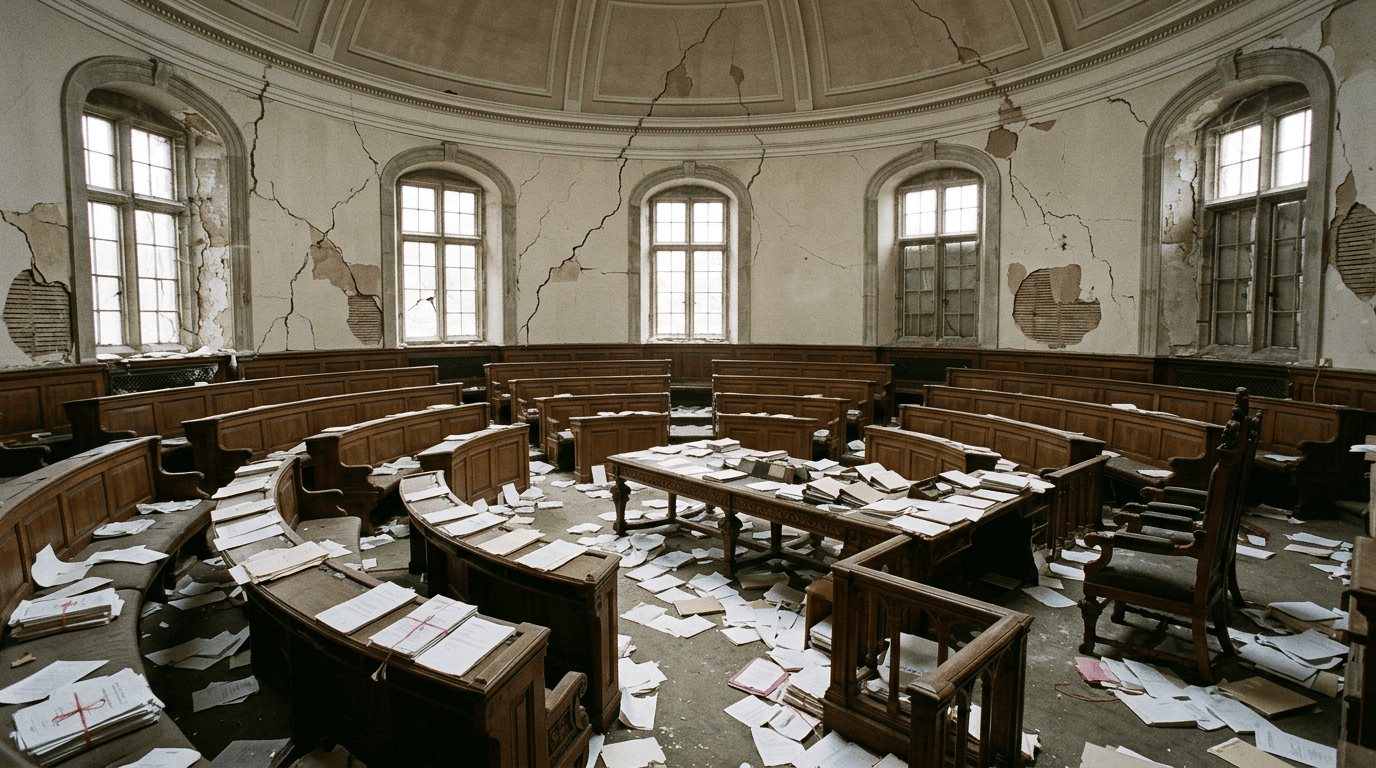
Political scientists, historians, and sociologists who argue that the “American Experiment”—the democratic republic founded on constitutional checks, civil liberties, and shared civic norms—is severely endangered or reaching an end typically point to structural strain across several core institutions.
While alarm over the republic’s demise is as old as the nation itself, modern analysts highlight several distinct indicators of systemic decay:
1. The Breakdown of Institutional Norms
- Erosion of Unwritten Rules: Democracies rely heavily on mutual toleration (accepting political opponents as legitimate) and institutional forbearance (exercising restraint when using constitutional power). When political parties treat routine governing mechanisms as existential warfare, checks and balances shift from a tool of balance to a weapon for gridlock.
- Contested Transfer of Power: Peaceful, undisputed transitions of power are the bedrock of democratic stability. The growing distrust in election integrity—and the willingness to challenge or reject certified outcomes—signals a breakdown in the fundamental rule of the game.
2. Severe Political Hyper-Polarization
- Affective Polarization: Political hostility has shifted from disagreement over policy to negative partisanship—where voters view the opposing party not just as misguided, but as a moral threat.
- Siloed Realities: The fragmentation of the news media landscape, paired with algorithm-driven information bubbles, has stripped away a shared baseline of facts. Without a consensus on reality (from public health to election results), compromise becomes nearly impossible.
3. Declining Trust in Core Institutions
- Distrust in Public Life: Public confidence in central democratic pillars—including the judiciary, public health authorities, Congress, and the press—has hit historic lows.
- Perception of Systemic Unfairness: Broad consensus exists among citizens that political and economic systems are rigged in favor of elite or corporate interests, leading to widespread cynicism and anti-establishment sentiment.
4. Gridlock and Governance Failure
- Structural Paralysis: The U.S. Constitution was designed to force compromise, but in a deeply polarized environment, it leads to paralysis. When major legislative bodies repeatedly fail to address long-term structural issues (e.g., fiscal deficits, immigration, infrastructure, climate change), citizens increasingly lose faith in democratic solutions.
- Executive Overreach: As legislative bodies stall, power routinely shifts to the executive branch and federal courts to govern by decree or decree-like actions, bypassing democratic debate.
5. Socioeconomic Friction and Inequality
- Economic Inequality: Historic levels of wealth concentration can undermine democratic equality, shifting political influence to wealthy individuals and corporate donors.
- Tribal & Demographic Division: When geographical, religious, cultural, and racial identities line up neatly with political party affiliation, political debate turns into existential zero-sum conflict.
The Counterargument:
Many historians caution against declaring the end of the experiment prematurely. The United States has survived severe existential crises before—including the Civil War, the Gilded Age, the Great Depression, and the civil unrest of the late 1960s. From this perspective, these “signs” may represent a painful period of democratic realignment and tension rather than a permanent collapse.
 Bright, Shiny Objects!
What do you think?