The People We Love Are Only on Loan

In a sense, we are permanently grieving. The Stoics were masters of consolation, or how to cope with loss and grief. What would they have to say to you?

In the article “The People We Love Are Only on Loan,” the author explores the concept of perpetual grief and how it influences our lives. Drawing on Stoic philosophy, the piece highlights the Stoics’ teachings on coping with loss and finding solace in the inevitability of change. Their insights remind us that acceptance and understanding are crucial in navigating the emotions tied to our relationships and experiences.

For a deeper understanding of these Stoic principles and how they can guide us through grief, I encourage you to read the full article here.

I Worried


“I worried a lot. Will the garden grow, will the rivers

flow in the right direction, will the earth turn

as it was taught, and if not how shall

I correct it?

Was I right, was I wrong, will I be forgiven,

can I do better?

Will I ever be able to sing, even the sparrows

can do it and I am, well,

hopeless.

Is my eyesight fading or am I just imagining it,

am I going to get rheumatism,

lockjaw, dementia?

Finally I saw that worrying had come to nothing.

And gave it up. And took my old body

and went out into the morning,

and sang.”

Mary Oliver

Read more about Mary Oliver and this poem here.

7 Signs You’re Being Breadcrumbed

The moment you stop settling for breadcrumbs is the moment you make room for the kind of love that actually nourishes you.

In the article “7 Signs You’re Being Breadcrumbed,” the author explores the concept of “breadcrumbing,” a situation where one partner gives minimal attention or affection, leaving the other feeling unfulfilled. The piece outlines seven telltale signs that indicate you may be in this type of relationship, emphasizing the importance of recognizing these red flags. It encourages readers to identify their worth and to seek meaningful relationships instead of settling for the bare minimum.

To gain a deeper understanding of breadcrumbing and how to avoid it, I encourage you to read the full article here.

This Common Online Habit Slowly Drains Your Happiness

This highly normalized habit can do an unexpected amount of damage.

In the article “This Common Online Habit Slowly Drains Your Happiness,” the author discusses how certain online behaviors, particularly excessive engagement in social media and constant connectivity, can lead to a significant decrease in overall happiness and well-being. It emphasizes the importance of recognizing these habits and taking steps to mitigate their negative effects to improve mental health.

To gain a deeper understanding of this phenomenon and explore practical strategies for creating a healthier online environment, read the full article here.

Signs This Is the End of The American Experiment

Political scientists, historians, and sociologists who argue that the “American Experiment”โ€”the democratic republic founded on constitutional checks, civil liberties, and shared civic normsโ€”is severely endangered or reaching an end typically point to structural strain across several core institutions.

Continue reading “Signs This Is the End of The American Experiment”

Marcus Aurelius on the Good Luck of Your Bad Luck

โ€œWhat happened could have happened to anyone, but not everyone could have carried on.โ€

Marcus Aurelius

In the article “Marcus Aurelius on the Good Luck of Your Bad Luck,” the author explores the Stoic philosophy of Marcus Aurelius and how it can help individuals turn adversity into personal strength. Aurelius emphasizes that while misfortune can affect anyone, it is the ability to persevere that sets people apart. The insights shared provide valuable lessons on resilience and the transformative power of a positive mindset in the face of challenges.

To delve deeper into these Stoic teachings and learn how to apply them in your own life, be sure to read the full article here.

David Brooks: On Character


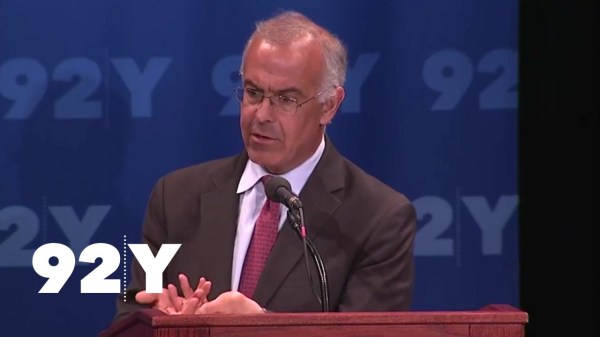
In his book The Road to Character (and discussed in his 92NY talk), David Brooks defines character not as an inherent, unyielding trait, but as an ongoing internal struggle to build moral strength, depth, and humility [18:03 Opens in a new window ].

Brooks frameworks his definition around several key concepts…

Continue reading “David Brooks: On Character”

Is America Going the Way of Rome and Britain?

When historians compare current U.S. indicators to past superpowers, they usually look at two distinct archetypes of decline: Western Rome (a story of internal institution failure, hyper-inflation, and sudden structural collapse) and the British Empire (a story of economic exhaustion, managed decolonization, and a peaceful handover of global leadership).

Continue reading “Is America Going the Way of Rome and Britain?”

On the Decline of Empires

In a previous post, I took a look at the rise and fall of empires since the beginning of the ‘Common Era’ and finished with this:

“Historians often point out that the average lifespan of a major empire is roughly 250 years, though anomalies like the Eastern Romans (Byzantines) managed to survive for over a millennium by constantly adapting their borders and administrative systems.”

While every imperial collapse has its own specific triggers, empires almost never fall to a single isolated event. Instead, they usually suffer from a fatal combination of internal structural decay and external pressure.

Continue reading “On the Decline of Empires”

Americans Rate Nation’s Moral Values at All-Time Low

While Americans point to a decline in morality, they may be referring to social conventions, not ethical behavior.

The article from Psychology Today discusses a significant decline in Americans’ perception of the nation’s moral values, which has been rated at an all-time low. It suggests that this perceived decline may stem from shifts in social conventions rather than actual ethical behavior. The piece explores how various factors influence public opinion on morality and highlights the differences between societal norms and personal ethics.

Go to the source and read the whole article: Americans Rate Nation’s Moral Values at All-Time Low

The Rising Cost of Dissent in America

In his TED Talk, The Rising Cost of Dissent in America, former senior U.S. national security official Miles Taylor explores the shifting dynamics of free speech, political violence, and public participation in modern American life.


Continue reading “The Rising Cost of Dissent in America”

All the ‘Major’ Empires that Have Risen and Fallen in The ‘Common Era’

I asked Gemini to compile a list of all the major empires that have risen and fallen since the beginning of the common era, and she threw back around 40 names! She pointed out that “historians often claim that major empires stick around for about 250 years on average, but letโ€™s not forget the Eastern Romans (Byzantines) who crashed that party by hanging in there for over a millennium, constantly reshaping their borders and governance.So, hereโ€™s a thought: are we already living in a post-American reality?

“A complete list of every single empire that rose and fell in the Common Era (CE) would include hundreds of regional powers, nomadic confederations, and short-lived dynasties. To make this digestible, here is a chronological mapping of the major global empires that shaped history from 1 CE onward, organized by the eras in which they reached their peak or collapsed.

Continue reading “All the ‘Major’ Empires that Have Risen and Fallen in The ‘Common Era’”

Ken Holtzman’s first no-hitter

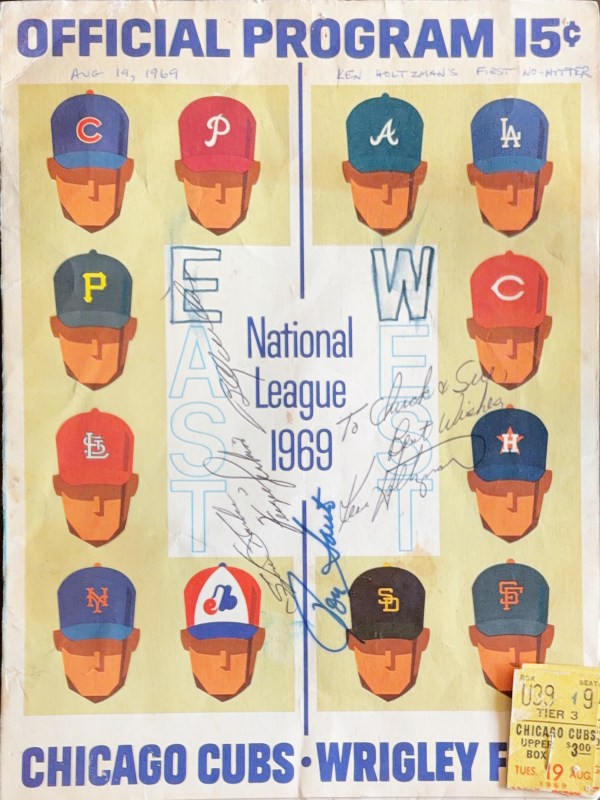
Yesterday, my mom gave me this program from Ken Holtzman’s 1969 no hitter. I was 11 and my dad and I sat in the upper deck behind home plate for what turned out to be one of the most unique games in Cubs’ history. The program is signed by Ken Holtzman, Ron Santo (who hit the game winning homer), Billy Williams (whose catch preserved the no hitter) and Fergie Jenkins. Ken Holtzmanโ€™s no-hitter on August 19, 1969, is one of the strangest and most memorable pitching performances in Chicago Cubs historyโ€”not because he overpowered hitters, but because he didnโ€™t strike out a single batter.

The 23-year-old left-hander faced the Atlanta Braves at Wrigley Field and won 3โ€“0, allowing no hits, three walks, and no runs. Every one of the Bravesโ€™ 27 outs came on a ball put into playโ€”grounders, fly balls, or line drives. A no-hitter without a strikeout is extraordinarily rare, and Holtzman remains the most recent major-league pitcher to accomplish it. (SABR)

Continue reading “Ken Holtzman’s first no-hitter”

The End of Reading Is Here

We have entered the post-literate age…

“The darkness is gathering again. Americans, once members of a proudly literate society, read much less than they used to. According to the National Endowment for the Arts, which conducts the most comprehensive survey of the nationโ€™s reading habits, fewer than half of all adults reported having read a book of any kind in 2022. Only 38 percent read a novel or short story. A study analyzing 236,000 responses to the American Time Use Survey found that the proportion of Americans who read for pleasure on any given day fell from 28 percent in 2004 to 16 percent in 2023. (The study looked at people who had read a book, magazine, or newspaper; listened to an audiobook; or read an e-book.) Gambling has become a more common leisure activity than reading a book: Last year, 57 percent of Americans placed a bet.”

Source: The End of Reading Is Here – The Atlantic

(Add the link in incognito mode to read)

Listen Like You Might Be Wrong

The speaker delivers a powerful message urging graduates to reject rigid binary thinking and move past a culture that values winning arguments over understanding people. He challenges the audience to engage in genuine dialogue, especially with those they deeply disagree with.

Continue reading “Listen Like You Might Be Wrong”

How to Be a Living Unison: D. H. Lawrence on Harmonizing the Conflicting Parts We Live With

“The great paradox of personhood is that the sum is simpler than its parts. We move through the world as a totality, fragmentary but indivisible, clothed in a costume of personality beneath which roil parts perpetually fighting for power, perpetually yearning for harmony. The person making the choices, the person bearing their consequences, and the person taking responsibility for them are rarely the same person.”

If this resonates wiht you, go to the source and read the entire article by Maria Popova: How to Be a Living Unison: D. H. Lawrence on Harmonizing the Conflicting Parts We Live With

Writer Ian Bogost Says ‘the Small Stuff’ Can Help Us Reclaim Our Lives from Too Much Convenience

Has Silicon Valley been building the wrong things?

Source: Writer Ian Bogost says ‘The Small Stuff’ can help us reclaim our lives from too much convenience | TechCrunch

Who Does it Serve?

In this keynote address from ARC 2026, artist and public speaker Jonathan Pageau delivers a profound philosophical warning about the unchecked trajectory of artificial intelligence, framing our current technological race through the lens of ancient myths and legends.


Here is a summary of the core themes and arguments from the video:

Continue reading “Who Does it Serve?”

David Brooks: America Has a Moral Problem, Not a Political One

In this episode of Prof G Conversations, host Scott Galloway interviews author, New York Times veteran, and Atlantic writer David Brooks. The discussion centers around what Brooks views as a deep-seated human and moral crisis in modern America, rather than a purely political one…

Continue reading “David Brooks: America Has a Moral Problem, Not a Political One”

The Arc of Justice

“And on the road, youโ€™ll read words from some of Americaโ€™s greatest leaders, including a quote that inspired that arch that you see right there at the south end of the plaza by Theodore Parker. โ€œThe arc of the moral universe is long, but it bends towards justice.โ€ Itโ€™s a quote that was often invoked by Dr. Martin Luther King Jr., but it originally comes from a Boston ministerโ€™s sermon more than 170 years ago. And at the time, the abolitionist cause seemed lost, the compromise of 1850 had made harboring fugitive slaves a crime under federal law, even in those states that had abolished slavery. And in a case that garnered national attention, a young fugitive in Boston had been seized and tried and marched to the wharf by hundreds of armed officers, where he was summarily put on a ship bound for the south, where he would remain in shackles and chains. It was a moment of profound uncertainty and despair, a moment the minister called darker than any New England had witnessed. โ€œWe do not see, Reverend Theodore Parker observed, โ€œthat justice is always done on earth. Many a knave is rich, sleek, and honored, while the just man is poor, hated, and in torment. I do not pretend,โ€ the preacher said, โ€œto understand the moral universe. The arc is a long one. My eye reaches but little ways. I cannot calculate the curve and complete the figure by the experience of sight. I can divine it by conscience, but from what I see, I am sure it bends towards justice.โ€

Source: President Obama and Mrs. Obamaโ€™s Remarks at the Opening of the Obama Presidential Center | by Barack Obama | Jun, 2026 | Medium

Start a Blog at WordPress.com.

Up ↑