George Washington’s Rules of Civility (and Decent Behaviour in Company and Conversation)

George Washington’s “Rules of Civility and Decent Behaviour in Company and Conversation” is a collection of 110 maxims that emphasize proper conduct and etiquette in social interactions. Originally derived from a set of French rules, Washington adopted and translated them in his youth. The rules cover various aspects of behavior, including:

  1. Respect for Others: Treating people with kindness and dignity, acknowledging their presence, and showing proper deference in conversation.
  2. Politeness and Modesty: Maintaining humility and refraining from boasting, as well as speaking appropriately according to the situation.
  3. Listening and Understanding: The importance of listening attentively and allowing others to express their thoughts without interruption.
  4. Avoiding Controversy: Steering clear of topics that could lead to disagreements or discord, particularly in mixed company.
  5. Good Manners: Practicing etiquette during meals and gatherings, sharing space amicably, and being gracious in both victories and losses.

Collectively, these maxims provide insight into the social expectations of Washington’s time and reflect timeless principles of civility that are still relevant today.

Could you imagine what our current president’s book would look like?

Media, Technology, and Stress At America’s 250th

“The United States is in a strange position. Even as we prepare to celebrate our 250th anniversary we are dissatisfied with how things stand. A recent Pew Poll indicated that 69% of Americans don’t like the way things are going right now but that may have always been true in this country; historians believe that only 30-40% of American Colonists actively supported the Revolutionary War, with 20% remaining loyal to the crown, and the remainder being neutral or disengaged.”

Go to the source and read the whole article if you’re interested: Media, Technology, and Stress At America’s 250th

How America Recovers from All This

The Hardest Part Of History To Tell Is How It Felt

An author writes about writing about the Lewis & Clark expedition. Personally I think this expedition was an as great or greater adventure than man landing on the moon and I can’t wait to read this new take…

Source: The Hardest Part Of History To Tell Is How It Felt | Defector

The Bigot in the Oval Office

Like dictators before him, Trump’s road to tyranny is paved with hate…

“I received a letter not long ago from a man who said, ‘You can go to Japan to live, but you cannot become Japanese. You can go to France to live and not become a Frenchman. You can go to live in Germany or Turkey, and you won’t become a German or a Turk.’ But then he added, ‘Anybody from any corner of the world can come to America to live and become an American.’”

Ronald Reagan
Continue reading “The Bigot in the Oval Office”

Hoosiers

When you move to Indiana, it’s obligatory that you watch this classic movie featuring Gene Hackman as coach Norman Dale who lead his ‘David’ Milan basketball team against ‘Goliath’ South Bend Central to win the state championship back in the fifties…

…meanwhile over in Elkhart there’s a lovely monument to Coach Dale immortalizing the moment when he had his players measure the net in the fieldhouse where the state championship game took place to prove to his players that even though the arena was bigger, the court was the same size!

Click to enlarge…

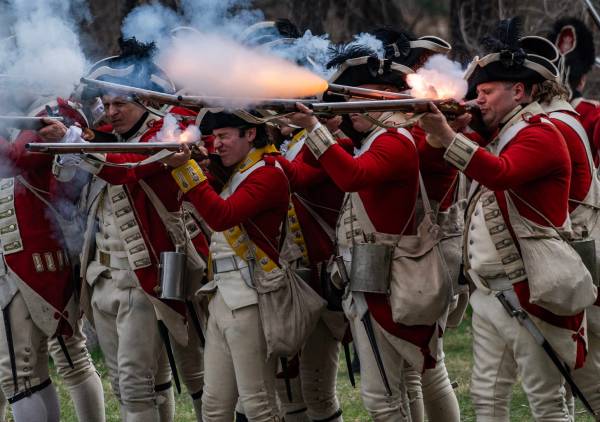
Lexington and Concord at 250: Can We Still Hear the ‘Shot Heard Round the World’?

Big Revolutionary War anniversaries lie ahead—and bring reminders of our messy, surprising history…

April 19, 2025, marked the 250th anniversary of the American Revolutionary War’s inception, highlighting significant historical reflections and events tied to this milestone. The article delves into the implications of such anniversaries, suggesting they serve as a reminder of the complex and often surprising nature of history. Additionally, it questions whether the essence of the conflict, encapsulated in the phrase “the shot heard round the world,” still resonates in today’s society. Through this lens, the article encourages contemplation on the ongoing relevance of the Revolutionary War and its legacy in contemporary America.

Source: Lexington and Concord at 250: Can We Still Hear the ‘Shot Heard Round the World’?

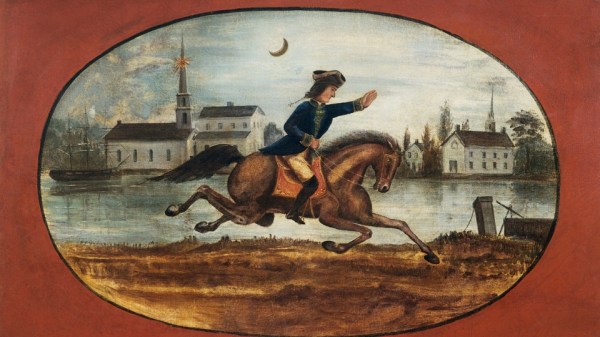
Paul Revere’s Ride

“Paul Revere’s Ride” is a narrative poem written by American poet Henry Wadsworth Longfellow, first published in 1861 in the Atlantic Monthly. The poem is inspired by the historical events surrounding the American Revolution and specifically recounts the midnight ride of Paul Revere on April 18, 1775, as he warned the American colonists of the approaching British forces.

Longfellow aimed to create a patriotic piece that would evoke a sense of national pride and unity during a time of crisis in America, as the country was on the brink of the Civil War. The poem romanticizes Revere’s ride and portrays him as a heroic figure in the fight for independence. Longfellow’s use of rhythmic structure and vivid imagery helped popularize the story of Paul Revere, making it a staple of American folklore.

Though artistic liberties were taken in the narrative, the poem’s legacy endured, and it remains one of Longfellow’s most celebrated works. It has continued to influence American literature and culture, serving as a symbol of the spirit of resistance and the quest for freedom. And so it begins…

Listen, my children, and you shall hear
Of the midnight ride of Paul Revere,
On the eighteenth of April, in Seventy-Five:
Hardly a man is now alive
Who remembers that famous day and year…

Source: Paul Revere’s Ride, by Henry Wadsworth Longfellow – The Atlantic

I Should Have Seen This Coming

David Brooks writes “When I joined the conservative movement in the 1980s, there were two types of people: those who cared earnestly about ideas, and those who wanted only to shock the left. The reactionary fringe has won.”

Example?

Russell Vought, Donald Trump’s budget director, sounds like he walked straight out of 1984. “When they wake up in the morning, we want them to not want to go to work, because they are increasingly viewed as the villains,” he said of federal workers, speaking at an event in 2023. “We want to put them in trauma.

This is not America. This is something different…

Source: I Should Have Seen This Coming

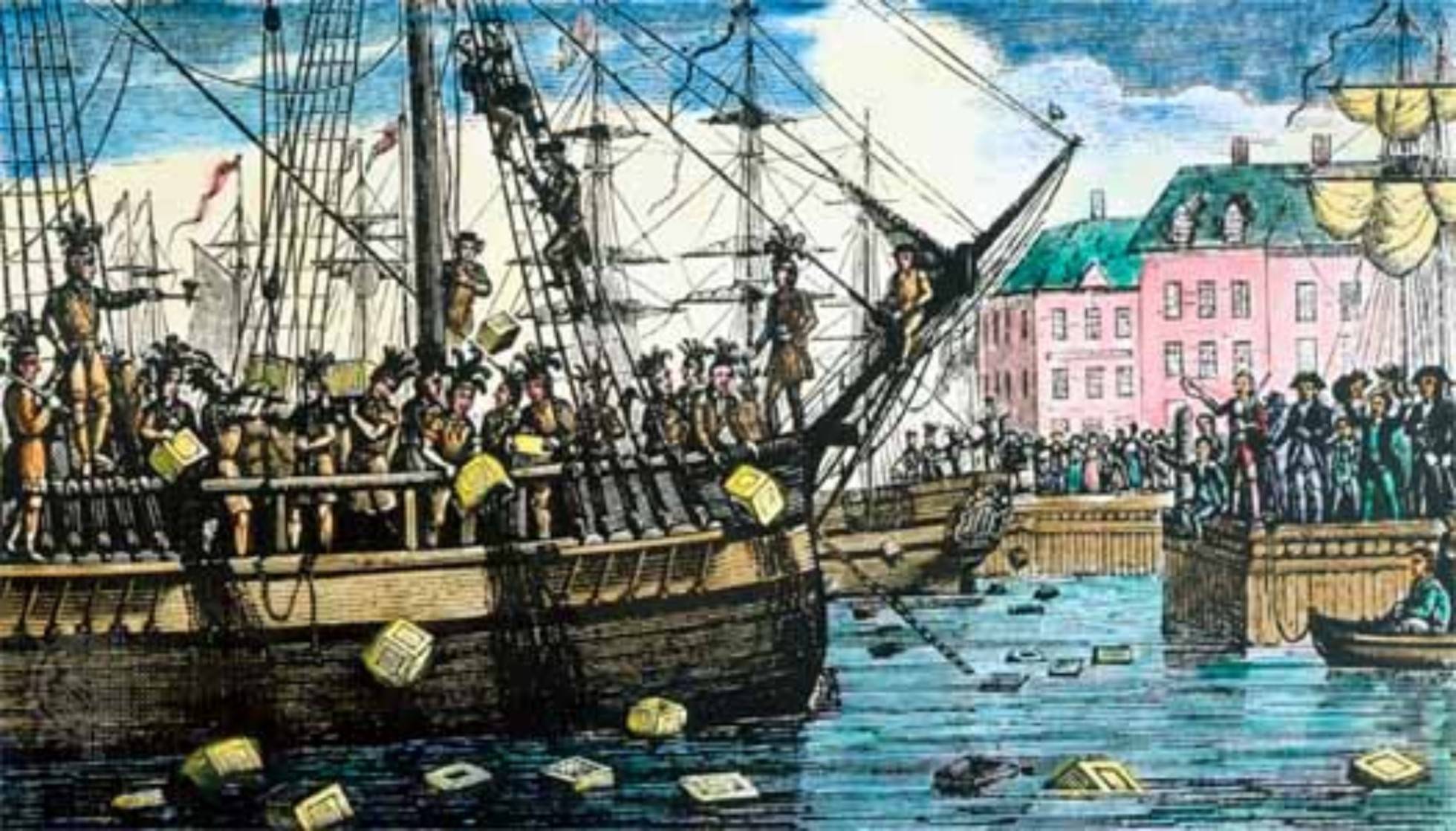
American Minute for December 16th; The Boston Tea Party

boston-tea-party-3


Bill Federer writes:

The British passed taxes on the American colonies, stifling the economy:

1764 Sugar Act-taxing sugar, coffee, wine;

1765 Stamp Act-taxing newspapers, contracts, letters, playing cards and all printed materials; and the

1767 Townshend Acts-taxing glass, paints, paper.

Beginning in 1768, British troops quartered in American homes.

When citizens gathered in protest, March 5, 1770, British troops fired into crowd, killing five, in what was called “the Boston Massacre.”

Just three years later, in 1773, the British passed yet another tax, the “Tea Act.”

While American merchants paid taxes, British allowed the East India Tea Company to sell a half million pounds of tea in the Colonies with no taxes, giving them a monopoly by underselling American merchants.

The citizens of Boston had enough, and on DECEMBER 16, 1773, led by Samuel Adams, a band of patriots called Sons of Liberty, disguised themselves as Mohawk Indians, left the South Meeting House toward Griffin’s Wharf, boarded the ships Dartmouth, Eleanor and Beaver, and threw 342 chests of tea into the harbor.

This was called the Boston Tea Party.

The men of Marlborough, Massachusetts, declared:

“Death is more eligible than slavery. A free-born people are not required by the religion of Jesus Christ to submit to tyranny, but may make use of such power as God has given them to recover and support their liberties…

We implore the Ruler above the skies that He would bare His arm…and let Israel go.”

via American Minute for December 16th.

Start a Blog at WordPress.com.

Up ↑