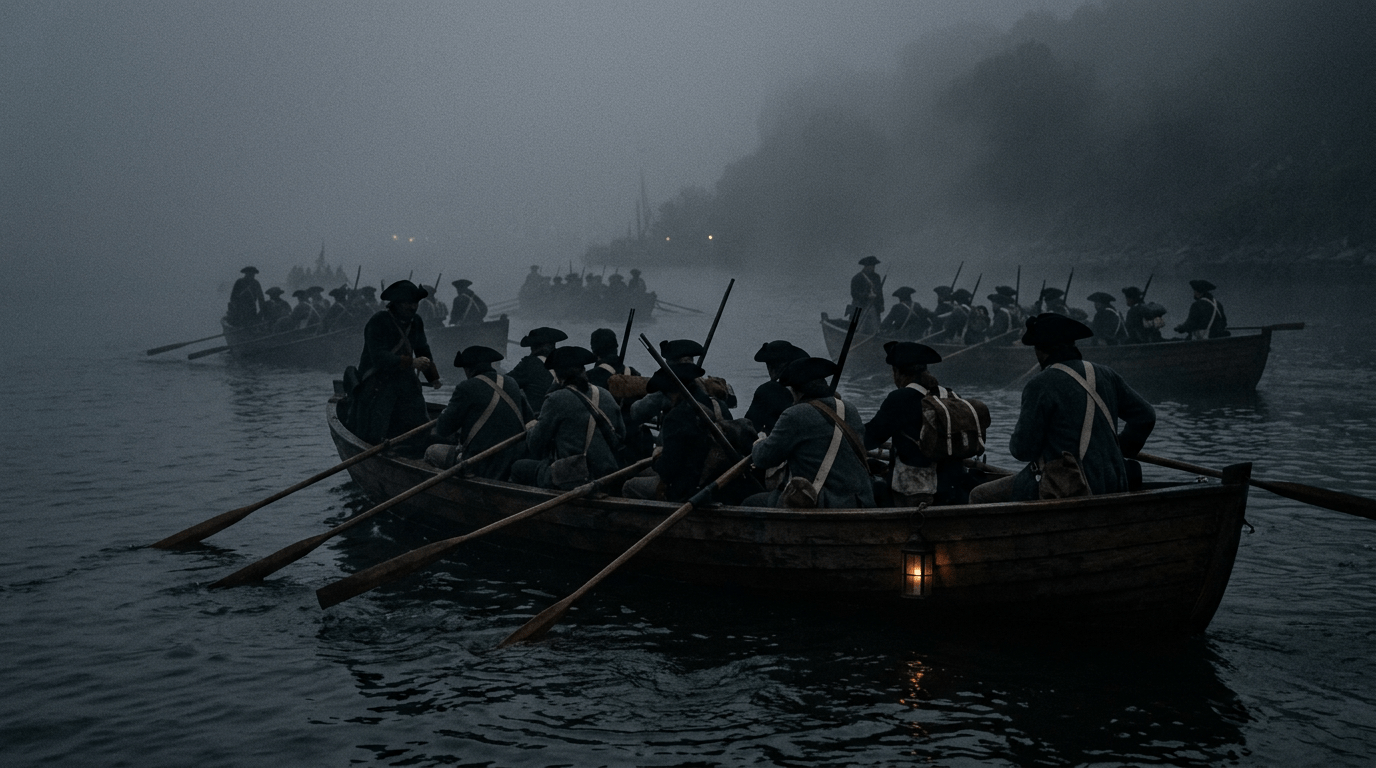
250 years ago today in the predawn hours of August 30, 1776, George Washington completed the extraordinary evacuation of the Continental Army from Brooklyn Heights across the East River to Manhattan.
After the devastating Battle of Brooklyn on August 27, roughly 9,000 Americans had been cornered with the British in front of them and the East River behind them. Washington recognized that another major engagement could mean the destruction of his army. National Park Service
So during the night of August 29–30, Washington pulled off a remarkable escape.
Colonel John Glover’s 14th Massachusetts Regiment—the Marblehead Mariners— used their considerable seamanship to ferry soldiers across the river. Wagons were muffled, campfires were left burning, and the troops were ordered to remain silent so the British wouldn’t realize what was happening. National Park Service
And then Washington caught an extraordinary break.
Fog rolled in.
It concealed the final stages of the evacuation from British observation. By about 7:00 a.m. on August 30, the Continental Army had safely reached Manhattan. The troops on Governors Island were among the last removed. National Park Service
We even have an eyewitness diary entry from Massachusetts soldier Moses Sleeper for today:
“Last night Evacuated Long Island with verry Much Fatigue…”
Sleeper recorded reaching New York at about 1:00 a.m. National Park Service
Why August 30 matters
This wasn’t a victory in the conventional sense. Washington had just lost the largest battle of the Revolution.
But he understood something fundamental that would become central to his strategy:
The British could capture territory. They could not be allowed to capture Washington’s army.
As long as the Continental Army remained intact, the Revolution remained alive.
And there’s something wonderfully cinematic about it: Howe wakes up expecting Washington’s battered army to still be sitting across from him at Brooklyn Heights—and discovers that the Americans have simply vanished.
 Bright, Shiny Objects!
What do you think?