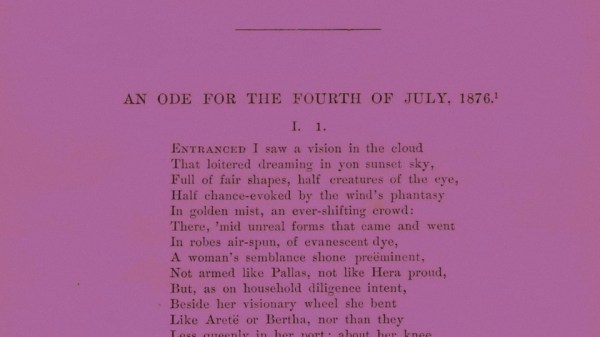
An unfinished ode from 1876 offers a lesson for Americaโs 250th. Open this link in incognito or private mode: What This Fourth of July Is Really About
George Washington’s Rules of Civility (and Decent Behaviour in Company and Conversation)
George Washington’s “Rules of Civility and Decent Behaviour in Company and Conversation” is a collection of 110 maxims that emphasize proper conduct and etiquette in social interactions. Originally derived from a set of French rules, Washington adopted and translated them in his youth. The rules cover various aspects of behavior, including:
- Respect for Others: Treating people with kindness and dignity, acknowledging their presence, and showing proper deference in conversation.
- Politeness and Modesty: Maintaining humility and refraining from boasting, as well as speaking appropriately according to the situation.
- Listening and Understanding: The importance of listening attentively and allowing others to express their thoughts without interruption.
- Avoiding Controversy: Steering clear of topics that could lead to disagreements or discord, particularly in mixed company.
- Good Manners: Practicing etiquette during meals and gatherings, sharing space amicably, and being gracious in both victories and losses.
Collectively, these maxims provide insight into the social expectations of Washington’s time and reflect timeless principles of civility that are still relevant today.
Could you imagine what our current president’s book would look like?
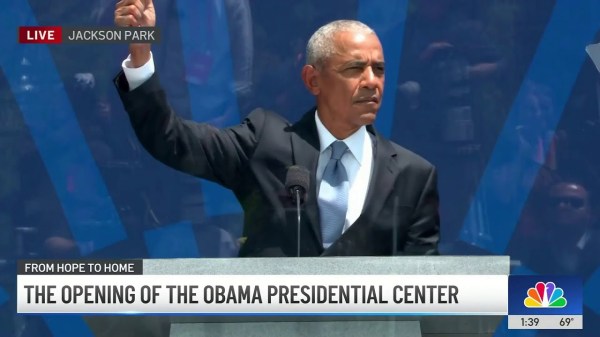
Barack Obama’s Speech at Grand Opening of New Presidential Center
โI hope this center will serve as an affirmation of just how special, how precious our democracy truly is and remind us what we can achieve when we embrace our shared responsibilities as citizens,โ Obama told the crowd.
In this NBC Chicago video, former President Barack Obama delivers a heartfelt and stirring keynote address at the grand opening ceremony of the new Obama Presidential Center in Jackson Park on the South Side of Chicago.
Key Themes & Highlights
- A Homecoming to Chicago: Obama reflects deeply on his roots, recalling his arrival in Chicago in 1985 as a 23-year-old community organizer 02:06 Opens in a new window . He notes that the city is where he found his purpose, met Michelle Obama, raised his children, and launched his political career 06:22 Opens in a new window . Because of this, he emphasizes that the center could not have been built anywhere else 07:17 Opens in a new window .
- A Living Community Hub: He highlights that the center was purposely designed not to be a “lifeless mausoleum” or merely a collection of past speeches, but rather a vibrant, active civic space intended to build community trust and strengthen democratic values 07:55 Opens in a new window .
- The Power of Everyday Citizens: Obama stresses that the exhibits explicitly focus on the stories of ordinary citizensโsuch as healthcare advocates, small business owners, and military familiesโwhose voices drove his administration’s major policy successes 18:01 Opens in a new window .
- Upholding American Democracy: Nearing America’s 250th birthday, Obama calls democracy a radical and precious experiment that requires constant effort 11:51 Opens in a new window . He highlights fundamental American valuesโsuch as the rule of law, checks and balances, a free press, and the peaceful transfer of power 15:21 Opens in a new window โnoting these are non-partisan principles that bind the nation together.
- Rejecting Cynicism: Acknowledging the turbulent political climate, technological disruptions, and cultural exhaustion of the last decade, he strongly warns against giving in to despair 20:59 Opens in a new window . He urges people not to give away their power by losing faith in the impact of voting and civic participation 23:39 Opens in a new window .
- The Next Chapter: The speech closes with an emphasis on the future. Referencing Theodore Parkerโs famous quote that “the arc of the moral universe… bends towards justice” 30:00 Opens in a new window , Obama calls on a new generation of leaders to keep organizing and writing the next chapters of the American story 33:50 Opens in a new window .
Barack Obama explains that despite the current feelings of uncertainty and division in the country, the majority of Americans are not seeking perpetual anger or conflict. Instead, he states that people are looking for:
- Fairness
- Common sense
- Mutual respect
He emphasizes that, deep down, citizens want to find a way to turn toward one another rather than pulling further apart (25:10 – 25:30).
You can read the entire transcript here.
Michelle Obama at Opening of Barack Obama Presidential Center
The video you are currently watching features Former First Lady Michelle Obama delivering a deeply moving and inspirational speech at the grand opening ceremony of the Obama Presidential Center on the South Side of Chicago.
Here is a concise summary of the key themes from her address:
- A Personal Tribute to Barack Obama: She takes the opportunity to loudly sing her husband’s praises, reflecting on his calm, unflappable nature and “stubborn optimism” during his eight years in office. She highlights major administration milestones, including expanding healthcare, rescuing the economy, ending a war, and advocating for marriage equality.
- A Monument to Everyday Americans: Michelle emphasizes that the center is a testament to shared values like equality, empathy, honesty, and inclusion. She notes that these qualities are not unique to her husband, but are shown every day by working-class Americans, teachers, and community volunteers.
- The Power of Choice over Cynicism: She speaks passionately about hope being a daily choice, asserting that voting, using one’s voice, and choosing to be a decent human being are essential actions, warning that failing to see the humanity in others puts democracy at risk.
- A Vibrant Hub for the South Side: Rather than a stagnant monument, she describes the center as a living, breathing community space. She explicitly invites neighbors to use the public park and library, make music in the recording studio, shoot hoops on the basketball court, and treat it as a joyful home.
She concludes by reminding the audience that the center is grounded in their stories, but it has never been about themโit belongs to the community and the future generations who will continue the steady march of change.
The Hardest Part Of History To Tell Is How It Felt
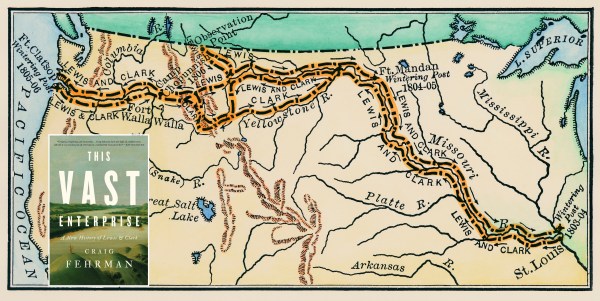
An author writes about writing about the Lewis & Clark expedition. Personally I think this expedition was an as great or greater adventure than man landing on the moon and I can’t wait to read this new take…
Source: The Hardest Part Of History To Tell Is How It Felt | Defector
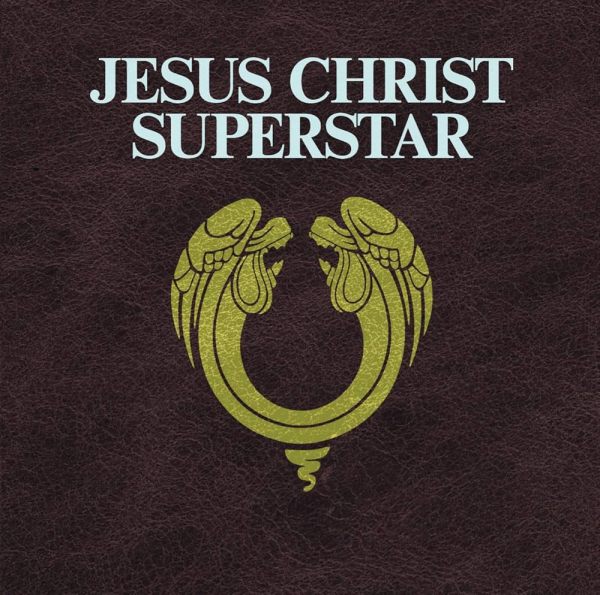
Jesus Christ Superstar Guitarists
On the original 1970 concept album of Jesus Christ Superstarโwhich served as the “original cast” recording before the show ever hit the stageโthe lead guitar duties were shared by two primary musicians, both of whom were members of Joe Cocker’s backing group, The Grease Band:
- Henry McCullough: He played both electric and acoustic guitar. McCullough is perhaps the most famous guitarist associated with the album; he later joined Paul McCartney & Wings and provided the iconic solo on “My Love.”
- Neil Hubbard: He played electric guitar. Hubbard was also a session veteran who later played with Roxy Music and B.B. King.
While both contributed heavily to the rock-operaโs gritty sound, McCullough is frequently credited with many of the more prominent, bluesy lead lines.
Continue reading “Jesus Christ Superstar Guitarists”The Legacy of Ed Sullivan
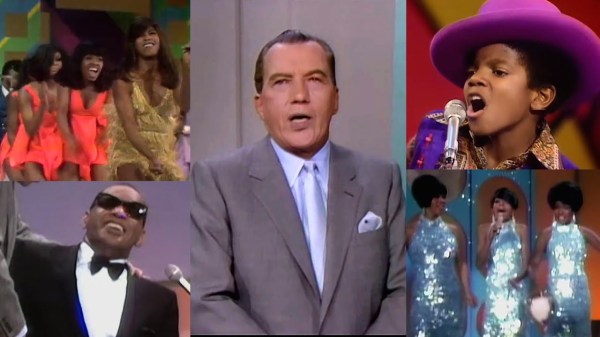
I love documentaries, especially ones that explore the latter part of the last century and this one is exceptional…
Ed Sullivan was a prominent television host and entertainment figure known for his iconic variety show, “The Ed Sullivan Show,” which aired from 1948 to 1971. His unique ability to showcase a diverse range of talent helped launch the careers of many famous artists, including Elvis Presley, The Beatles, and Broadway stars. Sullivan’s show became a cultural phenomenon, known for its live performances and innovative programming that captivated millions of viewers across the United States. His influence extended beyond television, as he played a significant role in shaping popular culture and the entertainment industry during a transformative period in American history. Combining humor, music, and special guest appearances, Sullivan’s legacy remains a defining element of mid-20th-century entertainment.
This is his story:
This documentary is currently available on Netflix.
Iโm so tired
I love this Christina Perri cover of the Beatles classic:
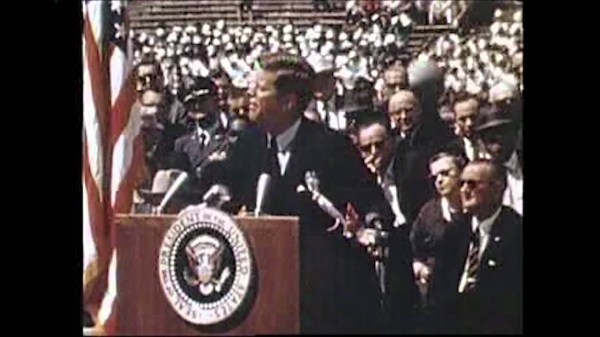
John F. Kennedy’s Address at Rice University on the Nation’s Space Effort
Thanks to a cool app called Likewise, I uncovered a period miniseries produced by Tom Hanks two years before Band of Brothers. The drama is called From the Earth to the Moon and it covered the space race from the 60’s in an exquisite manner. It’s available on HBO Max and Prime Video. Here’s the trailer…
Death by Lightning
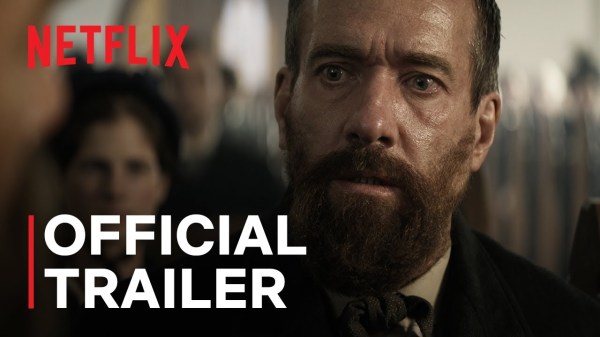
Death by Lightning is a gripping crime drama that intricately weaves together elements of suspense and emotional depth. The film follows the harrowing journey of its protagonist as they navigate a series of unexpected challenges and moral dilemmas. The cinematography is striking, capturing the raw beauty of the wilderness juxtaposed with the dark undertones of the story.
The performances are commendable, with the lead actor delivering a poignant portrayal of desperation and resilience. The screenplay effectively combines tension and introspection, keeping viewers on the edge of their seats while also provoking thoughtful reflection on themes of survival and justice.
Overall, Death by Lightning successfully blends thriller and character study, resulting in a thought-provoking cinematic experience that resonates long after the credits roll.
Additional perspectives…
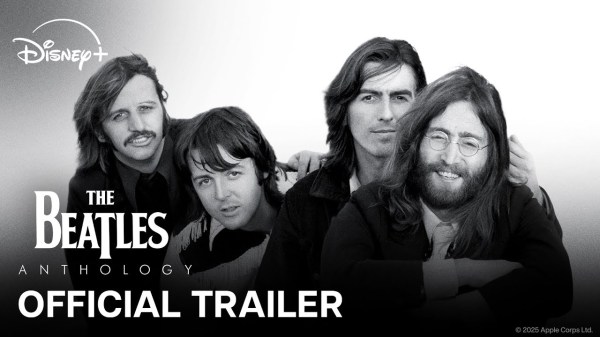
The Beatles Anthology
I was born in 1958. The first band I remember seeing was The Beatles on The Ed Sullivan Show. They have been the soundtrack for my entire life and now their story is being told by them in the way it deserves to be told…
TV viewers become outraged as football game is cut off to air โHeidiโ #today #history
“On November 17, 1968, the Oakland Raiders score two touchdowns in nine seconds to beat the New York Jetsโand no one sees it, because theyโre watching the movie Heidi instead. With just 65 seconds left to play, NBC switched off the game in favor of its previously scheduled programming, a made-for-TV version of the childrenโs story about a young girl and her grandfather in the Alps. Viewers were outraged, and they complained so vociferously that network execs learned a lesson theyโll never forget: โWhatever you do,โ one said, โyou better not leave an NFL football game.โ
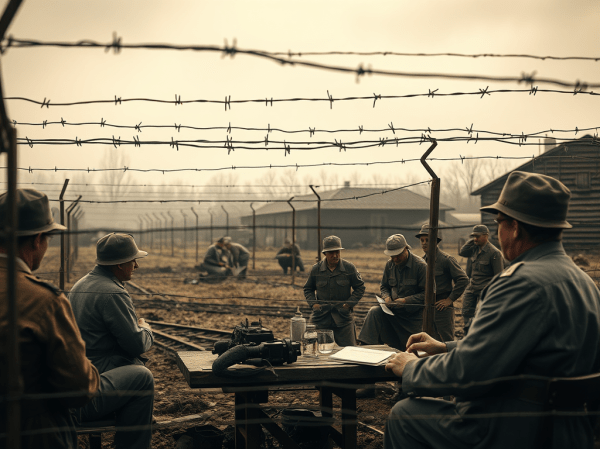
Continue reading “TV viewers become outraged as football game is cut off to air โHeidiโ #today #history”Did you know that in WWII, there were German POWs right down the road in the United States?
When I was in college, I was shocked to learn there were actually German POWs in the United States. This video (which you must watch on YouTube) goes into great detail on the topic.
A brief summary…
During World War II, the United States held over 425,000 German prisoners of war (POWs) in various camps across the country. Following the capture of German soldiers, they were transported to the U.S. as part of an agreement with the Allies. The conditions in these camps varied; some were well-kept, with prisoners allowed to work on local farms or in factories, while others were stricter. Many German POWs formed friendships with their American captors, and some even chose to remain in the U.S. after the war ended. The legacy of these POWs includes a complex interplay of wartime policies, cultural exchange, and post-war integration.
Geronimo surrenders
It’s a sad day in American history…
On September 4, 1886, Apache leader Geronimo surrenders to U.S. government troops. For 30 years, the Native American warrior had battled to protect his tribeโs homeland; however, by 1886 the Apaches were exhausted and outnumbered. General Nelson Miles accepted Geronimoโs surrender, making him the last Native American warrior to formally give in to U.S. forces and signaling the end of the Indian Wars in the Southwest.
Geronimo was born in 1829 and grew up in what is present-day Arizona and Mexico. His tribe, the Chiricahua Apaches, clashed with non-Native settlers trying to take their land. In 1858, Geronimoโs family was murdered by Mexicans. Seeking revenge, he later led raids against Mexican and American settlers. In 1874, the U.S. government moved Geronimo and his people from their land to a reservation in east-central Arizona. Conditions on the reservation were restrictive and harsh and Geronimo and some of his followers escaped.
Go to the source article: Geronimo surrenders | September 4, 1886 | HISTORY
Meet the Real Frank Abagnale
Frank Abagnale’s story was told in the movie Catch Me if You Can starring Leonardo di Caprio…
…here’s the ‘real thing’ on the Johnny Carson Show!
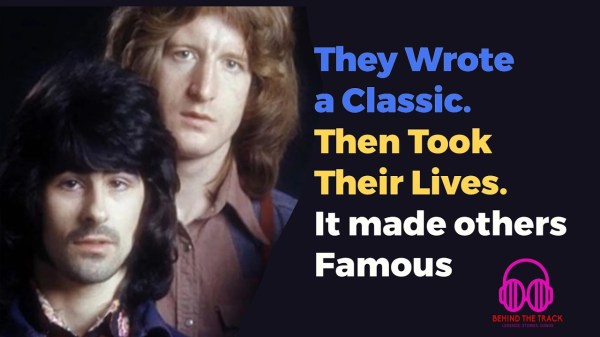
How One Song Made Stars But Left Its Creators Forgotten
A Brief History of Badfinger
Badfinger was a British rock band formed in 1961, originally under the name The Iveys. They gained prominence in the late 1960s and early 1970s, becoming one of the first artists to sign with the Beatles’ Apple Records. The band’s lineup consisted of Pete Ham, Tom Evans, Mike Gibbins, and Joey Molland.
Their breakthrough came with the release of the song “Come and Get It,” written by Paul McCartney, which topped the charts in 1970. Badfinger’s sound, characterized by catchy melodies and harmonies, resonated with audiences, leading to hits like “No Matter What” and “Day After Day.”
Despite their initial success, the band faced significant challenges, including managerial issues and financial struggles. Their second album, “Straight Up,” produced by Todd Rundgren, received critical acclaim but did not achieve the commercial success expected.
Tragedy struck when Pete Ham took his own life in 1975, followed by Tom Evans in 1983, casting a shadow over the band’s legacy. Despite these challenges, Badfinger’s music has remained influential, recognized for its contributions to power pop and rock. Today, their songs continue to be celebrated and enjoyed by fans old and new.
Hoosiers
When you move to Indiana, it’s obligatory that you watch this classic movie featuring Gene Hackman as coach Norman Dale who lead his ‘David’ Milan basketball team against ‘Goliath’ South Bend Central to win the state championship back in the fifties…
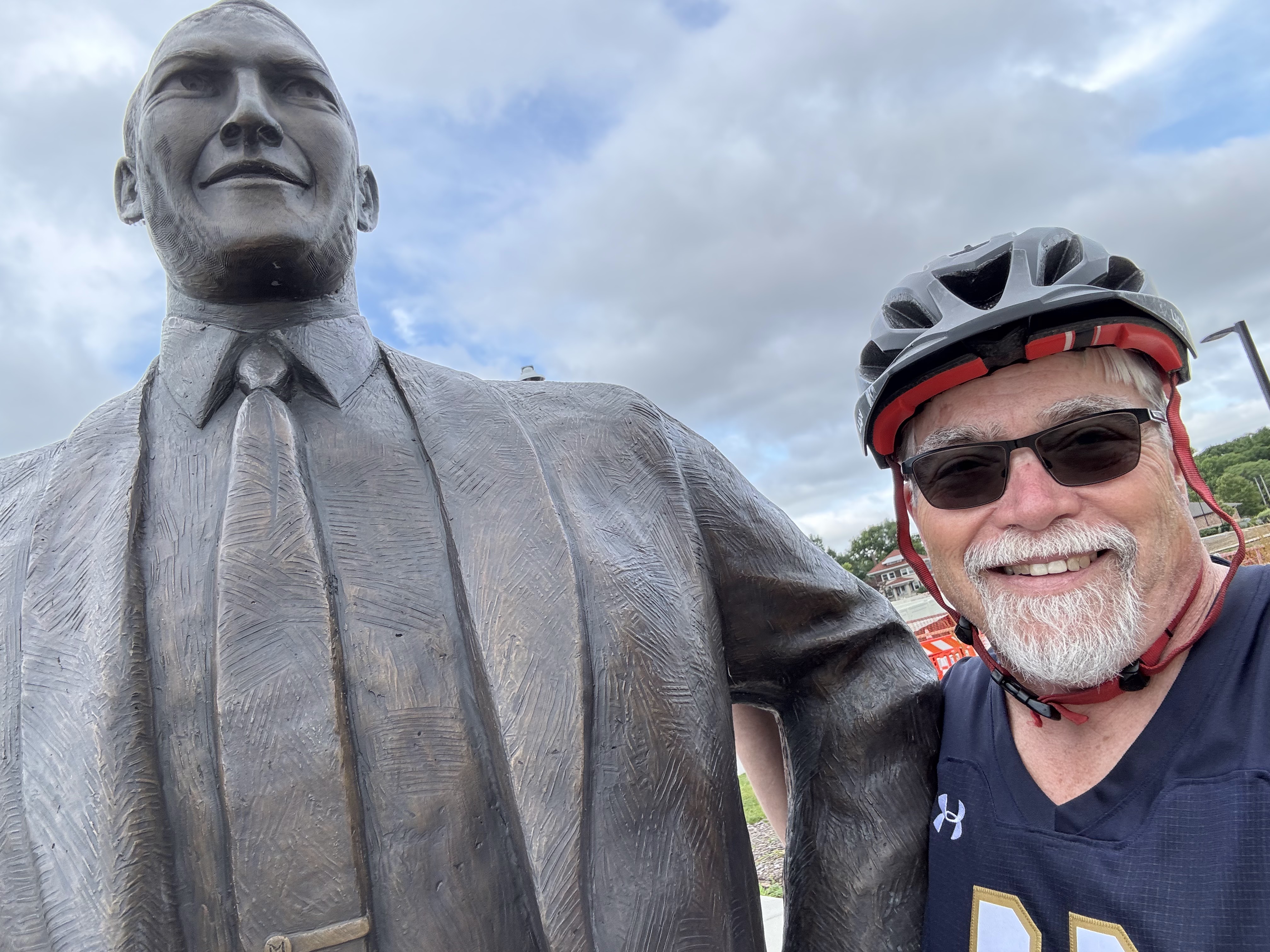
…meanwhile over in Elkhart there’s a lovely monument to Coach Dale immortalizing the moment when he had his players measure the net in the fieldhouse where the state championship game took place to prove to his players that even though the arena was bigger, the court was the same size!


Click to enlarge…
Lies My Teacher Told Me
Book Review: Lies My Teacher Told Me by James W. Loewen
“Lies My Teacher Told Me” is an eye-opening exploration of American history that challenges the conventional narratives presented in textbooks. James W. Loewen masterfully exposes the gaps and inaccuracies in what is often taught in schools, encouraging readers to think critically about the information they receive. His engaging writing style makes complex topics accessible, while his passionate advocacy for a more truthful and inclusive historical account is inspiring. This book is a must-read for anyone interested in understanding the real story behind America’s past. It not only enlightens but also prompts discussions that are vital for a well-rounded education. Highly recommended!
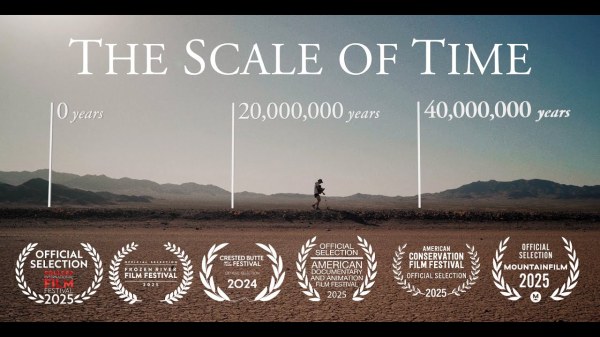
To Scale: TIME
On a dry lakebed in the Mojave, a group of friends build a practical scale model of time: 13.8 billion years of cosmic evolution, and our place within it. Best viewed at 4k playback on the largest screen available, with good sound or headphones. A complete chart of model scales & distances: https://www.toscaleseries.com/time
Bonus…
Trump, Hitler, and the End of the American Empire?
For your consideration: “Richard Wolff is Professor Emeritus of Economics at the University of Massachusetts Amherst and a visiting professor at The New School, where he works on economics in the Marxist tradition. This is Richardโs eighth appearance on Robinsonโs Podcast. In his last appearance, episode #243, he and Robinson discussed 2025 and the first weeks of Trumpโs presidency, as well as whatโs to come. More particularly, they discuss the irrelevance of Donald Trump, his domestic and global policies, China, narratives on the right and left, and the future of the United States. In this episode, they continue the discussion by diving deeper into recent events, Doge, Elon Musk, the relationship between Trump and Hitler, and important historical Marxists. Richardโs latest book is Understanding Capitalism (Democracy at Work, 2024).”
Easter Rising begins, April 24, 1916
On Easter Monday in Dublin, the Irish Republican Brotherhood, a secret organization of Irish nationalists led by Patrick Pearse, launches the Easter Rebellion, an armed uprising against British rule.
You must be logged in to post a comment.