The Role of Virtue and Education in the American Experiment

Popular government requires virtue, and public opinion must be enlightened.

George Washington

This is one of the central assumptions behind the Foundersโ€™ idea of republican government: a republic could not be sustained by a good constitution alone. It required citizens capable of governing themselvesโ€”both morally and intellectually. That theme also fits the broader Revolutionary-era framework weโ€™ve been building.

Continue reading “The Role of Virtue and Education in the American Experiment”

Battle of Brooklyn; August 27, 1776

HISTORICAL MAP | The Battle of Long Island and of Brooklyn Heights, New York on August 27, 1776

Source: Battle of Brooklyn – August 27, 1776

Battle of Long Island: 250 Years Ago Today

If most Americans know what happened 250 years ago today, it might be because of this song from the music Hamilton:


Hoewever, celebrating 250 years of America has nothing to do with Hamilton, UFC matches or Indy car races: it has to do with being mindful of the courage of real Americans who put everything on the line for us.

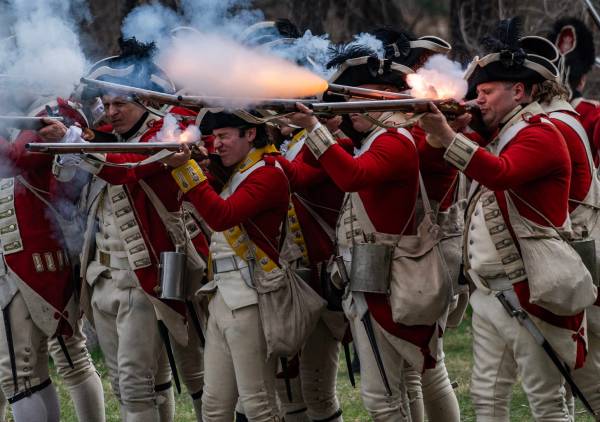
The Battle of Long Island, fought in August 1776, was a significant engagement during the American Revolutionary War. It marked the largest battle of the conflict in terms of troop strength, as British forces sought to seize control of New York City from the Continental Army. The battle showcased the tactical superiority of the British army and resulted in a decisive victory for them, forcing the Continental Army to retreat. This encounter set the stage for subsequent struggles throughout the war, highlighting both the challenges faced by the American forces and their resilience in the face of adversity.


For a more in-depth look at the strategies, key figures, and aftermath of this pivotal battle, be sure to read the full article on Wikipedia — I think you’ll be amazed! This is what it means to celebrate America; to pause and reflect on moments like this…

Bonus

George Washington’s Immortals: The 400 Who Saved the American Army

If you’re an American, you owe your ‘freedom’ to these 400 men who fought and died 250 years ago on August 27.


The 1st Maryland Regiment (specifically the “Maryland 400”) undertook a critical rearguard mission during the Battle of Long Island (Brooklyn) on August 27, 1776 [00:00:01].
  • The Objective: After British forces executed a surprise flanking march through the unguarded Jamaica Pass [00:09:19], the Continental Army was surrounded and cut off [00:00:21]. The mission of the 1st Maryland Regiment was to launch a counterattack against the fortified British position at the Old Stone House [00:15:48] and hold the line at all costs [00:00:31].
  • The Strategic Goal: Buy enough time for thousands of retreating American troops to escape across the treacherous mud and salt marshes of Gowanus Creek back into the primary defensive fortifications at Brooklyn Heights [00:14:29].
  • The Action: Led by General William Alexander (Lord Stirling) and Major Mordecai Gist [00:15:38], fewer than 400 Maryland soldiers charged into concentrated British artillery and musket fire multiple times [00:16:16], holding off 2,000 veteran British and Hessian regulars for roughly an hour [00:18:07].
  • The Cost & Outcome:
    • Over 256 Marylanders were killed and more than 100 captured [00:19:20], leaving fewer than a dozen able to return directly to camp [00:19:37].
    • The sacrifice succeeded, delaying the British advance long enough for Washington’s army to reorganize and ultimately execute their midnight evacuation across the East River to Manhattan [00:21:12], saving the Continental Army and the Revolution from early destruction [00:23:28].

Zeus’ Law Explained in The Odyssey

Zeus’ Law factors directly into the plot of Christopher Nolan’s The Odyssey, but there’s a little more to it than you may realize.


Zeus’ Law is a pivotal concept in Christopher Nolan’s adaptation of The Odyssey, serving as a guiding principle that shapes character decisions and interactions throughout the narrative. It emphasizes the tension between fate and free will, illustrating how the characters are influenced by predetermined forces while simultaneously navigating their personal choices. This interplay not only drives the plot forward but also deepens the thematic exploration of destiny and individual agency within the story, highlighting the complexity of human experience in the face of uncontrollable circumstances.

Go to the source and read the whole article: The Odyssey: Zeus’ Law Explained – SlashFilm

Bonus

Ken Holtzman’s first no-hitter

Yesterday, my mom gave me this program from Ken Holtzman’s 1969 no hitter. I was 11 and my dad and I sat in the upper deck behind home plate for what turned out to be one of the most unique games in Cubs’ history. The program is signed by Ken Holtzman, Ron Santo (who hit the game winning homer), Billy Williams (whose catch preserved the no hitter) and Fergie Jenkins. Ken Holtzmanโ€™s no-hitter on August 19, 1969, is one of the strangest and most memorable pitching performances in Chicago Cubs historyโ€”not because he overpowered hitters, but because he didnโ€™t strike out a single batter.

The 23-year-old left-hander faced the Atlanta Braves at Wrigley Field and won 3โ€“0, allowing no hits, three walks, and no runs. Every one of the Bravesโ€™ 27 outs came on a ball put into playโ€”grounders, fly balls, or line drives. A no-hitter without a strikeout is extraordinarily rare, and Holtzman remains the most recent major-league pitcher to accomplish it. (SABR)

Continue reading “Ken Holtzman’s first no-hitter”

What This Fourth of July Is Really About

An unfinished ode from 1876 offers a lesson for Americaโ€™s 250th. Open this link in incognito or private mode: What This Fourth of July Is Really About

George Washington’s Rules of Civility (and Decent Behaviour in Company and Conversation)

George Washington’s “Rules of Civility and Decent Behaviour in Company and Conversation” is a collection of 110 maxims that emphasize proper conduct and etiquette in social interactions. Originally derived from a set of French rules, Washington adopted and translated them in his youth. The rules cover various aspects of behavior, including:

  1. Respect for Others: Treating people with kindness and dignity, acknowledging their presence, and showing proper deference in conversation.
  2. Politeness and Modesty: Maintaining humility and refraining from boasting, as well as speaking appropriately according to the situation.
  3. Listening and Understanding: The importance of listening attentively and allowing others to express their thoughts without interruption.
  4. Avoiding Controversy: Steering clear of topics that could lead to disagreements or discord, particularly in mixed company.
  5. Good Manners: Practicing etiquette during meals and gatherings, sharing space amicably, and being gracious in both victories and losses.

Collectively, these maxims provide insight into the social expectations of Washington’s time and reflect timeless principles of civility that are still relevant today.

Could you imagine what our current president’s book would look like?

Media, Technology, and Stress At America’s 250th

“The United States is in a strange position. Even as we prepare to celebrate our 250th anniversary we are dissatisfied with how things stand. A recent Pew Poll indicated that 69% of Americans donโ€™t like the way things are going right now but that may have always been true in this country; historians believe that only 30-40% of American Colonists actively supported the Revolutionary War, with 20% remaining loyal to the crown, and the remainder being neutral or disengaged.”

Go to the source and read the whole article if you’re interested: Media, Technology, and Stress At America’s 250th

Barack Obama’s Speech at Grand Opening of New Presidential Center

โ€œI hope this center will serve as an affirmation of just how special, how precious our democracy truly is and remind us what we can achieve when we embrace our shared responsibilities as citizens,โ€ Obama told the crowd.

In this NBC Chicago video, former President Barack Obama delivers a heartfelt and stirring keynote address at the grand opening ceremony of the new Obama Presidential Center in Jackson Park on the South Side of Chicago.


Key Themes & Highlights

  • A Homecoming to Chicago: Obama reflects deeply on his roots, recalling his arrival in Chicago in 1985 as a 23-year-old community organizer 02:06 Opens in a new window . He notes that the city is where he found his purpose, met Michelle Obama, raised his children, and launched his political career 06:22 Opens in a new window . Because of this, he emphasizes that the center could not have been built anywhere else 07:17 Opens in a new window .
  • A Living Community Hub: He highlights that the center was purposely designed not to be a “lifeless mausoleum” or merely a collection of past speeches, but rather a vibrant, active civic space intended to build community trust and strengthen democratic values 07:55 Opens in a new window .
  • The Power of Everyday Citizens: Obama stresses that the exhibits explicitly focus on the stories of ordinary citizensโ€”such as healthcare advocates, small business owners, and military familiesโ€”whose voices drove his administration’s major policy successes 18:01 Opens in a new window .
  • Upholding American Democracy: Nearing America’s 250th birthday, Obama calls democracy a radical and precious experiment that requires constant effort 11:51 Opens in a new window . He highlights fundamental American valuesโ€”such as the rule of law, checks and balances, a free press, and the peaceful transfer of power 15:21 Opens in a new window โ€”noting these are non-partisan principles that bind the nation together.
  • Rejecting Cynicism: Acknowledging the turbulent political climate, technological disruptions, and cultural exhaustion of the last decade, he strongly warns against giving in to despair 20:59 Opens in a new window . He urges people not to give away their power by losing faith in the impact of voting and civic participation 23:39 Opens in a new window .
  • The Next Chapter: The speech closes with an emphasis on the future. Referencing Theodore Parkerโ€™s famous quote that “the arc of the moral universe… bends towards justice” 30:00 Opens in a new window , Obama calls on a new generation of leaders to keep organizing and writing the next chapters of the American story 33:50 Opens in a new window .

Barack Obama explains that despite the current feelings of uncertainty and division in the country, the majority of Americans are not seeking perpetual anger or conflict. Instead, he states that people are looking for:

  • Fairness
  • Common sense
  • Mutual respect

He emphasizes that, deep down, citizens want to find a way to turn toward one another rather than pulling further apart (25:10 – 25:30).

You can read the entire transcript here.

Michelle Obama at Opening of Barack Obama Presidential Center

The video you are currently watching features Former First Lady Michelle Obama delivering a deeply moving and inspirational speech at the grand opening ceremony of the Obama Presidential Center on the South Side of Chicago.

Here is a concise summary of the key themes from her address:

  • A Personal Tribute to Barack Obama: She takes the opportunity to loudly sing her husband’s praises, reflecting on his calm, unflappable nature and “stubborn optimism” during his eight years in office. She highlights major administration milestones, including expanding healthcare, rescuing the economy, ending a war, and advocating for marriage equality.
  • A Monument to Everyday Americans: Michelle emphasizes that the center is a testament to shared values like equality, empathy, honesty, and inclusion. She notes that these qualities are not unique to her husband, but are shown every day by working-class Americans, teachers, and community volunteers.
  • The Power of Choice over Cynicism: She speaks passionately about hope being a daily choice, asserting that voting, using one’s voice, and choosing to be a decent human being are essential actions, warning that failing to see the humanity in others puts democracy at risk.
  • A Vibrant Hub for the South Side: Rather than a stagnant monument, she describes the center as a living, breathing community space. She explicitly invites neighbors to use the public park and library, make music in the recording studio, shoot hoops on the basketball court, and treat it as a joyful home.

She concludes by reminding the audience that the center is grounded in their stories, but it has never been about themโ€”it belongs to the community and the future generations who will continue the steady march of change.

The Hardest Part Of History To Tell Is How It Felt

An author writes about writing about the Lewis & Clark expedition. Personally I think this expedition was an as great or greater adventure than man landing on the moon and I can’t wait to read this new take…

Source: The Hardest Part Of History To Tell Is How It Felt | Defector

Jesus Christ Superstar Guitarists

On the original 1970 concept album of Jesus Christ Superstarโ€”which served as the “original cast” recording before the show ever hit the stageโ€”the lead guitar duties were shared by two primary musicians, both of whom were members of Joe Cocker’s backing group, The Grease Band:

  • Henry McCullough: He played both electric and acoustic guitar. McCullough is perhaps the most famous guitarist associated with the album; he later joined Paul McCartney & Wings and provided the iconic solo on “My Love.”
  • Neil Hubbard: He played electric guitar. Hubbard was also a session veteran who later played with Roxy Music and B.B. King.

While both contributed heavily to the rock-operaโ€™s gritty sound, McCullough is frequently credited with many of the more prominent, bluesy lead lines.

Continue reading “Jesus Christ Superstar Guitarists”

The Legacy of Ed Sullivan

I love documentaries, especially ones that explore the latter part of the last century and this one is exceptional…

Ed Sullivan was a prominent television host and entertainment figure known for his iconic variety show, “The Ed Sullivan Show,” which aired from 1948 to 1971. His unique ability to showcase a diverse range of talent helped launch the careers of many famous artists, including Elvis Presley, The Beatles, and Broadway stars. Sullivan’s show became a cultural phenomenon, known for its live performances and innovative programming that captivated millions of viewers across the United States. His influence extended beyond television, as he played a significant role in shaping popular culture and the entertainment industry during a transformative period in American history. Combining humor, music, and special guest appearances, Sullivan’s legacy remains a defining element of mid-20th-century entertainment.

This is his story:

This documentary is currently available on Netflix.

Iโ€™m so tired

I love this Christina Perri cover of the Beatles classic:

John F. Kennedy’s Address at Rice University on the Nation’s Space Effort

Thanks to a cool app called Likewise, I uncovered a period miniseries produced by Tom Hanks two years before Band of Brothers. The drama is called From the Earth to the Moon and it covered the space race from the 60’s in an exquisite manner. It’s available on HBO Max and Prime Video. Here’s the trailer…

Continue reading “John F. Kennedy’s Address at Rice University on the Nation’s Space Effort”

Death by Lightning

Death by Lightning is a gripping crime drama that intricately weaves together elements of suspense and emotional depth. The film follows the harrowing journey of its protagonist as they navigate a series of unexpected challenges and moral dilemmas. The cinematography is striking, capturing the raw beauty of the wilderness juxtaposed with the dark undertones of the story.

The performances are commendable, with the lead actor delivering a poignant portrayal of desperation and resilience. The screenplay effectively combines tension and introspection, keeping viewers on the edge of their seats while also provoking thoughtful reflection on themes of survival and justice.

Overall, Death by Lightning successfully blends thriller and character study, resulting in a thought-provoking cinematic experience that resonates long after the credits roll.

Additional perspectives…

The Beatles Anthology

I was born in 1958. The first band I remember seeing was The Beatles on The Ed Sullivan Show. They have been the soundtrack for my entire life and now their story is being told by them in the way it deserves to be told…

Continue reading “The Beatles Anthology”

TV viewers become outraged as football game is cut off to air โ€œHeidiโ€ #today #history

“On November 17, 1968, the Oakland Raiders score two touchdowns in nine seconds to beat the New York Jetsโ€”and no one sees it, because theyโ€™re watching the movie Heidi instead. With just 65 seconds left to play, NBC switched off the game in favor of its previously scheduled programming, a made-for-TV version of the childrenโ€™s story about a young girl and her grandfather in the Alps. Viewers were outraged, and they complained so vociferously that network execs learned a lesson theyโ€™ll never forget: โ€œWhatever you do,โ€ one said, โ€œyou better not leave an NFL football game.โ€

Continue reading “TV viewers become outraged as football game is cut off to air โ€œHeidiโ€ #today #history”

Did you know that in WWII, there were German POWs right down the road in the United States?

When I was in college, I was shocked to learn there were actually German POWs in the United States. This video (which you must watch on YouTube) goes into great detail on the topic.

A brief summary…

During World War II, the United States held over 425,000 German prisoners of war (POWs) in various camps across the country. Following the capture of German soldiers, they were transported to the U.S. as part of an agreement with the Allies. The conditions in these camps varied; some were well-kept, with prisoners allowed to work on local farms or in factories, while others were stricter. Many German POWs formed friendships with their American captors, and some even chose to remain in the U.S. after the war ended. The legacy of these POWs includes a complex interplay of wartime policies, cultural exchange, and post-war integration.

Continue reading “Did you know that in WWII, there were German POWs right down the road in the United States?”

Geronimo surrenders

It’s a sad day in American history…

On September 4, 1886, Apache leader Geronimo surrenders to U.S. government troops. For 30 years, the Native American warrior had battled to protect his tribeโ€™s homeland; however, by 1886 the Apaches were exhausted and outnumbered. General Nelson Miles accepted Geronimoโ€™s surrender, making him the last Native American warrior to formally give in to U.S. forces and signaling the end of the Indian Wars in the Southwest.

Geronimo was born in 1829 and grew up in what is present-day Arizona and Mexico. His tribe, the Chiricahua Apaches, clashed with non-Native settlers trying to take their land. In 1858, Geronimoโ€™s family was murdered by Mexicans. Seeking revenge, he later led raids against Mexican and American settlers. In 1874, the U.S. government moved Geronimo and his people from their land to a reservation in east-central Arizona. Conditions on the reservation were restrictive and harsh and Geronimo and some of his followers escaped.

Go to the source article: Geronimo surrenders | September 4, 1886 | HISTORY

Start a Blog at WordPress.com.

Up ↑