Washington’s army disappears

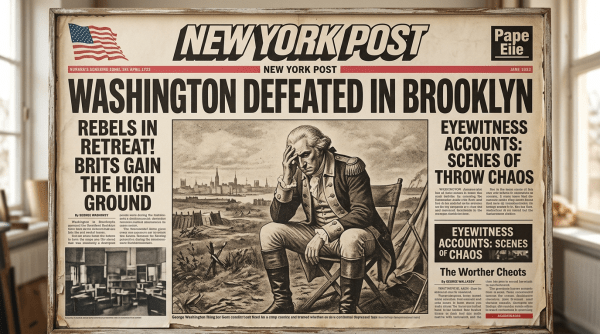
250 years ago today in the predawn hours of August 30, 1776, George Washington completed the extraordinary evacuation of the Continental Army from Brooklyn Heights across the East River to Manhattan.

After the devastating Battle of Brooklyn on August 27, roughly 9,000 Americans had been cornered with the British in front of them and the East River behind them. Washington recognized that another major engagement could mean the destruction of his army. National Park Service

So during the night of August 29–30, Washington pulled off a remarkable escape.

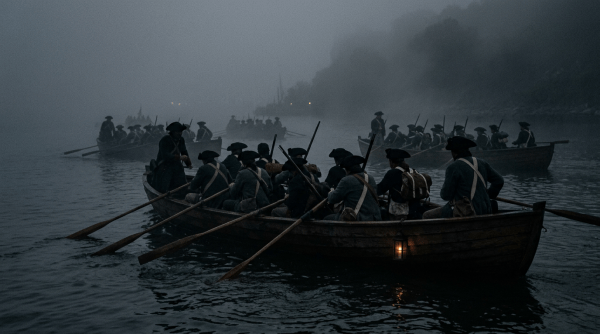
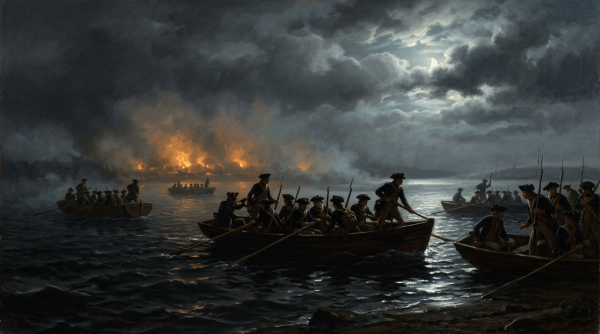
Colonel John Glover’s 14th Massachusetts Regiment—the Marblehead Mariners— used their considerable seamanship to ferry soldiers across the river. Wagons were muffled, campfires were left burning, and the troops were ordered to remain silent so the British wouldn’t realize what was happening. National Park Service

And then Washington caught an extraordinary break.

Fog rolled in.

It concealed the final stages of the evacuation from British observation. By about 7:00 a.m. on August 30, the Continental Army had safely reached Manhattan. The troops on Governors Island were among the last removed. National Park Service

We even have an eyewitness diary entry from Massachusetts soldier Moses Sleeper for today:

“Last night Evacuated Long Island with verry Much Fatigue…”

Sleeper recorded reaching New York at about 1:00 a.m. National Park Service

Why August 30 matters

This wasn’t a victory in the conventional sense. Washington had just lost the largest battle of the Revolution.

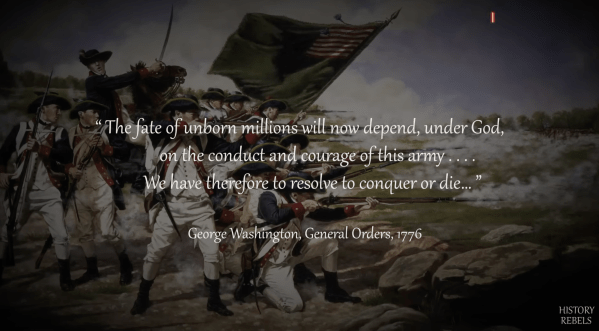
But he understood something fundamental that would become central to his strategy:

The British could capture territory. They could not be allowed to capture Washington’s army.

As long as the Continental Army remained intact, the Revolution remained alive.

And there’s something wonderfully cinematic about it: Howe wakes up expecting Washington’s battered army to still be sitting across from him at Brooklyn Heights—and discovers that the Americans have simply vanished.
Washington decides to escape Brooklyn

250 years ago today and two days after the disastrous Battle of Brooklyn, Washington’s army was trapped in its fortifications at Brooklyn Heights. The British were close enough that one American soldier recorded on August 29 that they had thrown up a breastwork “within gun shot of our Lines.” National Park Service

Washington now faced the possibility that his army—and perhaps the Revolution itself—could be destroyed.

On August 29, he made the critical decision to evacuate Brooklyn secretly across the East River.

That evening, Colonel John Glover’s Marblehead Mariners, experienced Massachusetts seamen, began ferrying thousands of soldiers, horses, artillery and supplies across to Manhattan. The evacuation continued through the night of August 29–30, aided famously by fog that concealed the operation from the British. National Park Service

It’s hard to overstate this one: Washington didn’t win a battle on August 29, 1776. He saved his army. And by saving the army, he kept the Revolution alive.

Battle of Brooklyn Comes Back to Life in Prospect Park 250 Years Later


In a remarkable event marking the 250th anniversary of the Battle of Brooklyn, Prospect Park recently hosted its first large-scale reenactment in 50 years. The event drew significant crowds, providing a vivid glimpse into history and honoring the legacy of those who fought in this pivotal battle. The reenactment featured actors, period costumes, and demonstrations, allowing attendees to experience a slice of 18th-century life.

For a more detailed account of this historic reenactment and its significance, be sure to read the original article: Battle of Brooklyn comes back to life in Prospect Park 250 years later

Battle of Brooklyn Coverage Around the US

I’ve been tracking the anniversary of the Battle of Brooklyn and pulled together recent news coverage and commentary about how this pivotal moment in the Revolutionary War is being remembered today.

“Today, August 27, 2026, is exactly the 250th anniversary and the Battle of Brooklyn/Long Island got some noteworthy coverage.

Continue reading “Battle of Brooklyn Coverage Around the US”

The Role of Virtue and Education in the American Experiment

Popular government requires virtue, and public opinion must be enlightened.

George Washington

This is one of the central assumptions behind the Founders’ idea of republican government: a republic could not be sustained by a good constitution alone. It required citizens capable of governing themselves—both morally and intellectually. That theme also fits the broader Revolutionary-era framework we’ve been building.

Continue reading “The Role of Virtue and Education in the American Experiment”

Battle of Long Island: 250 years ago today

If most Americans know what happened 250 years ago today, it might be because of this song from the music Hamilton:


Hoewever, celebrating 250 years of America has nothing to do with Hamilton, UFC matches or Indy car races: it has to do with being mindful of the courage of real Americans who put everything on the line for us.

The Battle of Long Island, fought in August 1776, was a significant engagement during the American Revolutionary War. It marked the largest battle of the conflict in terms of troop strength, as British forces sought to seize control of New York City from the Continental Army. The battle showcased the tactical superiority of the British army and resulted in a decisive victory for them, forcing the Continental Army to retreat. This encounter set the stage for subsequent struggles throughout the war, highlighting both the challenges faced by the American forces and their resilience in the face of adversity.


For a more in-depth look at the strategies, key figures, and aftermath of this pivotal battle, be sure to read the full article on Wikipedia — I think you’ll be amazed! This is what it means to celebrate America; to pause and reflect on moments like this…

Bonus

On Intelligent Discourse

George Washington acknowledged that differences in political opinions are unavoidable and even necessary, but he expressed deep regret when “subjects cannot be discussed with temper”. He warned that without “charity in deciding on the opinions, & actions of one another,” managing the government would be difficult, if not impracticable. To maintain harmony, Washington pleaded for “liberal allowances,” “mutual forbearances,” and “temporising yieldings on all sides” to replace “wounding suspicions, and irritable charges”. In his Farewell Address, he further cautioned that the “spirit of Party” constantly distracts public councils and “agitates the Community with ill founded jealousies and false alarms”.

Continue reading “On Intelligent Discourse”

Start a Blog at WordPress.com.

Up ↑