How to Create A Breakthrough in Any Area of Your Life: Manage Your Strategies, Your Story and Your State

Tony Robbins writes here about STRATEGIES, STORY AND STATE and how they work together:

Question: One of the toughest things about chasing the dream is managing the disciplines of persistent action and hopeful patience that are required to ultimately see the vision come to be. This is an area of huge tension. How do dream chasers manage that tension and thrive?

Fulfilling your dreams and your ability to thrive in the areas of your life that matter most can be simplified by breakthroughs—a moment in time when the impossible becomes possible. If anyone wants to thrive in any area of their life, they have to reach a point of breakthrough where they will not settle for anything less than extraordinary in that area. Whether someone wants a breakthrough in their:

  • business
  • intimate life
  • emotional well-being
  • health
  • finances
  • career

There are only three areas to break through in order to feel lasting success.

One breakthrough area is your STRATEGIES. I personally live for finding strategies—those shortcuts that help people get more done in less time. What is it that gets some people to succeed while others fail who seem to have equal enthusiasm or passion for the tasks at hand? They have insights, distinctions, and strategies that allow them to achieve more quickly. For example, take someone who was born very poor, without an education, and had emotional and financial challenges but found a way to be highly successful and living an inspired life. I don’t believe that’s lucky—luck is what you do for a day or a week—strategies are what make it consistently happen for decades. A strategy can be found in the simplest or slightest distinction and it can happen in an instant.

As I described above, there are three elements that effect the long-term success or failure of a person and whether they break through or not. For example, there are hundreds or even thousands of strategies out there for losing weight, and frankly most of them are proven to work—if you work them! We’re not hurting for strategies. There are fitness clubs on every street, dieticians, health coaches, training videos, audios, books, etc. Yet 65% of the United States is overweight and 33% is obese, and those numbers are only growing geometrically. I would suggest to you that the problem for most people is not that they don’t have a strategy—it’s that they’re not using a strategy that works for them or acting upon it. Why? Because they have a disempowering STORY.

We all have stories—narratives we tell ourselves about why we can or cannot do or achieve something in our lives. Whether we believe we can or can’t, we’re usually right, because our expectation controls our focus, perceptions, and the way in which we feel and act. When a person succeeds it’s because they have the right strategy, and they found it usually because they have a story that it was possible or they could make it happen. Often people are not losing weight because they have a simple story that says, “I’m big boned.” With that as your core belief system you are never going to find a strategy, and even if you do you won’t follow through on it.

Your story may be true—you may have been through a horrific experience–but that’s not the reason why you can’t have the life you want. For example, you might have had a bad breakup five years ago, but that’s not the reason you haven’t found the passionate and loving relationship you deserve. A disempowering story is one of the things that controls people and makes them stuck in their beliefs.

Most people tell a story in a selective way so they don’t have to ever maximize their effort towards a strategy because they’re afraid they will fail. In order to get out of a story you have to be triggered by hunger and desire—if someone wants something strong enough they will breakthrough the story that’s limiting them.

Of course, whether you have an empowering story or disempowering one is influenced most powerfully by the mental and emotional STATE you’re in at this moment in time. As human beings we all develop emotional patterns—moods—that are mental or emotional states that tend to filter how we look at our lives.

This influences the stories that we make up about who we are, what we’re capable of, or what’s achievable or not. The states we go into most often then become the most powerful filter of all that will determine whether we find the strategies necessary to succeed and whether we come up with a story that will empower us. The big question then becomes, what is it that we can do to change our state of mind when we’re not able to maximize our true potential? One of our greatest scientific discoveries has been that you can change your emotional mood by a radical change in your “physiology.”

For people who are experiencing stress at any given moment, a form of relief can be to simply change your physiology—take a couple of deep breaths. Most people only use 20% of their lung capacity taking small short breaths, but 70% of the body’s toxins can actually be released when taking a full breath! By taking the time to fill your lungs and release you can not only improve your health but also radically decrease the anxiety related to that moment. There are many ways to change your physiology and in our seminars we prove this time after time by taking people who feel depressed and having them make a radical shift. Intuitively we know this can be changed not only by the way we move, but our breath and body temperature as well.

The second thing that affects our state is what we focus on. For example, if you’ve been at a funeral honoring someone you cared about and everyone is in a sad state and afterwards someone shares a story or anecdote about something that person did that was extremely humorous, suddenly everyone goes from tears to laughter. In an instant our states can be changed by what we focus on. What’s wrong is always available—but so is what’s right. Whatever we focus on effects our state and our state then effects the story we have about who we are, what’s life about, what’s possible and what’s not. From that story we will often determine whether or not we will maximize our capabilities and the strategies that will help us achieve what we’re truly after in a sustainable way.

Learning to put yourself in a peak state consistently is one of the greatest gifts you can give yourself and your life. It can transform your stories and give you the strategies to breakthrough. This is a huge focus that we just don’t tell people but what we train people to do with their minds and bodies in an instant, on cue, so they can shift the quality of their performance. Whether it’s a peak performance athlete like Serena Williams, MMA champion Jon Jones, a president of a company, a parent, or someone in prison—if we’re going to shift our life it comes down to these three fundamentals.

Change your strategy, change your result.

Change your story, change your life.

Change your state—you change it all!

Source: How to Create A Breakthrough in Any Area of Your Life: Manage Your Strategies, Your Story and Your State

No Healthy Lies

New research from Notre Dame University (August 13, 2012) indicates that people that lie have more health problems.

The 10-week study indicates that all people lie by reconstructing the truth (white lie) a minimum of 11 times each week and showed that when a person tells lies they suffer from unnecessary “self induced” stress because the body releases stress hormones which leads to higher heart rate, higher blood pressure, and reduced white blood cell count that over time take a damaging toll on the physical body.

The study indicates that “LITTLE” lies are perhaps more damaging to the human body then their cousin “BIG” lies.

Get the rest here: No Healthy Lies | Searching for Truth.

The best of ‘what I see’ for 12/4/2012

  1. “The past is finished. Learn from it and let it go. The future is not even here yet. Plan for it, but do not waste your time worrying about it. Worrying is worthless. When you stop ruminating about what has already happened, when you stop worrying about what might never happen, then you will be in the present moment. Then you will begin to experience joy in life.”   – Brian Weiss
  2. “Healing may not be so much about getting better, as about letting go of everything that isn’t you – all of the expectations, all of the beliefs – and becoming who you are.” – Rachel Naomi Remen
  3. “We may tell ourselves that love is not really available. but the deeper truth is that we don’t entirely trust it, and therefore have a hard time fully opening to it or letting it all the way into us. This disconnects us from our own heart, exacerbating our sense of love’s scarcity.” – John Welwood,
  4. “We must each achieve greater individual consciousness and self-knowledge, and project mindful kindness toward everything and everyone.”Bryant McGill From book, Voice of Reason http://bryantmcgill.com/vor Photo by Jenni Young
  5. toddlohenry
    5 Fitness Gadgets That Actually Work And Won’t Swallow Your Money bit.ly/SJhyfA
  6. toddlohenry
    How I Learned to Relax and Enjoy My Family’s Quirks bit.ly/SJhAUH
  7. toddlohenry
    Lumawake: An iPhone Dock That Simulates the Sunrise bit.ly/SJhxZ5
  8. toddlohenry
    What Are You Pretending Not to Know? « Positively Positive bit.ly/RyPWwW
  9. toddlohenry
    The Beginning Of Infinity: Why Our Dreams Do Not Lack Reality | FinerMinds twy.la/YuWwYu
  10. toddlohenry
    “12 Tips for Managing People Who Blame Others for Everything” bit.ly/RyPLBK
  11. toddlohenry
    “If we are constantly looking outside of ourselves to create a feeling of happiness we will NEVER be content.” bit.ly/RyPKgU
  12. toddlohenry
    10 Unique Search Engines That Serve Very Unique Purposes bit.ly/SJcNCI
  13. toddlohenry
    The Greatist Table: 5 Healthy Root Vegetable Recipes from Around the Web bit.ly/SJcOGH
  14. toddlohenry
    News: Ultrasound Technology Can Make Spinach Safer bit.ly/R1etun
  15. toddlohenry
    Podcasting – Is the Old New Again? – Tell Bigger Stories bit.ly/R14xB6

How to Bring Out the Best in Yourself and Others

Ponder this:

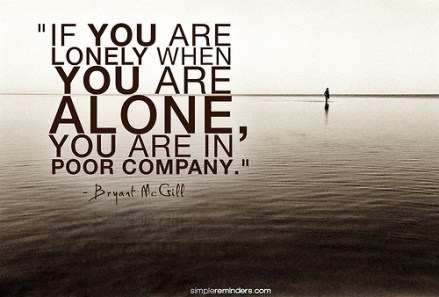
Those with whom we assemble, we soon resemble!

This simple old saying hides a deep truth that can enlighten and empower every aspect of our lives:

Who we are—our very essence—is continually being transformed by the company we keep.

Stated differently, when we keep the company of what is dark and discouraging, our lives can’t help but be dragged downward. And when we keep the company of what is light and bright, our lives get lighter and brighter.

This idea might sound a little simplistic at first, but its power soon becomes evident when we put it to use in the quest to realize our highest aspirations. The key lies in understanding that this principle is active on multiple levels at once. For instance, when referring to “the company we keep,” we, of course, mean the people we spend time with every day—family, friends, co-workers, etc.

Full story at: How to Bring Out the Best in Yourself and Others « Positively Positive

Maple-Roasted Turkey with Sage, Smoked Bacon, and Cornbread Stuffing Recipe

I’m already dreaming of Thanksgiving! Here’s a recipe for Thanksgiving Turkey that is soooo easy a guy can do it. I know because I used it for Christmas dinner last year and I totally rocked it…

Ingredients

  • 1 cup (2 sticks) unsalted butter, at room temperature
  • 1/2 bunch fresh sage, leaves finely chopped
  • Kosher salt and freshly ground black pepper
  • 2 large onions, finely chopped
  • 1 loaf cornbread, cubed (about 6 cups)
  • 1 large egg, lightly beaten
  • 1/2 cup heavy cream
  • 3 cups chicken stock
  • 1 (12 to 14 pound) fresh turkey
  • 1 cup pure maple syrup
  • 1/4 cup hot water
  • 8 strips smoked bacon
  • 1/4 cup all-purpose flour
  • 1/2 lemon, juiced

Directions

Preheat the oven to 350 degrees F and remove the top rack.

Combine the butter and sage in a mixing bowl, mash with a fork or spoon until the sage is well incorporated and the butter has flecks of green in it; season with salt and pepper.

In a saute pan, melt 4 tablespoons of the sage butter, add the onions, cook and stir for 15 minutes until soft and golden. Remove from heat. Put the cornbread in a large mixing bowl and scrape the sauteed onion mixture on top. Add the egg, heavy cream, and just enough chicken stock to moisten the stuffing without making it soggy (about 1/2 cup.) Toss well to combine, season with salt and pepper.

Remove the neck and gizzards from the inside of the turkey and discard. Rinse the bird thoroughly inside and out with cold water, pat dry. Sprinkle the cavity and skin liberally with salt and pepper. Using your fingers, gently lift the skin from the breast and legs, and slip pieces of the sage butter underneath; massaging it in as you go. Fill the bird with the cornbread stuffing without packing too tightly; cook the remaining stuffing separately in a buttered baking dish. Truss the turkey; place it on a rack in a large roasting pan, and put into the oven.

Meanwhile, in a small mixing bowl, whisk together the maple syrup and hot water to thin the glaze out a bit; use this to baste the turkey every 30 minutes. The turkey should take about 3 hours to cook (i.e. 15 to 20 minutes per pound.) If the legs or breast brown too quickly, cover with foil.

About 2 hours into cooking, shingle the strips of bacon oven the turkey breast to cover; continue to roast and baste for another hour or so. The turkey is done when an instant-read thermometer inserted into the meatiest part of the thigh registers 170 degrees F (the thigh juices will also run clear when pricked with a knife.) Transfer the turkey to a cutting board and let rest for 20 minutes before carving, so the juices can settle back into the meat.

Skim off the excess fat from the pan drippings with a spoon and place the roasting pan over 2 burners set on medium-high heat. Using a wooden spoon, scrape up brown bits stuck to bottom of pan. Whisk the flour into the drippings, stirring as it thickens to prevent lumps. Add the remaining chicken stock and bring to a simmer; season with salt and pepper and hit it with a squeeze of lemon juice to brighten the flavor. Simmer for 5 minutes and then strain to remove any particles. Serve the gravy with the maple-roasted turkey and cornbread stuffing.

Source: Maple-Roasted Turkey with Sage, Smoked Bacon, and Cornbread Stuffing Recipe : Tyler Florence : Recipes : Food Network

Expect Nothing; Get Everything

Life is rarely what we expect it to be. Sometimes, it’s better than we expect. Other times, it just is as it is.

Set your expectations to zero, show up at 110% every day, and your positive attitude will drive your 110% experience of life.

Moreover, you won’t be depleting precious mental energy by beating yourself and others up because you’re disappointed and angry at not having your expectations met.

Having low expectations does not mean that you don’t “go for it,” establish goals, or have visionary dreams. Setting your expectations to zero means that you are able to minimize your emotional setbacks that deplete and drain your vision of valuable energy. When you’re able to accept the outcome as it is, then you can rise from any fall, thus increasing your personal power of resiliency to move forward more quickly. When you give it your best shot and you miss, it’s not seen as a failure. Instead, it’s just another opportunity to step up to the plate and do it better next time.

When your child tries out for an activity and doesn’t make the “A” list, then you encourage him or her by saying: “It’s ok. Practice some more; enjoy what you are doing, and try, try, try again.” Life as an adult is no different. The game of life is like a sport; it takes practice. And the practice here is giving it your very best shot and accepting the end result without engaging in negative thoughts that lead you to feeling low. On playing fields, this is called good sportsmanship. In life, it’s called having a winning attitude.

Expect nothing and you’ll have everything. Strive every moment you’re alive to bring an attitude of excellence and integrity to your actions and words, and the end result will reflect the brilliance you bring.

You will find that if you can go with the flow then it’s far easier to be in the flow.

Get the rest here: Expect Nothing to Have Everything « Positively Positive

10 Things to Stop Caring About Today

Royale Scuderi has a post that I thought was so good I curated the whole thing for you:

stop caring

Some things you can feel free to stop caring about

Other people’s expectations for your life

This is your life. You are the one who has to live it. You have to live with the consequences of the decisions you make and the actions you take, so you should make them according to what you want for and from your life, not what someone else thinks you “should” do with your life. We care way too much about what other people think about us and far too little about what we think about ourselves.

How much you weigh

It’s just a number people! We live in such a weight-obsessed culture that our weight is often a measure by which we are judged and worse by which we judge ourselves. I’m not saying to stop caring about being healthy, that’s a completely different thing, and one definitely worth worrying about. Just don’t fixate on the number on the scale. Care about healthier food choices, care about how strong you are, how much exercise you’re getting, just stop attaching your value, your success, your confidence, your attractiveness and your health to this one single number.

How other people live

Let other people live their own lives, just as you’d like to be able to live yours. Stop judging what other people do and how they live. That’s their business. If it doesn’t affect you, stop caring about it. Stop comparing what you have, how you look, the money, the status, the possessions, the beauty to what you “think” others have. Don’t measure yourself against other people, measure yourself against your own yardstick.

How many Facebook friends you have

Same goes for Twitter followers. The number of social connections you have is not a good indicator of either the strength of your network or your true popularity. True connections are measured by the quality of interactions and the people you who actually care about you and what you have to say. How people respond to you and share with you is a far better indicator or your social status.

Perfection

We suffer so much anguish caring about being perfect. Perfection is nearly unattainable and our striving for it, costs us so much. Perfect is a waste of time, perfect is unreasonable, perfect is a recipe for stress. Pretty darn good is a better goal. It’s usually more than good enough and far less stressful. (Note: If you’re a brain surgeon or a pilot, please try for close to perfect, but as long as you leave my gray matter in place and get me on the ground safely, I’m good.)

Aging

You can’t stop the clock. It’s a fact, no matter how much you worry about it or how much money you spend trying to hide it, time is going to keep right on ticking and taking you along with it. Stop caring about how old you are. It’s not a good measure of the quality of life anyway. Or maybe it is…Studies have shown that people are actually happier as they age. So stop caring about your biological age and wrinkles (whether you have them or worry about getting them,) and start caring about what how you want to live the years you have left.

Fitting in

We place too much value on conformity. If you like to listen to jazz and wear purple shoes, go for it. If you are the sculptor in a family of accountants, good for you. No make-up, big jewelry, cowboy boots, bow tie, thrift store clothes, dinner on cushions, no TV…it’s all fine. You’re not hurting anyone, and though they may judge you, that’s their problem, not yours.

Star Watching

Why are we so obsessed with celebrities? From reality shows to magazines, entertainment news shows to paparazzi photos, clothing lines to hairstyles, we are so infatuated with the lives of the rich and famous. Why? Are we so unhappy in our own lives that we have to get our excitement and pleasure by watching public figures live theirs? Stop wasting your time caring about what famous people do, good, bad, crazy, sad or fabulous. It has nothing to do with you. It’s only a distraction from your own life.

Being right

We all want to be right. It must be intrinsically bred into our DNA, but more times than not, it’s very destructive. When we’re striving to be right, we’re focused on proving other people wrong. We’re grasping for power by trying to prove our infallibility. Care about finding solutions, collaborating with others to find the best answers, and cultivating relationships. Care about the result, not who is right or wrong.

Anything you can’t control

Stop caring about things you can’t control. If there’s nothing you can do to impact the person or the situation, then don’t waste your energy. There are so many important things in your life, in this world that you can affect. Focus on what you can change, where you can have the most impact, make a difference, and let the rest go.

Source: 10 Things to Stop Caring About Today

Thanks for your excellent thoughts, Royale – hope you don’t mind that I promoted your content here…

My buddy Ronnie Bincer brought this Hangout on Air [HoA] to my attention…

Ronnie’s already done a thorough analysis that I’ll share here:

Why it is different, how to maximize it for your business be it small or large. +Google+ Your Business with +Caroline McCarthy as the HOA host guides the Featured Panel Members: +Chris Brogan, +Mike Elgan, +Chad Wiebesick, & +Justin Williams in a great discussion on how G+ works for business.

Very, VERY Insightful Stuff here…

Chris has some great points and states them very eliquently… Mike at 23:42 speaks about how you can Use Google+ Search to enter into a conversation about a topic with thought leaders or enthusiasts, it really struck a chord with me, Fantastic Business Strategy +Mike Elgan

The main challenge with Mike’s point/strategy is if you are working G+ as a Page, you can’t necessarily join in the conversation, you need to do that as a Profile… one thing I still find troubling about Google+… a point +Chris Brogan speaks to at 34:12 and talks about how a business should have a solid ‘bench’ ready to interact as Profiles before engaging as a Brand Page.

Plenty of useful tips and a little encouragement to get Chris’s Book http://goo.gl/LEno8 Google+ for Business. This is one of the best videos put out by Google+ Your Business to date IMO… check it out… it is just shy of 1 hour long… the real content starts at 2:00

52:13 Not wise to use G+ to drive traffic to your blog…. hmmmm. I like that idea, but there are plenty of folks that say that is Exactly why there are here! Love to hear +Chris Brogan or +Mike Elgan’s perspective on why they dropped that little ‘bomb’ at the end! Wouldn’t you? (“leave them wanting more”, eh?).

The Hero’s Journey to Your Own Heart

Dr. Ingrid Mathieu writes:

As a psychologist, I am privileged to witness people engaging with questions of whom they are and want to be, where they are and want to go. I often think of my work as being an invited guest on an excavation into the depths of someone’s being. It is too dark to take the journey alone, but when we both put our headlamps on and take one step at a time into the darkness, we can see what lies ahead. We can remove the obstacles that stand in our way and plunge even deeper toward the treasure that we seek.

The obstacles people find can often be a cause for confusion. This is because every time we put the headlamp on to go exploring, we are afraid of what we are going to find. When we stumble upon the unexpected, we automatically write a story about what it means. We determine that we are “crazy” or on the wrong track and that we shouldn’t keep moving forward. We see the obstacle and say, “there is the evidence that I will never get what I want, so why did I even bother?”

We often look at our lives as proof of how we are doing it wrong instead of how we are doing it right.” Full story at:  The Hero’s Journey to Your Own Heart « Positively Positive.

Expectations, Disappointment, Anger, Depression

Thank God for my friend Steve — he’s one of the best blessings in my life! We frequently talk first thing in the day during his morning commute. This morning we talked about expectations of other people and how they are frequently a source of disappointment and then anger and then depression. Hence the quote above…

I was sitting down to prep a screencast on the topic when I started googling for a quote from Francois Fénélon I remember as “disappointments are the bastard child of false expectations” but my memory must be off because according to Google, no such quote exists. Still it makes a point and I found some writings of Fénélon that you might find interesting…

More interesting to me at the moment is this quote from Dr. Michael Yapko:

“What single factor most determines your degree of satisfaction with your relationships, whether it’s your relationships with your government or your relationship with your kids, friends and neighbors? What single factor most influences how you gauge whether your relationship with someone is good or bad, healthy or unhealthy, worthwhile or a waste of time? Your expectations.

When you have unrealistic expectations of other people, you are at high risk for getting hurt, disappointed and depressed. It’s easiest, perhaps even reflexive, to blame them and self-righteously say, “That person let me down.” And, maybe that person did let you down. But, it’s at least as likely that you let yourself down by having unrealistic expectations to begin with.

On one level, I’m talking about your expectations of others, but on another level, I’m really talking about you – the degree to which you are aware of what your expectations are and how well you can determine whether your expectations for others- and for yourself- are realistic. If they’re not, you can suffer repeated disappointments and hurts in your relationships, and these can be victimizing and painful enough to lead to frustration, anger, disillusionment – and depression.

Peoples’ poorly informed and therefore unrealistic expectations fuel their anger and discontent. Before you get angry, it would be great if you could sit down quietly for awhile and ask yourself what you expect, how you know whether your expectations are realistic, and whether you need much more information before you get too attached to your ideas about how you think things “should” be. You’ll get much further dealing skillfully with how things really are when you catch yourself getting wrapped up in the “shoulds.”

Don’t mistake what you want for what you’re actually going to get.” Full story at: Expectations, Disappointment, Anger, Depression | Managing Depression Skillfully.

So, as Dr. Yapko says “I’m talking about your expectations of others, but on another level, I’m really talking about you – the degree to which you are aware of what your expectations are and how well you can determine whether your expectations for others- and for yourself- are realistic.” So in the end, I think you and I are called to love ourselves and part of that loving is to have reasonable expectations of our capabilities and to work to increase those capabilities. In closing, the words of the great Apostle Paul:

12 Not that I have already obtained all this, or have already arrived at my goal, but I press on to take hold of that for which Christ Jesus took hold of me. 13 Brothers and sisters, I do not consider myself yet to have taken hold of it. But one thing I do: Forgetting what is behind and straining toward what is ahead, 14 I press on toward the goal to win the prize for which God has called me heavenward in Christ Jesus.” Phil. 3:12-14

Friend and client Nilofer Merchant just published a new book “11 Rules for Creating Value in the #SocialEra”. In Chapter 7, “Capture” she talks about one aspect of what she calls ‘levers of value’ and how social can be used to create and deliver work…

Work is freed from jobs. This means that human resources change when most of the people who create value are neither hired nor paid by you. And competition has changed so that any company can achieve the benefits of scale through a network of resources: for example, designing a product from anywhere, producing it through a 3-D printer, financing it communally, and distributing it from anywhere to anywhere.

Merchant, Nilofer (2012-09-12). 11 Rules for Creating Value in the Social Era (Kindle Locations 665-670). Perseus Books Group. Kindle Edition.

Along those lines, I want to share a couple of tactics I use to get other people to do my ‘Personal News Aggregation’ work by creating what I refer to as a ‘Personal News Agency’…

In this screencast I focus in on examples using Twitter, Pinterest, dlvr.it and Twylah to create Search Engine Optimization [SEO] value for your website by leveraging the things other people share…

UPDATED 10/8/2012: Hey, in the video above I struggled with getting an rss feed from Twitter. Thanks to @socmedsean, here’s how to do it:

Okay…here are the details. Start with getting your RSS feed. Twitter still provides access to their RSS feeds via the following URL:

http://search.twitter.com/search.atom

Twitter allows you to customize your search queries by adding certain parameters. Check out this great post on Sociable.co to learn about the Twitter RSS parameters. Basically, by customizing the RSS search, the following RSS search gives me all of my tweets:

http://search.twitter.com/search.atom?q=from%3Asocmedsean

(the %3A is the URL encoded representation of the @ symbol)

and I can further refine that RSS search to only show those tweets that include “http”…which means that the search would return all of my tweets that also included links

http://search.twitter.com/search.atom?q=http%20from%3Asocmedsean

(the %20 is the URL encoded representation of a space)

and finally, I could further refine the search so that it didn’t include retweets by simply telling the search to exclude any tweets with “RT” in them.

http://search.twitter.com/search.atom?q=http%20-RT%20from%3Asocmedsean

NOTE: The order in which I put the parameters is very important. The from has to come last or it didn’t work properly and the %20s are critical. If your feed isn’t working, check that it is similar to mine above.

via Shhh…Don’t Tell. You Can Still Post Your Tweets to Other Platforms | Social Media Today.

Comment below or connect with me so we can talk about how this applies to you and your situation — I can show you how to deepen your expertise using the strategies and the tactics I talk about in the screencast…

By the way, I highly recommend Nilofer’s book!

Getting Things Done [GTD] on the Internet…

Today I’m announcing an epic series called Getting Things Done [GTD] on the Internet. Every Friday for the foreseeable future I will post on some aspect of applying David Allen’s classic work “Getting Things Done” to the basics of Internet marketing…

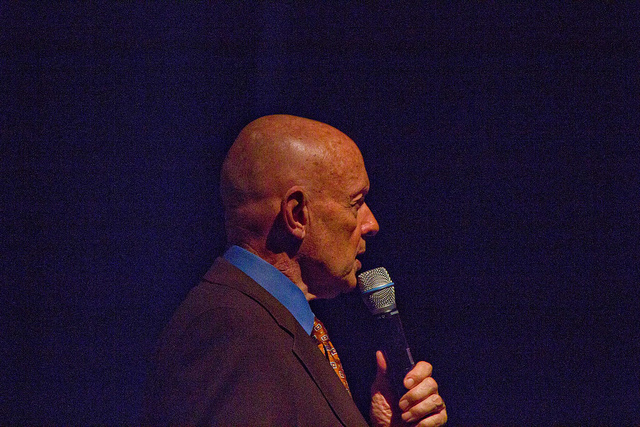
I’d like to start by thanking those of you who have not read David Allen’s book — you have given me a competitive advantage for years! Seriously, though, I’m continually surprised at how many people have not read this classic work. For me, it ranks among the three best business books I’ve ever read. It’s right up there with the seven habits of highly effective people and that is saying a lot for me. In fact, I think these two books go together like peanut butter and chocolate; Stephen Covey‘s book provides a strategic framework on David Allen’s book gives great insight on how to implement Covey’s framework…

Allen says:

THE CORE PROCESS I teach for mastering the art of relaxed and controlled knowledge work is a five-stage method for managing workflow. No matter what the setting, there are five discrete stages that we go through as we deal with our work. We (1) collect things that command our attention; (2) process what they mean and what to do about them; and (3) organize the results, which we (4) review as options for what we choose to (5) do. This constitutes the management of the “horizontal” aspect of our lives—incorporating everything that has our attention at any time.

Allen, David (2002-12-31). Getting Things Done: The Art of Stress-Free Productivity (p. 24). Penguin. Kindle Edition.

In my practice, my emphasis is on what I call “practical, tactical social media“. Chapter 2 of Allen’s book gave me a tool that I apply in multiple was to the social media process…


In the next couple of weeks, I’ll be talking about how to apply this diagram to everything from email to social media management, including…

  • Getting Things Done with Gmail, Google Apps and Google Tasks…
  • Getting Things Done with Google Reader for ‘Personal News Aggregation‘…
  • Getting Things Done with WordPress for Business Blogging…
  • Getting Things Done with Twitter for social media…
  • Getting Things Done with social media management…

I’ll also entertain ‘how would I apply Getting Things Done [GTD] to ________’ kind of questions if you have one you’d like to ask. I’ll share theses posts each Friday so you can ponder them and implement the parts you like over the weekend so stop by next Friday for Getting Things Done with Gmail, Google Apps and Google Tasks…

David Meerman Scott

I think someone must have peed in David Meerman Scott‘s cornflakes a couple of weeks back. He was so hacked off that he went off on a rant on content curation:

You may have noticed that content curation has grown very quickly as a way for people and organizations to publish on the Web.

Sure, there are some benefits to this effort. But as a strategy for generating attention for yourself or your business, content curation is nowhere near as powerful as generating original content.

Content curation

Unlike writing your own blog post or shooting your own video, content curation simply involves pointing to others’ work.

Services like Scoop.it and Paper.li have sprung up to make it easy for anyone to publish an online magazine by linking to anything on the Web.

Yes, there is value in pointing to others work. But that is the point – it is other people’s work, not your own.

Many organizations use guest writers to create content, which in my mind is another form of content curation. Nothing wrong with having a guest blog post now and then, but if you never showcase your own peoples’ ideas, I think it is a mistake.

Original Content: The focus a successful marketing [sic]

The best way to generate attention is to create original web content including text based information (sites, blogs, a Twitter feed), video content, photographs, infographics, and the like.

You brand yourself as an organization worthy of doing business with. Done well, an added bonus is that the search engines rank the content highly and people are eager to share the content on their social networks.

And hey if you generate some interesting stuff, then the content curators will link to you!! Wouldn’t you rather have the links come in?” via Content Curation: A Poor Substitute for Original Content | Social Media Today.

Now David’s a really smart guy — I even own his book “The Rules of Marketing & PR” — but this article doesn’t reflect that especially on the topic of curation…

The kind of curation David talks about is only one kind of curation — linking to other people’s content. This post is another type of curation. Sure, I point to David’s site and quoted a couple of his paragraphs but I’m adding my own value by pointing out that there’s another form of curation that David chose not to consider but that actually adds value. It looks alot like this

There is a ‘wrong’ way and a ‘right’ way to curate and a lot of it carries over from the ‘wrong’ way and ‘right’ way to write a term paper; correctly leveraging a quote is appropriate and brings power to your writing and your Search Engine Optimization [SEO] done properly. Like this post.

Be Aware of the Illusion of Control

Melody Beattie writes:

Remember how it feels when we try to control someone else.

“I was driving down the road one day behind a car that I decided was driving too slowly,” a friend said to me. “I was yelling, raging, and carrying on about the driver in front of me, trying to mentally will him out of my way. I wanted him to move over and let me by.

“While I was driving I observed myself. Then I started to laugh. I wasn’t angry about this driver in front of me. I was angry because I was trying to control something that I couldn’t change.”

Be aware of all your feelings. But also remember to be aware that sometimes it’s not the other person that’s making us crazy. We’re doing it to ourselves.

God, help me be aware of the self-created drama in my life. Help me let go of my need to control. Give me the courage of my feelings. And help me be aware of when my self-will is running riot.” via September 26: Be Aware of the Illusion of Control.

Heidi Cohen writes:

“Social media isn’t the holy grail,” according to Social Media Examiner’s Mike Stelzner, author of Launch: How to Quickly Propel Your Business Beyond the Competition, speaking at Content Marketing World 2012. At first blush this may sound ludicrous coming from the founder of one of the largest social media blogs but the reality is that social media isn’t a business goal!

Rather, social media is a conduit for delivering content to and engaging with your prospects, customers, fans and the public, and to answer their questions. To this end, Mike Stelzner recommended becoming a publisher in order to build your own audience cost effectively by creating valuable content for your target audience. This requires knowing who you want to reach and asking them what they want to know. Once you have answers to these two questions, it’s a matter of giving your audience relevant content that’s educational and easy-to-digest.

Otherwise, “social media is just talk without listening” in the words of Content Rules  co-author, C.C. Chapman. Without taking the time to hear what your prospects and customers want to know, you’ll never create what Social Media Explorer’s Jason Falls, co-author of No Bullshit Social Media, refers to as “holy smokes content.” This information drives social media because it gets you in front of your prospects and customers by providing solutions to their problems. Therefore, optimize your content for people by using the words your audience uses to get found because your ultimate goal is to sell your prospects and customers your products and services, not just build a social media following as an end in itself.” Get the rest here: Why Social Media Isn’t The Holy Grail (& Neither is Content Marketing) | Heidi Cohen.

High-Fructose Corn Syrup Is a Total Catastrophe

Autumn Brooks writes:

High-Fructose Corn Syrup (HFCS) is a very low cost sweetener derived from milled corn, then processed again to form corn syrup, then again processed with fructose to form High-Fructose Corn Syrup. It’s very common in processed foods and beverages in the U.S., including breads, cereals, breakfast bars, lunch meats, yogurts, soups and condiments. Unfortunately, the overuse of such a toxic substance has led to an increase of metabolic syndrome in America that is supported study after study and proves that HFCS is not the same as sugar.

So, if HFCS is so damaging to the human body, why would a company prefer it over the other options? Not surprisingly, the main reason is it’s very inexpensive. But, it’s also easy to transport, keeps food moist and has a very long shelf life. It should also be divulged that the majority of HFCS is genetically modified and has a high potency of mercury. If you add up all of the information about HFCS, be prepared for a total catastrophe.

In 40 years since the introduction of HFCS, obesity rates have skyrocketed. In 1970, the obesity rate was 15 percent, and by 2010, the rate was around 33 percent – or one-third of the population. Princeton has been in the forefront of studies that are linking all of the information together. They have demonstrated that all sweeteners are not created equal when it comes to weight gain. HFCS isn’t recognized by the leptin receptors in your body, and leptin is the hormone assigned to tell you when you are full. Therefore, you aren’t told by your own body when to stop eating when it comes to foods that contain HFCS; that leads to overeating and weight gain.” Get the rest here: High-Fructose Corn Syrup Is a Total Catastrophe.

9 Superfoods for Super Health

David Arenson writes:

Imagine a food that contains high levels of vitamins, amino acids, and minerals that can add years to your life, reduce your risk of anything from heart disease and cancer to diabetes and arthritis, make you feel and look better, and has no side effects…

My philosophy is that nature intended all food to be “super!” It’s just that modern farming methods mean the stuff you find in your supermarket is far less than “super.” Wild foods – the wilder the better (the way nature intended them) – are true superfoods.

When we live according to nature, and listen to our bodies, health and vitality come as a natural consequence. Crucial elements of health like nutrition, clean flowing water, clean air, activity/exercise, sunlight, love and passion all work like alchemy to create an optimal homeostatic balance in the body system. With our busy, stressed lifestyles and polluted cities some of these factors have become impaired, hence heightening the importance of superfoods to stave off stress and the onset of chronic diseases.

I have chosen the most readily available superfood categories and the easiest to find, depending on seasonal factors.

I have targeted foods that lower blood sugar levels, which is an essential aspect in slowing the aging process and preventing chronic illnesses.” Get the rest here: 9 Superfoods for Super Health.

Where do addictions come from? “Elf Esteem”!

 

Karen Salmansohn shares a cute, but powerful, perspective that I wanted to share with you this morning:

Self sabotaging behavior often is a sign of low self esteem.

Or I guess that would be “elf esteem,” because it’s low esteem.

Okay, about as low as this joke! Although addictions are no joke. I am however a big believer if we can laugh at ourselves, we can loosen our ego’s grasp on tightly held beliefs, and we’re more open to change.

I’d like to help you loosen your ego’s grasp on maintaining addictions, and change over to more healthful behavior.

How?

If you want to break an addiction, you must heighten your low “elf-esteem” to high self esteem.

Interestingly, in studies on happiness the happiest people are those with high self esteem.

And just as interestingly, the happiest people are reported to be those who do consistent acts of altruism.

There’s a do-good-feel-good-do-good-feel-good cause and effect.

My belief: the more good you do for others, the more you raise your self esteem, and the better you feel about yourself, and so the more you want to do good, and on and on the upward cycle goes.

Ironically, the more you do your addiction, the worst you feel about yourself, and the lower your elf esteem, then the more you seek your addiction, which further lowers your elf esteem, and downward do you go.

In other words, you create a do-bad-feel-bad-do-bad-feel-bad cause and effect.

YOUR ASSIGNMENT: If you have a bad habit you’re trying to break, start by doing more positive habits: donate time in an old age home or read to the blind. Of course “elf esteem” also comes from deeper subconscious forces that you need to delve into as well – and I suggest you do some delving.  But it’s a good jump start to loving yourself more if you start to do more good in the world – so you can feel what a powerful spirit you can be – thereby you start to believe more in the awesome goodness inside you!

And keep in mind the words of Abraham Lincoln: “Most people are about as happy as they make up their minds to be.”

Aren’t you worthy of happiness?” via Where do addictions come from? “Elf Esteem”! Karen Salmansohn.

We take care of what we value. Value your self…


Leveraging the Power of Intention

“Our intention creates our reality.” ~Wayne Dyer

Read the rest of the article here: Creating Change: Leveraging the Power of Intention | Tiny Buddha.


The best of @toddlohenry for 7/22/2012

  1. “Everything we hear is an opinion, not a fact. Everything we see is a perspective, not the truth.”- Marcus Aurelius

    Fri, Jul 20 2012 12:56:57
  2. “Love is the ability and willingness to allow those that you care for to be what they choose for themselves, without any insistence that they satisfy you.”- Wayne Dyer

    Fri, Jul 20 2012 12:56:04
  3. “Remember, when you judge another, you do not define them, you define yourself as someone who needs to judge. The same applies to judgments directed at you.”- Wayne Dyer

    Thu, Jul 19 2012 13:24:04
  4. Currently, there is overwhelming evidence showing that consuming fewer calories helps one live longer: this is true whether you’re a single-celled amoeba or a human. Consuming excess calories day after day accelerates aging and then significantly contributes to your death. Simply stated, the results of decades of research confirm that caloric restriction is the only valid, scientifically proven dietary intervention that has been shown to slow the aging process. Also, it can save you lots of money on your weekly food bill.
    Thu, Jul 19 2012 13:24:04
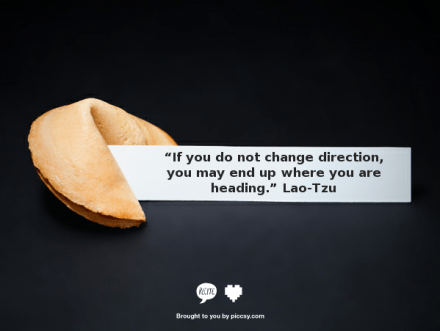
  5. “If you do not change direction, you may end up where you are heading.”- Lao-Tzu

    Thu, Jul 19 2012 00:14:51
  6. ManifestYogaJen
    The thing is, you’ll always find what you are looking for. What are you looking for? #lookingforinspiration #lookingforlove
    Wed, Jul 18 2012 14:16:44
  7. Todd’s tweets…

  8. toddlohenry
    “It could be a chemical intolerance, not a bad day at work, that’s giving you the blues.” http://bit.ly/PwDjil
    Sun, Jul 22 2012 04:52:33
  9. toddlohenry
    “It’s Never Too Late to Ask: Is This The Way to Health?” http://bit.ly/LDmAVp
    Sun, Jul 22 2012 04:20:41
  10. toddlohenry
    Coping with the Tragic News of the Colorado Theater Massacre http://fb.me/2ixfRpQHW
    Sun, Jul 22 2012 04:18:55
  11. toddlohenry
    ““If a sufficient number of management layers are superimposed on top of each other, it can be assured that disaster is not left to chance.…
    Sat, Jul 21 2012 13:25:29

7 Habits of Highly Effective People; A Dedication to Stephen Covey

“I know of no more encouraging fact than the unquestionable ability of man to elevate his life by conscious endeavor. ” ~ Henry David Thoreau

Get the rest here: 7 Habits of Highly Effective People—A Dedication to Stephen Covey « Positively Positive.

Start a Blog at WordPress.com.

Up ↑