How to Never Forget Anything Again

Leo Babauta writes:

The human brain is a wonderful thing, but it’s a bit faulty as a tool for remembering things. Luckily for us (and for our frazzled brains), technology has stepped in to help out.

With the proper habits and the right tools, you and your brain won’t have to remember a thing again.

There are a host of tech tools that can help with taking notes, managing projects and to-dos, and manage your email and calendar needs just fine. Though I’ll include the best choices below, these tools are just one piece of the puzzle. There are more elegant methods (ever scheduled something in Google Calendar via voicemail?)…

To really never have to remember a thing again, you have to combine a few tools in smart and comprehensive fashion, and even more important, you have to develop specific habits that will ensure that things don’t slip between the cracks … because the cracks just get bigger and bigger with more time and more data.

In this post I’ll look at some of the requirements of a “Never Forget Again” system, along with 4 key habits for using that system. I’ll include my setup, as well as some other tools you can use to develop your own setup.” Read the rest of the article here: How to Never Forget Anything Again.

Like Leo, I use Evernote, Gmail and Google Calendar, but I use Google tasks instead of ‘Anxiety’. Evernote is always available and syncronizes between devices and supports Leo’s 4 critical habits as well as David Allen’s Getting Things Done [GTD] principles…

The 7 Habits of Highly Effective People

English: Stephen Covey at the FMI Show, Palest...
Goodbye, Stephen Covey. Thanks for the gift you left us…

Habit 1: Be Proactive

Take initiative in life by realizing that your decisions (and how they align with life’s principles) are the primary determining factor for effectiveness in your life. Take responsibility for your choices and the consequences that follow.

Habit 2: Begin with the End in Mind

Self-discover and clarify your deeply important character values and life goals. Envision the ideal characteristics for each of your various roles and relationships in life.

Habit 3: Put First Things First

Prioritize, plan, and execute your week’s tasks based on importance rather than urgency. Evaluate whether your efforts exemplify your desired character values, propel you toward goals, and enrich the roles and relationships that were elaborated in Habit 2.

Habit 4: Think Win-Win

Genuinely strive for mutually beneficial solutions or agreements in your relationships. Value and respect people by understanding a “win” for all is ultimately a better long-term resolution than if only one person in the situation had gotten his way.

Habit 5: Seek First to Understand, Then to be Understood

Use empathic listening to be genuinely influenced by a person, which compels them to reciprocate the listening and take an open mind to being influenced by you. This creates an atmosphere of caring, respect, and positive problem solving.

Habit 6: Synergize

Combine the strengths of people through positive teamwork, so as to achieve goals no one person could have done alone. Get the best performance out of a group of people through encouraging meaningful contribution, and modeling inspirational and supportive leadership.

Habit 7: Sharpen the Saw

Balance and renew your resources, energy, and health to create a sustainable, long-term, effective lifestyle. It primarily emphasizes on exercise for physical renewal, prayer (mediation, yoga, etc.) and good reading for mental renewal. It also mentions service to the society for spiritual renewal.

– Stephen Covey, 7 Habits of Highly Effective People. Rest in peace.” via Today’s Quotes: The 7 Habits of Highly Effective People.

Does Gratitude Matter in Marriage?

Susan Heitler, Ph.D. writes:

“Please” and “thank you” often come out of our mouths automatically. How can we use true gratitude and thankfulness to cultivate healthy relationships?

Gratitude is “the quality of being thankful; readiness to show appreciation for and to return kindness.”

As children we’re taught to say “thank you” automatically in return for a favor. On this surface level, we are taught that gratitude is an appropriate social response.

At the same time, on a more complex level, gratitude is a way of being. When we truly feel gratitude, we experience heartfelt awe and appreciation for the goodness of something outside ourselves. Having gratitude towards someone or something means respecting its value and treasuring how unique, beautiful, or indispensable it is.

New studies support the idea that gratitude is an integral part of healthy relationships. As marriages move past the honeymoon stage, couples go from appreciating and loving every little detail about each other to taking each other for granted. Amie Gordon, a psychologist from U.C. Berkeley, blames this for the downfall of many relationships: ”You get used to having [your spouse] in your life and forget why you chose to be with them.” We become deadened to our spouse’s special qualities and instead focus on things that annoy us about them. These doldrums leave couples confused and discouraged: “Maybe the man they married isn’t so great after all…What happened to the spark in our relationship?…What do we do now?”

Dr. Gordon’s study in the Journal of Personality and Social Psychology explores the role of gratitude and appreciation in maintaining long and healthy relationships. In the study, 50 committed couples were given a week to fill out appreciation journals. On days when one partner reported feeling more appreciated, he or she tended to appreciate his or her partner more the next day.

Couples who had ongoing reciprocal appreciation were less likely to break up in the next nine months and even reported being more committed at the end of that time. The researchers concluded that a nourishing cycle of encouragement and appreciation provides extra incentive to maintain our relationships. In other words, when we appreciate our partners, we develop trust and respect. When we feel appreciated, we feel needed and encouraged.

In the second part of the study, Gordon’s researchers observed how couples of all ages–from 18 to 60–communicated appreciation. The team noticed that “highly appreciative” pairs tended to use body language and response skills to show that they valued their spouses. Foremost of these was a Power of Two favorite skill: active listening. When their partner spoke, appreciative spouses leaned in, made eye contact, and responded thoughtfully to what they were saying. They made it clear that they were listening to and digesting what their spouse said, thereby showing that they valued their spouse’s opinion. Appreciative couples also used touch and physical encouragement such as handholding or an encouraging pat on the leg.

This study observed the healthy relationships benefits of naturally appreciate couples. The flipside is that some couples are not naturally appreciative. It can be incredibly discouraging to not feel appreciated–you may even feel like your marriage is over. Luckily, our behavior and thoughts are malleable; just as we fell out of patterns of love and gratitude, we can grow back into them.

The key to sparking healthy relationships with gratitude is to take the initiative: “Instead of just waiting for the other person to make you feel good, you can jumpstart that cycle and take it into your own hands by focusing on what’s good in your relationship,” says Dr. Gordon. Start with small and easily achievable goals, such as giving your spouse five compliments a day, or simply smiling at her more often.

Gratitude is a skill that you cultivate—nurture it in yourself, and soon your will see positivity radiate back at you.

Source: Does Gratitude Matter in Marriage? | Psychology Today

Fall Asleep Naturally

Why is sleep so elusive for so many? Well, a big part of the problem is that many people are unwittingly sabotaging their natural ability to fall asleep. So how to get the job done without costly prescriptions and peculiar side effects (like sleep-eating and sleep-walking)?

The drug-free key is to start setting the stage long before you climb under the covers.” There’s some good advice here: Fall Asleep Naturally « Positively Positive.

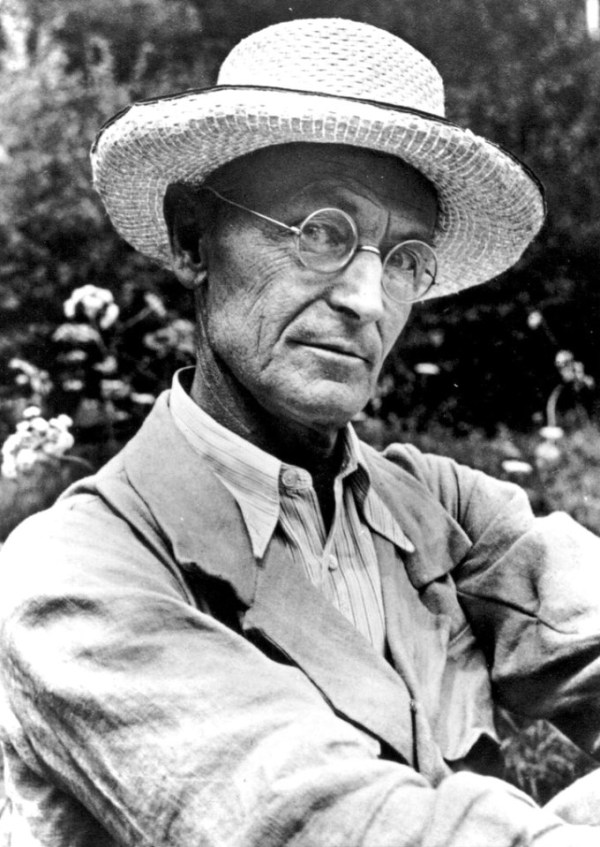
Happy birthday, Hermann Hesse!

I was a German language and literature major in college and went as far as my doctoral studies at University of Illinois before I took a ‘safer’ route. My plan was to become a world famous Hermann Hesse scholar and my dissertation would have explored the relationship between Hesse’s body of work and Hegel’s dialectic but alas. Here is his life in his own words:


I was born in Calw in the Black Forest on July 2, 1877. My father, a Baltic German, came from Estonia; my mother was the daughter of a Swabian and a French Swiss. My father’s father was a doctor, my mother’s father a missionary and Indologist. My father, too, had been a missionary in India for a short while, and my mother had spent several years of her youth in India and had done missionary work there.My childhood in Calw was interrupted by several years of living in Basle (1880-86). My family had been composed of different nationalities; to this was now added the experience of growing up among two different peoples, in two countries with their different dialects.

I spent most of my school years in boarding schools in Wuerttemberg and some time in the theological seminary of the monastery at Maulbronn. I was a good learner, good at Latin though only fair at Greek, but I was not a very manageable boy, and it was only with difficulty that I fitted into the framework of a pietist education that aimed at subduing and breaking the individual personality. From the age of twelve I wanted to be a poet, and since there was no normal or official road, I had a hard time deciding what to do after leaving school. I left the seminary and grammar school, became an apprentice to a mechanic, and at the age of nineteen I worked in book and antique shops in Tübingen and Basle. Late in 1899 a tiny volume of my poems appeared in print, followed by other small publications that remained equally unnoticed, until in 1904 the novel Peter Camenzind, written in Basle and set in Switzerland, had a quick success. I gave up selling books, married a woman from Basle, the mother of my sons, and moved to the country. At that time a rural life, far from the cities and civilization, was my aim. Since then I have always lived in the country, first, until 1912, in Gaienhofen on Lake Constance, later near Bern, and finally in Montagnola near Lugano, where I am still living.

Soon after I settled in Switzerland in 1912, the First World War broke out, and each year brought me more and more into conflict with German nationalism; ever since my first shy protests against mass suggestion and violence I have been exposed to continuous attacks and floods of abusive letters from Germany. The hatred of the official Germany, culminating under Hitler, was compensated for by the following I won among the young generation that thought in international and pacifist terms, by the friendship of Romain Rolland, which lasted until his death, as well as by the sympathy of men who thought like me even in countries as remote as India and Japan. In Germany I have been acknowledged again since the fall of Hitler, but my works, partly suppressed by the Nazis and partly destroyed by the war; have not yet been republished there.

In 1923, I resigned German and acquired Swiss citizenship. After the dissolution of my first marriage I lived alone for many years, then I married again. Faithful friends have put a house in Montagnola at my disposal.

Until 1914 I loved to travel; I often went to Italy and once spent a few months in India. Since then I have almost entirely abandoned travelling, and I have not been outside of Switzerland for over ten years.

I survived the years of the Hitler regime and the Second World War through the eleven years of work that I spent on the Glasperlenspiel (1943) [Magister Ludi], a novel in two volumes. Since the completion of that long book, an eye disease and increasing sicknesses of old age have prevented me from engaging in larger projects.

Of the Western philosophers, I have been influenced most by Plato, Spinoza, Schopenhauer, and Nietzsche as well as the historian Jacob Burckhardt. But they did not influence me as much as Indian and, later, Chinese philosophy. I have always been on familiar and friendly terms with the fine arts, but my relationship to music has been more intimate and fruitful. It is found in most of my writings. My most characteristic books in my view are the poems (collected edition, Zürich, 1942), the stories Knulp (1915), Demian (1919), Siddhartha (1922), Der Steppenwolf (1927) [Steppenwolf], Narziss und Goldmund. (1930), Die Morgenlandfahrt (1932) [The Journey to the East], and Das Glasperlenspiel (1943) [Magister Ludi]. The volume Gedenkblätter (1937, enlarged ed. 1962) [Reminiscences] contains a good many autobiographical things. My essays on political topics have recently been published in Zürich under the title Krieg und Frieden (1946) [War and Peace].

I ask you, gentlemen, to be contented with this very sketchy outline; the state of my health does not permit me to be more comprehensive.” via nobelprize.org

Happy birthday, Hermann! You made a profound impact on my life through your body of work…

Related articles

Tastes As Good As Soda!

There isn’t only one type of tea – think of the many tea brews you’ve seen in their fancy packaging at the supermarket whilst you were on your way to the soda aisle (for instance).

There are teas scented or infused with flowers like rose and jasmine; herbs like peppermint and pandan; spices like vanilla, cinnamon and ginger; and even fruit like strawberry or orange.

Brew it strong, pour into a pitcher or a bottle and let it cool inside the fridge. If you want it sweet, add some honey.” via Tastes As Good As Soda! | FinerMinds.

Lately, I’ve been rocking the iced tea at home and at restaurants. It’s a great substitute for soda and beer and you can be very creative with it, too. Try sun-brewed tea, too!

How to Know When to Change Course

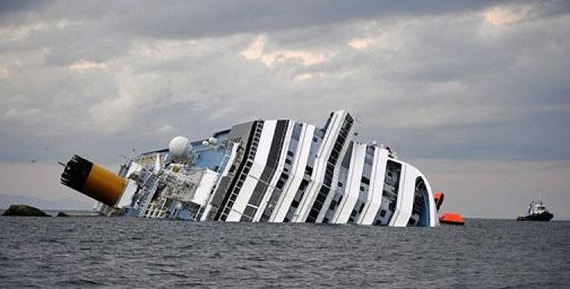
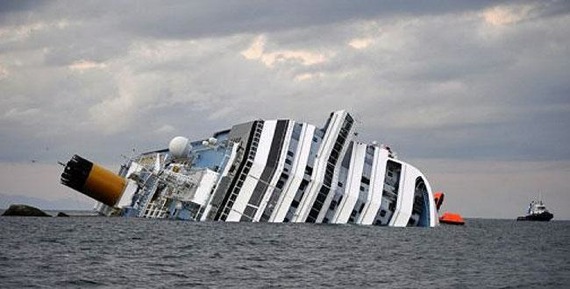
It is easy to compare the Costa Concordia with the Titanic, another cruise liner disaster from long ago. But there are some key differences. And it is in those differences that we can learn a few lessons to navigate life.

First, the Titanic was built in an era of big ships but with no technology available for the captain to see his way ahead. Radar was decades away from development. So as the Titanic was built and launched, its claim to being unsinkable was predicated on the toughness of the hull of the ship.

It is not surprising that the crew could not see an iceberg that was large above the water line and much larger still below the water line. Back then they could only see what their eyes could see. (Interestingly, if they really believed the ship was unsinkable, why would watches even need to be posted?)

The Costa Concordia, on the other hand, had all the advantages of modern technology. It not only had radar to see above the water, it had depth finders and quite possibly even sonar. (I am not one hundred percent sure of that, but the technology certainly exists today.) The crew should have known how deep the waters were and, because of GPS where they were within thirty feet of accuracy.

Yet due to hubris and human error, the Costa Concordia was where it should not have been. And despite the technology, the crew ran aground, the ship foundered, and lives were lost.

There is so much to learn here about leadership and life. Let me suggest four:

  • When we cannot see clearly, we should exercise caution. The Titanic’s crew could not see that far ahead, but they proceeded without caution. We may feel tough. We may feel unsinkable. But if we don’t have clear vision, or if we cannot enunciate a clear vision, we are in danger if we rush ahead blindly.
  • When we don’t pay attention to feedback, we can run aground. The danger here is due to not recognizing the danger. Failure to seek feedback is folly. Failure to listen to it is foolishness.
  • When we have vision, we need to clarify it regularly. Instruments on aircraft or ships need to be calibrated to verify accuracy. In life, we need to clarify our vision repeatedly in order to insure that we are on track with where we want to go. A friend once told me if you profess to have vision but no one is following you, it is likely you merely had indigestion.
  • When we have clarity, we need to practice humility. Every person who is more confident in themselves than in the vision they espouse is vulnerable to prideful downfalls. Great leaders can crash in the blink of an eye.

We all make choices as we navigate life. We all have an impact on others, whether it is our family, friends or colleagues. It is vitally important for us to have a clear sense of ourselves, a clear sense of our relationship with the Eternal, and a clear sense of our relationships with those we influence. If we have that clarity we will see success, but if we don’t we may well crash on the rocks.” via How to Know When to Change Course | Michael Hyatt.

Let me suggest two more:

  • Captains shouldn’t try to impress chicks by buzzing the shoreline in a cruise ship and…
  • …when they run aground, the should be the last, not the first, off the ship!

In other words think twice before and after engaging in bad behavior…

Withholding

Melody Beattie writes:

Sometimes, to protect ourselves, we close ourselves off from a person we’re in a relationship with. Our body may be present, but we’re not. We’re not available to participate in the relationship.

We shut down.

Sometimes, it is appropriate and healthy to shut down in a relationship. We may legitimately need some time out. Sometimes it is self-defeating to close ourselves off in a relationship.

To stop being vulnerable, honest, and present for another person can put an end to the relationship. The other person can do nothing in the relationship when we are gone. Closing ourselves makes us unavailable to that relationship.

It is common to go through temporary periods of closing down in a relationship. But it is unhealthy to make this an ongoing practice. It may be one of our relationship-sabotaging devices.

Before we close down, we need to ask ourselves what we are hoping to accomplish by shutting down. Do we need some time to deal? To heal? To grow? To sort through things? Do we need time out from this relationship? Or are we reverting to our old ways – hiding, running, and terminating relationships because we are afraid we cannot take care of ourselves in any other way?

Do we need to shut down because the other person truly isn’t safe, is manipulating, lying, or acting out addictively or abusively? Are we shutting down because the other person has shut down and we no longer want to be available?

Shutting down, shutting off, closing ourselves and removing our emotional presence from a relationship is a powerful tool. We need to use it carefully and responsibly. To achieve intimacy and closeness in a relationship, we need to be present emotionally. We need to be available.

God, help me be emotionally present in the relationships I choose to be in.” via Just For Today Meditations » 2012 » June » 23.

Eat More Dirt

A farmer in West Virginia blogs:

My morning routine gets me moving and my brain awakening. After I get my coffee and breakfast prepared, I carry it to my desk where the computer is first turned to email.  I was happy to see today that this blog has a new subscriber who lives in the Philappines. We can safely assume she will not be shopping our farmers markets but something I wrote struck a cord for her and she signed on. Welcome!  The local food movement is growing!

As I wandered down my email I came to my daily subscription for the New York Times. One of the op-ed pieces caught my eye and I want to share it with you: Dirtying Up Our Diets was written by Jeff D. Leach, a science and archaeology writer and founder of the Human Food Project. In the New York Times piece Leach poses one benefit to the increase in farmers market participation that I had not considered: we will be eating more dirt!

During the 20th century more Americans moved off the farm into the cities and no longer grew a good percentage of their own food. As food distribution industrialized, packaging of fresh produce became more prevalent and now we can get prewashed plastic bags of salads, vegetables all cut up ready for stir frying, and even prepared trays of fruit to bring to the next office party.

That popular time saving package saves you germs too. Sounds good, right?

Well, Leach says it is not all good. While he is not truly suggesting that we actually go eat some dirt and therefore ingest some harmful bacteria, he does say that all this washing has resulted in a reduction of the GOOD bacteria that our guts need.” Get more here: Eat More Dirt « wvfarm2u.

Father’s Day Without My Dad

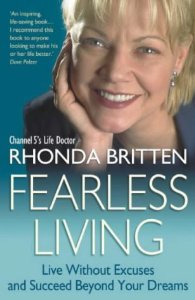
Cover of "Fearless Living: Live without E...

An atypical — but powerful — Father’s Day story with a lesson from Rhonda Britten:

The last time I saw my dad was on Father’s Day in 1975. It was rainy and cold much like most June days in the U.P., short for Upper Peninsula. I grew up in the part of Michigan that looks like the mouth of the wolf. The wolf being Lake Superior. The mouth being the Keweenaw Peninsula, or the Copper Country.

It’s a little-known fact that more millionaires were made during the copper rush of the U.P. than the gold rush in California. But I digress — as I tend to do when I am talking about my father.

You see, the last time I saw my father, he had a rifle in his hand and he was raging at my mother, bullets flying. When all was said and done, both my parents lay dead by my father’s hand and I was the only witness, the one left standing.

Most people assume I hate my father. Or worse, that I am glad he’s dead. I feel neither.

You see, I have forgiven him for that horrid act and that forgiveness has softened my heart and turned into love. Yes, I love my father.

He has taught me more about love than anyone, because he has taught me everything about fear.

The first thing you read when you crack open my book, Fearless Living, is this:

Fear is a killer.

It kills hopes.

It kills dreams.

It kills careers.

It kills relationships.

In a flash, it killed my parents.

It almost killed me.

How is it killing you?

I know this because of my father. He killed because he was afraid of the emotions he couldn’t control. He stewed when he was hurt. He blamed and attacked when there was an inkling of embarrassment or shame. Humiliation? He’d rather die.

After my mother’s announcement that she was leaving him after enduring his jealous rages, infidelities and abuse for over two decades — they were buried on what would have been their 20th wedding anniversary — he put two bullet holes into her while repeating over and over again, “This is your fault. You made me do this. This is your fault.” He was a victim until the bitter end.

My father killed (and died) because he was afraid. Afraid to lose, afraid to feel, afraid to be human.

This is why fear has become my specialty, my obsession. I am not going to let fear decide my life, my future, my fate. It isn’t going to tell me what to do, or convince me to blame the ones I love how wrong they are, or suck one ounce of passion out of me. No siree.

I was a witness to the horror of a life lived in fear.

But fear is so subtle, so seductive, so invisible, I have had to learn all of its tricks to stop myself from following the easy path of a fear-driven life. That’s what I have done for the past decade plus. I have devoted my life to understanding how fear works, learning how to process it in a healthy, loving way and master it so I can live the life my father was afraid to.

So here I stand. A daughter of a murderer. A daughter of a man who lived in fear. A daughter of a man who taught her how to love.

My father lived in fear and died in fear. I’m not going to do the same. I choose love. I know he’d be proud.” via Rhonda Britten: Father’s Day Without My Dad.

He Who Sits the Most Dies the Soonest

Sitting Alone…people who sat more than 11 hours a day had a 40% higher risk of dying in the next three years than people who sat less than four hours a day. This was after adjusting for factors such as age, weight, physical activity and general health status, all of which affect the death risk. It also found a clear dose-response effect: the more people sat, the higher their risk of death.

The results are part of the Sax Institute’s 45 and Up Study, the largest ongoing study of healthy aging in the Southern Hemisphere. It compared the self-reported daily sitting time of 222,497 Australian adults 45 years or older with their likelihood of death in the next three years.

Healthy or sick, active or inactive, the more people sat, the more likely they were to die in the next three years. Physical activity did reduce this risk significantly: the 40% higher death risk found when comparing people who sat the most to those who sat the least increased to 100% when comparing those who sat the most and exercised the least to those who sat the least and exercised the most. But while the death risk was much lower for anyone who exercised five hours a week or more, it still rose as these active people sat longer.” via theatlantic.com

What a great study! If you sit….you need to move more! If you have pain from too much sitting and need help to get started on a more active lifestyle…call today to schedule a consultation.”via Confirmed: He Who Sits the Most Dies the Soonest | Ashwaubenon Chiropractic.

George Washington assigned to lead the Continental Army; This Day in History

On this day in 1775, George Washington, who would one day become the first American president, accepts an assignment to lead the Continental Army.

Washington had been managing his family’s plantation and serving in the Virginia House of Burgesses when the second Continental Congress unanimously voted to have him lead the revolutionary army. He had earlier distinguished himself, in the eyes of his contemporaries, as a commander for the British army in the French and Indian War of 1754.

Born a British citizen and a former Redcoat, Washington had, by the 1770s, joined the growing ranks of colonists who were dismayed by what they considered to be Britain’s exploitative policies in North America. In 1774, Washington joined the Continental Congress as a delegate from Virginia. The next year, the Congress offered Washington the role of commander in chief of the Continental Army.

After accepting the position, Washington sat down and wrote a letter to his wife, Martha, in which he revealed his concerns about his new role. He admitted to his “dear Patcy” that he had not sought the post but felt “it was utterly out of my power to refuse this appointment without exposing my Character to such censures as would have reflected dishonour upon myself, and given pain to my friends.” He expressed uneasiness at leaving her alone, told her he had updated his will and hoped that he would be home by the fall. He closed the letter with a postscript, saying he had found some of “the prettiest muslin” but did not indicate whether it was intended for her or for himself.

On July 3, 1775, Washington officially took command of the poorly trained and under-supplied Continental Army. After six years of struggle and despite frequent setbacks, Washington managed to lead the army to key victories and Great Britain eventually surrendered in 1781. Due largely to his military fame and humble personality, Americans overwhelmingly elected Washington their first president in 1789.

via George Washington assigned to lead the Continental Army — History.com This Day in History — 6/15/1775.

Solving Problems

Melody Beattie writes:

“Shame is the first feeling that strikes me whenever I, or someone I love, has a problem;’ said one recovering woman.

Many of us were raised with the belief that having a problem is something to be ashamed of.

This belief can do many damaging things to us. It can stop us from identifying our problems; it can make us feel alien­ated and inferior when we have, or someone we love has, a problem. Shame can block us from solving a problem and finding the gift from the problem.

Problems are a part of life. So are solutions. People have problems, but we, and our self-esteem, are separate from our problems.

I’ve yet to meet a person who didn’t have problems to solve, but I’ve met many who felt ashamed to talk about the problems they actually had solved!

We are more than our problems. Even if our problem is our own behavior, the problem is not who we are — it’s what we did.

It’s okay to have problems. It’s okay to talk about problems at appropriate times, and with safe people. It’s okay to solve problems.

And we’re okay, even when we have, or someone we love, has a problem. We don’t have to forfeit our personal power or our self-esteem. We have solved exactly the problems we’ve needed to solve to become who we are.

Today, I will let go of my shame about problems.” via June 10: Solving Problems.

Bigger Isn’t Better when it comes to Farming

The EPA was directed to set standards for radi...

I’ve shared information about CAFO’s here before. As a resident of rural Wisconsin in a county with 17 CAFO’s, I’m concerned about the impact of these mega-manure operations on my land and water…

The Environmental Protection Agency estimates that more than 1 billion tons of animal waste is produced annually by livestock operations, much of it from CAFOs. These facilities commonly rely on open lagoons or large piles to store the huge volumes of waste generated there, later to be crop-applied. This waste is essentially untreated and often used at levels that far exceed the fertilization needs of crops. This results in excess runoff and leaching into local rivers, streams and bays, damaging water quality and fish, birds, and other life.

“The waste generated by CAFOs contains a range of pollutants, including excess nutrients such as nitrogen and phosphorus. Even more alarming, this manure can carry pathogens like bacteria and viruses, antibiotics, copper, and arsenic.” Karen Steuer, Director, Reforming Industrial Animal Agriculture

And there have been plenty of reports of these issues affecting people, too. In 2004, 29 states identified livestock-feeding operations as a source of water pollution. According to the EPA, drinking water sources for an estimated 40 percent of Americans have suffered some level of pathogen contamination associated with CAFOs.

The waste generated by CAFOs contains a range of pollutants, including excess nutrients such as nitrogen and phosphorus. Even more alarming, this manure can carry pathogens like bacteria and viruses, antibiotics, copper, and arsenic.

All this can result in a multitude of problems for people, plants, and animals alike. For example:

A massive manure spill at a Lewis County, N.Y., dairy farm in 2005 contaminated 20 miles of the Black River and killed 375,000 fish.

At a national wildlife refuge near a large hog operation in Nebraska, wildlife experts concluded in 2004 that wastewater with high concentrations of phosphorous, ammonia, nitrogen, and harmful pathogens had created an environment conducive to algal blooms and possible outbreaks of avian botulism and avian cholera.

Over the last three years, toxic algal blooms have plagued Grand Lake St. Marys in western Ohio. These are caused by excess nutrients, and the Ohio Department of Natural Resources notes that the “manure generated by approximately 300 confined animal operations and applied to nearby crop fields is a major component of the nutrient load to the watershed.”

The Clean Water Act is the principal law for controlling pollution of rivers, lakes, and wetlands in the United States. The law has a mixed record overall, but an especially poor one when it comes to regulating pollution from animal agriculture, particularly concentrated animal feeding operations. While the EPA and state agencies have implemented various regulations to control nutrient pollution, significant gaps remain.

In my next blog, I will provide more detail on the specific links between CAFOs and water pollution across the country.” Get more here: Bigger Isn’t Better – Pew Environment Group.

You can track the issue here and via Google Alerts and Google Reader if you’re interested in knowing more…

[View the story “Just in case you missed this for 6/7/12” on Storify]

Just in case you missed this for 6/7/12

Storified by Todd Lohenry · Thu, Jun 07 2012 10:16:37

Marketers curate content to unclutter the internetPosted: 6/5/2012By: Jamie O’Hara As the web grows, so does the expansive amount of content on it. Thus, it’s become far more challenging …
Will Google Maps Lose Its Mojo if It Gets Kicked Off the iPhone?Next week, Apple is widely expected to drop Google as the maps provider for the iPhone and iPad. Google has provided Apple’s mobile mappi…
How to Check If Your LinkedIn Password Was StolenWorried that your LinkedIn password may be a part of the nearly 6.5 million compromised on Wednesday? Password management firm LastPass h…
4 ways to improve quotes in press releases | ArticlesWhat will sink your press release faster than an iceberg on a foggy night? Well, besides clichés, superlatives, and meaningless terms suc…
Brands find success using Google hangouts | ArticlesSome recent research about Google+ isn’t terribly encouraging. According to RJ Metrics data reported on Fast Company’s website, engagemen…
Bad Day For LinkedIn: 6.5m Hashed Passwords Reportedly Leaked17 hours ago … One LinkedIn user has already confirmed his password was leaked: … to have been decrypted, and more are being cracke…
Writing an article with my pal @danavan – who knows maybe we’ll become writing partners?!Susyn Elise Duris
Small-Business Owners Most Stressed By Running BusinessRunning a small business is more stressful than anything else in a small-business owner’s life — including raising children — according…
Your Social Media Spring Cleaning Guide Part IV – Polish Your LinkedIn ProfileVery few of us spend as much time on LinkedIn as we do tending to our Facebook Pages. LinkedIn is like that spare bedroom in your house t…
Is Social Media Too Good To Be True? http://bit.ly/McM1Nve1evation
Samsung Galaxy Nexus now available for just 1¢ http://bit.ly/KkZ2oZ @steveboneye1evation
Android growth to end in 2012 as Microsoft begins to steal Google and Apple’s thunder http://bit.ly/KkYVd5 I want some what he’s smoking!e1evation
Samsung appoints new CEO, former chief to focus on strategyBy: Zach Epstein | Jun 7th, 2012 at 08:55AM Samsung Electronics on Thursday announced that it has appointed a new chief executive. Kwon O…
Dynamic touchscreen tech looks to change the mobile world By: Dan Graziano | Jun 7th, 2012 at 06:09AM At the Society for Information Display’s Display Week in Boston, Tactus Technology showcased …
Acer unveils sub-$200 quad-core Android tabletBy: Dan Graziano | Jun 7th, 2012 at 03:19AM Acer on Wednesday unveiled its latest tablet, the Iconia Tab A110, during the Computex Taipei…
52 cool social media facts | ArticlesImpress your colleagues, friends or attendees at your next presentation with these facts-one for every week of the year.
Pew Report: The demographics of Twitter users | ArticlesIn 2010, I lectured at the International College of Management to a class of 18- to 24 year-old-students. I asked if any of them were on …
Are You Making These 7 Blog Promotion Mistakes? – Pushing SocialYour first 1,000 visitors will be the toughest to attract. While some bloggers have zoomed to popularity in a few months, the majority ha…
How and When Do You Find Time For Blogging? | MackCollier.com – Social Media Training and ConsultingNext Sunday we will be discussing Blogging Time Management, as suggested by Patrick Phillips. Patrick noticed that over the past week or …
Facebook’s Future Has Never Been RosierSean Parker’s Airtime is only the latest company to use Facebook credentials for login. If you recall, flagrant display of male genitalia…
Hacker steals more than 6 million passwords from LinkedIn [updated]By: Dan Graziano | Jun 6th, 2012 at 10:25AM A Russian forum member claims to have stolen 6.46 million encrypted LinkedIn passwords and po…
The Great Shift from "Blogging" to "Content Marketing" has ArrivedAs many of you know, the word blog has been bothering for quite some time. In fact, when I take a look at the entire English vernacular, …
52 Cool Facts About Social Media – 2012 Edition #socialmedia – Danny BrownBack in July 2010, I wrote a post called "52 Cool Facts About Social Media". I wanted to have a look at some of the mind-boggling and tru…
Turning a Platform Into an AssetMarketing podcast with Michael Hyatt (Click to play or right click and Save As to download – Subscribe now via iTunes or subscribe via ot…
Katya’s Non-Profit Marketing BlogEarlier this week, I posted on getting people to say nice things about your organization online. But what if they say bad things? I’ll be…
8 public speaking books every professional should read | ArticlesYou can find plenty of books on public speaking, but this group features unusual takes on the topic. These books feature challenges large…
13 ways social media can backfire (and what to do) | ArticlesSocial media brings every marketer’s worst fears to the fore. It’s no surprise, since social media provides every consumer with his or he…
Netflix passes Apple to take lead in online movie businessAccording to a recent report from market research firm IHS iSuppli, Netflix surged past Apple's iTunes service in 2011 to become the …
Samsung Galaxy S III coming to U.S. Cellular in JulyBy: Dan Graziano | Jun 5th, 2012 at 09:10PM U.S. Cellular on Monday announced that it will join the four major U.S. carriers in offering …
Samsung Galaxy Nexus now available for just 1¢By: Zach Epstein | Jun 5th, 2012 at 07:00PM With Samsung’s Galaxy S III rolling out across at least five carriers in the United States be…
The 10 Commandments of Using Pinterest for BusinessWould you love to tap into the power of a social media site that can send you more referral traffic than Twitter? Bring you more leads th…
Samsung, Amazon emerge as Apple’s only tablet rivals… but barelyBy: Zach Epstein | Jun 5th, 2012 at 01:10PM More than 100 media tablets were unveiled at the Consumer Electronics Show in January 2011 as…
Google acquires QuickofficeBy: Dan Graziano | Jun 5th, 2012 at 12:15PM Google on Tuesday announce that it is acquiring Quickoffice. "Today, consumers, businesses an…
Planning Your Content Marketing Team: Critical Positions and Salary Info http://bit.ly/JNIZOVe1evation
5 Jobs for the Marketing Team of the Future http://bit.ly/JNJ19te1evation
The Huffington Post: Yet Another Fan of Content Curation http://bit.ly/JNIZ1ne1evation
5 Ways Blogging Supports a Multichannel Marketing Strategy http://bit.ly/JNIYdSe1evation
Is Social Media Too Good To Be True? http://bit.ly/McM1Nve1evation
Samsung Galaxy Nexus now available for just 1¢ http://bit.ly/KkZ2oZ @steveboneye1evation
Android growth to end in 2012 as Microsoft begins to steal Google and Apple’s thunder http://bit.ly/KkYVd5 I want some what he’s smoking!e1evation
Planning Your Content Marketing Team: Critical Positions and Salary Info http://bit.ly/JNIZOVe1evation
5 Jobs for the Marketing Team of the Future http://bit.ly/JNJ19te1evation
The Huffington Post: Yet Another Fan of Content Curation http://bit.ly/JNIZ1ne1evation
5 Ways Blogging Supports a Multichannel Marketing Strategy http://bit.ly/JNIYdSe1evation
e1evation & friends is out! http://bit.ly/w0bGvK ▸ Top stories today via @steverubele1evation
The Dip, revisited, plus audio bonus http://bit.l
y/L9KGY6e1evation
5 Cool Social Media Tools to Help You Expand Your Small Business http://bit.ly/L9KCr6e1evation
How to know if Pinterest is right for your business http://bit.ly/L8tqUQe1evation
Top 5 Tools for Impressive (and Easy) Vlogging http://bit.ly/KdLOsde1evation
Ex-Google employee calls Google+ a ‘stupid Facebook clone’ http://bit.ly/Lwf4fVe1evation
The Daily "Thought Leader" is out! http://bit.ly/hJYuTAe1evation
10 No-Nonsense Ways to Build Backlinks http://bit.ly/Lwf3sue1evation
Maybe You’re Just Thinking About Content All Wrong http://bit.ly/Lwf0Nie1evation

Healthy Phones?

Your phone may be able to help you live a healthier lifestyle, according to a new study.

Being able to connect with a personal coach, who receives your nutrition and exercise information and can then support and encourage you, could help people to live healthier lifestyles, according to new research.

And participants in the study made healthier choices — including eating more fruits and vegetables, and partaking in fewer sedentary activities — even 20 weeks later, according to the study, published in the journal Archives of Internal Medicine.” Get more here:  How Your Phone Could Help You Lead A Healthier Lifestyle.

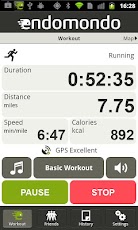
I’ve written before about how Endomondo is changing my life by encouraging me to keep up my fitness routine and keeping track of what I do. Since I started using this app to track my walking and cycling, I have lost 10 pounds and a lot of inches…

Fitness apps I use and recommend?

  1. Gotta have workout music!

Just in case you missed this for 5/31/2012

  1. Todd’s tweets…

Amen! For me, it’s more about managing my expectations than the relationship itself…

Google Tasks

Chrome Web Store – Google Tasks (by Google)

Easily add and manage your tasks from Chrome in one of three ways:

  • Simply type “t Your new task” into the Chrome Omnibar to easily add a task from whatever web page you’re on.
  • Click the Tasks icon to add a task, see your tasks and task lists and mark a task as completed
  • Highlight text on any web page, right click and add that text to a new task.

Tasks are visible everywhere that you can see your Google Tasks – in Gmail, Calendar, iGoogle, Mobile and via the Google Tasks API.

This extension has been released as an example of the Google Tasks API, and can be viewed and contributed to at https://code.google.com/p/google-tasks-chrome-extension

Please note that if you sign into multiple Google accounts you should ensure that the first account you sign into is the account you wish to use when managing Tasks via this extension.

Get some!!!

Superfood: Grapes

I love grapes! Now I have more reasons why…

Grapes are packed with hundreds of antioxidants, including vitamins C and K and beta-carotene, which help rid the body of pesky free radicals (byproducts of oxygen use) that cause cellular damage. Antioxidants act as free radical hunters to prevent and repair the damage to cells[4][5].
What’s more, grapes are a great source of phytonutrients, the most notable of which is resveratrol. Resveratrol has made big headlines in recent years for its potential cardiac benefits like lower levels of LDL cholesterol (high levels of which can lead to heart problems) and prevention of blood vessel damage. Plus, it may help inhibit cancer cell growth and possibly help treat cognitive impairment[6][7].

Think grapes are just good eats? Wrong! This fruit’s super power is not just through the belly — it’s good for the skin, too! Grape seed oil contains high amounts of conjugated linoleic acid (a fatty acid and antioxidant). Slathering on some grape seed oil can help skin fight off collagen- and elastin-destroying enzymes and could also inhibit damage caused by free radicals[8]. Isn’t the old saying, “A grape seed a day keeps the wrinkles away?” (Well, now it is.) via Superfood: Grapes | Greatist.com.

Go buy some grapes!!!

Some people like to make things overly complicated. Me? Sometimes I like to grossly oversimplify things and take them back to the basics. Example? ‘Thought leadership’ marketing. To my mind, if you want to be a thought leader there are only two things you need to do well:

  • Deepen your expertise through a continuous learning program
  • Document your expertise through blogging and social networks

Everything else is just details…

When it comes to effective business development, or marketing and sales again, I think there are only two activities you need to master:

  • Generating leads
  • Managing leads

Again, everything else is just details…

Whether you are a freelancer or running a large enterprise I believe there are 7 databases you must manage effectively to succeed. They are:

That’s all there is to it! If you can effectively manage these 7 databases you can go from reacting to your market to dominating your market.

Questions? Feedback? I’d be happy to expand/expound on any of these topics…

Enhanced by Zemanta

Start a Blog at WordPress.com.

Up ↑