Imperfection

Mastin Kipp writes:

“We learn from Tony Robbins that everyone’s core fear is that they are not enough, and that because they aren’t enough, they won’t get Love. And LOVE is the oxygen of the Soul.

This much we know already.

But then I thought about what made me successful and what made so many people I know successful and what I love about my favorite characters. And there was always something in common.

The imperfect person overcomes. It boils down to that.

So I had an “ah-ha!” on the phone with my client and I blurted out, “We become successful by admitting we are not perfect, rather than trying to be perfect and thinking that we’re not enough.”

And I think this about sums it up.” via OK, I just had a MAJOR AHA moment! Check it out!.

Detachment breaks the bond

Santa Maria degli Angeli (Assisi)

“Joy fixes us to eternity and pain fixes us to time. But desire and fear hold us in bondage to time, and detachment breaks the bond.” Simone Weil.

We live both in the material realm and the spiritual. In our material dimension we seek material pleasures, inherent in which is pain. Our human emotions are tied to our material attachments, and joy, at its fullest, is never found here. Real joy lies outside of the material dimension while living fully within us too, in the secret, small place inside where we always know that all is well.

We are on a trip in this life. And our journey is bringing us closer to full understanding of joy with every sorrowful circumstance. When you or I are one with God, have aligned our will with the will of God, we know joy. We know this, fully, that all is well. No harm can befall us.

Each circumstance in the material realm is an opportunity for us to rely on the spiritual realm for direction, security, and understanding. As we turn within, to our spiritual nature, we will know joy.

Every day in every situation I have an opportunity to discover real joy. It’s so close and so ready for my invitation.” via Just For Today Meditations » Daily Recovery Readings – June 28, 2012.

Success and achievement

English: Maslow's hierarchy of needs. Resized,...

“We fear our highest possibility (as well as our lowest one). We are generally afraid to become that which we can glimpse in our most perfect moments.” Abraham Maslow

In our daily lives, we may dream of success and achievement. We strive and compete in the workplace. We go to meetings and do our part on each Step in the program searching for better lives. When success comes, we are faced with a new problem we could not have expected. It comes as an outcome of some hard work, some good luck, and some help from our friends. It is frightening to have a good thing in our lives and not be in control of it.

We are just as powerless over our successes as we are over the worst of our behaviors. We can only be faithful to our duties and ourselves. The successes, which flow from our work, come and go. Since we can’t nail them down, they may make us feel insecure. Many a man has destroyed his moment of success because he couldn’t stand the powerless feeling. We must return to our program and allow success to rise and fall, as it will.

Today, I turn to my Higher Power for help in accepting success.” via Just For Today Meditations » Daily Recovery Readings – June 28, 2012.

When Things Don’t Work

Melody Beattie writes:

Frequently, when faced with a problem, we may attempt to solve it in a particular way. When that way doesn’t work, we may continue trying to solve the problem in that same way.

We may get frustrated, try harder, get more frustrated, and then exert more energy and influence into forcing the same solution that we have already tried and that didn’t work.

That approach makes us crazy. It tends to get us stuck and trapped. It is the stuff that unmanageability is made of.

We can get caught in this same difficult pattern in relationships, in tasks, in any area of our life. We initiate something, it doesn’t work, doesn’t flow, we feel badly, then try the same approach harder, even though it’s not working and flowing.

Sometimes, it’s appropriate not to give up and to try harder. Sometimes, it’s more appropriate to let go, detach, and stop trying so hard.

If it doesn’t work, if it doesn’t flow, maybe life is trying to tell us something. Life is a gentle teacher. She doesn’t always send neon road signs to guide us. Sometimes, the signs are more subtle. Something not working may be a sign!

Let go. If we have become frustrated by repeated efforts that aren’t producing desired results, we may be trying to force ourselves down the wrong path. Sometimes, a different solution is appropriate. Sometimes, a different path opens up. Often, the answer will emerge more clearly in the quietness of letting go than it will in the urgency, frustration, and desperation of pushing harder.

Learn to recognize when something isn’t working or isn’t flowing. Step back and wait for clear guidance.

Today, I will not make myself crazy by repeatedly trying solutions that have proven themselves unsuccessful. If something isn’t working, I will step back and wait for guidance.” via Just For Today Meditations » Daily Recovery Readings – June 28, 2012.

Man has conversation with his 12-year-old self 20 years later

This is one of the most creative things I’ve seen in a long time and I see ALOT!

Oh, the magic of the Internet! What other medium would allow you to have a public conversation with your 12-year-old self? See what happens when Jeremiah McDonald allows himself to be interviewed by his pre-teen self via an old tape recording he had addressed to the guy he’d become twenty years later.

More laughs. via Man has conversation with his 12-year-old self 20 years later.

Mistakes

Despair.com cracks me up! Mistakes Demotivator® – The Original Demotivational Posters.

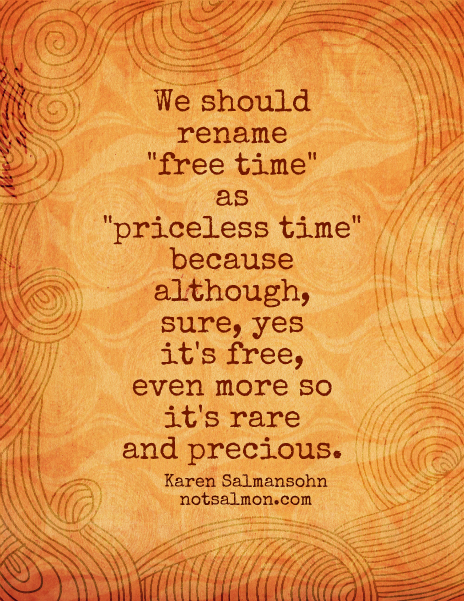
My thoughts on “free time”…

notsalmon via My thoughts on “free time”….

Quotes

Sorry. Just having a laugh at myself, here…

Epic Fail Funny Videos and Funny Pictures via Failbook: Share If You Agree! Like If You Don’t!.

“I am not what happened to me, I am what I choose to…

“I am not what happened to me, I am what I choose to become.”

Carl Jung, a Swiss psychologist and psychiatrist who founded analytical psychology. Jung proposed and developed the concepts of the extraverted and the introverted personality, archetypes, and the collective unconscious. His work has been influential in psychiatry and in the study of religion, literature, and related fields.” via “I am not what happened to me, I am what I choose to….

Get Spicy for Better Digestion

See on Scoop.itMy Perspective on Loving, Living, Learning and Laughing

Turmeric has some serious anti-inflammatory power.

See on greatist.com

Kick BPAs to the Curb

Dr. Frank Lipman writes:

Today we’re sharing crucial information about avoiding BPAs, a harmful chemical found in plastics and canned food. Armed with this knowledge, you can take simple steps to protect your health. Remember—your health is the greatest wealth!

When it comes to BPAs (bisphenol A), I really can’t say a good word about them. They’re bad for the earth and terrible for our bodies, so the less we ingest (knowingly or not) the better. When you feel as strongly about sustaining wellness as I do, the best way to deal with BPAs is to get them out of your life.

And how do I loathe BPAs? Let me count the ways. Biosphenol A is an industrial chemical, an endocrine disruptor, a suspected carcinogen, and proven synthetic hormone that mimics the effects of estrogen! BPAs have been linked to increased risks for heart disease, cancer, and diabetes, as well as liver and brain problems. BPAs are also credited with contributing to erectile dysfunction and the growth of breast cancer cells in adults plus developmental problems in children. Need I go on? Clearly, it’s time for all of us to kick it to the curb.” Get more here: Kick BPAs to the Curb « Positively Positive.

Seven Habits to Incorporate Today to Be More Successful Tomorrow

Habits are behaviors we choose both consciously and subconsciously. They define the outcome of our days. Positive, productive habits give us better outcomes than destructive habits, and the most powerful habits are those that begin with understanding and controlling your thoughts. Though the following habits are not often discussed in common dialogue, they have been critical in all of my work and personal transformation. Each can be quickly adapted and easily applied—so long as the ego does not overrule your desires.” Get the rest here: Seven Habits to Incorporate Today to Be More Successful Tomorrow « Positively Positive.

Claim Your Day of Rest for Improved Health and Productivity

Tabitha Green writes:

My parents were firm believers in honoring the Sabbath. Coming from the Christian tradition, this meant that we observed a day of rest on Sundays. On this day, no household chores (aside from cooking and washing the dishes) could take place. No knitting or mowing the lawn. And absolutely no shopping.

Now, the shopping part was not much of a choice during my childhood, because I lived in Sweden, where the stores were closed on Sundays.

However, as I grew older – and stores started being open on Sundays – these rules started to annoy me a bit. What’s so bad about going shopping on a Sunday? What if I need to do homework?

When I left for college, I rebelled against the day of rest. I sat in the library every Sunday from the time it opened until it closed at midnight (yes, I was a really fun college student…).

While I supported my husband through graduate school, I would often babysit on Sundays. It was a great way to get some extra cash, but not very restful.

And when I entered the management level in the corporate world, weekends didn’t really exist anymore. I used to joke about the fact that “it doesn’t really matter what day it is, because I’m always working.” Get the rest here: Claim Your Day of Rest for Improved Health and Productivity.

How pixelated uniforms turned soldiers into walking targets

Media_httpcdntheweekc_qwrnh

The military has a major pixelation problem, and it doesn’t involve computers. New reports suggest that the U.S. Army’s pixelated camo uniform, introduced in 2004, is actually a monumental $5 billion blunder. Industry insiders are calling this a “fiasco,” and many are enraged that the Army took eight years to address the issue. (See the uniforms at right and below.) Here’s what you should know:

What’s wrong with the uniforms? The pattern is too easy to spot. Though the camouflage is supposed to help mask soldiers’ presence in the desert and more moderate terrain, soldiers everywhere are criticizing the pixelated gray-green Universal Camouflage Pattern, or UPC, “for standing out almost anywhere it’s been worn,” says Erik German at The Daily. The mixture of the Army’s gray-green color scheme with the pixel pattern turns out to be quite eye-catching — not a good quality in camouflage.

What kind of problems did these uniforms cause? It’s an “epic mistake that cost billions of dollars,” says Molly Oswaks at Gizmodo, “and, ostensibly, many lives.” Think about it, says Ubergizmo. Not only are the pixelated camouflage uniforms highly visible in their own right, but because the U.S. was bogged down fighting two wars, supply lines dragged, and many Army soldiers had the new pixelated gray-green fatigues, but old-school gear. So “soldiers were running around with desert-colored clothing, but their backpacks, vests, and body-armor would be colored differently with black or green,” essentially telling enemies where to shoot.” Full story at The Week. via How pixelated uniforms turned soldiers into walking targets.

Pastors, Politics, and the American Republic

John Piper writes:

For those reading from the States, today is Independence Day, the peak of America‘s summer. So in the midst of cookouts and fireworks, let’s do a quick dial back to the founders.

America and its founders. Now that’s a conversation folks can get passionate about, whether in political rhetoric or some Christian circles. However, beyond any dispute on the role Christianity played in those early days, we can say undoubtedly that public opinion in 1776 considered Christians beneficial to the American republic. In short, the consensus was that Christians bring a lot of societal good in a representative democracy.

The man who led the way in articulating this benefit was John Witherspoon, founding father, Presbyterian minister and president of Princeton University, among other things. Though he flies under the radar in many history classes, Witherspoon’s influence is significant. And while he embodied the major intellectual traditions of his day, he has a helpful word on the gospel’s influence in society.

Witherspoon contended that the contribution of “true religion” to the public order is the morality of its adherents. Or said another way, the gospel’s influence on society comes by the means of transformed lives.

And this influence is stewarded by the church’s pastors. Witherspoon writes,

The return which is expected from [pastors] to the community is, that by the influence of their religious government, their people may be the more regular citizens, and the more useful members of society. I hope none here will deny, that the manners of the people in general are of the utmost moment to the stability of any civil society. When the body of a people are altogether corrupt in their manners, the government is ripe for dissolution.

Good laws may hold the rotten bark some longer together, but in a little time all laws must give way to the tide of popular opinion, and be laid prostrate under universal practice. Hence it clearly follows, that the teachers and rulers of every religious denomination are bound mutually to each other, and to the whole society, to watch over the manner of their several members.1

How might pastors influence their people to be “the more useful members of society”? Or how might they “watch over the manner of their several members”? By “feed[ing] the saints with such meals that they go out strengthened and robust and able to do the study and do the courage and do the action needed as salt and light in this world.” via Pastors, Politics, and the American Republic – Desiring God.

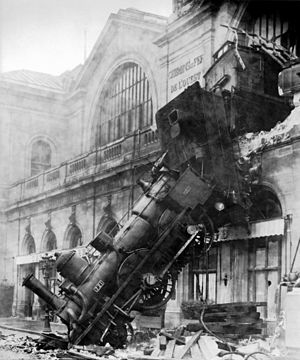
8 thoughts while watching trainwrecks

Jon Swanson writes:

(First published July 19, 2011. And here’s the video version).

It happens to all of us. A friend, a family member, a coworker looks like they have picked the wrong track and are heading toward a trainwreck. Not physically, probably, but emotionally, spiritually, or relationally. I probably hear about more of these than many people because I’m one of the people that people talk to: “Jon, you’re a (social media) chaplain/pastor. You’ll know what to do. How do I stop them from wrecking everything?”

1. Maybe you are missing something. Probably not, but consider the possibility.

2. TV Movie endings are only in TV movies. If you want an intervention to always end with “How could I have been so foolish, I’m sorry, you were right,” you are going to be disappointed. Every time.

3. Humans almost always choose the short-term over the long-term. Even when the short-term looks painful, it’s because it is easier than the real hard work that would bring about long-term change.

4. Remorse and repentance aren’t the same thing. One is about getting caught. The other is about getting right. The first will only lead to avoidance. The second may lead to change.

5. Yelling almost never works. It just makes fingers go into ears.

6. Sin is fun like antifreeze is sweet. Both are delightful for the short term. And then kill you.

7. Self-destruction often isn’t evident to the self being destroyed. What looks obvious from the outside looks very different from the inside. Of course, the outside view can often see further down the track.

8. Consequence pain is often a good alarm clock. Sometimes people sleep through gentle warnings.

I know it hurts to watch. And you want to help. But sometimes the best help is to be around after the wreck. And to ask God for wisdom and clarity and the right words.

That’s what I do anyway.” via 8 thoughts while watching trainwrecks (from the archives).

Thomas Jefferson and John Adams die; This Day in History 7/4/1826

Benjamin Franklin, John Adams and Thomas Jeffe...
Benjamin Franklin, John Adams and Thomas Jefferson writing the Declaration of independence (1776) were all of British descent. (Photo credit: Wikipedia)

On this day in 1826, former Presidents Thomas Jefferson and John Adams, who were once fellow Patriots and then adversaries, die on the same day within five hours of each other.

Thomas Jefferson and John Adams were the last surviving members of the original American revolutionaries who had stood up to the British empire and forged a new political system in the former colonies. However, while they both believed in democracy and life, liberty and the pursuit of happiness, their opinions on how to achieve these ideals diverged over time.

Adams preceded Jefferson as president (1797-1800); it was during this time that their ideas about policy-making became as distinct as their personalities. The irascible and hot-tempered Adams was a firm believer in a strong centralized government, while the erudite and gentile Jefferson believed federal government should take a more hands-off approach and defer to individual states’ rights. As Adams’ vice president, Jefferson was so horrified by what he considered to be Adams’ abuse of the presidency–particularly his passage of the restrictive Alien and Sedition Acts of 1798–that he abandoned Adams and Washington for his estate at Monticello. There, he plotted how to bring his Republican faction back into power in the presidential election of 1800. After an exceptionally bitter campaign, in which both parties engaged in slanderous attacks on each other in print, Jefferson emerged victorious. It appeared the former friends would be eternal enemies.

After serving two presidential terms (1801-1809), Jefferson and Adams each expressed to third parties their respect the other and their desire to renew their friendship. Adams was the first to break the silence; he sent Jefferson a letter dated January 1, 1812, in which he wished Jefferson many happy new years to come. Jefferson responded with a note in which he fondly recalled when they were fellow laborers in the same cause. The former revolutionaries went on to resume their friendship over 14 years of correspondence during their golden years.

On July 4, 1826, at the age of 90, Adams lay on his deathbed while the country celebrated Independence Day. His last words were Thomas Jefferson still survives. He was mistaken: Jefferson had died five hours earlier at Monticello at the age of 82.” via Thomas Jefferson and John Adams die — History.com This Day in History — 7/4/1826.

History.com fails to mention that they both died 50 years to the day after signing the original Declaration of Independence

A Fourth of July channeling of Thomas Jefferson

English: Portrait of Thomas Jefferson, founder...

Paul Brandus writes:

“We hold these truths to be self-evident, that all men are created equal, that they are endowed by their Creator with certain unalienable Rights, that among these are Life, liberty and the pursuit of Happiness.”

Thomas Jefferson’s glorious sentence from his Declaration of Independence — arguably the most influential sentence in the history of the English language — holds true to this day, and remains a beacon to all who cherish or yearn for the human rights he espoused. Abraham Lincoln considered that specific passage one of the most important things he ever read, and regarded it as the bedrock of his political philosophy.

Jefferson believed that the Declaration was his greatest accomplishment — even more so than being president of the United States. In fact, gaze upon his gravestone at Monticello (appropriately adorned with nickels left by visitors), and you wouldn’t even know that he was president:

“Here was buried Thomas Jefferson, Author of the Declaration of American Independence, of the Statute of Virginia for religious freedom, Father of the University of Virginia.” via A Fourth of July channeling of Thomas Jefferson – The Week.

July 4th is an exception to the rule: when we sing the national anthem

July 4th is an exception to the rule: when we sing the national anthem, we almost always do it before a sporting event. This is somewhat fitting because successfully performing the anthem is practically an athletic feat.

A look at some of the most famous performances of the National Anthem: http://nyr.kr/MR9urK via July 4th is an exception to the rule: when we sing the national….

10 Bad Habits Worth Losing

As we enter the first week of July, it’s been 6 months since we made our 2012 New Year’s Resolutions. How many have you nailed? And how many have fell [sic] by the wayside?

Now is a good time to review what you’ve achieved so far and what needs more work. Effective people understand the need to constantly ‘review’ themselves to improve and refine their level of productivity and achievement. Instead of focusing on what to achieve, sometimes it can be good to look at things to cut out from your life.

What bad habits do you currently have that are hindering your progress or productivity? Remember the saying:

“We are what we repeatedly do.”

What ‘thing’s do you do that you wish you didn’t?

It’s a good idea to put together a list of bad habits to remove from your life this year. And the good news is – we still have 6 months to get rid of them!” Get the answer here: 10 Bad Habits Worth Losing.

Make today YOUR independence day

Mastin Kipp writes:

“Let today be the day that you declare to yourself that you have inalienable rights and have the courage to stand up to those in your life who convince you otherwise. If any of your relationships do not promote your right to “Life, liberty and the pursuit of Happiness”, do what we did in 1776 and draw a boundary. And like the Preamble says, if any relationship becomes destructive, it is your right to abolish it and create new relationships that promote Safety and Happiness.

A single act of defiance in the face of oppression created a whole new country full of new found possibility and freedom. And so it is with you, if you are feeling the need for your own Declaration of Independence, have the courage to stand up for what you need. Who knows what kind of new life and possibilities are out there just waiting for you to claim your right and acknowledge that you deserve a better life? What would of happened if our forefathers hadn’t taken a stand? Where would that of left us?

If you are not in the flow of your happiness, then abundance, freedom, creativity, joy and love cannot be yours. And if you are not in alignment with belief that what you desire for yourself you also desire for others, then these gifts will also evade you.

All beings are created equal and deserve happiness. Claim your right to happiness and let go of trying to control the will others. Give them the space to find what they need and give yourself the room to do the same.

The examples of how to do this are all around you. It’s up to you to claim your own happiness and release others to find this gift for themselves.” Source: Make Today YOUR Independence Day!

Start a Blog at WordPress.com.

Up ↑