The Best Revenge

“The best revenge is to be unlike him who performed the injury.”

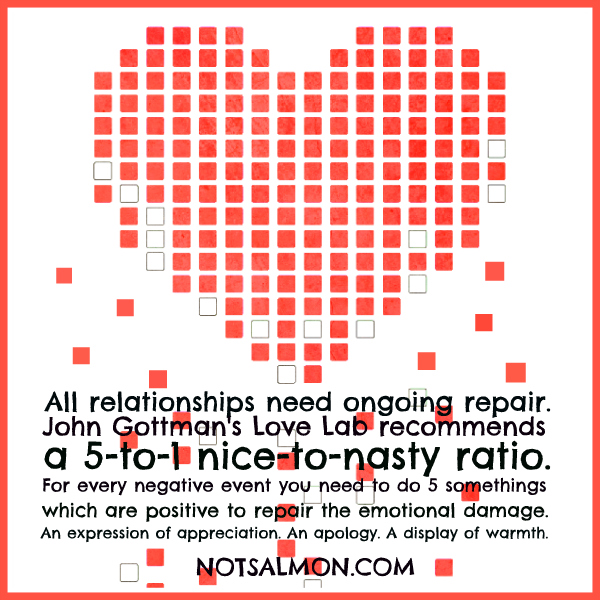
Does Your Relationship Have a 5 to 1 Nice To Nasty Ratio?

Get more here: Does Your Relationship Have a 5 to 1 Nice To Nasty Ratio?.

Musings during a power outage

Jon Swanson writes:

I walk into the bathroom and turn on the electric switch. Nothing happens. For three days nothing has happened. I know the power is out. I still reach for the switch. Habits are strong.

The computer is off. I walk past my office and look at the screen. It’s still off. I still look.

I think often about wanting time to read and to write. With no access to Internet and no power for television, this would be a perfect opportunity. But I can’t sit still. I can’t let what might happen tomorrow simply happen tomorrow.

It is remarkably easy to blame the rough-running of the neighbor’s generator for the rough-running of my thoughts. And then to generate a low-voltage current of blame that wears down my motor.

It is hot, I suppose, but exercise will make me perspire anyway. And might help alleviate the uncertainty about when the power might come on. Instead, I wait for what might happen. I wait for a day, then another.

It seems that my agenda is more driven by the tools that are working than I thought. I could be working and resting, following the daylight, enjoying the restoration than can come from disconnection. Instead, I am feeling disconnected.

I am grateful for what I am learning about ingratitude during this time. We have water. We have hot water. We have a grill. We can even use the stove (if I light it manually). We have a frenchpress for coffee. Our house wasn’t hit by any trees.

I read from Acts on Sunday morning. I realized that the early church never cancelled services because the electricity was out. It was the right choice for our church on Sunday, but I’m thinking a lot about how much I depend on the wrong energy sources.” via Musings during a power outage. | 300 words a day.

Hmmm. We live in a rural area so when our power goes out, we lose our water too making it even harder to be grateful. Still I love Jon’s perspective…

Constantly Feel Good About Yourself Using These 3 Steps

It is important that you feel good about yourself. More and more scientific evidence points towards a significant link between how you feel about yourself and your overall health and sense of well-being. Scientists have proven that feelings of inferiority have the capacity to pave the way to illness or disease. On the other hand, if you feel good about yourself, have a positive outlook, and maintain an active involvement in life, you’re more likely to be happy and healthy.

Our emotional state can be affected by a lot of things the environment we are in, the people we are with, the weather, the food we eat, how much sleep we’ve had, and so on. Feeling insecure, incapable and inadequate once in a while is part of being human, what matters is that you are able to make yourself feel better again.

If you feel as if you are currently in a state wherein you need some help on bolstering your feelings of self-worth, here are some ideas that you may find helpful:

Step 1: Reframe your identity

If you were asked to describe yourself, what would you say? What be the first adjectives that you would come out with? Experts say that a person’s self-worth can be assessed by the first five words that he would use to answer this question. If you answer with negative adjectives, then you would need to redefine how you think about yourself. Instead of focusing on the shortfalls in your life, bring to mind things that make you special.

For example, instead of branding yourself as a mere office worker, try looking at yourself as a great Mom or a great Dad. Pride yourself on your greatest achievements instead of highlighting flaws.

Step 2: Challenge negative self-talk

As we go about our daily lives, we constantly think about and interpret every situation that we encounter. It’s like we have this voice inside our head that talks us through everything. Psychologists call this inner voice “self-talk.” How this inner voice talks to us is based on our values, beliefs and our conscious and subconscious thoughts. If your self-talk is mostly negative, you will have a very hard time feeling good about yourself.

To correct negative self-talk, you need to learn to notice it as it happens, and consciously dispute and challenge these negative and irrational thoughts. Ask yourself questions like, “Are my thoughts factual?”, “Is this situation as bad as I am making out to be?” or “What can I do that will help me solve the problem?”. Make it a point to conquer self-defeating thoughts with positive and realistic thinking.

Step 3: Take time for yourself

In this world where everyone and everything seems to be in a rush, most of us don’t make ourselves a priority. Often we focus on catering to the needs of others and on being productive. Although it is good to take care of the people you love and fulfill your responsibilities at home and at work, you should not neglect your responsibility and obligation to yourself.

In the same way that you make others feel good when you take care of them, taking care of yourself will also bring about the same feelings. Make it a point that you allocate a certain amount of time each day for yourself to do things you love. Paying attention to yourself has been proven to improve self-esteem and feelings of self worth.

It is impossible for anyone to feel perfectly happy about who he is for their entire life. We are all bound to feel inferior or insecure every once in a while. Fortunately, our thoughts and feelings are not permanent and there are so many ways to love, accept and feel good about ourselves.” via Constantly Feel Good About Yourself Using These 3 Steps.

Watch Out For the “I’m Right, You’re Wrong” Conversation

Gretchen Rubin writes:

A few days ago, I posted about a phenomenon I describe as “oppositional conversational style” (OCS for short), and I’ve been flabbergasted by the heated response.
I thought I’d identified some obscure, rare pattern of human interaction, but it turns out that lots of people had already identified this kind of interaction.

A person with “oppositional conversational style” is a person who, in conversation, disagrees with and corrects whatever you say. Maybe in a friendly way, maybe in a belligerent way, but their remarks are framed in opposition to whatever you say.

I was fascinated to read people’s comments. I learned several things.

First, people recognize this pattern easily. OCS, it turns out, is a widespread phenomenon.

Second, people find it tiresome to be on the receiving end of OCS. To be repeatedly told “I’m right; you’re wrong,” in every context, gets annoying.

Third, at least some people who practice OCS recognize it in themselves, and they think there’s value to this kind of exchange. They engage with others in this way because they find it fun to argue, or they want to get facts exactly correct, or because they want to make clear that there’s another side to an argument (even if they don’t particularly believe in that side of the argument, they want to explore it).

Fourth, OCS is sometimes related to the Tigger vs. Eeyore distinction. OCS seems associated with Eeyoredom, though not everyone who exhibits OCS is an Eeyore.

I think it’s helpful to watch out for the “oppositional conversational style.” Sometimes, just being able to identify something that’s bugging you somehow lessens the annoyance. Instead of reacting to the exchange unthinkingly, you realize, “Oh, I’m in the presence of the oppositional conversational style! How very interesting!” Get more here: Watch Out For the “I’m Right, You’re Wrong” Conversation | Psychology Today.

10 Things You Might Not Know About America’s Independence

C’mon, world! We’re not all imperialist dogs — some of us are quite nice actually! Here are some things you might want to know about our Independence Day:

On July Fourth, Americans eat hot dogs and apple pie, watch fireworks, and go swimming. But what are we really celebrating? Standard answers to this question are that we are celebrating our independence or the signing of the Declaration of Independence. Well, yes and no.

Here are 10 things you might not know about our America’s Independence Day.” Get the answer here: 10 Things You Might Not Know About America’s Independence | All Pro Dad.

The Treasure Within Your Struggle

Jackie Dumaine wrote something so good I want to share the entire thing with you here:

“We all have them.

Moments of darkness.

Moments where we’re not sure what will come or if we even have the strength to wait.

Moments where we feel lost, confused and unsure of our existence.

What I’ve come to learn in the last few years is that in these moments of darkness, there is wisdom to be found.

Unanswered questions find their home in this space.

Whether it’s related to life, career or love – our deepest wounds and heartaches can be the source of our greatest joy.

“Where there is ruin, there is hope for a treasure.” ~ Rumi

The 8th principle of The Yoga Code is Tapas – and it asks to hold on during the dark hours of life.  To have the faith and the belief that everything that happens has a purpose – but if we give up and let go too soon, we may never discover what that purpose is.

Tapas asks us to gather the strength, courage and self-discipline to carry through. To hold on for another moment until we can see the blessing in each of our struggles.

As a Yoga Inspired Life Coach and Yoga Teacher, I am not immune to the curve balls that life throws us.

I will never pretend to be.

I have moments of intense confusion. There are times when I doubt my Self and my path. My heart aches.

This is what makes me human.  It’s what gives me the ability to relate on a personal level with my students, coaching clients, friends and family.  It’s what makes me real – and it’s what will make you real.

Please don’t discount your struggles and your shadows. Do not hide them behind a medieval shield of protection. Refrain from acquiring the belief that the world is out to get you. You are worthy of abundance, joy and love.

Do you believe that?

Life has a unique way of showing us the faith it has in our ability to shine.

Pretty remarkable, isn’t it?  Trust this.”

via Jackie Dumaine – Blog – The Treasure Within Your Struggle.

Not Losing Weight? Listen Up!

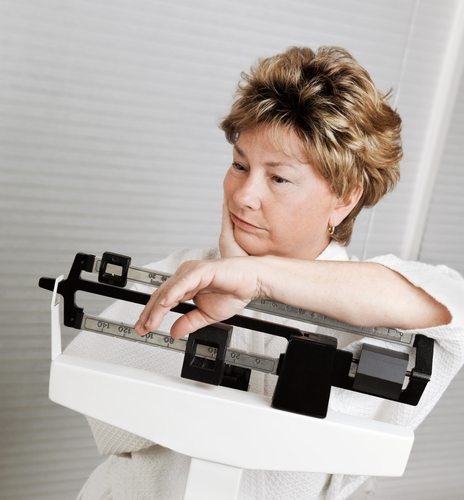
You’ve been watching what you eat for weeks, but you can’t seem to get the scale to budge.

To rev up your metabolism and get the scale moving in the right direction, you might want to take a better look at what you’re putting in your mouth.

But it’s not all about the food.

Let’s dive in and help you shed those unwanted pounds…shall we?

It’s time to get clean

While we’ve all been told to check the labels, foods that require labels are processed, and processed foods can be poison to a diet plan. While low-fat granola bars and fuel-packed protein bars might have their place in an emergency (like hiking the Appalachian Trail, where there’s not a salad bar in sight), in the real world eating “clean” is the way to go.

That means eating foods as close to their natural state as possible – fresh fruits and veggies, lean meats and healthy fats. Keep the empty calories of processed foods out of the shopping cart. Instead, opt for foods in their natural state and not in a wrapper.

Get Off the Couch

Are you a couch potato, crashing after a day of work with a marathon session of your favorite TV show rather than a walk around the block?

The key to successful weight loss is torching more calories than you take in, so couch potatoes will have a tougher time dropping pounds.That’s not to say you need to channel your inner Arnold Schwarzenegger…hmmm, bad example, to successfully lose weight. You just need to recognize that exercise is a great way to burn extra calories and will help you have a better shot at seeing the numbers on the scale drop.

Take a walk, head to the park for a game of Frisbee or revisit your childhood and tune up that bike so you can hit the road for a burst of cardio your body will appreciate. The biggest perk is that the added activity will likely lead you to try new forms of exercise, and could inspire you to hit the gym to bust some weightlifting moves that will give your metabolism an added boost.

Keep Your Cool

Living on the edge with high stress levels and a constant anxiety can wreak havoc on even the best of diets.

Stress results in a flood of cortisol rushing through your system, an age-old response that began in the cave man era, when our bodies warned us of life-threatening dangers with the flight-or-flight response we now know as stress. The thing is, we now see rush-hour traffic and cranky co-workers in the same way as deadly cougar attacks, and we’re not fleeing the scene to reap the benefits of the response.

Those elevated cortisol levels lead to attacks on muscles, reduced insulin resistance, and the storage of unwanted fat (just in case that cougar blocks our path to the grocery store for a few weeks).

Try to find a little more Zen in your life, through yoga, meditation or massages might do the trick.

Time Your Meals

An effective way to build the healthy eating habit is to time your meals. Predetermined the day before exactly what time you will be eating. Schedule them roughly four hours apart. So for example; 8am, noon, 4pm, and 8pm would be your meal times for the day. This will keep you metabolism running high, blood sugar stable so your body can stay primed for buying stored fat as fuel, and satisfied to stave off any cravings. Prepare meals ahead of time so that you are ready to roll.

Dieting is Outdated

Really what it all comes down to is lifestyle changes — and seeing a healthy lifestyle as a choice that makes living an adventure.

If you eat right, you have the energy to head to the hills for a hike, hop on the mountain bike and tackle that challenging new trail or take the dog for a walk around a bigger block. And that opens the door for the life you want to live, not a life you only have the energy to dream about.

It’s just a matter of making slow, easy-to-manage changes that reflect a new found attention to a healthy way of living, like trading water for soda or a more nutrient-packed veggie place of mashed potatoes.” via Not Losing Weight? Listen Up!.

Normally, I would feel guilty curating something like this, however, in this case I’ve been doing all these things for a couple of months and the results have been amazing. I can testify first hand to what great advice this is…

A new mental model

English: Blue plaque at Iffley Road Track, Oxf...

“Human beings can’t run a mile in under four minutes. It simply isn’t possible.” Sound crazy? It does now. But for decades it was a common point of view. It was a mental model: an assumption about how the world worked. As Professor Jerry Wind of the Wharton School tells the story: The four-minute mile seemed like a physical barrier that humans could not cross… until May 6, 1954. That was the day that Roger Bannister, in a meet at Oxford, ran a mile in 3:59.3 He broke the barrier. Suddenly, in the next three years, 16 other runners cracked the four-minute mile as well. Was there some breakthrough in human evolution? No. What had changed was the mental model.” Lecinski, Jim (2011-06-24). Winning the Zero Moment of Truth – ZMOT (Enhanced Version) (Kindle Locations 122-128). Vook. Kindle Edition.

Do What You Cannot Do!

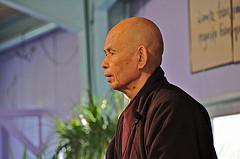
Zen Master Thich Nhat Hanh

“There is no one in the universe more dear to us than ourselves. The mind may travel in a thousand directions, but it will find no one else more beloved. The moment you see how important it is to love yourself, you will stop making others suffer.

Thich Nhat Hanh. via Today’s Quotes: Do What You Cannot Do!.

What’s on Your List?

Seth Godin writes:

“I have kids at home.”

“I don’t have a manager.”

“I need to pay off student debt.”

“My boss never lets me.”

“I’m really busy because of soccer season.”

“My knee is acting up.”

“There’s already five galas coming up.”

“My RSI hurts when I type.”

“I don’t have a degree.”

“I have a degree and can’t waste it.”

“I’m not good at that.”

“I tried it before, and it didn’t work.”

“I’ve never tried it before.”

“The weather is crazy, isn’t it.”

“The election is right around the corner.”

“I’ve been at this job too long.”

“They won’t listen to me.”

“I’m going to retire soon.”

“I’m too young.”

“I’ll never learn.”

“It’s too risky.”

etc.…

We all have a list. Most of the things on it may be legitimate reasons to say “no.”

I guess the self-marketing question is, “how often do you remind yourself of what’s on the list?”

If the first thing you do when considering an opportunity is consult the list, then the list is the most important thing in your life, isn’t it?” via What’s on Your List? « Positively Positive.

Just in case you missed this for 7/2/2012

  1. Maybe you know the drill here, maybe you don’t. Every day I share the best of what I find in my Google Reader that day. It’s amazing to me that even though I pull content from all over the internet, frequently it seems the Universe is acting in concert to emphasize a particular lesson. Today’s lesson? Starting over. Beginning. Letting go. Here’s the best of what I found this morning…
  2. “It’s easy to get lost in endless speculation. So today, release the need to know why things happen as they do. Instead, ask for the insight to recognize what you’re meant to learn.”

    – Caroline Myss

3 Hacks to Be a Better You

We should always work to be better people. We have the tools, and they shouldn’t be wasted. How you decide to become a better person is up to you. It may mean being a better spouse, parent, sibling, son, or daughter. Perhaps it means being a better provider, a better employee, or a better employer. No matter what it means to you, it means work. One should not shy away from the work that it takes to improve as a person. With that said, if you need a little direction then here are 3 hacks to be a better you: 3 Hacks to Be a Better You.

Me? I like the first ‘hack’; exercise. Eating well and exercising has changed my life this year. Get rid of your excuses and take care of yourself. Nothing matters more because it affects everything — EVERYTHING you do!

Don’t Should on Yourself

Is expectation keeping you from living your most authentic life?

Our upbringing, the media, our friends, and our selves are all constantly pressuring us for more, better, or different.

“By now, I should ________.”

Many of my patients finish that sentence with:

  • be married
  • have more money
  • have children
  • be happy
  • have better work
  • be having fun
  • be on vacation
  • be retired
  • own a home
  • have no debt
  • feel better

It’s one thing to recognize something as uncomfortable or as going against your desires. It’s an entirely different thing to witness this “bad” thing and then, on top of it, judge yourself for the existence of this “imperfection.” Now, this one weight upon your mind has become two. And this can snowball if you consciously know that you’re judging yourself, and then—you guessed it—you start to judge yourself for judging yourself. Since we’re all striving to feel comfortable in life, why create all this undue pressure?” Get more here: Don’t Should on Yourself « Positively Positive.

How to Begin (Anything)

“I’m not ready.”

“I don’t know what I’m doing.”

“What if nobody likes it or I’m not a good writer?”

These questions haunted me for the past several months, as I got up the gumption to finally write my first post for Positively Positive.

Candor, self-disclosure, and transparency are my preferred teaching tools. No need to uphold an idealized version of myself—not helpful for you or me.

Yes, I was nervous to put myself “out there.” Every time I break open and expand, I’m met with self-doubt, fear, insecurity, and a comparing mind.

For my first post, I decided to tackle my self-doubting questions head-on and share some tools I find useful when battling the nasty voice of uncertainty: practical advice meets neuroscience meets spirituality.

Ask yourself: How do you handle the anxiety around a difficult transition and trust the unknown? Do you freeze (procrastination, excuses), run (avoid, deny, lie), or attack (irritable, critical, blame)?” via How to Begin (Anything) « Positively Positive.

The Healing Power Of Furry Friends

healing power of animals

Anyone who has ever had a pet can vouch for the fact that seeing their loving little eager-to-please faces as you come home can really lift your spirits after a long day.

Even if they do destroy your home, keep you up with their crying all night or leave unwanted presents on your new carpet – you can’t help but love their butter-wouldn’t-melt-in-their-mouth faces!

Therefore, it’s not surprising that studies have confirmed that having a little furry friend does indeed do wonders for your overall happiness. Study researcher Allen McConnell, of Miami University in Ohio, said in a statement.

“We observed evidence that pet owners fared better, both in terms of well-being outcomes and individual differences, than non-owners on several dimensions.

Specifically, pet owners had greater self-esteem, were more physically fit, tended to be less lonely, were more conscientious, were more extroverted, less fearful and less preoccupied than non-owners.”

On a deeper level, having a pet as a companion can also help mend the pain associated with loss, or during periods of loneliness or depression. They force you to care for another life – thus helping to take the focus off your own problems and provide you with unconditional love.

Everyone wants to be loved and needed – pets fulfill this nurturing role. This can be particularly important for middle-aged parents who may be suffering from ‘empty nest syndrome’ after their children have moved out, or for the elderly who are alone and have limited family and friends.

Of course if you’re not an animal person, or you’re having trouble looking after yourself, having an animal will not be for you. However, if you’re in a position to care for a special little friend, getting a pet can be the best remedy for loneliness.

One of our favorite pet stories has to be the story of Faith, a dog born with deformed front legs. However, as a result of her owner’s love and determination, she not only averted the doggy lethal injection, but now also walks on her back legs!

Has your pet helped you get through a difficult time or increased your overall happiness? We’d love to hear your story and how they’ve made a difference in your life, or to someone you know!” via The Healing Power Of Furry Friends.

Blog readers know all about my black cat Boo and how our ‘kitty time’ has changed my life. How about you? Got an animal friend?

“Fighting Well”

“The most important thing in the Olympic Games is not winning but taking part; the essential thing in life is not conquering but fighting well.” Pierre de Coubertin. via Quote: Olympics Spirit and “Fighting Well” | Greatist.comHealth and Fitness Articles, News, and Tips – Greatist.com.

Congress votes for independence; This Day in History — 7/2/1776

Benjamin Franklin, John Adams and Thomas Jeffe...
Benjamin Franklin, John Adams and Thomas Jefferson writing the Declaration of independence (1776) were all of British descent. (Photo credit: Wikipedia)

On this day in 1776, the Second Continental Congress, assembled in Philadelphia, formally adopts Richard Henry Lee’s resolution for independence from Great Britain. The vote is unanimous, with only New York abstaining.

The resolution had originally been presented to Congress on June 7, but it soon became clear that New York, New Jersey, Pennsylvania, Delaware, Maryland and South Carolina were as yet unwilling to declare independence, though they would likely be ready to vote in favor of a break with England in due course. Thus, Congress agreed to delay the vote on Lees Resolution until July 1. In the intervening period, Congress appointed a committee to draft a formal declaration of independence. Its members were John Adams of Massachusetts, Benjamin Franklin of Pennsylvania, Roger Sherman of Connecticut, Robert R. Livingston of New York and Thomas Jefferson of Virginia. Thomas Jefferson, well-known to be the best writer of the group, was selected to be the primary author of the document, which was presented to Congress for review on June 28, 1776.

On July 1, 1776, debate on the Lee Resolution resumed as planned, with a majority of the delegates favoring the resolution. Congress thought it of the utmost importance that independence be unanimously proclaimed. To ensure this, they delayed the final vote until July 2, when 12 colonial delegations voted in favor of it, with the New York delegates abstaining, unsure of how their constituents would wish them to vote. John Adams wrote that July 2 would be celebrated as the most memorable epoch in the history of America. Instead, the day has been largely forgotten in favor of July 4, when Jeffersons edited Declaration of Independence was adopted.” via Congress votes for independence — History.com This Day in History — 7/2/1776.

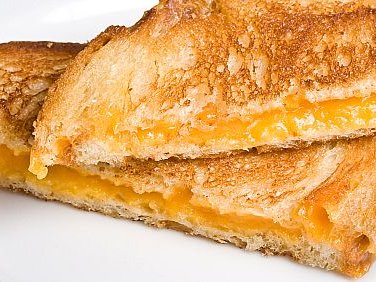
Ancient grilled cheese secrets

Molly Snyder writes:

I’m far from being a gourmet cook, but I do enjoy preparing food and experimenting in the kitchen. Over the years, I’ve made hundreds of grilled cheese sandwiches and, since it’s the last day of Dairy Month, I’m sharing the few simple rules I follow that produce a perfect grilled cheese sandwich every time.

    1. Figure out which pan works the best for grilled cheese and never, ever use another one. Re-buy the same pan if need be. I have made the mistake of using another pan because my grilled cheese sandwich pan was dirty, and it throws everything off. Don’t mess with success, people.
    2. Butter the bread generously. This is no time to cut calories. Promise yourself you’ll eat a salad for dinner and get slathering. The bread slices must be entirely covered in butter to make this thing really work.
    3. Make sure the pan is medium-hot enough. Don’t throw the sammy on the griddle too fast or else it won’t turn out like the sandwich that dreams are made of. And if it’s too hot, it will burn the bread without melting the queso. It’s zen and the art of grilled cheese time – something only you and your stove top can figure out together. Also, put a lid on the pan to trap the heat and melt the cheese all the way through.
    4. Use sliced or shredded cheese. If you have a block of cheese, don’t cut into chunks, rather shred it before putting it between the slices of bread. It will melt better that way. Slices work well, too. But don’t buy those plastic-wrapped ” cheese” slices if you can help it. They melt well but they’re kinda gross.” via Molly Snyder ‘s Blogs: Ancient grilled cheese secrets.

Kindness

“Be kind, for everyone you meet is fighting a hard battle.”

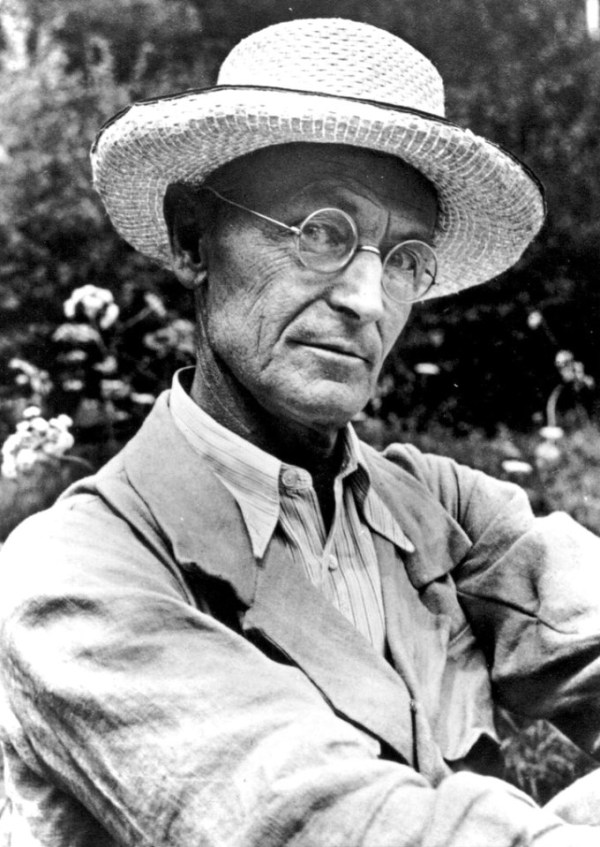
Happy birthday, Hermann Hesse!

I was a German language and literature major in college and went as far as my doctoral studies at University of Illinois before I took a ‘safer’ route. My plan was to become a world famous Hermann Hesse scholar and my dissertation would have explored the relationship between Hesse’s body of work and Hegel’s dialectic but alas. Here is his life in his own words:


I was born in Calw in the Black Forest on July 2, 1877. My father, a Baltic German, came from Estonia; my mother was the daughter of a Swabian and a French Swiss. My father’s father was a doctor, my mother’s father a missionary and Indologist. My father, too, had been a missionary in India for a short while, and my mother had spent several years of her youth in India and had done missionary work there.My childhood in Calw was interrupted by several years of living in Basle (1880-86). My family had been composed of different nationalities; to this was now added the experience of growing up among two different peoples, in two countries with their different dialects.

I spent most of my school years in boarding schools in Wuerttemberg and some time in the theological seminary of the monastery at Maulbronn. I was a good learner, good at Latin though only fair at Greek, but I was not a very manageable boy, and it was only with difficulty that I fitted into the framework of a pietist education that aimed at subduing and breaking the individual personality. From the age of twelve I wanted to be a poet, and since there was no normal or official road, I had a hard time deciding what to do after leaving school. I left the seminary and grammar school, became an apprentice to a mechanic, and at the age of nineteen I worked in book and antique shops in Tübingen and Basle. Late in 1899 a tiny volume of my poems appeared in print, followed by other small publications that remained equally unnoticed, until in 1904 the novel Peter Camenzind, written in Basle and set in Switzerland, had a quick success. I gave up selling books, married a woman from Basle, the mother of my sons, and moved to the country. At that time a rural life, far from the cities and civilization, was my aim. Since then I have always lived in the country, first, until 1912, in Gaienhofen on Lake Constance, later near Bern, and finally in Montagnola near Lugano, where I am still living.

Soon after I settled in Switzerland in 1912, the First World War broke out, and each year brought me more and more into conflict with German nationalism; ever since my first shy protests against mass suggestion and violence I have been exposed to continuous attacks and floods of abusive letters from Germany. The hatred of the official Germany, culminating under Hitler, was compensated for by the following I won among the young generation that thought in international and pacifist terms, by the friendship of Romain Rolland, which lasted until his death, as well as by the sympathy of men who thought like me even in countries as remote as India and Japan. In Germany I have been acknowledged again since the fall of Hitler, but my works, partly suppressed by the Nazis and partly destroyed by the war; have not yet been republished there.

In 1923, I resigned German and acquired Swiss citizenship. After the dissolution of my first marriage I lived alone for many years, then I married again. Faithful friends have put a house in Montagnola at my disposal.

Until 1914 I loved to travel; I often went to Italy and once spent a few months in India. Since then I have almost entirely abandoned travelling, and I have not been outside of Switzerland for over ten years.

I survived the years of the Hitler regime and the Second World War through the eleven years of work that I spent on the Glasperlenspiel (1943) [Magister Ludi], a novel in two volumes. Since the completion of that long book, an eye disease and increasing sicknesses of old age have prevented me from engaging in larger projects.

Of the Western philosophers, I have been influenced most by Plato, Spinoza, Schopenhauer, and Nietzsche as well as the historian Jacob Burckhardt. But they did not influence me as much as Indian and, later, Chinese philosophy. I have always been on familiar and friendly terms with the fine arts, but my relationship to music has been more intimate and fruitful. It is found in most of my writings. My most characteristic books in my view are the poems (collected edition, Zürich, 1942), the stories Knulp (1915), Demian (1919), Siddhartha (1922), Der Steppenwolf (1927) [Steppenwolf], Narziss und Goldmund. (1930), Die Morgenlandfahrt (1932) [The Journey to the East], and Das Glasperlenspiel (1943) [Magister Ludi]. The volume Gedenkblätter (1937, enlarged ed. 1962) [Reminiscences] contains a good many autobiographical things. My essays on political topics have recently been published in Zürich under the title Krieg und Frieden (1946) [War and Peace].

I ask you, gentlemen, to be contented with this very sketchy outline; the state of my health does not permit me to be more comprehensive.” via nobelprize.org

Happy birthday, Hermann! You made a profound impact on my life through your body of work…

Related articles

Start a Blog at WordPress.com.

Up ↑