Owning Our Power

Melody Beattie writes:

Don’t you see? We do not have to be so victimized by life, by people, by situations, by work, by our friends, by our love relationships, by our family, by ourselves, our feelings, our thoughts, our circumstances.

We are not victims. We do not have to be victims. That is the whole point!

Yes, admitting and accepting powerlessness is important. But that is a first step, an introduction to this business of recovery. Later, comes owning our power. Changing what we can. This is as important as admitting and accepting powerlessness. And there is so much we can change.

We can own our power, wherever we are, wherever we go, whoever we are with. We do not have to stand there with our hands tied, groveling helplessly, submitting to whatever comes along. There are things we can do. We can speak up. Solve the problem. Use the problem to motivate ourselves to do something good for ourselves.

We can make ourselves feel good. We can walk away. We can come back on our terms. We can stand up for ourselves. We can refuse to let others control and manipulate us.

We can do what we need to do to take care of ourselves. That is the beauty, the reward, the crown of victory we are given in this process called recovery. It is what it is all about!

If we can’t do anything about the circumstance, we can change our attitude. We can do the work within: courage­ously face our issues so we are not victimized. We have been given a miraculous key to life.

We are victims no more unless we want to be.

Freedom and joy are ours for the taking, for the feeling, for the hard work we have done.

Today, I will remind myself as often as necessary that I am not a victim, and I do not need to be victimized by whatever comes my way. I will work hard to remove myself as a victim, whether that means setting and enforcing a boundary, walking away, dealing with my feelings, or giving myself what I need. God, help me let go of my need to feel victimized.

Source: November 18: Owning Our Power | Language of Letting Go

30 Ways to Improve Your Mood When You’re Feeling Down

“The secret of joy is the mastery of pain.” ~ Anais Nin

Full story at:  30 Ways to Improve Your Mood When You’re Feeling Down | Tiny Buddha.

Timing…

Melody Beattie writes:

Wait until the time is right. It is self-defeating to postpone or procrastinate; it is also self-defeating to act too soon, before the time is right.

Sometimes, we panic and take action out of fear. Sometimes, we take untimely action for revenge or because we want to punish someone. We act or speak too soon as a way to control or force someone to action. Sometimes, we take action too soon to relieve feelings of discomfort or anxiety about how a situation will turn out.

An action taken too soon can be as ineffective as one taken too late. It can backfire and cause more problems than it solves. Usually, when we wait until the time is right – sometimes only a matter of minutes or hours – the discomfort dissolves, and we’re empowered to accomplish what we need to do.

In recovery, we are learning to be effective.

Our answers will come. Our guidance will come. Pray. Trust. Wait. Let go. We are being led. We are being guided.

Today, I will let go of my need to control by waiting until the time is right. When the time is right, I will take action.

Source: Just For Today Meditations » Daily Recovery Readings – November 12, 2012

Expect Nothing; Get Everything

Life is rarely what we expect it to be. Sometimes, it’s better than we expect. Other times, it just is as it is.

Set your expectations to zero, show up at 110% every day, and your positive attitude will drive your 110% experience of life.

Moreover, you won’t be depleting precious mental energy by beating yourself and others up because you’re disappointed and angry at not having your expectations met.

Having low expectations does not mean that you don’t “go for it,” establish goals, or have visionary dreams. Setting your expectations to zero means that you are able to minimize your emotional setbacks that deplete and drain your vision of valuable energy. When you’re able to accept the outcome as it is, then you can rise from any fall, thus increasing your personal power of resiliency to move forward more quickly. When you give it your best shot and you miss, it’s not seen as a failure. Instead, it’s just another opportunity to step up to the plate and do it better next time.

When your child tries out for an activity and doesn’t make the “A” list, then you encourage him or her by saying: “It’s ok. Practice some more; enjoy what you are doing, and try, try, try again.” Life as an adult is no different. The game of life is like a sport; it takes practice. And the practice here is giving it your very best shot and accepting the end result without engaging in negative thoughts that lead you to feeling low. On playing fields, this is called good sportsmanship. In life, it’s called having a winning attitude.

Expect nothing and you’ll have everything. Strive every moment you’re alive to bring an attitude of excellence and integrity to your actions and words, and the end result will reflect the brilliance you bring.

You will find that if you can go with the flow then it’s far easier to be in the flow.

Get the rest here: Expect Nothing to Have Everything « Positively Positive

Letting Go of Resistance

Melody Beattie writes:

Do not be in such a hurry to move on.

Relax. Breathe deeply. Be. Be in harmony today.

Be open. There is beauty around and in us today. There is purpose and meaning in today.

There is importance in today — not so much in what hap­pens to us, but in how we respond.

Let today happen. We learn our lessons, we work things out, we change in a simple fashion: by living our life fully today.

Do not worry about tomorrow’s feelings, problems, or gifts. Do not worry about whether we can trust ourselves, life, or our Higher Power tomorrow.

Everything we need today shall be given to us. That is a promise — from God, from the Universe.

Feel today’s feelings. Solve today’s problems. Enjoy today’s gifts. Trust yourself, life, and your Higher Power today.

Acquire the art of living fully today. Absorb the lessons, the healing, the beauty, the love available to us today.

Do not be in such a rush to move on. There is no hurry. We cannot escape; we only postpone. Let the feelings go; breathe in peace and healing.

Do not be in such a hurry to move on.

Today, I will not run from myself, my circumstances, or my feelings. I will be open to myself, others, my Higher Power, and life. I will trust that by facing today to the best of my ability, I will acquire the skills I need to face tomorrow.

Source: November 11: Letting Go of Resistance | Language of Letting Go
15 Great Excuses Not to Form the Fitness Habit

Leo Babauta writes:

Lots of people know they should be getting fit, but they can’t seem to find the time to form the fitness habit.

And while I understand this completely — I was stuck in overweight, unhealthy mode for years — I think it’s useful to take a look at the justifications we give ourselves to put it off.

I put things off because I didn’t have time, or energy, or I had too many family commitments, or not enough motivation, or work kept getting in the way, or I didn’t feel good enough to run, or I was sick, or other people would make things difficult, or I didn’t have the money for a gym membership … you get the idea.

But I’ve learned to kill all the excuses. Or to put it less violently, I’ve found loving ways to let them go and embrace the joy of a fit and healthy life.

I did it with six kids and a wife, a full-time job (and now my own business), a ton of family and work commitments, freelancing on the side, building a blog on the side, while writing various books … and so the excuses were ultimately meaningless.

Why might you be putting things off? Let’s look at the justifications, and try to blast them.

Full story at:  » 15 Great Excuses Not to Form the Fitness Habit :zenhabits

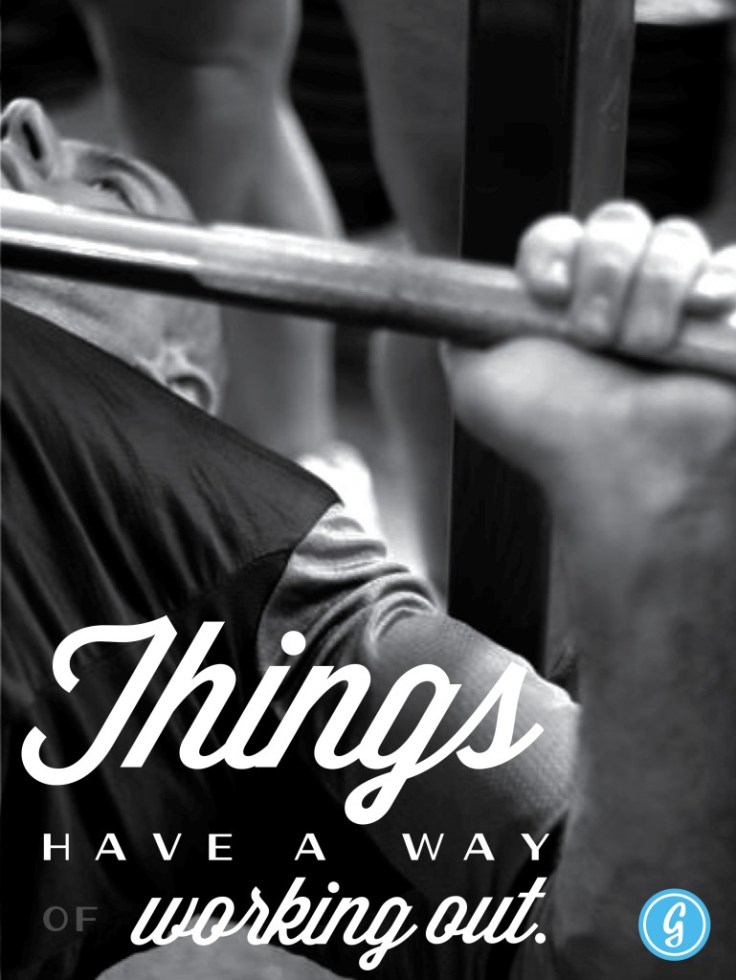
Things Have a Way of Working Out

Poster: Things Have a Way of Working Out | Greatist.

Accepting love…

Melody Beattie write:

Many of us have worked too hard to make relationships work; sometimes those relationships didn’t have a chance because the other person was unavailable or refused to participate.

To compensate for the other person’s unavailability, we worked too hard. We may have done all or most of the work. This may mask the situation for a while, but we usually get tired. Then, when we stop doing all the work, we notice there is no relationship, or we’re so tired we don’t care.

Doing all the work in a relationship is not loving, giving, or caring. It is self-defeating and relationship defeating. It creates the illusion of a relationship when in fact there may be no relationship. It enables the other person to be irresponsible for his or her share. Because that does not meet our needs, we ultimately feel victimized.

In our best relationships, we all have temporary periods where one person participates more than the other. This is normal. But as a permanent way of participating in relationships, it leaves us feeling tired, worn out, needy, and angry.’

We can learn to participate a reasonable amount, and then let the relationship find it’s own life. Are we doing all the calling? Are we doing all the initiating? Are we doing all the giving? Are we the one talking about feelings and striving for intimacy?

Are we doing all the waiting, the hoping, and the work?

We can let go. If the relationship is meant to be, it will be, and it will become what it is meant to be. We do not help that process by trying to control it. We do not help the other person, the relationship, or ourselves by trying to force it or by doing all the work.

Let it be. Wait and see. Stop worrying about making it happen. See what happens and strive to understand if that is what you want.

Today, I will stop doing all the work in my relationships. I will give myself and the other person the gift of requiring both people to participate. I will accept the natural level my relationships reach when I do my share and allow the other person to choose what his or her share will be. I can trust my relationships to reach their own level. I do not have to do all the work; I need only do my share.” Source: Just For Today Meditations – Maintaining A Life

Questions? Feedback?

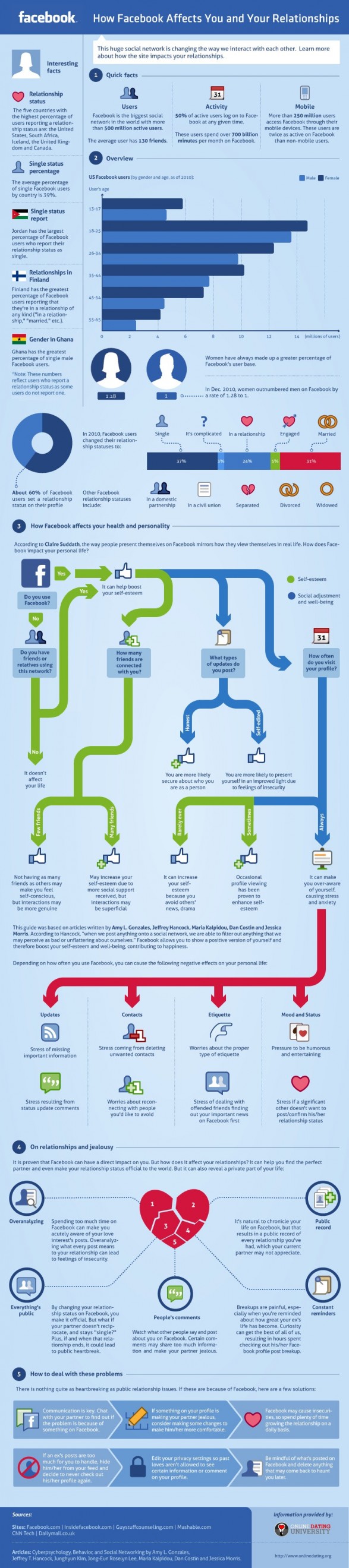
How Is Facebook Affecting Your Relationships?

FinerMinds

via How Is Facebook Affecting Your Relationships? (Infographic).


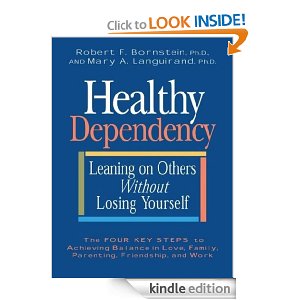
Healthy Dependency?

I didn’t know what it looked like either until I read this book. I knew what it looked like to be unheathily attached — it looked like codependency. I knew what it looked like to be unheathily detached — it looked like ‘eff you — I’m taking my marbles and leaving’. If you struggle with either being overly detached or attached, this book will help evision what healthy dependency looks like…

Click the image to learn more…

You are Loveable

Melody Beattie writes:

Even i f the most important person in your world rejects you, you are still real, and you are still okay. Codependent No More

Do you ever find yourself thinking: How could anyone possibly love me? For many of us, this is a deeply ingrained belief that can become a self-fulfilling prophecy.

Thinking we are unlovable can sabotage our relationships with co-workers, friends, family members, and other loved ones. This belief can cause us to choose, or stay in, relation­ships that are less than we deserve because we don’t believe we deserve better. We may become desperate and cling as if a particular person was our last chance at love. We may become defensive and push people away. We may withdraw or constantly overreact.

While growing up, many of us did not receive the uncon­ditional love we deserved. Many of us were abandoned or neglected by important people in our life. We may have con­cluded that the reason we weren’t loved was because we were unlovable. Blaming ourselves is an understandable reaction, but an inappropriate one. If others couldn’t love us, or love us in ways that worked, that’s not our fault. In recovery, we’re learning to separate ourselves from the behavior of others. And we’re learning to take responsibility for our healing, regardless of the people around us.

Just as we may have believed that we’re unlovable, we can become skilled at practicing the belief that we are lovable. This new belief will improve the quality of our relationships.

It will improve our most important relationship: our rela­tionship with our self. We will be able to let others love us and become open to the love and friendship we deserve.

Today, God, help me be aware of and release any self-defeating be­liefs I have about being unlovable. Help me begin, today, to tell myself that I am lovable. Help me practice this belief until it gets into my core and manifests itself in my relationships.” via November 5: We are Loveable.

Get Up. Get Out. Don’t Sit.

Thanks to David Kanigan for finding and sharing this:

“…New research this month finds that the more time someone spends sitting, the shorter and less robust his or her life may be. The findings were sobering: Every single hour of television watched after the age of 25 reduces the viewer’s life expectancy by 21.8 minutes. By comparison, smoking a single cigarette reduces life expectancy by about 11 minutes. Looking more broadly, they concluded that an adult who spends an average of six hours a day watching TV over the course of a lifetime can expect to live 4.8 years fewer than a person who does not watch TV.  Those results hold true even for people who exercise regularly. It appears a person who does a lot of exercise but watches six hours of TV every night might have a similar mortality risk as someone who does not exercise and watches no TV…”The researchers found that those people with the “highest sedentary behavior,” meaning those who sat the most, had a 112 percent increase in their relative risk of developing diabetes; a 147 percent increase in their risk for cardiovascular disease; and a 49 percent greater risk of dying prematurely — even if they regularly exercised.

“We might convince ourselves that we are not at risk of disease because we manage the recommended 30 minutes of exercise a day.” But, she says, we “are still at risk if we sit all day…If you exercise for 30 minutes a day, she says, “take time to reflect on your activity levels for the remaining 23.5 hours,” and aim to “be active, sit less.” via Get Up. Get Out. Don’t Sit. – Lead.Learn.Live..

The grief process

Melody Beattie writes:

To let ourselves wholly grieve our losses is how we surrender to the process of life and recovery. Some experts, like Patrick Carnes, call the Twelve Steps “a program for dealing with our losses, a program for dealing with our grief.”

How do we grieve?

Awkwardly. Imperfectly. Usually with a great deal of resistance. Often with anger and attempts to negotiate. Ultimately, by surrendering to the pain.

The grief process, says Elisabeth Kubler Ross, is a five stage process: denial, anger, bargaining, sadness, and, finally, acceptance. That’s how we grieve; that’s how we accept; that’s how we forgive; that’s how we respond to the many changes life throws our way.

Although this five-step process looks tidy on paper, it is not tidy in life. We do not move through it in a compartmentalized manner. We usually flounder through, kicking and screaming, with much back and forth movement – until we reach that peaceful state called acceptance.

When we talk about “unfinished business” from our past, we are usually referring to losses about which we have not completed grieving. We’re talking about being stuck somewhere in the grief process. Usually, for adult children and codependents, the place where we become stuck is denial.. Passing through denial is the first and most dangerous stage of grieving, but it is also the first step toward acceptance.

We can learn to understand the grief process and how it applies to recovery. Even good changes in recovery can bring loss and, consequently, grief. We can learn to help others and ourselves by understanding and becoming familiar with this process. We can learn to fully grieve our losses, feel our pain, accept, and forgive, so we can feel joy and love.

Today, God, help me open myself to the process of grieving my losses. Help me allow myself to flow through the grief process, accepting all the stages so I might achieve peace and acceptance in my life. Help me learn to be gentle with others and myself while we go through this very human process of healing.” via Just For Today Meditations – Maintaining A Life.

Whatever your losses, they will hang in there until you work the grieving process. Long ago a priest friend of mine told me that all loss is a death of sorts so applying Ross’ stages is appropriate for just about anything…

Little Bear Cabin in the Gallatin National Forest, Montana.

Cabin Porn

via Little Bear Cabin in the Gallatin National Forest, Montana..

How to Lead a More Balanced Life

Found this on Michael Hyatt’s blog:

When I’m riding, I have a habit of looking over my shoulder to see if anyone else is coming and also to take a second look at something I just passed. At one point yesterday, traveling twenty mph, I executed my habitual over-the-shoulder look to re-see a beautiful lilac bush.

Turning my gaze forward, I realized I was off balance, heading from the paved path and into the forest where certain death awaited! (Cue dramatic music). A quick correction and I was back on track and not in the hospital.” Full story at: How to Lead a More Balanced Life | Michael Hyatt.

Scary Stuff! The Most Dangerous Candies

Apparently my beloved Reese’s Peanut Butter Cups are bad for you? Who would have thought the ‘nectar of the gods’ could be harmful? Full story at: Scary Stuff! The Most Dangerous Candies.


Have an Adventure (or Two) Every Day

Greatist – Health and Fitness Articles, News, and Tips

via Poster: Have an Adventure (or Two) Every Day.

Dreams

Melody Beattie writes:

I want a new home. a great job. and lots of money” one man said.

“What practical steps are you taking to help that happen?” I asked.

“I’m not very good at practical steps,” he said. “But I’m an expert at dreams.”

It’s important to fantasize. but if you want your fantasies to materialize. you have to take practical steps. Turn dreams into achievable written goals.

It takes courage to go for what we want. Giving some­thing our all. then failing, is a risk. Anyone I know who has accomplished anything of value has failed on the road to success.

Challenge: The hardest thing about going for our goals, hopes, and dreams can be fighting off that part of us that says, “What’s the use?” Ordinary people can accomplish extraordinary things when they make a choice to do something, then surrender to God’s Will.” via October 25.

6 Ways to Decrease Your Suffering

Image

The world is full of suffering. It is also full of overcoming it.” ~Helen Keller

You’ve probably heard the saying “Pain is inevitable; suffering is optional.”

For a many years, I didn’t understand how pain and suffering were different from each other. They seemed inextricably wrapped up together, and I took it for granted that one was the inevitable consequence of the other.

However, as I have grown to understand my own capacity to create happiness, I noticed something interesting about the nature of my suffering.

As I reflect back on painful episodes in my life, I can recall losing people who were dear to me. I remember abrupt changes in jobs, housing, and other opportunities that I believed were the basis of my happiness.

In each of those experiences the immediate visceral pain was searing, like a hot knife cutting through my heart. Then afterwards came grief, an emotional response to loss that arose quite naturally.

But closely on the heels of physical pain and emotional grief comes something else, something that I create in my own mind even though it feels quite real. That something else is “suffering.” Full story at: 6 Ways to Decrease Your Suffering | Tiny Buddha.

Documentaries That Changed the Way I Think About Food

Michelle Tess writes:

For me, the shift in my way of thinking about food began after I saw the movie Food, Inc. It was a big slap in the face to all my beliefs about food because, like many, I was so far detached from where it came from. And even after watching Food, Inc, I was still in denial. 

At least I was, until I walked into my local supermarket. I clearly remember looking at the perfectly packed shelves, lined with processed foods and thinking, “This is so far from food.” 

When you open the door to the organic world, it can be so overwhelming! You find yourself feeling like you don’t know where to start or wondering if it’s even worth the change.” Full story at: Documentaries That Changed the Way I Think About Food.

Most of these movies [an many others on the same topic] are available free on YouTube or via streaming Netflix…

The True Meaning of Patience: Let Go and Take Your Time

 “Patience is not passive; on the contrary, it is active; it is concentrated strength.” ~Edward G. Bulwer-Lytton

Full story at: The True Meaning of Patience: Let Go and Take Your Time | Tiny Buddha.

Start a Blog at WordPress.com.

Up ↑