Google Plus has been written off as a universal flop–but a deeper look proves that we will all eventually succumb to its siren song.
Embedded Link
Plus-One This: Proof That Google Plus Will Prevail
Remember when Google Plus “flopped”? Well, it didn’t. In fact, it was, and still is, just part of Google’s plan–but everyone (including the media) has trouble seeing it as anything other than a swin…
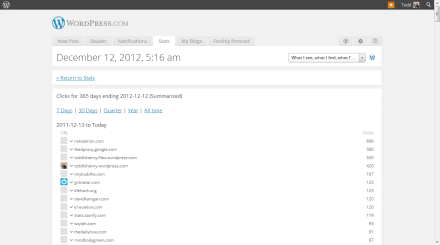
Now is a good time to review your previous year’s blogging results and see what you can learn. I just went through this exercise today and thought I’d share what I learned. Hopefully, it will encourage you to do a similar assessment.
Got content marketing? Here's a special year end offer to help you get ready for 2013…
Embedded Link
Grasshopper or ant: which one are you? @e1evation
The wikipedia tells us: “The Ant and the Grasshopper, also known as The Grasshopper and the Ant (or Ants), is one of Aesop’s Fables, providing an ambivalent moral lesson about the virtues of hard work…
Beth Hayden @ CopyBlogger has a great post I’d like to share with you…
Keyword research is one of the most important types of research you’ll do throughout your content marketing career. It’s also one of the most difficult.
In this series, we’ve already discussed the fact that research isn’t sexy, glamorous, or fun. We’ve also talked about how you need to do research consistently — just like you need to work out in a consistent manner in order to see the real physical fitness results you want.
But there’s something particularly arduous about conducting keyword research. Many of the tools available are confusing and counter-intuitive. We don’t know what we’re supposed to be looking for, and we often don’t have a system in place for how to do keyword research effectively.
But, in putting this series together, I took a very close look at the process of keyword research, and I realized that there’s a better way to find the keywords I needed for my work … without tears, gnashing of teeth, or the desire for hard alcohol.
I always seem to get lost in the data of keyword research. I feel like all of the information I find is incredibly important, and I can’t figure out what to focus on and what to ignore.
Sometimes I make a half-hearted effort to research the keywords I should use in my content, then get aggravated and toss my lists aside in favor of doing less frustrating work.
In the next two posts of this research series, I’m going to give you the solution to your keyword research woes. I’ll teach you …
How to stay focused when doing your research
How to avoid getting bogged down in the stuff that doesn’t matter
How to take a shortcut that will save you tons and time and energy
Let’s get started…
Get focused on your goal
Your goal when conducting keyword research is to identify the topics that matter most to your target audiences, and then discover the exact language they use when they search for information and discuss their questions on social networking sites.
To reach that goal, you need a simple, effective system for keyword research. Follow these three steps to clear up the fog of procrastination and confusion that surrounds the process of finding target keywords for your content.
Discovering the exact language people are using is the key to aligning your writing with the value demands of your target audience. You may want to elevate your status by calling yourself a ‘purveyor of fine previously owned automobiles’ but the target audience is just looking for a good used car. If you don’t discover what people are looking for and bring your message into alignment, you’re whistling in the dark! Get a grip by following the link and reading the rest of Beth’s perspective. I’m always here to help, too! Comment below or connect with me so we can talk about how this applies to you and your situation…
Fact #5: The person who cares the most will often end up doing a task. If you care more about a task being done, you’re more likely to end up doing it—and don’t expect other people to care as much as you do, just because something is important to you. It’s easy to make this mistake in marriage. You think it’s important to get the basement organized, and you expect your spouse to share the work, but your spouse thinks, “We never use the basement anyway, so why bother?” Just because something’s important to you doesn’t make it important to someone else, and people are less likely to share work they deem unimportant. At least not without a lot of nagging.
Of course, there can be an assortment of reasons why you’re not yet getting whatever it is you want. I’m going to suggest, however, that one of the reasons is that you haven’t done EVERYTHING that can be done. So, instead of feeling helpless and confused, revisit the situation at hand, and ask yourself – Are there projects that have yet to be completed? Are there to-do’s that have been patiently waiting to be crossed off of your list?
“Believe in your epiphanies. Believe in your yourself. Take action. And watch the world conspire to support you.”Elise Ballard Learn more about Elise and her latest inspirational book at EpiphanyChannel.com Photo and Art by Jenni Young & Bryant McGill
Call home at least once a week. It’s a proven fact that we call home less the older we get. And that’s wrong. It should be the other way around. As we get older, our parents get older.
Ever heard of the Pareto Principle? Mostly likely you have but may not know it by that name. “The Pareto principle (also known as the 80–20 rule, the law of the vital few, and the principle of factor sparsity) states that, for many events, roughly 80% of the effects come from 20% of the causes.” In the ‘e1evation workflow‘, 80% of my results come from having mastered just three tools. Why is this important? My clients include thought leaders like authorNilofer Merchant, author and professorPhilip Auerswald, author and professor Timothy Kastelle, consultant Gretchen Jahn and professor and TEDFellowNina Tandon; people like that don’t have the time or patience to learn an infinite number of tools — they need to know the three that will yield the most effective results…
I teach them [and all my clients] that if I could only use three tools for effective content marketing there is no confusion in my mind as to what they would be:
Why? No other combination of tools covers the basics of content marketing better. Google Reader helps me find great content that deepens my expertise. WordPress and Twylah help me document my expertise by turning everything I create or curate into content marketing with Search Engine Optimization [SEO] value for my domain. Let me explain…
Here are all the tools I use in the ‘e1evation workflow’:
And here are the 20% that yield the 80% of my results:
Questions? Feedback? Comment or contact me to talk more about how this applies to you and your situation…
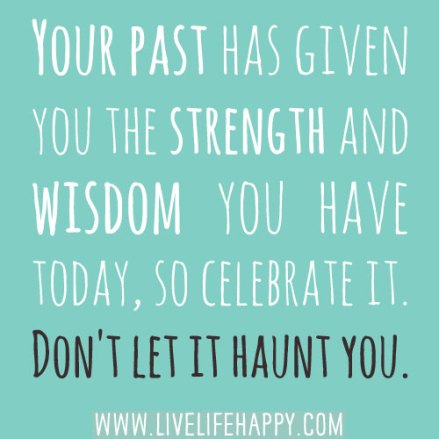
“The past is finished. Learn from it and let it go. The future is not even here yet. Plan for it, but do not waste your time worrying about it. Worrying is worthless. When you stop ruminating about what has already happened, when you stop worrying about what might never happen, then you will be in the present moment. Then you will begin to experience joy in life.” – Brian Weiss
“Healing may not be so much about getting better, as about letting go of everything that isn’t you – all of the expectations, all of the beliefs – and becoming who you are.” – Rachel Naomi Remen
“We may tell ourselves that love is not really available. but the deeper truth is that we don’t entirely trust it, and therefore have a hard time fully opening to it or letting it all the way into us. This disconnects us from our own heart, exacerbating our sense of love’s scarcity.” – John Welwood,
“We must each achieve greater individual consciousness and self-knowledge, and project mindful kindness toward everything and everyone.”Bryant McGill From book, Voice of Reason http://bryantmcgill.com/vor Photo by Jenni Young
…then you might enjoy this video from Ronnie Bincer who is rapidly emerging as one of the top Google+ experts in the world. My favorite takeway from this video is the question about Facebook versus Google+; Ronnie says Facebook is the place to go to connect with your existing friends and Google+ is the place to go to make new connections. That’s the kind of common sense you can take to the bank…
I am right now. Here’s what I’m doing to do; I’m going to review how to find my purpose in 5 seconds and then I’m going to pick something off this list:
Going back to our Getting Things Done [GTD] decision diagram for a minute…
The in basket I’m using more often than not is Google Reader. When I see ‘actionable’ content, I decide where is the best place to share that content using the following diagram:
I focused in an earlier post about sharing via Twylah and other tools — today the focus is on curation and blogging as a means of Getting Things Done [GTD]…
How do I decide that something is bloggable? Well here are some guidelines that I use…
When I come across content that is so brilliant that I could have written it myself if I would only take the time. Seriously, when I come across really good content that I want to expound upon and call out to my clients and readers…
When I find a great illustration or infographic
When I find a great YouTube video
When commenting on this content gives me a change to share something about my brand by agreeing, disagreeing, adding or subtracting…
You get the idea, right? Anything I find on the Internet is fair game as long as I remember to do three things:
Block quote and indent the content I am curating
Provide a link back to the original source
Be ready to move the content if requested by the owner
I firmly believe that when you curate effectively everybody wins. The original author gives exposure to my readers. My readers get a different perspective. Finally, my post is easier to write and I get the Search Engine Optimization [SEO] benefits from the content I curate…
Here are some thoughts from Suzanne Bird-Harris and a few others on the rationale for curation and some ideas on how to structure a curative post along with a screencast on how I do it using Windows Live Writer, a free blog editor from Microsoft…
Personally? I think curation is one of the best ways to supplement the original thinking on my blog. Here are some thoughts on curation in the blogging process…
Personally? I think curation is one of the best ways to supplement the original thinking on my blog. Here are some thoughts on curation in the blogging process…
Personally? I think curation is one of the best ways to supplement the original thinking on my blog. Here are some thoughts on curation in the blogging process…
My buddy Ronnie Bincer brought this Hangout on Air [HoA] to my attention…
Ronnie’s already done a thorough analysis that I’ll share here:
Why it is different, how to maximize it for your business be it small or large. +Google+Your Business with +Caroline McCarthy as the HOA host guides the Featured Panel Members: +Chris Brogan, +Mike Elgan, +Chad Wiebesick, & +Justin Williams in a great discussion on how G+ works for business.
Very, VERY Insightful Stuff here…
Chris has some great points and states them very eliquently… Mike at 23:42 speaks about how you can Use Google+ Search to enter into a conversation about a topic with thought leaders or enthusiasts, it really struck a chord with me, Fantastic Business Strategy +Mike Elgan
The main challenge with Mike’s point/strategy is if you are working G+ as a Page, you can’t necessarily join in the conversation, you need to do that as a Profile… one thing I still find troubling about Google+… a point +Chris Brogan speaks to at 34:12 and talks about how a business should have a solid ‘bench’ ready to interact as Profiles before engaging as a Brand Page.
Plenty of useful tips and a little encouragement to get Chris’s Book http://goo.gl/LEno8 Google+ for Business. This is one of the best videos put out by Google+ Your Business to date IMO… check it out… it is just shy of 1 hour long… the real content starts at 2:00
52:13 Not wise to use G+ to drive traffic to your blog…. hmmmm. I like that idea, but there are plenty of folks that say that is Exactly why there are here! Love to hear +Chris Brogan or +Mike Elgan’s perspective on why they dropped that little ‘bomb’ at the end! Wouldn’t you? (“leave them wanting more”, eh?).
GTD guru David Allen recently spoke in an interview with The Atlantic about all the things that keep him organized and productive. He uses a combination of low-tech tools and digital applications to accomplish what he says is the number one thing people need to do to gain control over their lives: “externalize” all the stuff thats coming in.” Full story at:The Tools David Allen Uses to Get Things Done.
Go to the source if you’re interested in David Allen’s approach…
Me? Here’s my list of GTD tools. Almost all electronic and besides the hardware, free or freemium and completely cross platform:
I’m always trying to explain things in a way that is as simple as possible but no simpler, so I thought of another way to take a pass at David Allen’sGetting Things Done [GTD] principles as applied to the curation process. Here is the workflow map:
Here is how I apply it to the curation process:
Now, let me talk you through it:
Here are the two posts I mentioned in the screencast:
In his epic book “Here Comes Everybody”, Clay Shirky writes:
We are living in the middle of the largest increase in expressive capability in the history of the human race. More people can communicate more things to more people than has ever been possible in the past, and the size and speed of this increase, from under one million participants to over one billion in a generation, makes the change unprecedented, even considered against the background of previous revolutions in communications tools. The truly dramatic changes in such tools can be counted on the fingers of one hand: the printing press and movable type (considered as one long period of innovation); the telegraph and telephone; recorded content (music, then movies); and finally the harnessing of radio signals (for broadcasting radio and TV). None of these examples was a simple improvement, which is to say a better way of doing what a society already did. Instead, each was a real break with the continuity of the past, because any radical change in our ability to communicate with one another changes society.
So now you are an expert. I know it. You know it. It’s the rest of the world that may not know it. Yet. In my humble opinion however you did not get to this ripe old age of wherever you’re at without becoming an expert in something. The 10,000 hour rule is just that – Malcolm Gladwell hypothesized that it takes approximately 10,000 hours of practice to become an expert at something. Now think of all the things you are an expert at!
Here’s the problem, however: your area of expertise may be so narrow or specialized that no one in your town or county or even your state needs it. There are however almost 2,000,000,000 people on the Internet. Even if your expertise appeals to only one in 1 million people that still means there are 2,000 people who need you to guide them. The 10,000 hours you spent gaining your expertise probably means you’re pretty good thinker too. The challenge is you can be the sharpest knife in the drawer but if no one can find the drawer you’ll never get a chance to get out…
Chris Brogan says:
“As you now know, if you have no Google results, in a sense you don’t exist.
My good friend Dana VanDen Heuvel, a thought leader in his own right, says “there are thinkers and there are thought leaders. They both have a point of view. The thinker has a point of view that is limited by word-of-mouth but the thought leader is only limited by world of mouth.” Using the good, fast and cheap tools available on the Internet a thinker can make his or her thought leadership position searchable, findable, knowable, usable, and shareable. Because of all those ‘ibles’, they may actually become credible. Publishing your thought leadership position will give you a share of voice which may lead to share of mind and ultimately to share of market…
The first step in ‘being known’ is actually accepting the face that you ARE an expert and discovering your ‘onlyness’ as author Nilofer Merchant puts it in her book “11 Rules for Creating Value in the #SocialEra“:
The foundational element starts with celebrating each human and, more specifically, something I’ve termed onlyness. Onlyness is that thing that only one particular person can bring to a situation. It includes the skills, passions, and purpose of each human. Onlyness is fundamentally about honoring each person, first as we view ourselves and second as we are valued. Each of us is standing in a spot that no one else occupies. That unique point of view is born of our accumulated experience, perspective, and vision. Some of those experiences are not as “perfect” as we might want, but even those experiences are a source of ideas and creativity. Without this tenet of celebrating onlyness, we allow ourselves to be simply cogs in a machine—dispensable and undervalued.
Merchant, Nilofer (2012-09-12). 11 Rules for Creating Value in the Social Era (Kindle Locations 107-113). Perseus Books Group. Kindle Edition.
So now we have established the foundation of being known; you have to define your area of expertise and embrace your ‘onlyness’; only then can you take the next step. More next Tuesday…


















































 Bright, shiny objects!
comments