Our culture has accepted two huge lies. The first is that if you disagree with someone’s lifestyle, you must fear or hate them. The second is that to love someone means you agree with everything they believe or do. Both are nonsense. You don’t have to compromise convictions to be compassionate.

Rick Warren (via staypozitive) from Tumblr via IFTTT

Loving ourselves more: 10 Tips for greater self-compassion

“Self-compassion is extending compassion to one’s self in circumstances where we perceive ourselves as inadequate or helpless. It’s practice is associated with greater well-being, including diminished anxiety and depression, and better emotional coping skills.”

Get the rest here: Loving ourselves more: 10 Tips for greater self-compassion | moodwatchers – website of psychologist Shane Martin.

Compassion

My friend Kristin Barton Cuthriell has a great post on her blog today.

We may try to live with integrity, but slip up sometimes. We are human so it is going to happen. As long as we take responsibility for our actions, learn from our mistakes, and refuse to repeat damaging patterns of behavior over and over again, there is no need to wrap ourselves in shame which creates great pain. Having self-compassion rather than continually beating ourselves up will lead to greater peace of mind.

Get the rest of the article here: 2 Things People with Peace of Mind Do Differently. I suggest you follow her blog and read her epic book The Snowball Effect as a new year’s resolution…

Click to purchase on Amazon.
Click to purchase on Amazon — it’s only $3.03 in the Kindle version…

How "I’m Right, You’re Wrong" Destroys Loving Relationships

I have found this to be true in my life:

People who have a strong need to be right or always win find their capacity to be empathetic very limited. Empathy means looking beyond your own sense of self and being able to experience emotional world of your partner. “I’m right, you’re wrong “mind shuts down the partner on the receiving end – his or her viewpoint is dismissed. And what is usually were thinking, here she is not correct and that’s all there is to it.

When couples disagree, it is often not about right or wrong and what one knows or does no know. It is about realizing that there are different ways of looking at issues and new experiences. Being empathetic, therefore, helps us work out misunderstandings with our partners with openness, compassion, and flexibility.

Source: How “I’m Right, You’re Wrong” Destroys Loving Relationships | Psychology Today

Just Like Me

Great thoughts from Barb Markway at The Self Compassion Project…

Barbara Markway's avatarThe Self-Compassion Project

20374a03b025ee1a540c3a53b7022ea1I heard the phrase this week, “Just Like Me” in reference to not judging others. When we’re having a conflict with someone, try to remember these things:

  • The other person wants to be happy, just like me.
  • The other person loves and wants to spend time with their family, just like me.
  • The other person experiences pain and suffering, just like me.
  • The other person sometimes speaks before thinking, just like me.
  • The other persons sometimes procrastinates, just like me.
  • The other person sometimes does stupid things, just like me.

I know all too well, this is much easier said than done. I often end up writing what I need to learn, so I wrote this post for Psychology Today called, Love Yourself More by Judging Others Less.

View original post

Our days are happier when we give people a bit of our heart rather than a piece of our mind.

http://www.elephantjournal.com/2014/10/the-only-way-to-cure-compassion-fatigue/ from Tumblr via IFTTT

How to Practice Compassionate Listening

The Purpose Fairy writes:

“Deep listening is the kind of listening that can help relieve the suffering of another person. You can call it compassionate listening. You listen with only one purpose: to help him or her to empty his heart. Even if he says things that are full of wrong perceptions, full of bitterness, you are still capable of continuing to listen with compassion. Because you know that listening like that, you give that person a chance to suffer less. If you want to help him to correct his perception, you wait for another time. For now, you don’t interrupt. You don’t argue. If you do, he loses his chance. You just listen with compassion and help him to suffer less. One hour like that can bring transformation and healing.” ~ Thich Nhat Hanh

via How to Practice Compassionate Listening – Purpose Fairy.

Here are two enlightened souls talking about listening:

I also recommend this dharma talk from Tara Brach!

A moment of self compassion…

The benefits of #selfcompassion

Compassion

Growing self compassion

Growing Self Compassion

via Blogger

Forget self-esteem and embrace self-compassion

I just stumbled across an old article form +Heidi Grant Halvorson in the +Harvard Business Review about #selfesteem vs. #selfcompassion that I think bears repeating. Here’s a link you can follow if you’d like to know more…

via Blogger

The journey…

Right now, at this moment, this seems to me to be one of the most beautiful poems ever written…

I heard this in this podcast on the ‘Prodigal Son’ by Tara Brach. She says we need to start letting love in and start opening to where the suffering of separation is in our bodies and our hearts. If someone else is our focus of aversion — if we’re critical of someone else, it’s not until we open ourselves to compassion and include that person in our hearts that we can actually let love in ourselves. If we are judging another person or aversive to another person it’s not until we open our hearts to what we are aversive about whatever behavior or ways that that person is that we can actually let love in ourselves. We project the things we don’t like about ourselves on others. If we can begin to open to how others are living that thing we don’t like out, we can let love in and accept ourselves more. She discusses this at about 35 minutes into the talk, but you can listen to the whole thing here…

Making Peace with Selfishness and Setting Healthy Personal Boundaries

Evita Ochel has a thoughtful article on a difficult topic for me to understand. I share it in hopes that it may help both of us:

One topic that seems to pose some of the greatest challenges for the human species is that of personal boundaries. We want to interact with others, we want to be loving and caring, but we also want to honor our personal space and needs. In this essay, we will address how to expand our consciousness on the topic of selfishness and explore its many dimensions, as well as become more effective in our personal boundary setting.

Why this Ad? How do I sponsor this page?

Some people’s boundaries are too tight. Some are too loose. Some are non-existent. When should we say “yes” to others and when should we say “no”? How do we know what decisions to make when it comes to other people’s happiness? These questions and considerations do not have easy answers. Whether you officially consider yourself an empath or not, nearly all of us will deal with the challenge of creating healthy personal boundaries at one time in our life, if not many.

Continue reading “Making Peace with Selfishness and Setting Healthy Personal Boundaries”

‘I’ve Got Your Back’

Margaret Paul, Ph.D. writes:

Being there for each other in very difficult times is one of the things that relationships are about. Without this caring and support, we feel very lonely, sometimes unbearably lonely. We are not meant to manage very difficult feelings and situations alone. We all need love and support when we are having a hard time or facing very challenging situations.

This does not mean that partners have an excuse to abuse each other. It also doesn’t mean that you can control whether your partner will allow you to be there for them — for example, if they consistently abandon themselves. We can support each other, but we cannot do for our partner what they need to be doing for themselves, without enabling them in their self-abandonment.

However, we’re all human, and there may be occasional times when you or your partner feel too overwhelmed to be there for yourself. Imagine that your feelings are your inner child, and imagine that when you feel badly, you are able to hold your inner child with a lot of caring and compassion. And imagine that your partner is holding you while you are holding yourself. This is very loving and supportive.

But sometimes, in extreme situations, we are so triggered into fear that we cannot hold ourselves. This is when we need our partner to stand in as the loving parent for our distressed inner child. We all have those times when our feelings feel so overwhelming that we just can’t manage them ourselves, and partners in a healthy relationship are able to do this in extreme situations. It is important, though, that it not become a habit, as it can be a slippery slope from occasionally stepping in and being there for your partner when he or she is distressed, to giving oneself up in order to avoid the pain of seeing one’s partner struggling with their own feelings.

Having each other’s back is of one of the great benefits of a loving relationship.

via ‘I’ve Got Your Back’ | Margaret Paul, Ph.D..

A Forgiving Heart

Tara Brach writes…

Anger is an intelligent emotion, a natural part of our evolutionary design that lets us know when we are endangered or impeded in our progress. But when it locks into ongoing resentment and blame, our heart becomes armored and we lose access to a wholeness of being. This talk explores forgiving as a process of relaxing our armoring and awakening a healing compassion for ourselves and others.

Direct download: 2014-02-26-Pt3-A-Forgiving-Heart-TaraBrach.mp3

Source: Tara Brach : Part 3: A Forgiving Heart

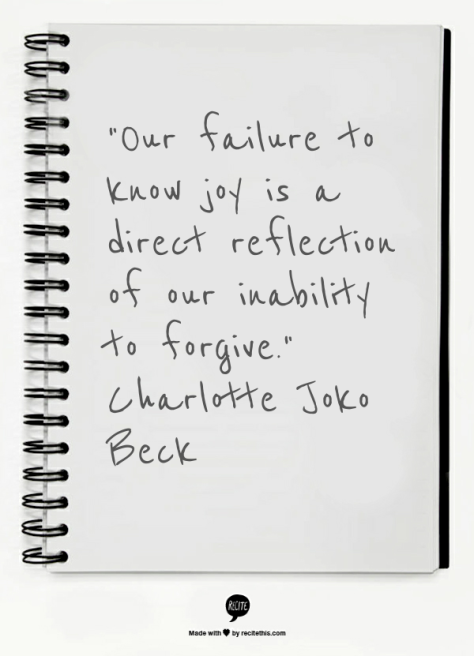
recite-5549-1130647567-18s5xy4-1

What’s Your Superpower?

I must confess that many of the thought I post here come from reflecting on Tara Brach’s podcast to which I listen daily. In her most recent podcast [link below], she spoke about this image…
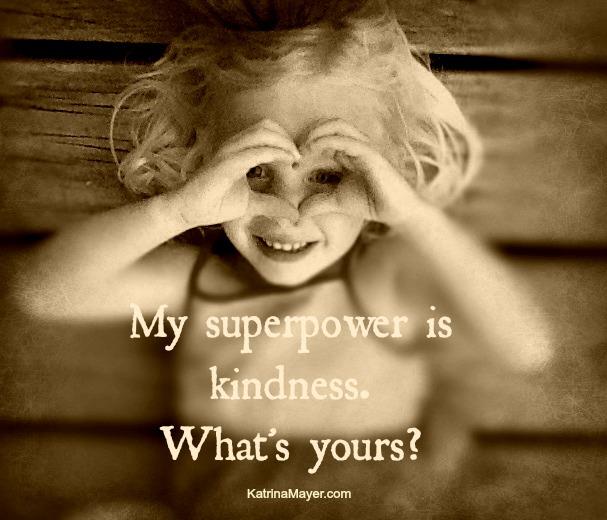
What’s Your Buddhist Superpower? – Buddhist Peace Fellowship / Turning Wheel Media.

Tara Brach talked about this image in her recent podcast:

2014-02-19 – Part 2: Heart of Compassion – Most of us consciously value compassion, but move through much of life without access to the full capacity of our heart. This talk explores the self-compassion that is the very grounds of loving our world.

Direct download: 2014-02-19-Heart-of-Compassion-TaraBrach.mp3

My superpower IS kindness, but I don’t ‘get into the phonebooth’ often enough, if you what I mean. I often don’t put on my ‘kindness costume’ when I need it most…

Does that make me a failure? No, I think it puts me on a path. It makes me human. HH the Dalai Lama says:

“I don’t know why people like me so much. It must be because I value bodhichitta [the awakened heart/mind]. I can’t claim to practice [it], but I value it.” We care about the awakened heart because, like a flower in full bloom, it is the full realization of our nature. Feeling loved and loving matters to us beyond all else. We feel most “who we are” when we feel connected to each other and the world around us, when our hearts are open, generous and filled with love. Even when our hearts feel tight or numb, we still care about caring.

Brach, Tara (2004-11-23). Radical Acceptance (p. 222). Random House Publishing Group. Kindle Edition.

How can I, a fellow being who is much less awakened, condemn myself for not practicing?

My takeaway? Get into the phonebooth. Put on lovingkindness. Even when — ESPECIALLY WHEN — our hearts feel tight and numb…
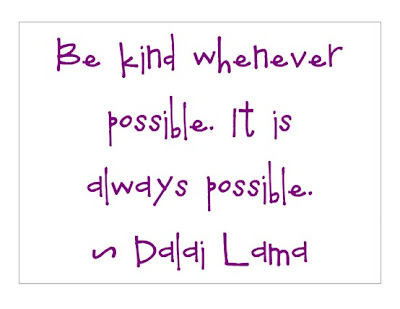

His wise counsel hits the target every time!

compassion #tinyhearts

Barbara Markway's avatarThe Self-Compassion Project

unnamed-28 From Sharon Salzberg

Compassion is the movement of the heart in recognizing our own or someone else’s vulnerability. We move towards that person, to see if we can be if help.

In day to day life that might look like simply recognizing our own humanity, or the humanity of someone else.

I was teaching recently and a woman told me, after a sitting, ” All week long my boss has been a tyrant — unfair, judgmental, in a very uncharacteristic way. It’s only been here, meditating, that it occurred to me to think, ‘ She might have something going on in her life that is provoking this.'”

Here’s the first post of this series, Hearthstones.

View original post

Responding to Sibling Fighting with Spanking?

This one has me thinking about some of my own behaviors and how I got sucked into spanking when I knew instinctively it was wrong…

As I have highlighted in previous posts, one of the most stressful aspects of parenting reported by parents is when their children fight. Although by now the scientific study of parenting has forwarded some exceptional methods of parenting to help deal with the stress of sibling dynamics, many parents respond out of religious conviction to sibling aggression with spanking their children.

Imagine the irony of hearing a parent yell at their child “don’t ever hit your brother, we do not hit in this house…” as the parent proceed to hit their child.

This technique is apparently making a comeback in some online circles as a parenting method to deal with many childhood misbehaviors. Recently I was sent a link by a religious friend of mine to what he thought was a clever online post that read something to effect of “I was spanked as a child and therefore… have developed a respect for others.”

I responded to his link with “you probably also developed aggressive tendencies, an anxiety disorder, anti-social tendencies, academic problems, and sexual issues…”

I have yet to hear back from him.

Continue reading “Responding to Sibling Fighting with Spanking?”

Practice compassion…

Practice compassion…

Evernote helps you remember everything and get organized effortlessly. Download Evernote.

How I Poison Myself

“The three poisons are passion (this includes craving or addiction), aggression, and ignorance (which includes denial or the tendency to shut down and close out).

We would usually think of these poisons as something bad, something to be avoided. But that isn’t the attitude here; instead, they become seeds of compassion and openness.”

~ from “Three Methods for Working With Chaos,” Pema Chodron, Shambhala Sun, March 1997

via How I Poison Myself. | elephant journal.


Start a Blog at WordPress.com.

Up ↑