Mindful Eating: Nourish Your Mind And Body

FinerMinds

Get the scoop here: Mindful Eating: Nourish Your Mind And Body.


Don’t look back in anger!

The Daily Love

via Visual Inspiration: Don’t look back in anger!.


Leveraging the Power of Intention

“Our intention creates our reality.” ~Wayne Dyer

Read the rest of the article here: Creating Change: Leveraging the Power of Intention | Tiny Buddha.


Who Makes You Better?

Antonio Neves writes:

I’m not going to be a national champion.

Those were my thoughts as I completed my first track and field practice as an NCAA Division I student athlete at Western Michigan University.

As much as this realization stung to the core, it was the truth. No matter how hard I practiced, the odds of my becoming a national champion were pretty much non-existent.

This realization didn’t mean that I didn’t want to get better. Quite the contrary. I was determined to see what I was made of. To see how far my DNA could take me.

Unfortunately, during my first two years of competing, I didn’t come close to placing in a major competition. I was hanging on for dear life and hoping not to get cut from the roster.

That was until one day at practice my coach pointed out something of which I was unaware.

“Antonio, we have two All-Americans on our team,” he said. “I’ve never seen you practice with either of them. Are you surrounding yourself with people who make you better?”

As he walked away I kept asking myself, “Antonio, who makes you better?” This question hit me like a ton of bricks.

The harsh reality was that I spent most of my time at practice going through the motions and joking around with the same group of teammates. As much as I loved these guys, if I gave a less than stellar effort, no one questioned me. They didn’t make me better.

Yet, right there in front of me were two All-Americans that could make me better. But I was intimidated. Why? Because I saw the discipline, hard work, and healthy habits that were required to compete at that level. These were two individuals who wouldn’t accept mediocrity. Was I willing to commit to working that hard?” via Who Makes You Better? « Positively Positive.

Love or dependency?

Kristin Barton Cuthriell has an excellent post on codependency that I want to share with you this morning:

“Love is the ability and willingness to allow those that you care for to be what they choose for themselves without any insistence that they satisfy you.” Wayne Dyer.

Sally tells her husband, Ron, that she would like to go visit her sister for the weekend. Ron becomes upset and accuses Sally of not loving him. He gives Sally such a hard time, that even if she were to go, she would not enjoy herself. Ron tells Sally that he does not want her to go because he loves her and wants to spend all of his time with her.

Ken and Angie spend most evenings and weekends together. One Saturday, Ken is invited to go to a ballgame with the guys. When Ken asks Angie if he can go, she becomes upset and reasons that he would rather be with the guys than with her.  She feels hurt and acts angry and resentful towards Ken. Ken can’t enjoy the game because he knows that he has hurt Angie.

Cindy joins a book club that meets the first Wednesday night of each month. Ted feels threatened by Cindy leaving the house to do something without him. As much as Cindy enjoys book club, she stops going. The way Ted treats her when she does go, just isn’t worth it.

Unless the visit to the sister, the ballgame, and the book club are destructive to the individual or the couple in some way, Ron, Angie, and Ted are operating with their insecurities in the driver’s seat. They believe that they have been acting out of love. But this kind of love is about them, not their partner. What they call love is really dependency. They are not holding their partner back for the good of their partner, they are holding their partner back because they want to make themselves happy. They want to fulfill an unmet need within themselves.

When individuals function from a place of dependency rather than mature love, they are usually trying to get a childhood need for security and nurturing met. As infants, we are totally dependent on our caretakers for all of our needs. If those needs are met, we are more likely to experience mutual love in adult relationships. If those needs are not met when we are young, we do not outgrow them. Instead, we unconsciously demand that these needs be met by our partners. When this happens, our partner’s needs are often ignored and the relationship becomes more about us than about them.

A healthy parent child relationship is very different from a healthy adult relationship. In a healthy parent child relationship, the parent is to meet the child’s needs, not the other way around (Note: meeting a child’s needs is not the same as spoiling a child). The relationship is not mutual. It is about the child.

A healthy adult relationship is about mutual sharing. The adult is not enmeshed, as an infant often is with their primary caretaker. The relationship consists of a delicate balance of closeness and separateness.” If any of this resonates with you, you can read the rest of the article here: Love or dependency – Let Life in Practices.

While you’re there, signup to receive Kristin’s updates or follow her in social media! She is a continuous source of good, clear thinking on relationships and her perspective has helped me many times…

A story of a champion

Who Thinks My Thoughts? Steps on the Path to Mindfulness

“Life is 10% what happens to you and 90% how you react to it.” ~Charles Swindoll

Read the rest of the article here: Who Thinks My Thoughts? Steps on the Path to Mindfulness | Tiny Buddha.

Don’t Give Up Your Dreams!


Tommy Rosen

had such a good post at the The Daily Love today that I had to grab the whole think [no, that’s not a typo! I’m being intentional] for you:

Don’t you give up your dreams. Spend your life in pursuit of them. It does not matter which ones come true and which ones don’t. The point is you will have lived a life pursuing what meant the most to you. We can look around us and see countless reasons to despair and also countless reasons to persevere.

Focus your attention on the things that make life worth living. Look at publications that uplift you. Read spiritual books that inspire you. If you watch television and movies, try to expose yourself to heart-opening, thought-provoking media. For goodness sakes, do not read the newspaper. We already know that the human condition is full of challenges. There is no need to compound those challenges by focusing our attention en masse upon the worst parts of our society. If you cannot let that go because you feel that your livelihood is connected to it, then be disciplined in what you read so that you only ingest the parts that you must and you will limit the negative effect upon your life.

Look for sources of information, which contain hope, love and possibility within them. Work to make your life better. Work to help the people around you and to make their lives better. If everyone did that, we would have a world of peace in a few weeks.

Be unapologetic in your positivity even in the face of dire circumstances. Even when it seems that there is no way out, insist that there is one and that you just cannot see it at that moment. Though you may not have an answer now, be secure in the knowledge that there is an answer to every question you can ask. You may need to develop patience to wait out periods of “darkness”. Know that the light always comes.

Do not misunderstand the Human condition and how difficult it is. It is challenging to be a human being because of the interplay between our own desires and the rules of The Uni-verse. We die, for example. That’s a tough one for us. We lose loved ones and must navigate through sadness, anger, jealousy and grief. These things are not a theory. We all experience them and we are here, in part, to support each other as we go through the hardest parts of our lives.

We are also here to celebrate each other. To look upon another person’s success with excitement and awe is a blessing. Do not let jealousy and envy overcome you. Be excited for other people who find success and, inspired by their example, continue to pursue the things that mean the most to you. Think how you feel when watching an Olympic athlete win a gold medal. Do you sit there thinking, “Wow, I can’t believe it is not me up there,” or are you in awe of the discipline that it must have taken for that person to get to that place. For me, it is inspiring to see someone obtain excellence, even mastery in something. That makes me want to become excellent at the things I am working on. Though we may never obtain mastery, it is our pursuit of mastery that matters.

When you do experience negative emotions regarding other people’s accomplishments, deal with them in the moment. How? See how your emotions are directly related to some work within yourself that still needs to be addressed. When you encounter envy, take it to mean that there is something you are being asked to do that you are not yet doing. It is the Uni-verse’s way of nudging you to put you “on task” and it actually has nothing to do with the person or situation you are envious of. With patience and humility, you can acknowledge someone else’s successes while at the same time using the feeling of envy to fuel your own efforts.

Do not be misguided in this world. Learn how to listen to your own heart. Develop an inner compass through the ancient practices of yoga, meditation and prayer. Learn about yourself. This will require you to be quiet and to focus your attention within. You will need to spend some time alone. This does not mean time in front of the television, computer or even lost in a book. I am speaking about time spent in quiet reflection, prayer and meditation. Do you know how to do these things? If you do not, then take some time to learn. The story of my life can be summed up as follows: on those days when I meditated and practiced yoga, I felt connected to what really mattered. On those days when I did not meditate or practice, I felt less connected to what really mattered. I do not know how to put this any more plainly. Start your practice today and you will find that the pursuit of your dreams, in and of itself, will become a wonderful, magical journey that is worth living for.
I say these things to you as a recovered drug addict who had lost myself completely to hardcore drug addiction.

There was a time when I could not imagine a day without using drugs. I was not really living. Each day was another experience of just how powerless I was to do anything of value for myself much less others. I wanted to stop and a thousand times I made that commitment, but it only resulted in more sadness and frustration.

Yet, somehow, even in the midst of my worst drug abuse, I never gave up my hope of learning to live a better life. I had no idea how this was to happen, but I still wanted it deep within. What I was missing was the pathway, support and love I needed to get better from the profound, unseen things that plagued me. When I was blessed with the right teachers and the willingness to listen to them, the light flooded into my heart and I found recovery.

Don’t give up your dreams no matter what happens. Keep trying. Keep looking. Persevere. Bring whatever positivity you can to the struggle and it will build upon itself. As the famous poet, Rainer Maria Rilke wrote, “Live your questions now, and perhaps even without knowing it, you will live along some distant day into your answers.”

Source: Don’t Give Up Your Dreams!


Don’t Let Them Stop You


Kristin Barton Cuthriell writes:

“Criticism is something we can avoid easily by saying nothing, doing nothing, and being nothing. “ -Aristotle

You have a purpose.

There is work to be done.

You can do it.

There is fun to be had.

You can have it.

There are people to love.

You can love them.

There are quiet moments to enjoy.

You can enjoy them.

There is love to be received.

You can receive it.

There is life worth experiencing.

You can experience it.

No matter what you do, there may always be someone out there who finds fault in you.

The truth is… we all have faults.

The truth is… we can always find a critic.

Are you going to allow those critics or the critic that lives within you, hold you back from living your best life?

Work hard, play hard, take time to rest, pray, and let life in.

When you live with integrity, you can ignore the critic.

Related articles

via Don’t Let Them Stop You.

The Beauty of Nothing: Reflections on Impermanence

“Everything flows and nothing abides, everything gives way and nothing stays fixed.” ~Heraclitus. Read the rest of the article here: The Beauty of Nothing: Reflections on Impermanence | Tiny Buddha.

101 Ways to Feel Happy on a Daily Basis

via Stepcase Lifehack. Read the article here: 101 Ways to Feel Happy on a Daily Basis.

40 Lessons for Finding Strength in Hard Times

Nobody gets through life without losing someone they love, someone they need, or something they thought was meant to be.  But it is these losses that make us stronger and eventually move us toward future opportunities for growth and happiness.” Read the rest of the article here: 40 Lessons for Finding Strength in Hard Times.

The Ego Epidemic: Narcissism Is On the Rise

Dr Tara J. Palmatier shares this article from an article on Mail Online:

There’s an interesting article on the rise of narcissism at the Mail Online, “The ego epidemic: How more and more of us women have an inflated sense of our own fabulousness. The author, Lucy Taylor, cites research by Jean M. Twenge, PhD and W. Keith Campbell, PhD in their book, The Narcissism Epidemic: Living in the Age of Entitlement. W. Keith Campbell, PhD has also researched and written about narcissism as it pertains to social media platforms. His work is cited in the post, Social Media Platforms, Narcissists, Borderlines and Histrionics: The Lure of Blogs, Facebook and MySpace.

In the Mail’s article, Ms Taylor shares the following research from Twenge and Campbell” Read the rest of the article here: The Ego Epidemic: Narcissism Is On the Rise « A Shrink for Men.

Curating a curated article? That’s ‘triple dipping’! See?! I AM the kingofcuration. :-D

Can Posters Work As Pattern Interrupts In Changing Moods?

I curate a lot of Karen Salmansohn‘s ‘posters‘ on my blog — well over 100 at this point. Her she writes about posters as ‘pattern interrupts‘:

About two years ago, I gave birth to a baby boy. Shortly after, I found myself experiencing trouble giving birth to writing a book. I began believing in that much talked-about “mommy brain.”

Thankfully, I’ve always loved design. Being the positive problem solver that I am, I started experimenting with designing inspiring posters. It seems the “designer” part of my brain was not fogged by newbie mommyhood. (Perhaps this is a topic for yet another essay – where I explore the interesting workings of the right versus left brain! I know in the book My Stroke of Insight, the author said she found it easier to write in a journal rather than by computer when she was on her way to recovery. But I digress!)

I began calling my daily posters I was writing and designing my “Daily Inspirational Flashcards” – because their goal was to quickly remind people of positive psychological beliefs and productive habits which lead to the happiest life. Soon, my “Inspirational Flashcards” began to go viral – with thousands – then hundreds of thousands – then even millions of shares for a single poster. I began receiving hundreds of emails from people – thanking me – explaining that my daily “Inspirational Flashcards” were truly helping them battle depressed emotional states – even when it came to dealing with majorly challenging issues like a bipolar disorder or a loved one’s death.” Read the rest of the article here: Can Posters Work As Pattern Interrupts In Changing Moods? | Psychology Today.

I love Karen’s work [duh! Why else would I curate it so much?]. My friend and mentor RJ always says ‘never confuse the artist with the art’ but in this case, the artist is the art and it’s all beautiful. To answer the original question there have been many times when Karen’s posters have interrupted my mood in a good way hence the reason I share them so much…

The best of @toddlohenry for 7/17/2012

  1. “My life has been filled with misfortunes, most of which never happened.”- Mark Twain

    Sat, Jul 14 2012 15:18:31
  2. Todd’s tweets…

  3. toddlohenry
    “5 Reasons You Can’t Tell When You Are Being Lied To” http://bit.ly/LvYosN
    Tue, Jul 17 2012 09:02:55
  4. toddlohenry
    25 Animals Who Are Genuinely Interested In What You Have To Say http://bit.ly/NdEJil
    Mon, Jul 16 2012 17:00:42
  5. toddlohenry
    Wow. Even LinkedIn is getting a major overhaul… With Sights Set on Engagement, LinkedIn Launche… http://bit.ly/O3Nppq
    Mon, Jul 16 2012 16:50:15

When You Fear Making the “Wrong” Decision

“Fear is a natural reaction to moving closer to the truth.” ~Pema Chodron. Get more here: When You Fear Making the “Wrong” Decision | Tiny Buddha.

6 Tips to Tame Negative Thoughts for a Less Limited Life

“You are your choices.” ~Seneca. Get more here: 6 TIps to Tame Negative Thoughts for a Less Limited Life | Tiny Buddha.

The 7 Habits of Highly Effective People

English: Stephen Covey at the FMI Show, Palest...
Goodbye, Stephen Covey. Thanks for the gift you left us…

Habit 1: Be Proactive

Take initiative in life by realizing that your decisions (and how they align with life’s principles) are the primary determining factor for effectiveness in your life. Take responsibility for your choices and the consequences that follow.

Habit 2: Begin with the End in Mind

Self-discover and clarify your deeply important character values and life goals. Envision the ideal characteristics for each of your various roles and relationships in life.

Habit 3: Put First Things First

Prioritize, plan, and execute your week’s tasks based on importance rather than urgency. Evaluate whether your efforts exemplify your desired character values, propel you toward goals, and enrich the roles and relationships that were elaborated in Habit 2.

Habit 4: Think Win-Win

Genuinely strive for mutually beneficial solutions or agreements in your relationships. Value and respect people by understanding a “win” for all is ultimately a better long-term resolution than if only one person in the situation had gotten his way.

Habit 5: Seek First to Understand, Then to be Understood

Use empathic listening to be genuinely influenced by a person, which compels them to reciprocate the listening and take an open mind to being influenced by you. This creates an atmosphere of caring, respect, and positive problem solving.

Habit 6: Synergize

Combine the strengths of people through positive teamwork, so as to achieve goals no one person could have done alone. Get the best performance out of a group of people through encouraging meaningful contribution, and modeling inspirational and supportive leadership.

Habit 7: Sharpen the Saw

Balance and renew your resources, energy, and health to create a sustainable, long-term, effective lifestyle. It primarily emphasizes on exercise for physical renewal, prayer (mediation, yoga, etc.) and good reading for mental renewal. It also mentions service to the society for spiritual renewal.

– Stephen Covey, 7 Habits of Highly Effective People. Rest in peace.” via Today’s Quotes: The 7 Habits of Highly Effective People.

Connecting some dots on ‘boundaries’

  1. Everything I’ve ever curated on ‘boundaries’…

Healthy Boundaries: A Good Practice

English: Slate fencing marking field boundarie...

Kristin Barton Cuthriell writes:

“Boundaries are those invisible lines that separate you from other people. When children grow up in families that practice healthy boundaries, these boundaries are typically passed down through generations. The same is true when individuals are raised in dysfunctional families that have no sense of healthy boundaries. These poor boundaries, too, are often passed down the generational line.

Poor boundaries are usually too rigid or too loose. Like a concrete wall, rigid boundaries keep people out. When a person is closed off with rigid boundaries, they do not allow themselves to become vulnerable, which makes true intimacy impossible.

People with loose boundaries have little fence or no fence at all. The separation between self and others is blurred. Individuals with loose boundaries do not have a clear sense of self. These people trust easily, disclose too much, have a difficult time setting limits, and often become enmeshed with others.

Healthy relationships require healthy boundaries. If you are aware that your personal boundaries are either too loose or too rigid, you can learn healthy boundaries.

The first step to change is recognizing that change is needed.  What you do not acknowledge, you do not change.

What is a healthy boundary? Take a look.” Get more here: Healthy Boundaries: A Good Practice – Let Life in Practices.

How to do an Ultimate GTD Weekly Review

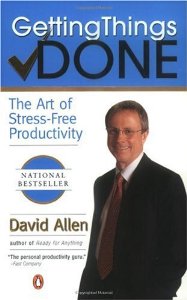
Cover of "Getting Things Done: The Art of...

Lifehacker is offering courses online; today they tackle the Getting Things Done weekly review:

You are only as good as your GTD system.

In the Getting Things Done system, without a solid weekly review, your productivity will not be at an optimum level. The weekly review is one of the most overlooked aspect of GTD, mostly because it seems to take too much time or may seem “overboard”. The fact is the GTD weekly review is essential to get more done with relaxed control.

In this Lifehack Lesson you will learn how to do one of the most thorough weekly reviews that will boost your productivity and get you one step closer to having a “mind like water”. Get the course here: How to do an Ultimate GTD Weekly Review.

If you’re not familiar with David Allen’s classic work on ‘Getting Things Done’ I strongly encourage you to look into his system!

Start a Blog at WordPress.com.

Up ↑