Brian Johnson shares this thought:
Want to optimize your life? Try this simple exercise to identify the top things you could *start* doing and *stop* doing that will lead to the most positive impact in your life!
Thinks I find along the way
Brian Johnson shares this thought:
Want to optimize your life? Try this simple exercise to identify the top things you could *start* doing and *stop* doing that will lead to the most positive impact in your life!
Kute Blackson writes:
It’s your life.
Are you living boldly?
Or are you playing it safe?
Safe is risky. Safe is an illusion. Safe is death.
Whose life are you living? Yours or someone else’s?
It’s your life. Not your parent’s, brother’s, cousin’s, friend’s or neighbor’s.
We are constantly bombarded by the media and sold the lie: “Who you are is not enough!”
We are taught to fit in. To play it safe. To seek approval. To be realistic. This process begins from the moment we are born. We are told who we need to be in order to get love and survive. We learn to play “The Game.” But ironically, the better you play the game, the more you lose …. YOU.
Continue reading “F%#k It! The 2 Magic Words Necessary To Live A Bold Life!”

Full story at: Are You Playing The Victim? Here’s How To Regain Your Power!.

“If you don’t like something change it; if you can’t change it, change the way you think about it.” ~Mary Engelbreit
Full story at: Who Are You Trying to Prove Yourself To? | Tiny Buddha.
 Melody Beattie writes:
“We learn some behaviors have self-defeating consequences, while others have beneficial consequences. We learn we have choices” Beyond Codependency
It is so easy to come to the defense of others. How clear it is when others are being used, controlled, manipulated, or abused. It is so easy to fight their battles, become righteously indignant, rally to their aid, and spur them on to victory.
“You have rights,” we tell them. “And those rights are being violated. Stand up for yourself, without guilt.”
Why is it so hard, then, for us to rally to our own behalf? Why can’t we see when we are being used, victimized, lied to, manipulated, or otherwise violated? Why is it so difficult for us to stand up for ourselves?
There are times in life when we can walk a gentle, loving path. There are times, however, when we need to stand up for ourselves – when walking the gentle, loving path puts us deeper into the hands of those who could mistreat us.
Some days, the lesson we’re to be learning and practicing is one of setting boundaries. Some days, the lesson we’re learning is that of fighting for our own rights and ourselves.
Sometimes, the lesson won’t stop until we do.
Today, I will rally to my own cause. I will remember that it is okay to stand up for myself when that action is appropriate. Help me, God, to let go of my need to be victimized. Help me appropriately, and with confidence, stand up for myself.

Tiny Buddha: Wisdom Quotes, Letting Go, Letting Happiness In
Full story at: 7 Tips to Develop a Daily Practice for Growth, Healing, and Happiness.
We’ve all heard that money can’t buy us happiness. Or as the Beatles rightly pointed out, it can’t buy you love either.
However, despite this knowledge, we are surrounded by on average 3,000 advertisements a day telling us that success and happiness comes from earning a lot of money, achieving fame and being physically beautiful. It’s little wonder we strive towards achieving these things in hope that they will equal happiness.
In this 4-minute video, Brian Johnson, author of Philosopher’s Notes, explains how we can break this cycle of extrinsic motivation by become more intrinsically motivated; simply by focusing on attaining meaningful relationships, growing as a human being and contributing. Not surprisingly, not only does this make you a better person, research has shown that it also makes you more psychologically happy and stable, too.
via Why We Do What We Do: Intrinsic vs. Extrinsic Motivation | FinerMinds.

LOL! I thought I was the only one being ‘instructed’ by my cat, but Dayne Stevens has a great post here on a totally different set of lessons than what I’m ‘taking’:
Many of us live with and love animals. But we can learn a great deal from them regarding life, how we face challenges, and how we need to live with less resistance. I personally am more of a cat person versus a dog person, but I think both cats and dogs have things to teach us…if we pay close attention.
Over the last 8 years, I’ve been the proud owner of a big, and I mean BIG, cat named Bob. Bob has been with me through good and bad times, always loyal, always loving.
The other day I was watching him sleep and it got me to thinking about the life lessons he has taught me. They’ve made a huge difference in my life; I hope they do the same for you.
Full story at: 5 Life Lessons I’ve Learned From My Cat Bob.
You can read my related cat post here…
Melody Beattie writes:
Did you ever do something stupid that hurt someone’s feelings? Did you ever treat someone wrong and there was no justification for how you behaved? I have. It’s an awful place to be, when we realize what we’ve done.
The more we value that person, the more we want them to know how genuinely sorry we are. We’d give anything to see their facial muscles soften and hear them say, “It’s okay.”
I first learned about the value of forgiveness when 1 was in treatment for chemical dependency. I didn’t realize how much I’d hurt other people until I’d been sober for a while. When I became aware of my guilt, it was paralyzing and thick. I just wanted it to go away, and I didn’t think it ever would. The antidote for guilt is forgiveness. Asking for forgiveness from others or God puts us in a vulnerable place. There is nothing we can do except wait until we get word—and believe—that it’s okay.
I recently read a magazine article about the physiological benefits of saying, “I’m sorry” Acknowledging to someone that we’ve hurt them, saying we’re sorry, and genuinely meaning it improves health.
Recovery programs have known for a long time that becoming aware of the harm we’ve done and making direct amends are essential for the well-being of the person making amends. But making amends doesn’t just benefit us. It helps the other person too.
As hard as I try not to, I still make mistakes and do things that hurt others. Sometimes I know what I’m doing is wrong, and I do it anyway Other times it’s an accident.
Forgiveness isn’t just a value we need if and when we’re recovering. It’s a value we’ll need all our lives.
Value: Forgiveness has many components: self-inspection, self-responsibility compassion, living by a set of ethics, letting go of our defenses, letting go of resentments and judgments, humbling ourselves, wanting to be close to God, acknowledging to other people that they’re important to us, knowing that others care enough about us. All these aspects of forgiveness are good. Whether we’re extending or receiving forgiveness, it’s the value this week.
Kelly O’Brien writes:
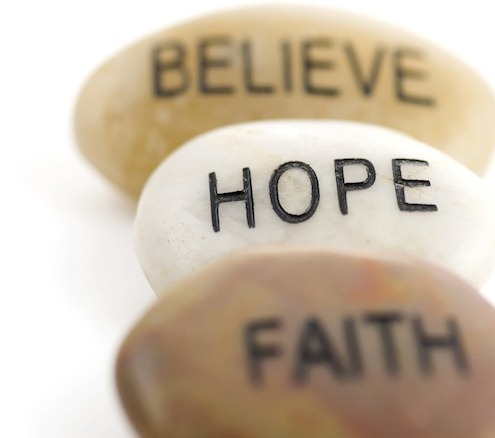
Happy New Year, everyone! It seems many of us make New Years resolutions and in order to stay inspired as we revamp our diets or workout routines, relationships or careers, we turn to quotes and affirmations. Universally, we all seem to be able to relate to quotes and “life advice” from spiritual leaders throughout history: Gandhi, Buddha, etc. What about advice from Jesus Christ? It seems when many hear the name “Jesus Christ,” they recoil. Sides are taken, much like a debate between a staunch Republican and avid Democratic. People dont want to hear advice from Jesus Christ, yet his advice is as powerful as Buddha and Gandhi. You can put a quote from Gandhi on your Facebook wall and people will hit “Like” but put one from Jesus Christ and you might get defriended. If you can stay open minded, keep reading.
…or perhaps thinking so much or overthinking. Donna Gates writes:
Have you ever wondered why your life is one way, when you dream of another?
Have you ever worried that your mistakes in the past may carry into the future?
Or if you will have the resources that you need to take you where you want to go?
We all have had these thoughts. And while they may seem harmless enough, too much worry drains the body of physical health.
It’s like this: If you want the greatest physical health possible, stop the mind chatter.
Or think very little.
Full story at: Want To Live A Long, Healthy Life? Stop Thinking!.

Carris Christianson writes:
Rather than making another set of resolutions that will most likely be broken within days, it’s time to create healthy, high-standards for yourself to insure you’re living the New Year right!
I created this Self-Agreement Contract as I began my path to wellness. It holds me accountable for living the life that aligns with my beliefs.
Although I’ve had my missteps, I return to my contract to live my best life daily! I now share this with my clients and have seen wonderful, beneficial results!
Take the time to create your own Self-Agreement Contract and start living the beautiful life you’ve always envisioned for yourself.
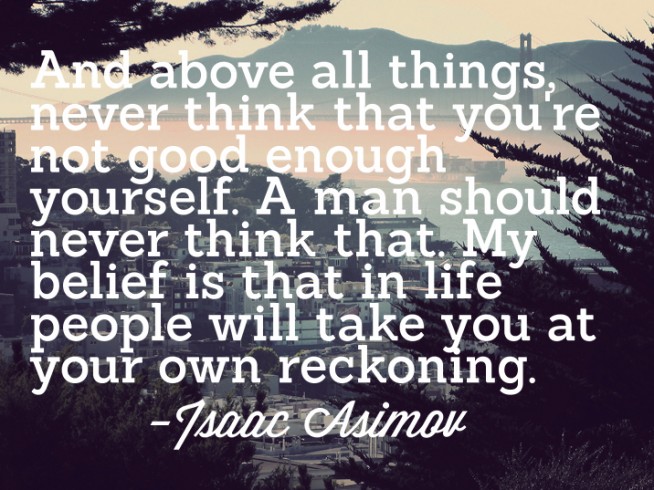
“I’m not good enough.”
At some point in our lives, we’ve all said it. We use these words to justify our fears and explain our insecurities or the reasons we don’t have the things we want most.
“I’m not good enough to be in a relationship.”
“I’m not good enough to get that job.”
“I’m not good enough to write that book.”
“I’m not good enough to record an album.”
“I’m not good enough [fill in the blank].”
These four vile words strip us of our personal value, our core identity, and any sense of purpose. They represent the epitome of the worst self-inflicted psychological diseases: self-pity.
“Certainly the most destructive vice, if you like, that a person can have. More than pride, which is supposedly the number one of the cardinal sins—is self-pity. Self-pity is the worst possible emotion anyone can have. And the most destructive. It is, to slightly paraphrase what Wilde said about hatred, and I think actually hatred’s a subset of self-pity and not the other way around: ‘It destroys everything around it, except itself.’”
Stephen Fry
It’s time to stop using the term “not good enough” to reinforce some deep-seeded belief that we are insufficient or incomplete. We cannot surrender control of our self-worth to someone else, especially to someone who likely doesn’t deserve or even want that power.
Get more here: Are You Good Enough? « Positively Positive.
Chris Assad writes:
I know the feeling. In fact, I’ve been in the thick of it for the past little while now, too. Perhaps it’s the time of year. As one year comes to a close and another begins, it’s easy to feel the pinch of time passing by. Whether it’s looking back at the year that’s just passed and feeling like there’s so much that you could have done but didn’t, or feeling overwhelmed at the challenge of stepping it up and doing one better in the year ahead, it can weigh on us.
Get the rest here: Feeling Stuck? Try This!.
Leo Babauta writes:
The Internet is overwhelming for many people — it never ends, and our connection to it is consuming more and more of our time.
When things get overwhelming, my advice is always the same: simplify.
But how do you simplify such a complicated beast as the Internet? It’s impossible! Actually, no, it’s doable, but it takes a willingness to let go.
Without letting go, there is no simplicity.
Let’s take a look at some ways to simplify the Internet.
Full story at: » Simplify the Internet :zenhabits.
My favorite suggestion? “Pay yourself first. Before you get lost down the digital rabbit hole of distractions and socializing, do the work that matters most to you first. Before you check email and social networks and start online reading, do important work. Find distraction-free spaces, and let go of the need to check your online addictions.”
Today you get a double shot of Melody Beattie because I need it!
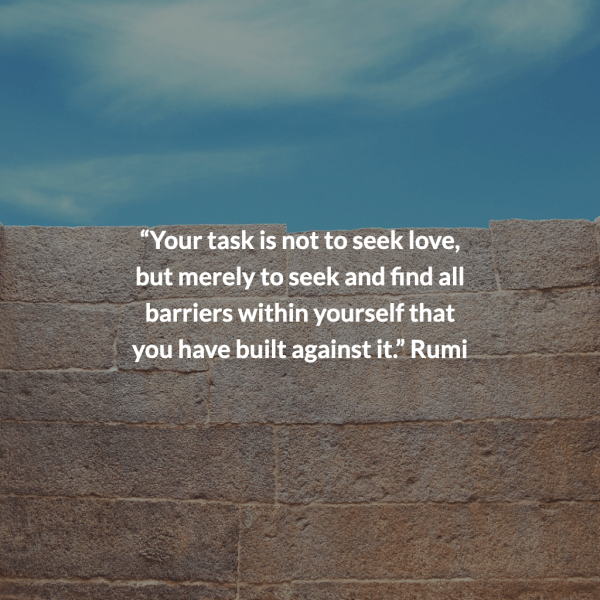
“…there isn’t a guidebook for setting boundaries. Each of us has our own guide inside ourselves. If we continue to work at recovery, our boundaries will develop. They will get healthy and sensitive. Our selves will tell us what we need to know, and we’ll love ourselves enough to listen.” Beyond Codependency
What do we need to do to take care of ourselves? Listen to that voice inside. What makes you angry? What have you had enough of? What don’t you trust? What doesn’t feel right? What can’t you stand? What makes you uncomfortable? What do you want? Need? What don’t you want and need? What do you like? What would feel good? In recovery, we learn that self care leads us on the path to God’s will and plan for our life. Self-care never leads away from our highest good; it leads toward it. Learn to nurture that voice inside. We can trust ourselves. We can take care of ourselves. We are wiser than we think. Our guide is within, ever present. Listen to, trust, and nurture that guide.
Today, I will affirm that gift to the Universe and myself. I will remember that nurturing self care delivers that gift in its highest form.


 Bright, shiny objects!
You must be logged in to post a comment.