No Partner, No Worries: New Study of Psychological Health

Interesting study about the benefits of marriage that may surprise you!

When adults get into their mid-fifties and beyond, how much does a romantic partner matter to their psychological well-being? Matthew Wright and Susan Brown of Bowling Green University, authors of a study (link is external) recently published online at the Journal of Marriage and Family, expected to find a hierarchy of good outcomes. They predicted that married people would enjoy the greatest psychological well-being. Cohabiters, they thought, would do next best, and daters would follow in third place. They expected unpartnered single people to be worst off, psychologically. That is not what they found.

Instead they found that for women, partnership status made no difference. Whether the women were married, cohabiting, dating, or single and unpartnered, there were no statistically significant differences in their experiences of depression, stress, or loneliness. There were some nonsignificant trends in the data, but even those were not always consistent with the authors’ predictions. For example, the women who were dating tended to experience more stress than the single women without a romantic partner.

For the men, having a romantic partner mattered more than it did for the women, but again, not exactly in the ways the authors predicted. The authors thought that the unpartnered single men would do worse than the single men who were dating on every measure, but that never happened. The men who were dating did not differ significantly from the unpartnered single men in their experiences of depression or stress or loneliness.

pablo (13)

The cohabiting men were predicted to do less well than the married men, but that never happened, either. The married men were more likely to report frequent depressive symptoms. They were also slightly more likely to experience stress than the cohabiting men. Marriage was also no protection against loneliness, as married men were no less lonely than cohabiting men. Cohabiting men also did well in comparison to the dating or unpartnered men on two measures of well-being: They were less likely to report frequent depressive symptoms or loneliness.

Go to the source for more: No Partner, No Worries: New Study of Psychological Health | Psychology Today
A Courageous Brain: Not Manipulated by Needless Fear

pablo-4

Our ancestors evolved a frightened brain for survival in harsh conditions. Today, unnecessary and unwarranted fear can make it harder to speak from the heart, dream big dreams and stand up to the manipulations of advertisers and demagogues. A Courageous Brain: Not Manipulated by Needless Fear is a Commonwealth Club National Podcast where Dr. Rick Hanson, Ph.D., explores the practical neuroscience of courage in ourselves, our homes, offices and politics.  Go to the Commonwealth Club for more information.

Source: A Courageous Brain: Not Manipulated by Needless Fear – Dr. Rick Hanson

Listen here…

Cubs Fans Celebrate While NL MVP Kris Bryant Gets Back to Work

You Can’t Get Rid of Your Anger—And That’s OK

Anger is an agitated state of mind that can easily lead to hatred and violence if unchecked. Yet I don’t believe it’s possible to get rid of anger; it is a universal emotion deeply rooted in ingrained survival reactions. My goal is to live with anger—as well as other difficult emotions—in a skillful way so it doesn’t cause harm.

How do I practice with anger in order to achieve that?

There are many types of anger. For example, there’s the anger I feel after watching or reading about social injustice. The energy of this type of anger can be helpful. Taking action requires experiencing enough outrage that I’m compelled to volunteer, protest, or support the causes that address social injustice—without allowing my indignation to erupt into violence.

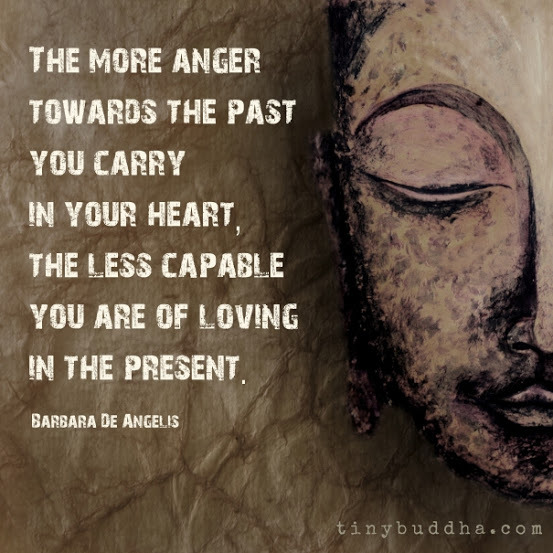
Another type of anger is made up of grudges that camouflage grief. I mentor many people who carry around unending resentments at those who’ve abandoned them, whether lovers, spouses, partners, parents, or family members. What I find is that harboring such resentment creates the illusion that we can protect ourselves from ever being abandoned again.

Source: You Can’t Get Rid of Your Anger— And That’s OK – Lion’s Roar

Truth

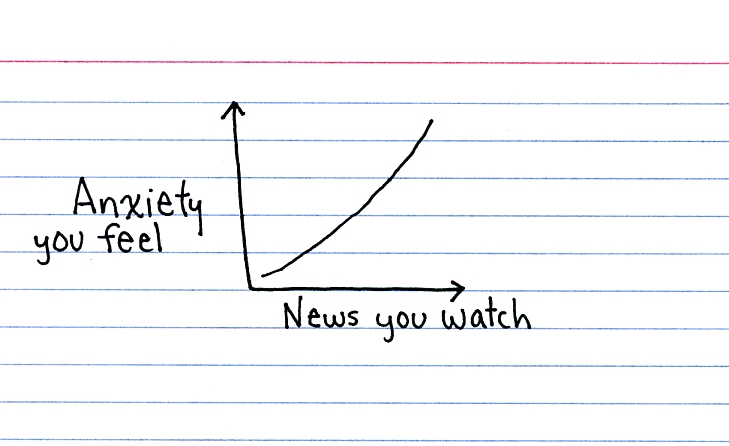
Truth! I notice this every time I visit my parents. They watch the evening news. I don’t…

Live & Learn's avatarLive & Learn

anxiety-news-terrorist-fear-chart


Source: Indexed – Existential Heartburn

View original post

How to Use Your Anger to Help Yourself

pablo

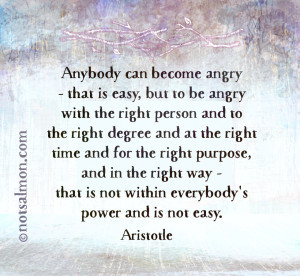
We grew up hearing that anger is a weakness. It’s shameful. It’s a monster. But I’ve learned that anger can actually be helpful if we know how to manage it.

Source: How to Use Your Anger to Help Yourself

Dangerous woman [live]

Dangerous Girl :-D

Another ‘Dangerous Woman’ sighting

Watch Your Language!

However the main reason to pick your words carefully is for yourself. We constantly hear ourselves describing ourselves and although it may be unconscious, we choose particular words to describe ourselves and our deeds. If you are someone who minimises themselves on a regular basis this is how you and others will see you. You may create the belief that you are “only” or “just” or “quite” rather than powerfully occupying who you are in whatever role you have chosen for yourself. Drop those qualifiers. Additionally, don’t use frightening or exaggerating words when describing a forthcoming event that you are not looking forward to. If you describe a visit to the doctor or dentist as horrid or scary, then like as not this is how it will be for you. Incidentally, many parents prejudice their children prior to inoculations or having to take medicine by telling their children how awful it will be. Don’t do it.

Get the rest of the article here: https://www.psychologytoday.com/blog/handy-hints-humans/201604/watch-your-language

‘Dangerous Woman’ on Jimmy Fallon

Dangerous woman. New music from Ariana Grande…

How Pain Can Cause Us to Act “Crazy” in Relationships

“Sometimes crazy behavior is a symptom of trauma and pain. A lot of times crazy behavior hides deeper issues. From the moment we are born we start to develop a sense of self and belonging. We start to develop an idea of whom we are, how others feel about us, and where we fit in the world. Our first feelings and ideas of self come from the relationship we have with our parents. Generally speaking, if children have healthy parents and feel loved and secure at home, they will grow up secure and will have secure adult relationships. But if children come from homes where there is any type of trauma, abuse, or abandonment, where they don’t learn to build a secure sense of self, then they will grow up anxious and insecure and will have difficulty trusting others and themselves. Most of the time, people who act “crazy” are subconsciously playing out their childhood wounds. These wounds need to be worked through; otherwise, they continue to manifest over and over again with every new relationship.” Source: http://tinybuddha.com/blog/how-pain-can-cause-us-to-act-crazy-in-relationships/?platform=hootsuite

The Dangers of Selfie Sticks PSA

20 most dangerous selfies ever taken

Parent child bonding done right

Start a Blog at WordPress.com.

Up ↑