How to Never Forget Anything Again

Leo Babauta writes:

The human brain is a wonderful thing, but it’s a bit faulty as a tool for remembering things. Luckily for us (and for our frazzled brains), technology has stepped in to help out.

With the proper habits and the right tools, you and your brain won’t have to remember a thing again.

There are a host of tech tools that can help with taking notes, managing projects and to-dos, and manage your email and calendar needs just fine. Though I’ll include the best choices below, these tools are just one piece of the puzzle. There are more elegant methods (ever scheduled something in Google Calendar via voicemail?)…

To really never have to remember a thing again, you have to combine a few tools in smart and comprehensive fashion, and even more important, you have to develop specific habits that will ensure that things don’t slip between the cracks … because the cracks just get bigger and bigger with more time and more data.

In this post I’ll look at some of the requirements of a “Never Forget Again” system, along with 4 key habits for using that system. I’ll include my setup, as well as some other tools you can use to develop your own setup.” Read the rest of the article here: How to Never Forget Anything Again.

Like Leo, I use Evernote, Gmail and Google Calendar, but I use Google tasks instead of ‘Anxiety’. Evernote is always available and syncronizes between devices and supports Leo’s 4 critical habits as well as David Allen’s Getting Things Done [GTD] principles…

Limit Screen Time, Limit Sitting

Leo Babauta writes:

One of the hazards of our modern lifestyle is our tendency to become more and more addicted to staring at screens, and more and more sedentary.

We look at laptops and desktop computers, iPhones and Androids and iPads and iPods, TVs and movie screens, play video games, watch videos, surf the web, socialize online, work online. And we’re sitting the whole time.

I’m a victim of this as much as anyone else. My family and I are drifting toward this lifestyle, and while I’m no Luddite, I do believe that we should live less as victims and more consciously.

Too much screen time means less active time, less personal socializing, less focus on the present, less time for cooking healthy food, less time reading novels, painting, making music, making time for the ones you love. And too much sitting means fewer years on your life.

So what’s a better way?

Limits.

Limit how much screen time you have each day. Limit your sitting to short periods with breaks in between.

I realize that many people have jobs that require them to have a minimum amount of computer time, and probably mostly sitting. So I don’t recommend a certain number, only that you figure out a limit and work with that.

What I’ve Been Doing

Though I’ve set limits for myself in the past, I’ll admit that they’ve eroded in recent months, so that my screen time has grown over time. And not just for me — for my wife and kids. So recently Eva and I set limits for ourselves, and we’ve been working with them.

We find them to be great. I find daily limits to be a better balance than going on week-long or month-long digital sabbaticals, which aren’t realistic for many people.

Here’s an example:

  • We set a limit of either 4 or 5 hours of total screen time a day. (We haven’t figured out what’s best yet, still experimenting.)
  • That total is broken into 30-minute chunks. So if it’s 5 hours total, that’s 10 chunks of 30 minutes.
  • At the start of a 30-minute chunk, I set a computer timer and put a tally mark on a text document, so I know how many chunks I’ve used today. When the bell rings, I close my laptop.
  • After the 30-minute chunk, I take a break of at least 30 minutes. I try to get up and move, stretch, play with the kids, get outside. I also often read a novel. The moving is good for my body, and helps me to think.
  • If I have things I want to look up online, or write online, I’ll just make a note of it and do it when I start my next 30-minute chunk.

This isn’t the only way to do it — you’ll have to find the limit that works for you, and the chunk size that works for you. But the idea is to set limits, and to break the total up into pieces so you’ll take breaks and do other things.

Benefits of the Limits

We’ve loved it: we’re reading more books, spending more personal time with each other and the kids, getting more chores done, exercising more, playing outside more.

It also means that because we have a limit, we have to figure out the best way to use that time. We have to make choices — what’s worthy of our limited time, and what isn’t? This means more conscious use of our time.

We haven’t instituted the limits with the kids yet, though we have been talking to them about it and getting them thinking about what would work best for them. And we do tell them to take breaks from devices throughout the day, so they’ll do other things.

For the kids, this has meant they have more unstructured, imaginative play, more reading, more art and music, more activity. Kids get addicted to screens just as much as adults do, and it’s not a healthy thing for them. We’re trying to teach them ways to live a healthy lifestyle, which is a lesson with lifelong benefits.

We’ve found this lifestyle to be healthier, better for relationships, better for our peace of mind. And to me, that means it’s something work keeping.

More reading:

via Limit Screen Time, Limit Sitting.

Social Media Platforms, Narcissists, Borderlines and Histrionics: The Lure of Blogs, Facebook and MySpace

Dr Tara J. Palmatier writes:

Over the last few months, many Shrink4Men readers have posted comments about how much time their spouses, girlfriends and exes spend on Facebook, MySpace, Twitter personal blogs and other social media platforms like mommy and bridal websites. Their behavior goes far beyond the typical sharing of family photos or funny news links. These individuals create their own public-relations-spin-control-propaganda-I-am-the-center-of-the universe profiles, networks and feeds.

One recently divorced reader’s (Still Recovering) ex-wife became obsessed with her profile and “friends” on a popular bridal site, TheKnot, and then a newlywed site, TheNest. His ex maintained her elaborate profile post-divorce—including photos of him and their wedding—and communicated with her followers as if they were still married. After repeatedly requesting that she remove his photos, he publicly outed her regarding the divorce. His ex and her online friends erupted into a flame war in which they portrayed him as the abusive psycho rather than his ex-wife who was masquerading as a perennial bride-newlywed in order to maintain her status and feel special. Still Recovering suspects that his ex-wife may, in fact, be a narcissistic personality.

Other readers report that their wives, girlfriends and exes spend inordinate amounts of time every day fine tuning their profiles and posting updates in which they portray themselves as busy “super moms/super wives/super martyrs” who single-handedly run their households and take care of their children and husbands. One wonders how they do all of this while spending most of the day online.

What’s the connection between narcissism and social media?” Read the rest of the article here: Social Media Platforms, Narcissists, Borderlines and Histrionics: The Lure of Blogs, Facebook and MySpace « A Shrink for Men.

Related articles

Creating Peace by Finding a Connection to the Earth

“You get peace of mind not by thinking about it or imagining it, but by quietening and relaxing the restless mind.” ~Remez Sasson. Read the rest of the article here: Creating Peace by Finding a Connection to the Earth | Tiny Buddha.

Tell A New Story!

The Daily Love via Visual Inspiration: Tell A New Story!.

Slow-and-Steady Wins the Race: Especially with Diet and Weight

Terese Katz writes:

When it comes to exercise, too, slow and steady promises results. Fitness journalist Gretchen Reynolds recently reviewed several large-scale exercise studies. It was “slow or average” paced jogging, moderate exercise like walking or cycling, that proved most beneficial. These regimes, and not high-intensity running, for example, improved health factors most consistently. So here, sticking with what’s manageable, and not necessarily pressing yourself for more and more, may serve you well in the long run.

The moral of these findings could be summed up with some words from a Harvard Health Letter summarizing decades or research on changing unhealthy behavior: “Change is a process, not an event.” “It can take a few rounds.” “You should keep trying.” “Any effort you make in the right direction is worthwhile.” People who’ve kept weight off, or stopped a gorging habit, or built a solid exercise routine will usually echo these sentiments. In your frustration, when weight loss seems stuck, or when you feel you just can’t get it right, take heart from knowing that you still may be forging change.

Often we don’t realize we’re “forging” at all. If you’ve stopped and started a hundred diets, though, chances are you’ve discovered a thing or two that actually does work for you, even if the overall schemes did not. For example, you may not have kept your Weight Watchers pounds off, but maybe you’ve incorporated the idea of “budgeting” so that’s it’s now part of your automatic thinking. You may ask yourself “Can I afford this?”, as you approach the make-your-own-sundae party. Maybe you’ve learned that a food log will pull you back to a more mindful eating stance.

Or, perhaps you found the ultra-low-carb diet impossible. However, you’ve retained the idea of keeping certain carbs low—like maybe those in white breads or pasta. Or perhaps when fat-free fell by the wayside, you at least kept up an awareness of fat content, and the extra calories they bring.” Read the rest of the article here: Slow-and-Steady Wins the Race: Especially with Diet and Weight | Psychology Today.

“Peter Pan”, 1924

Retronaut. Get more here: “Peter Pan”, 1924.

The best of @toddlohenry for 7/17/2012

  1. “My life has been filled with misfortunes, most of which never happened.”- Mark Twain

    Sat, Jul 14 2012 15:18:31
  2. Todd’s tweets…

  3. toddlohenry
    “5 Reasons You Can’t Tell When You Are Being Lied To” http://bit.ly/LvYosN
    Tue, Jul 17 2012 09:02:55
  4. toddlohenry
    25 Animals Who Are Genuinely Interested In What You Have To Say http://bit.ly/NdEJil
    Mon, Jul 16 2012 17:00:42
  5. toddlohenry
    Wow. Even LinkedIn is getting a major overhaul… With Sights Set on Engagement, LinkedIn Launche… http://bit.ly/O3Nppq
    Mon, Jul 16 2012 16:50:15

The 7 Benefits of Keeping a Daily Journal

via Michael Hyatt’s Blog. Get more here: The 7 Benefits of Keeping a Daily Journal.

Grow Through It!

The Daily Love via Visual Inspiration: Grow Through It!.

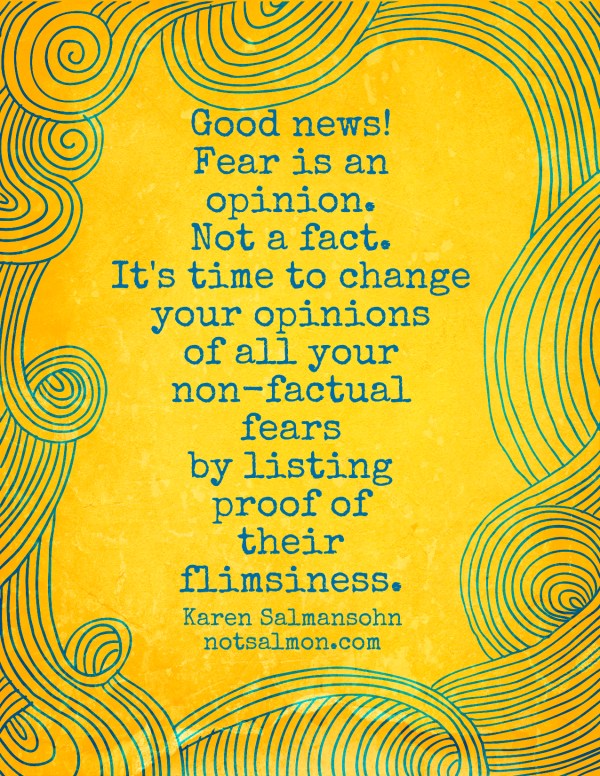
Good news! Fear is an opinion, not a fact!

notsalmon via Good news! Fear is an opinion, not a fact!.

Connecting some dots on ‘boundaries’

  1. Everything I’ve ever curated on ‘boundaries’…

“Yes” Doesn’t Count if you can’t say “No” – Why Clear Boundaries are Important in Intimate Relationships

English: A young woman and man embracing while...

I found this over at Psychology Today:

Most people think of an ideal romantic relationship as a union of two inseparable beings forged into one heart, one mind, and one dream. If either partner has a conflicting desire, he or she too often does not express it. They consciously or unconsciously choose to protect the fantasy of perfect compatibility, but may not realize the limitations that are wedded to that decision.
Eventual conflicts are not as noticeable early when relationships are new. The joy of new discovery and lustful connection often eclipse any disagreements that might arise. Newly-in-love partners too often do not want to know anything about each other that could threaten the perfection they cherish. Both may choose to leave well enough alone even if the result is incomplete or inauthentic communication. In the void of unexpressed conflicts, the partners often want to maintain the illusion of a perfect match.

“He finishes my sentences before I even know what I’m going to say.”

“She anticipates what I want before I tell her.”

“We agree on everything. It’s amazing.”

“It’s so easy to be together. We love all the same things.”

Sadly, those constructed realities of perfect compatibility cannot sustain over time. People cannot feel genuinely loved if their partners are not aware of the other’s core feelings and desires. They can only keep renewing their love if they can face their conflicts openly and work through them.

That requires that both partners are willing to follow these six principles:

They are able to say what they need from their partners

They know what they are able to offer

They honestly share those thoughts and feelings

They listen to their partner’s needs without becoming defensive

They have or are willing to learn the skills to negotiate their differences

They respect each other’s conflicting desires

To make these principles work, partners must be clear from the beginning of their relationship to set clear boundaries that they both agree to honor. Boundaries are like the borders between countries. They can be barriers to communication and cooperation, or viable interfaces for exchanging ideas and resources.

When beautifully used in intimate relationships, they are symbolic lines of demarcation that help partners understand their differences while they seek whatever ways are necessary to authentically connect. Only the acceptance of those known similarities and differences can keep partners truly validating their mutual needs.

Healthy boundaries should be fluid and openly susceptible to changes by either partner during any time in their relationship. They hopefully know or are willing to learn what is personally important to them and make every effort to share those thoughts with each other. By working together over time, they learn to quickly recognize when they are in agreement, when they need to negotiate, and when they must turn down a request that could destroy their personal integrity.” Get more here: “Yes” Doesn’t Count if you can’t say “No” – Why Clear Boundaries are Important in Intimate Relationships | Psychology Today.

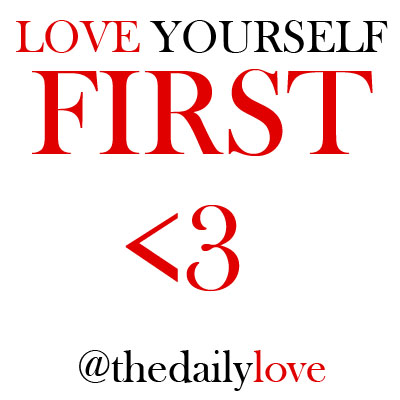
Love Yourself First!

I don’t think you can accomplish much in a relationship if you aren’t bringing YOUR best every day. On the surface, self-love sounds ‘wrong’ but it’s the right thing to do! The Daily Love via Visual Inspiration: Love Yourself First!.

Jeremiah 17:5-10

Cover for a NIV Bible

Trust in your higher power, not in the people around you!

5 This is what the Lord says:

“Cursed is the one who trusts in man,

who draws strength from mere flesh

and whose heart turns away from the Lord.

6 That person will be like a bush in the wastelands;

they will not see prosperity when it comes.

They will dwell in the parched places of the desert,

in a salt land where no one lives.

7 “But blessed is the one who trusts in the Lord,

whose confidence is in him.

8 They will be like a tree planted by the water

that sends out its roots by the stream.

It does not fear when heat comes;

its leaves are always green.

It has no worries in a year of drought

and never fails to bear fruit.”

9 The heart is deceitful above all things

and beyond cure.

Who can understand it?

10 “I the Lord search the heart

and examine the mind,

to reward each person according to their conduct,

according to what their deeds deserve.” via Jeremiah 17 NIV | YouVersion.

Be what you want to attract

notsalmon via Love This @SerenaDyer Quote!.

Stop Reading This (and Start Doing More)

Sorry, but sometimes when I start curating an article, I just can help but grab the whole thing! Justin Miller writes:

Nike’s slogan, Just Do It, goes far beyond the athletic field. It really can serve as a mantra for a successful life.

But in order to turn “Just do it” into a mission statement for living wisely, it’s important to get off the couch, take a hard look at your life and fix what’s broken – without beating yourself up about what might have been.

So wrap up your reading, grab a piece of paper to take down some notes and get ready to make some changes. It’s time for your new life, and that time starts NOW.

Forget regrets

Don’t let past mistakes rob you of your future. It’s easy to look back and see how our mistakes have creates bumps in our road of life, but that doesn’t mean they have to become a compete roadblock that robs us of our future. Regret provides an opportunity for growth. Stop shoulding all over your self. I should have done this. I should have done that. There’s plenty more to get done. Get started today!

Take a cue from their actions, and forget the regret, opening the doors to a different, brighter future.

Assess your needs

Take time to think hard about what  it really is you want to accomplish in your life, and look at what you’re doing that will make that possible. Also think about the things you may be doing right now that are holding you back.

Erase the things that prevent your dreams from seeing fruition, like the after-work drink that turns into ten and prevents you from being on top of your game the next day, and focus on what works.

Ask yourself this question every day. What is one thing I can do right now that will guarantee I have a great day? What is one thing I can stop doing right now that almost certainly guarantees a bad one.

Surround yourself with greatness

Make sure that the people you are hanging out with are people you admire, people who are living a life that you want for yourself. The close proximity to success is a great way to make it part of your own world. They say you are the average of the five people you spend the most time with.

The time is now

There’s never the perfect time for taking action. If you wait around for perfect conditions – when I lose weight I’ll do it, when the economy looks better I’ll try to branch out – that day will likely never come.

Try to look at today’s conditions as right, no matter what they are, and work with what you’ve been given. You always have the greatest resource available to you. That resource being choice. You choose to take action or not.

Break it down

If a task seems completely unmanageable, break it down into smaller parts.

If you want to write a book, but the idea of it is so overwhelming you can’t seem to get started, it pays to start small. Write a page a day, and within a year, you will have written 365 pages, bringing you that much closer to your goal.

No place for procrastination

Don’t put off until tomorrow what you can do today. Taking charge now will not only leave tomorrow free for tackling some other project, but will also erase the guilt you feel when you do procrastinate.

Just take a deep breath, grab the paperwork, and do it. Write the first page, sign up for the gym membership or send out a resume to the firm where you’ve always wanted to work. You can’t get the job if they don’t know who you are.

Focus on the essentials, and let the other things wait

Sure, you’d like to volunteer, plant a garden, get a degree, and take a vacation.  Eventually, you will do all those things. But in the hectic, stress-filled now, choose the most important and most pressing of your goals, and weed out those things that can wait.

Don’t be afraid to say no to the one-acre garden plot and plant a container garden or a few pots of herbs instead. Take a single class as you aim for a degree and plan a weekend away to Vegas with your partner or some friends, making it a temporary stand-in for that backpacking trip across Europe.” via Stop Reading This (and Start Doing More).

The 21 Best Organic Snacks

I’m not sure about the integrity of this list; there’s not a raw vegetable in sight! Seems to be mostly packaged foods but if that’s your thing, you can get more here: healthy snacks list | The 21 Best Organic Snacks | Rodale News.

Calvin on perspective

Calvin and Hobbes Comic Strip, July 15, 2012 on GoComics.com.

It’s A New Start!

The Daily Love via Visual Inspiration: It’s A New Start!.

Get the Guilt Stain Out

“Nagging guilt is like gray paint splashed over life’s sparkling moments” Sally Shannon. Get more here: Get the Guilt Stain Out « Positively Positive.

Start a Blog at WordPress.com.

Up ↑