Bikers stop at the Algoma beach all the time. A caught a big pack starting up on my way into the office this afternoon…
Let’s ride!

Thinks I find along the way
Bikers stop at the Algoma beach all the time. A caught a big pack starting up on my way into the office this afternoon…

Somebunny loves me! Thanks, Jaz…
You must be the change you wish to see in the world. Mahatma Gandhi

View original post 15 more words

I saw it as it happened!
At 10:56 p.m. EDT, American astronaut Neil Armstrong, 240,000 miles from Earth, speaks these words to more than a billion people listening at home: “That’s one small step for man, one giant leap for mankind.” Stepping off the lunar landing module Eagle, Armstrong became the first human to walk on the surface of the moon.
The American effort to send astronauts to the moon has its origins in a famous appeal President John F. Kennedy made to a special joint session of Congress on May 25, 1961: “I believe this nation should commit itself to achieving the goal, before this decade is out, of landing a man on the moon and returning him safely to Earth.” At the time, the United States was still trailing the Soviet Union in space developments, and Cold War-era America welcomed Kennedy’s bold proposal.
In 1966, after five years of work by an international team of scientists and engineers, the National Aeronautics and Space Administration (NASA) conducted the first unmanned Apollo mission, testing the structural integrity of the proposed launch vehicle and spacecraft combination. Then, on January 27, 1967, tragedy struck at Kennedy Space Center in Cape Canaveral, Florida, when a fire broke out during a manned launch-pad test of the Apollo spacecraft and Saturn rocket. Three astronauts were killed in the fire.
Despite the setback, NASA and its thousands of employees forged ahead, and in October 1968, Apollo 7, the first manned Apollo mission, orbited Earth and successfully tested many of the sophisticated systems needed to conduct a moon journey and landing. In December of the same year, Apollo 8 took three astronauts to the dark side of the moon and back, and in March 1969 Apollo 9 tested the lunar module for the first time while in Earth orbit. Then in May, the three astronauts of Apollo 10 took the first complete Apollo spacecraft around the moon in a dry run for the scheduled July landing mission.
At 9:32 a.m. on July 16, with the world watching, Apollo 11 took off from Kennedy Space Center with astronauts Neil Armstrong, Edwin Aldrin Jr., and Michael Collins aboard. Armstrong, a 38-year-old civilian research pilot, was the commander of the mission. After traveling 240,000 miles in 76 hours, Apollo 11 entered into a lunar orbit on July 19. The next day, at 1:46 p.m., the lunar module Eagle, manned by Armstrong and Aldrin, separated from the command module, where Collins remained. Two hours later, the Eagle began its descent to the lunar surface, and at 4:18 p.m. the craft touched down on the southwestern edge of the Sea of Tranquility. Armstrong immediately radioed to Mission Control in Houston, Texas, a famous message: “The Eagle has landed.”
At 10:39 p.m., five hours ahead of the original schedule, Armstrong opened the hatch of the lunar module. As he made his way down the lunar module’s ladder, a television camera attached to the craft recorded his progress and beamed the signal back to Earth, where hundreds of millions watched in great anticipation. At 10:56 p.m., Armstrong spoke his famous quote, which he later contended was slightly garbled by his microphone and meant to be “that’s one small step for a man, one giant leap for mankind.” He then planted his left foot on the gray, powdery surface, took a cautious step forward, and humanity had walked on the moon.
“Buzz” Aldrin joined him on the moon’s surface at 11:11 p.m., and together they took photographs of the terrain, planted a U.S. flag, ran a few simple scientific tests, and spoke with President Richard M. Nixon via Houston. By 1:11 a.m. on July 21, both astronauts were back in the lunar module and the hatch was closed. The two men slept that night on the surface of the moon, and at 1:54 p.m. the Eagle began its ascent back to the command module. Among the items left on the surface of the moon was a plaque that read: “Here men from the planet Earth first set foot on the moon–July 1969 A.D–We came in peace for all mankind.”
At 5:35 p.m., Armstrong and Aldrin successfully docked and rejoined Collins, and at 12:56 a.m. on July 22 Apollo 11 began its journey home, safely splashing down in the Pacific Ocean at 12:51 p.m. on July 24.
There would be five more successful lunar landing missions, and one unplanned lunar swing-by, Apollo 13. The last men to walk on the moon, astronauts Eugene Cernan and Harrison Schmitt of the Apollo 17 mission, left the lunar surface on December 14, 1972. The Apollo program was a costly and labor intensive endeavor, involving an estimated 400,000 engineers, technicians, and scientists, and costing $24 billion (close to $100 billion in today’s dollars). The expense was justified by Kennedy’s 1961 mandate to beat the Soviets to the moon, and after the feat was accomplished ongoing missions lost their viability.
via Armstrong walks on moon — History.com This Day in History — 7/20/1969.
As long as you’ve read this far, here’s a bonus funny story that unfortunately never happened…


Kristin Barton Cuthriell writes:
“Criticism is something we can avoid easily by saying nothing, doing nothing, and being nothing. “ -Aristotle
You have a purpose.
There is work to be done.
You can do it.
There is fun to be had.
You can have it.
There are people to love.
You can love them.
There are quiet moments to enjoy.
You can enjoy them.
There is love to be received.
You can receive it.
There is life worth experiencing.
You can experience it.
No matter what you do, there may always be someone out there who finds fault in you.
The truth is… we all have faults.
The truth is… we can always find a critic.
Are you going to allow those critics or the critic that lives within you, hold you back from living your best life?
Work hard, play hard, take time to rest, pray, and let life in.
When you live with integrity, you can ignore the critic.
Related articles
- Appreciation Is The Language of the Soul (mothermaryswords.wordpress.com)
- The love you give is the love you receive. (positive-thoughts.typepad.com)
- The inner Critic (wellnessspirit.wordpress.com)

Pops Digital via Fireworks of Green and Red.

The Daily Love via Visual Inspiration: Be The Love!.

Salads have so much potential –though that’s not always a good thing. Topped with fresh vegetables, lean proteins, healthy fats, and homemade dressing, they can make the perfect nutrient-packed meal. But when words like “buffalo,” “bacon,” and “blue” are involved, their real potential is for packing on pounds. Thankfully, you don’t need to nosh solely on plain lettuce leaves to stay slim and healthy. We asked top nutrition experts to reveal their favorite recipe for a hearty, healthy salad. Their answers were even more mouthwatering than expected. Check out all 23 expert’s meal ideas—and try not to drool!” via 23 Healthy Salads Nutrition Experts Eat Slideshow | LIVESTRONG.COM.

via Stepcase Lifehack. Read the article here: How To Stop Cravings: Banishing Unhealthy Snacking.

Nice picture [even if it is Kewaunee!]. Pops Digital via Supraliminal Sunrise.
The Daily Love via Visual Inspiration: No More Excuses!.

Pops Digital via Bird’s Foot Trefoil.

via Stepcase Lifehack. Read the article here: How to Stay Young…Even with Kids.


Jennifer Pastiloff writes:
One of the things I do in my Manifestation Workshops and Retreats is have people write down all their excuses on a piece of paper and then rip it up and put it in a pile at the front of the room. The little pieces of paper mix in with other little pieces of paper and look like a pile of trash. Which is, essentially, what they are.
So what do the papers say? What excuses am I talking about?
Any and all excuses.
Any excuses that we have collected over the years that stop us from going after what we want or saying Yes.
Mine have ranged from:
- I don’t have enough money,
- It will be hard,
- I don’t have enough experience,
- People won’t like me,
- I am too old,
- I am too fat
- I am too tired
- I am not good enough,
… and on and on depending on the year, the day, the mood.
So, I have them put the excuses into this pile at the front of the room, and then I ask them what the pile is. We all agree it is a pile of trash, of garbage, of sh*t. I then take a picture of it and tell anyone that if they ever forget that they have put their excuse into this pile, they can email me or call me and I will send them the photo as a sweet reminder.
Some people struggle when I ask them to rip up the excuses. You can see a slight subtle pull of resistance. Like they are afraid of who they might be, of what they might do, without their beloved excuse that they have clung to for so long.
At my last retreat in Italy, just a week ago, a girl from Philadelphia shared something really profound with me.
She had attended my workshop in Philadelphia at Dhyana Yoga in March. After the workshop, she emailed me to inquire about my Tuscany retreat. We exchanged a few emails, and then she decided she couldn’t make it happen.
A few days later she emailed me back and said she had changed her mind and was going to join me.
In Tuscany, she told me that she had been standing in her kitchen making tea after our initial emails where she told me she couldn’t make the retreat happen when it hit her like a pot of boiling water!
She had realized that all the excuses she had given me as to why she could not attend the retreat in Italy where no longer usable because she had ripped them up and put them into a pile of sh*t on the floor of Dhyana Yoga back in March. The excuses ran the gamut from she didn’t have enough money, she didn’t have anyone to go with, she wasn’t “good” at yoga, etc. She told me all of this with tears in her eyes in Italy, where she made lifelong friends and had a life-changing experience.
Yes, it was just words on a paper and a metaphor of throwing excuses into a pile of garbage. But, did it matter? She remembered that metaphor, and that action of ripping up her excuses, and chose to no longer use them.
We always have the choice.
Read the rest of the article here: Put Your Excuses in a Pile of Sh*t

Alltop Inspiration RSS via If You Were Waiting For A Sign.. This Is It.


Tara Palmatier shares this thought:
“Entitlement and narcissism are on the rise in our culture. Every now and again, you get to witness what happens when entitlement and a lack of smarts collide.
And that’s what happened at the Alamo Drafthouse last summer when an angry customer left an indignant, expletive riddled and hilarious voicemail to complain about being kicked out of one of their theaters for texting on her phone during a movie. Please note, I don’t think the woman who left the voicemail intended it to be hilarious, but don’t forget about what I said earlier about the entitlement and lack of smarts combo.
I don’t live anywhere near an Alamo Drafthouse cinema, but if I did, I’d happily give them my patronage. I think they handled this exactly right.
If you are at work, please turn down the volume or plug in your headset as the woman caller uses a good deal of profanity:” via Friday Funny: The Rules Don’t Apply to Me, A$$hole! | Shrink4Men.


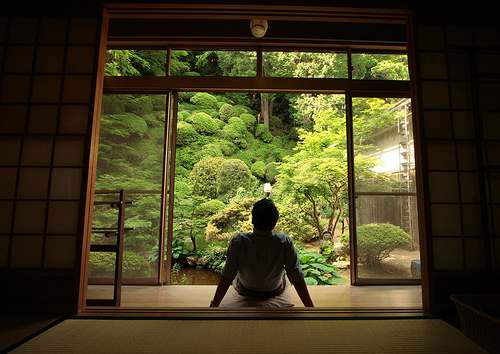
Don’t you hate those days where you can’t turn off the negative internal chatter in your head? When you wake up in the morning and the very thing that was circling around in your head the night before is there to greet you with a big nudge, and not even a coffee?
This negative chatter can really impact your productivity throughout the day and ruin your ability to live in the moment. It’s only natural that we worry about circumstances in our lives, we wouldn’t be human if we didn’t. However, when these thoughts consume our heads to the point where we find it difficult to concentrate on anything else, it’s important you have a coping mechanism in place to try and get you through the day.
When it comes to decluttering the head and letting go of what’s worrying you, we found some really practical tips in 7 Ways To Let Go Of What’s Ailing You. The article explains that while we may not be able to solve the problem on the spot, there are many ways we can try and let it go of it for the time being.
“Letting go doesn’t mean ignoring the problem. It simply means that you realize that there is nothing you can do about the issue right now, and rather than having it consume your life with stress and anxiety you are going to put it aside until you are in a position where you can deal with it.”
One of our favorite tips in the article is the visualization exercise. If you’re not used to visualizing, this may seem a little strange to start off with, however, this method can be very effective as it puts you in a position of control to deal with the problem, even if it’s just in your head. For example:
“Imagine the thing that is bothering you, and then visualize placing it in a balloon and watching it float away.”
You’ll be surprised by how therapeutic this exercise can be and the ability for it to free your mind.
If this method isn’t for you, another helpful tip is to write your thoughts down. If you feel the anxiety building in the morning before you’ve even entered the shower, sit down and freely write your thoughts, paying little attention to the need for it to make sense.
The aim is to release everything from your mind, no matter how illogical your thoughts may seem, and write for as long as it takes to get everything out. You’ll be surprised how easily and quickly the words fall to the page when they come from the heart – it’s almost as if the brain is relieved it has an opportunity to freely unload. Even if writing isn’t your forte, this is a very easy exercise which you can turn into a daily practice.
Do you use a technique to turn off the internal chatter running around in your head? Or perhaps you have several depending how severe the issue is? Tell us about your favorite method and how effective it is at “letting thoughts go”. via Let It Go: Switching Off Your Inner Chatter.
Leo Babauta writes:
The human brain is a wonderful thing, but it’s a bit faulty as a tool for remembering things. Luckily for us (and for our frazzled brains), technology has stepped in to help out.
With the proper habits and the right tools, you and your brain won’t have to remember a thing again.
There are a host of tech tools that can help with taking notes, managing projects and to-dos, and manage your email and calendar needs just fine. Though I’ll include the best choices below, these tools are just one piece of the puzzle. There are more elegant methods (ever scheduled something in Google Calendar via voicemail?)…
To really never have to remember a thing again, you have to combine a few tools in smart and comprehensive fashion, and even more important, you have to develop specific habits that will ensure that things don’t slip between the cracks … because the cracks just get bigger and bigger with more time and more data.
In this post I’ll look at some of the requirements of a “Never Forget Again” system, along with 4 key habits for using that system. I’ll include my setup, as well as some other tools you can use to develop your own setup.” Read the rest of the article here: How to Never Forget Anything Again.
Like Leo, I use Evernote, Gmail and Google Calendar, but I use Google tasks instead of ‘Anxiety’. Evernote is always available and syncronizes between devices and supports Leo’s 4 critical habits as well as David Allen’s Getting Things Done [GTD] principles…

 Leo Babauta writes:
One of the hazards of our modern lifestyle is our tendency to become more and more addicted to staring at screens, and more and more sedentary.
We look at laptops and desktop computers, iPhones and Androids and iPads and iPods, TVs and movie screens, play video games, watch videos, surf the web, socialize online, work online. And we’re sitting the whole time.
I’m a victim of this as much as anyone else. My family and I are drifting toward this lifestyle, and while I’m no Luddite, I do believe that we should live less as victims and more consciously.
Too much screen time means less active time, less personal socializing, less focus on the present, less time for cooking healthy food, less time reading novels, painting, making music, making time for the ones you love. And too much sitting means fewer years on your life.
So what’s a better way?
Limits.
Limit how much screen time you have each day. Limit your sitting to short periods with breaks in between.
I realize that many people have jobs that require them to have a minimum amount of computer time, and probably mostly sitting. So I don’t recommend a certain number, only that you figure out a limit and work with that.
What I’ve Been Doing
Though I’ve set limits for myself in the past, I’ll admit that they’ve eroded in recent months, so that my screen time has grown over time. And not just for me — for my wife and kids. So recently Eva and I set limits for ourselves, and we’ve been working with them.
We find them to be great. I find daily limits to be a better balance than going on week-long or month-long digital sabbaticals, which aren’t realistic for many people.
Here’s an example:
- We set a limit of either 4 or 5 hours of total screen time a day. (We haven’t figured out what’s best yet, still experimenting.)
- That total is broken into 30-minute chunks. So if it’s 5 hours total, that’s 10 chunks of 30 minutes.
- At the start of a 30-minute chunk, I set a computer timer and put a tally mark on a text document, so I know how many chunks I’ve used today. When the bell rings, I close my laptop.
- After the 30-minute chunk, I take a break of at least 30 minutes. I try to get up and move, stretch, play with the kids, get outside. I also often read a novel. The moving is good for my body, and helps me to think.
- If I have things I want to look up online, or write online, I’ll just make a note of it and do it when I start my next 30-minute chunk.
This isn’t the only way to do it — you’ll have to find the limit that works for you, and the chunk size that works for you. But the idea is to set limits, and to break the total up into pieces so you’ll take breaks and do other things.
Benefits of the Limits
We’ve loved it: we’re reading more books, spending more personal time with each other and the kids, getting more chores done, exercising more, playing outside more.
It also means that because we have a limit, we have to figure out the best way to use that time. We have to make choices — what’s worthy of our limited time, and what isn’t? This means more conscious use of our time.
We haven’t instituted the limits with the kids yet, though we have been talking to them about it and getting them thinking about what would work best for them. And we do tell them to take breaks from devices throughout the day, so they’ll do other things.
For the kids, this has meant they have more unstructured, imaginative play, more reading, more art and music, more activity. Kids get addicted to screens just as much as adults do, and it’s not a healthy thing for them. We’re trying to teach them ways to live a healthy lifestyle, which is a lesson with lifelong benefits.
We’ve found this lifestyle to be healthier, better for relationships, better for our peace of mind. And to me, that means it’s something work keeping.
More reading:








 Bright, shiny objects!
comments