

Surrender yourself humbly; then you can be trusted to care for all things. Do not be concerned with loss or gain. Love the world as your own Self; then you can truly care for all things.
~Lao Tsu~
Thinks I find along the way
Surrender yourself humbly; then you can be trusted to care for all things. Do not be concerned with loss or gain. Love the world as your own Self; then you can truly care for all things.
~Lao Tsu~


Simple, but not easy…
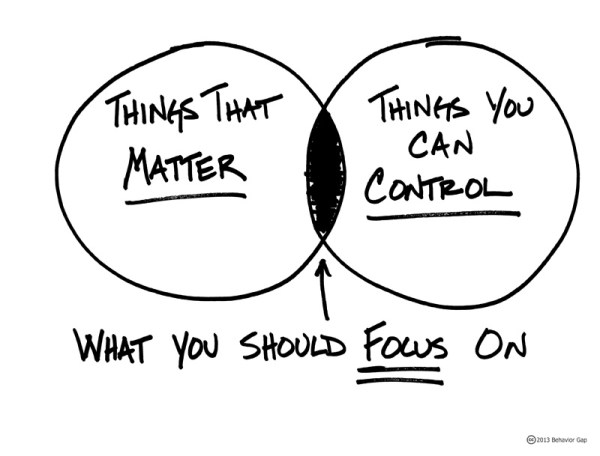
It’s amazing to me that Epictetus had this nailed in 100 CE and yet we each need to discover this in our own lives…

Epictetus (AD 55–135) was a Greek sage and philosopher. He was born a slave in present day Turkey, and lived in Rome until his banishment, when he went to Nicopolis in northwestern Greece for the rest of his life. Philosophy, Epictetus taught, is a way of life and not just a theoretical discipline. To Epictetus, all external events are determined by fate, and are thus beyond our control; we should accept whatever happens calmly and dispassionately. However, individuals are responsible for their own actions, which they can examine and control through rigorous self-discipline. Suffering occurs from trying to control what is uncontrollable, or from neglecting what is within our power. As part of the universal city that is the universe, it is our duty to care for all our fellow men. Those who follow these precepts will achieve happiness and peace of mind. (Source: Wiki)

“Today is your day! Your mountain is waiting, so…get on your way!”
Continue reading: Dr. Seuss’ Prescription For A Bad Day (PHOTOS).

Don’t get me wrong — I love my cat more than my dog, but there’s some truth in this…

Tara Brach writes:
All of us live with fear. Whenever fear takes over, we’re caught in what I call the trance of fear. As we tense in anticipation of what may go wrong, our heart and mind contract. We forget that there are people who care about us, and about our own ability to feel spacious and openhearted. Trapped in the trance, we can experience life through the filter of fear, and when we do, the emotion becomes the core of our identity, constricting our capacity to live fully.
This trance usually begins in childhood, when we experience fear in relating to our significant others. Perhaps as an infant our crying late at night may have frustrated our exhausted mother. When we saw her frowning face and heard her shrill tone, suddenly we felt unsafe with the person we most counted on for safety. Our arms and fists tightened, our throat contracted, our heartbeat raced.
This physical reaction of fear in response to disapproval may have happened repeatedly through our early years. We might have tried out something new—putting on our clothes all by ourselves and gotten them backwards. We might have poured a cup of grape juice—but spilled it on the living room carpet. Each time our mother’s disapproving look and tone of frustration were directed at us, we felt the same chain reaction of fear in our body.
Continue reading: Tara Brach: The Trance of Fear.







 Bright, shiny objects!
You must be logged in to post a comment.