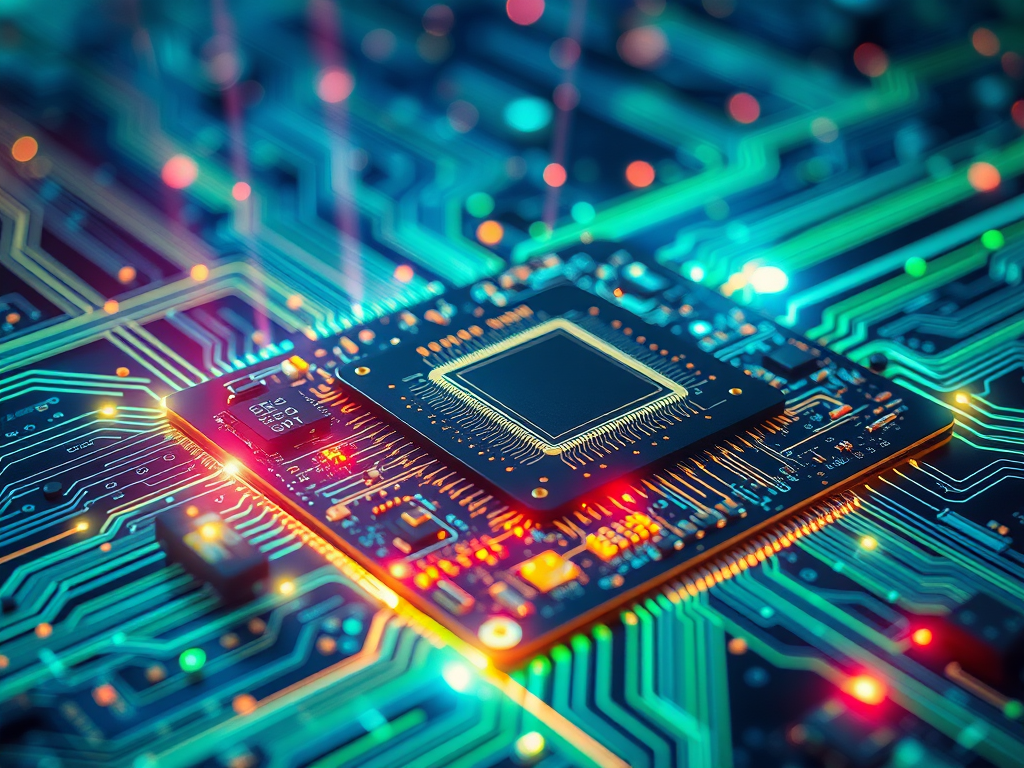
As artificial intelligence (AI) workloads grow exponentially, the energy demands of traditional electronic computing are becoming a major challenge. Enter photonic computing—a technology that uses light instead of electricity to process information. This innovation promises to revolutionize how we power and scale AI systems…
What Is Photonic Computing?
Photonic computing leverages photons (light particles) to perform computations, replacing electrons in conventional circuits. Because light travels faster and generates less heat, photonic systems can dramatically reduce energy consumption while increasing speed.
Recent Breakthroughs
Researchers at ETH Zurich and other leading institutions have demonstrated optical neural networks using advanced materials like lithium niobate and phase-change compounds. These breakthroughs, documented in journals such as Nature Photonics and IEEE publications, show that photonic circuits can efficiently handle complex operations like matrix multiplications—critical for AI.
Why It Matters
- Energy Efficiency: Optical systems can slash power usage, making them ideal for large-scale AI applications.
- Performance Gains: Light-based operations enable faster data transfer and computation, potentially accelerating AI training and inference.
Industry Momentum
Companies like Lightmatter and PsiQuantum are investing heavily in photonic AI accelerators and quantum photonic technologies. Their work signals strong industry confidence in the potential of light-based computing.
Separating Fact from Hype
While photonic computing is real and promising, some claims—such as “data centers becoming obsolete” or “centuries of operation without decay”—are speculative. Similarly, predictions about an imminent AI bubble burst are opinion-based, not proven.
Bottom Line:
Photonic computing represents a significant step toward sustainable, high-performance AI infrastructure. The technology is still emerging, but its potential to reshape the future of computing is undeniable.
This article was researched by AI and inspired by this article…
 Bright, shiny objects!
What do you think?