Want to be a better blogger?

Use Google Reader to find and share good information:

http://www.youtube.com/watch?v=2n3I9bTF7Qw

Bonus!!!

http://www.youtube.com/watch?v=n8AdlSmIPHg

Time for a course correction? Updated 12/13/2012

Here’s another post in an infrequent series that I do to give back to the WordPress.com community

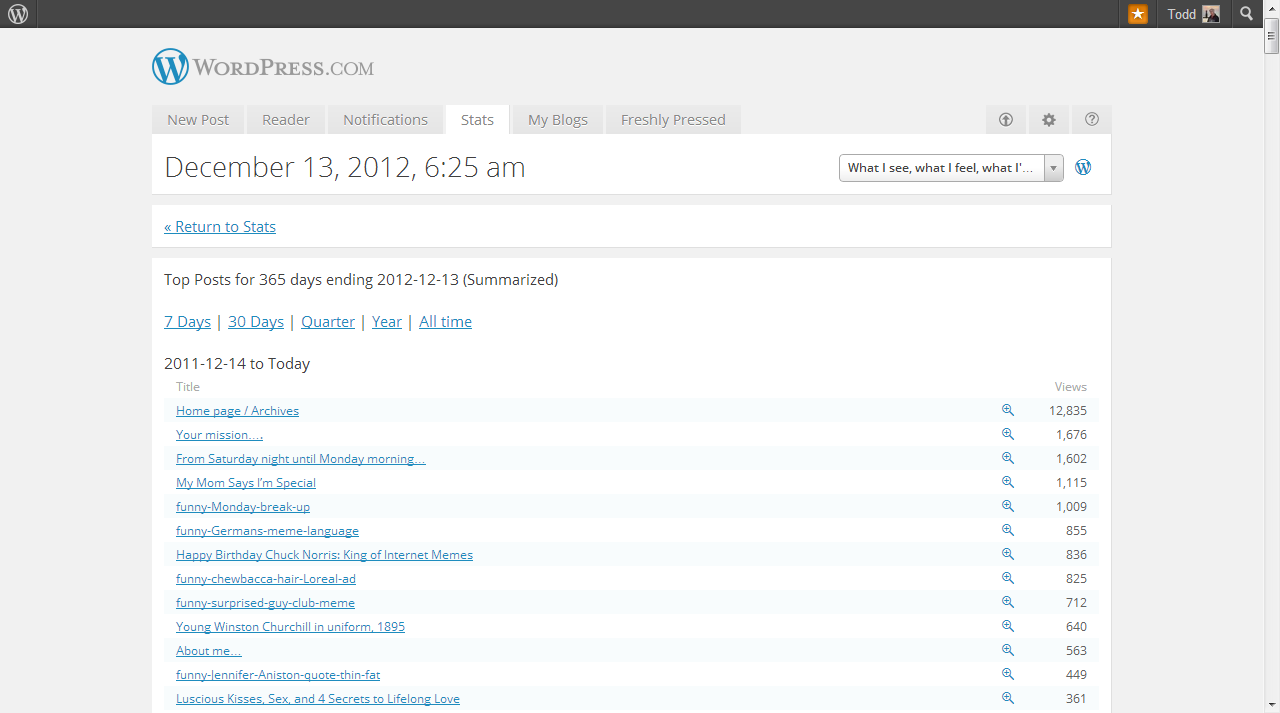
A famous comment usually attributed to Lord Leverhulme goes: “I know that half of my advertising budget is wasted, but I’m not sure which half”. The same is true of your blogging and social media time! How can you tell if you’re on track? Which 50% is working? What can you do if you’re off course? Well, the simplest way may be to check your WordPress.com stats for the past year and see what links people are actually clicking on…

12-12-2012 5-21-44 AM
Click to enlarge…

…then give them more of what they like and less of what they don’t! @jonswanson reminded me that reviewing your mosts popular posts and doing more like them is a good review do to as well!

12-13-2012 6-26-13 AM

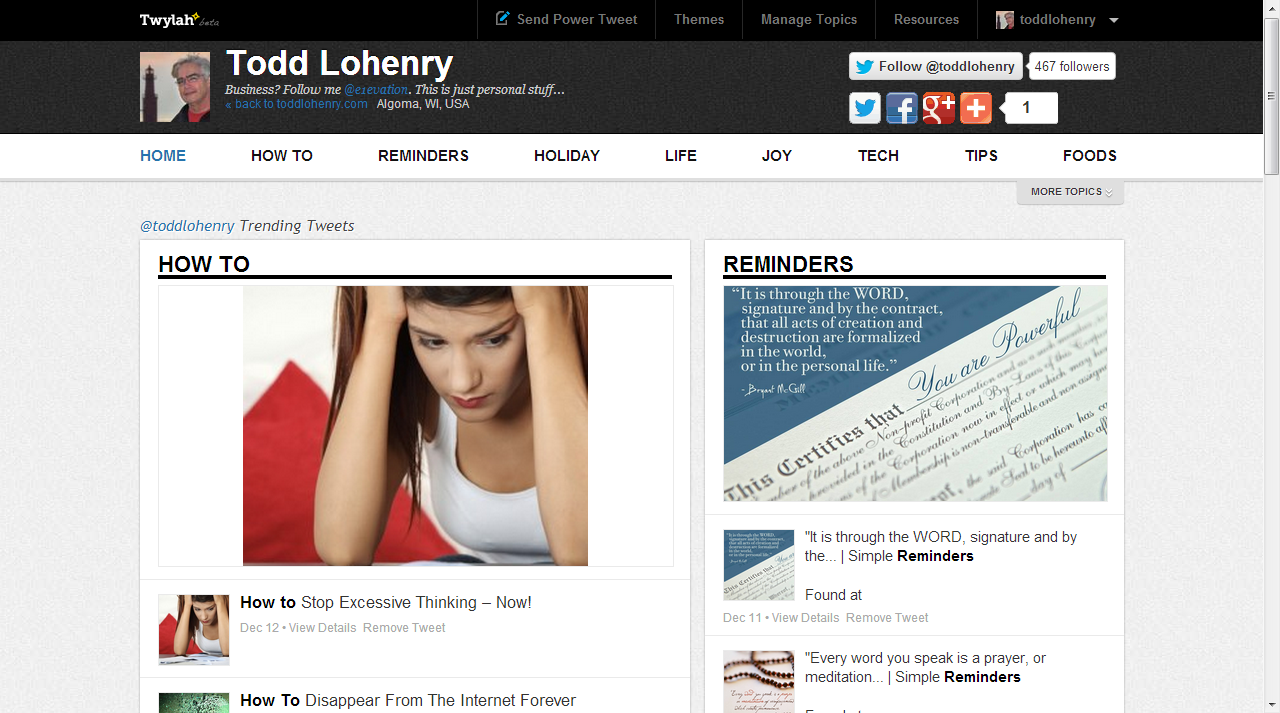
Another interesting way is to add twitter tool Twylah to your mix. Twylah brings your brand message into focus, extends the life of your tweets, and helps you get discovered beyond Twitter. Twitter you say? I don’t even use that! Well, you might want to start! I use the sharing feature in the WordPress settings to send every WordPress post to Twitter as a way of amplifying my posts. I also use Twitter to share articles that I don’t feel like sharing on the blog. Together — my blog posts and my tweets — create what I call a lifestream and Twylah is the place where I put that lifestream. Twylah automagically organizes my lifestream by topic and gives me a pretty good indication of how the internet views my lifestream. If the topics are way off, it might be time for a course correction! If the topics look like who you want to be known as, then Twylah provides that validation as well…

12-12-2012 5-44-39 AM

Another reason why I love Twylah in closing is that I can host Twylah on my domain so that I can effectively add Twylah to my WordPress.com blog and get Search Engine Optimization [SEO] benefits from my tweets as well. Oh, and did I mention that Twylah is free?

Blogging in the WordPress.com community is fun, but if you actually want to be recognized as an authority in an area and get found when people are looking for you, these two tools may be all you need to amp your internet presence! Oh, and by the way if you’re looking for WordPress.com or ‘thought leadership’ marketing coaching, you can stop by my business site at http://e1evation.com/services/

When I’m not doing ‘internet plumbing’ — website development and social media optimization — I’m working on the problem of getting found in what Google calls the ‘Zero Moment of Truth’. The big issue I’m trying to solve my clients and myself is “when people are searching for what I do will they find me”? It’s a difficult problem to solve and I rant about it here…

By the way, here is a list of the top 10 tools that I have found in my quest…

[listly id=”1Tz” layout=”full”]

Expect Nothing; Get Everything

Life is rarely what we expect it to be. Sometimes, it’s better than we expect. Other times, it just is as it is.

Set your expectations to zero, show up at 110% every day, and your positive attitude will drive your 110% experience of life.

Moreover, you won’t be depleting precious mental energy by beating yourself and others up because you’re disappointed and angry at not having your expectations met.

Having low expectations does not mean that you don’t “go for it,” establish goals, or have visionary dreams. Setting your expectations to zero means that you are able to minimize your emotional setbacks that deplete and drain your vision of valuable energy. When you’re able to accept the outcome as it is, then you can rise from any fall, thus increasing your personal power of resiliency to move forward more quickly. When you give it your best shot and you miss, it’s not seen as a failure. Instead, it’s just another opportunity to step up to the plate and do it better next time.

When your child tries out for an activity and doesn’t make the “A” list, then you encourage him or her by saying: “It’s ok. Practice some more; enjoy what you are doing, and try, try, try again.” Life as an adult is no different. The game of life is like a sport; it takes practice. And the practice here is giving it your very best shot and accepting the end result without engaging in negative thoughts that lead you to feeling low. On playing fields, this is called good sportsmanship. In life, it’s called having a winning attitude.

Expect nothing and you’ll have everything. Strive every moment you’re alive to bring an attitude of excellence and integrity to your actions and words, and the end result will reflect the brilliance you bring.

You will find that if you can go with the flow then it’s far easier to be in the flow.

Get the rest here: Expect Nothing to Have Everything « Positively Positive

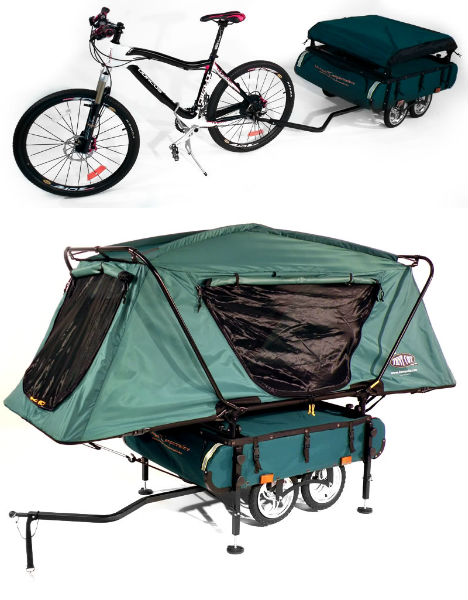
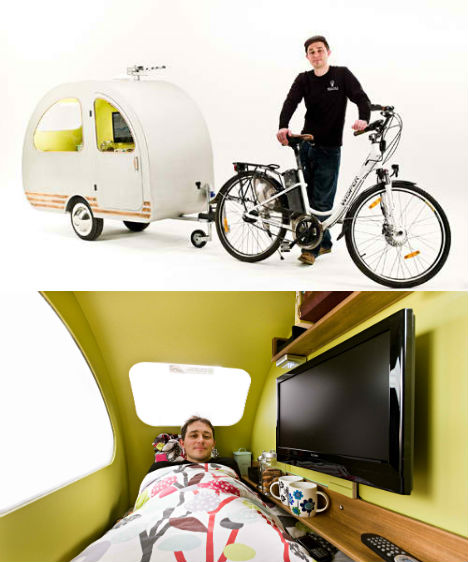
Bike Campers: 12 Mini Mobile Homes for Nomadic Cyclists

Full story at:  Bike Campers: 12 Mini Mobile Homes for Nomadic Cyclists | WebUrbanist.


Felix Baumgartner’s jump from space: By the numbers

The Week: Most Recent Home Page Posts

Full story at: Felix Baumgartner’s jump from space: By the numbers.

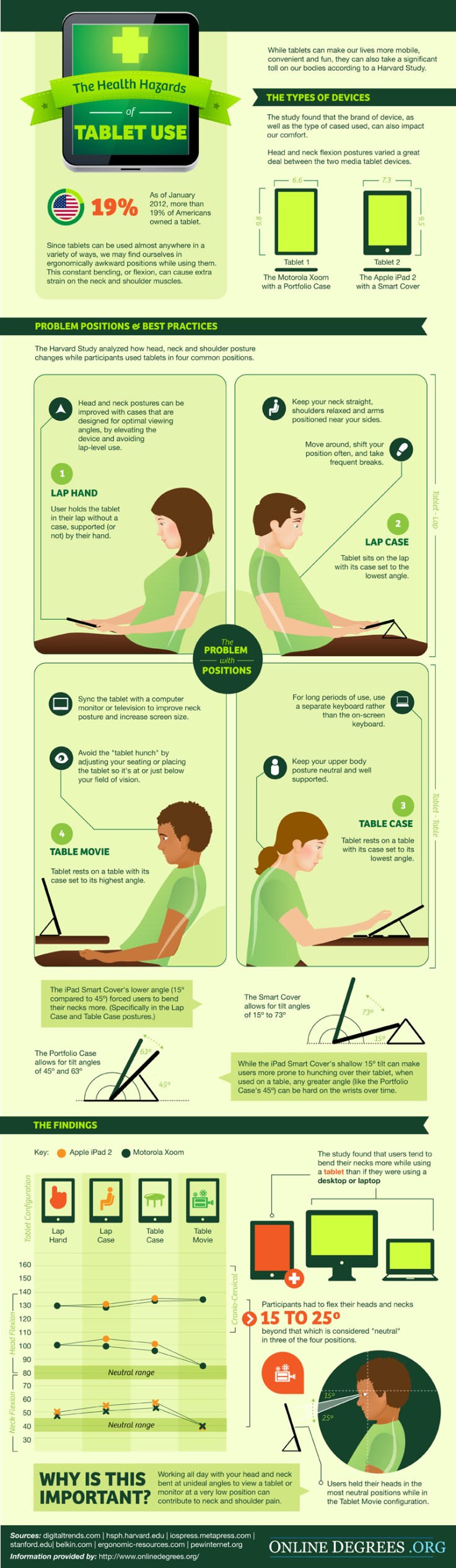
The health hazards of tablet use

Holy Kaw!

via The health hazards of tablet use [infographic].

Most Have Broadband Internet Connections at Home

Not this boy! I do most of my ‘personal news aggregation’ and blogging via a cellular modem in a hundred year old farm house!

Daily Number: Most Have Broadband Internet Connections at Home – Pew Research Center.

3 Steps to Fuel Your Creativity and Purpose with Exercise

Stepcase Lifehack

Get the scoop here: 3 Steps to Fuel Your Creativity and Purpose with Exercise.

Limit Screen Time, Limit Sitting

Leo Babauta writes:

One of the hazards of our modern lifestyle is our tendency to become more and more addicted to staring at screens, and more and more sedentary.

We look at laptops and desktop computers, iPhones and Androids and iPads and iPods, TVs and movie screens, play video games, watch videos, surf the web, socialize online, work online. And we’re sitting the whole time.

I’m a victim of this as much as anyone else. My family and I are drifting toward this lifestyle, and while I’m no Luddite, I do believe that we should live less as victims and more consciously.

Too much screen time means less active time, less personal socializing, less focus on the present, less time for cooking healthy food, less time reading novels, painting, making music, making time for the ones you love. And too much sitting means fewer years on your life.

So what’s a better way?

Limits.

Limit how much screen time you have each day. Limit your sitting to short periods with breaks in between.

I realize that many people have jobs that require them to have a minimum amount of computer time, and probably mostly sitting. So I don’t recommend a certain number, only that you figure out a limit and work with that.

What I’ve Been Doing

Though I’ve set limits for myself in the past, I’ll admit that they’ve eroded in recent months, so that my screen time has grown over time. And not just for me — for my wife and kids. So recently Eva and I set limits for ourselves, and we’ve been working with them.

We find them to be great. I find daily limits to be a better balance than going on week-long or month-long digital sabbaticals, which aren’t realistic for many people.

Here’s an example:

  • We set a limit of either 4 or 5 hours of total screen time a day. (We haven’t figured out what’s best yet, still experimenting.)
  • That total is broken into 30-minute chunks. So if it’s 5 hours total, that’s 10 chunks of 30 minutes.
  • At the start of a 30-minute chunk, I set a computer timer and put a tally mark on a text document, so I know how many chunks I’ve used today. When the bell rings, I close my laptop.
  • After the 30-minute chunk, I take a break of at least 30 minutes. I try to get up and move, stretch, play with the kids, get outside. I also often read a novel. The moving is good for my body, and helps me to think.
  • If I have things I want to look up online, or write online, I’ll just make a note of it and do it when I start my next 30-minute chunk.

This isn’t the only way to do it — you’ll have to find the limit that works for you, and the chunk size that works for you. But the idea is to set limits, and to break the total up into pieces so you’ll take breaks and do other things.

Benefits of the Limits

We’ve loved it: we’re reading more books, spending more personal time with each other and the kids, getting more chores done, exercising more, playing outside more.

It also means that because we have a limit, we have to figure out the best way to use that time. We have to make choices — what’s worthy of our limited time, and what isn’t? This means more conscious use of our time.

We haven’t instituted the limits with the kids yet, though we have been talking to them about it and getting them thinking about what would work best for them. And we do tell them to take breaks from devices throughout the day, so they’ll do other things.

For the kids, this has meant they have more unstructured, imaginative play, more reading, more art and music, more activity. Kids get addicted to screens just as much as adults do, and it’s not a healthy thing for them. We’re trying to teach them ways to live a healthy lifestyle, which is a lesson with lifelong benefits.

We’ve found this lifestyle to be healthier, better for relationships, better for our peace of mind. And to me, that means it’s something work keeping.

More reading:

via Limit Screen Time, Limit Sitting.

Mayoral Candidate Promises Kick Ass Fireworks

Finally, a politician with priorities. Everyone knows that on the 4th of July, fireworks are our top priority…

via Mayoral Candidate Promises Kick Ass Fireworks.

What Fireworks Look Like From A Bird’s-Eye View

Step 1: Strap a camera to a balloon. Step 2: Light some fireworks. Those are pretty much all the steps.

via What Fireworks Look Like From A Bird’s-Eye View.

Musings during a power outage

Jon Swanson writes:

I walk into the bathroom and turn on the electric switch. Nothing happens. For three days nothing has happened. I know the power is out. I still reach for the switch. Habits are strong.

The computer is off. I walk past my office and look at the screen. It’s still off. I still look.

I think often about wanting time to read and to write. With no access to Internet and no power for television, this would be a perfect opportunity. But I can’t sit still. I can’t let what might happen tomorrow simply happen tomorrow.

It is remarkably easy to blame the rough-running of the neighbor’s generator for the rough-running of my thoughts. And then to generate a low-voltage current of blame that wears down my motor.

It is hot, I suppose, but exercise will make me perspire anyway. And might help alleviate the uncertainty about when the power might come on. Instead, I wait for what might happen. I wait for a day, then another.

It seems that my agenda is more driven by the tools that are working than I thought. I could be working and resting, following the daylight, enjoying the restoration than can come from disconnection. Instead, I am feeling disconnected.

I am grateful for what I am learning about ingratitude during this time. We have water. We have hot water. We have a grill. We can even use the stove (if I light it manually). We have a frenchpress for coffee. Our house wasn’t hit by any trees.

I read from Acts on Sunday morning. I realized that the early church never cancelled services because the electricity was out. It was the right choice for our church on Sunday, but I’m thinking a lot about how much I depend on the wrong energy sources.” via Musings during a power outage. | 300 words a day.

Hmmm. We live in a rural area so when our power goes out, we lose our water too making it even harder to be grateful. Still I love Jon’s perspective…

Denouncing

“There is nothing as easy as denouncing. It don’t take much to see that something is wrong, but it takes some eyesight to see what will put it right again.” Will Rogers.

We come to this day with a choice of whether to be for something or against it. Shall we put energy into what we seek and admire or shall we give our energy to opposition and resistance of what we dislike? If someone asks a favor, we have a choice to resent and resist the intrusion or to engage with the person and see where it might lead. If a project we are working on is frustrating, we can wallow in criticizing it or try to get a clearer picture of what will work and what we want.

Criticizing may be a helpful first stage in learning, but it is seductive because it holds little risk and we feel safe doing it. In that comfort we forget to go forward to create what we really want. Our negative energy, when we are seduced by it, creates negative results. When we look back upon today, we will admire those choices that risked creating something positive.

Today, I will not give my energy to denouncing but to creating what I believe is worthwhile.” via Just For Today Meditations » Daily Recovery Readings – June 30, 2012.

Not Knowing

http://www.youtube.com/watch?v=ZJFPWeORNC4&feature=player_embedded

“Being the person that always knows and always has an answer, doesn’t leave a lot of room for learning. And for people to have the energy to teach yourself. The more I work, the closer I get to *not* knowing and to understanding that what matters is the responses not the pre-dertermined idea.” Andrew Zuckerman (via On Curiosity) via Not Knowing.

Directness

Melody Beattie shares this:

We feel safe around direct, honest people. They speak their minds, and we know where we stand with them.

Indirect people, people who are afraid to say who they are, what they want, and what they’re feeling, cannot be trusted. They will somehow act out their truth even though they do not speak it. And it may catch everyone by surprise.

Directness saves time and energy. It removes us as victims. It dispenses with martyrdom and games. It helps us own our power. It creates respectful relationships.

It feels safe to be around direct, honest people. Be one.

Today, I will own my power to be direct. I do not have to be pas­sive, nor do I need to be aggressive. I will become comfortable with my own truth, so those around me can become comfortable with me.” via June 23: Directness.

A Primer for Blogging; thoughts on 3,000 posts…

Old books

Just in time for this ‘milestone’ post, Chris Brogan provided this handy list that I’ll use as a preamble to what it is that I already wanted to share with you…

If you would like to get further into blogging, here is a brief primer:

  1. Get a blog. (Easy: tumblr.com, wordpress.com, blogger.com. Better: host your own -affiliate link.)
  2. Pick an area of focus, but one that has broad sides. (Mine: helping people do digital business in a human way.)
  3. Start writing.
  4. Start by planning to publish 1 post a week.
  5. Get daring and try for 2 posts a week (eventually).
  6. Make the posts more than 100 words and less than 1000 words most days.
  7. Spell-check.
  8. Delete the sentences that don’t matter.
  9. Realize that posts that are helpful to others get shared more than posts that are merely interesting.
  10. Never write a “sorry I haven’t written” post. Ever.
  11. Posts that just comment on other people’s posts and sum things up aren’t all that interesting.
  12. Do NOT get hung up on the tech. Get hung up on passion.
  13. The best way to write better is to read more. Second best: write more (often).
  14. Don’t try to copy other people’s style. Try to copy their proliferation.
  15. My best (most popular) posts were the ones I spent the least time writing.
  16. My least popular posts were the ones that took me more than a half hour to write.
  17. Pictures are a great place to start a post idea.
  18. Inspiration is a verb and a muscle.
  19. Lazy is, too.
  20. You’re doing it wrong. So is everyone.
  21. There’s not a single rule on this list that isn’t breakable. Break all the rules you want and enjoy yourself.

There. Write. Stop what you’re doing. Don’t comment. Don’t even share this post. Go write. On whatever came to mind. Delete it, if you hate it. But write. Now.

Source: A Primer for Blogging

Far be it from me to take issue with the great Chris Brogan, but regarding #1 I’ll say choose WordPress.com if you’re just getting started. Tumblr and Blogger are nice, but if you’re looking for traffic, nothing is better for Search Engine Optimization [SEO] than WordPress.com. You can always graduate to the self-hosted version of WordPress later if you want…

Regarding #2, sooner or later, you’ll have to face up to the fact that if you want to get good at it, your blog will have a brand. What is a brand?

“A brand is a “Name, term, design, symbol, or any other feature that identifies one seller’s good or service as distinct from those of other sellers.” Branding began as a way to tell one person’s cattle from another by means of a hot iron stamp. A modern example of a brand is Coca Cola which belongs to the Coca-Cola Company.” Source: Brand – Wikipedia, the free encyclopedia.

Simply put, if you’re going to find faithful readers, you’ll have to curate or create information on a narrow scope of topics so that people will know what to expect from you – what they come to expect of you is your brand. A blog gives you a share of voice on the internet which gives you a share of mind which may ultimately give you a share of market if you pursue it. You might even become a thought leader like Chris Brogan if you work your blog well enough! Thought leader? To me that’s a recognized expert that can be found in Google search. To become one you only need to do two things well; deepen your expertise [continuously learn – stay on top of your craft] and document your expertise [blog and engage in social media].

Regarding #11, I think curation is an important part of thought leadership and I think Chris ‘sums up’ more than he realizes! In this age of information proliferation, you have the ability to become a source that people trust through your blog by consistently curating and creating information that is useful to them. Also, I’m following rule #21 by breaking rule #11 and quoting Chris himself twice in this post! Here’s another great post he did this weekend about having a plan and working it;

“It’s a gorgeous and sunny day as I write this. I would like to be outside, maybe grilling up some steaks and drinking a beer or 12. But I’m working because that’s the plan. I have a short window of time to get a bunch of things done before I hit the road again, and because part of my business is to create media, that means writing and creating information that might be useful to you. Work the plan. That’s the message of the day. Work the PlanMy media plan says I should be writing one of six types of posts:

  • How to
  • Vision/Perspective
  • Promotion
  • Interview
  • Do it Better
  • Review

In this case, I’ll call this post a “how-to.” It’s not the best I’ve ever written, especially because it’s so self-referential, but it proves the point. If your goal is to reach into the heads of the people you hope to reach, you’d best have a plan. If your goal is to make money, and this digital strategy is part of the plan, then what are you doing to stick to it?” Source: Work the Plan.

Only you can decide if my post is ‘not all that interesting’ because I ‘summed up’ Chris’ post — obviously I think it’s beneficial or else I wouldn’t do it…

btw, yesterday I passed the 3,000 post milestone on my personal blog and I’m fast approaching 5,000 on my business blog but these are just the posts that have been published! Counting other blogs that I’ve done since I started 7 years ago I conservatively estimate I’ve created over 20,000 posts. I’m no Chris Brogan, but I have developed an efficient ‘lather rinse repeat’ cycle of blogging using Google Reader and WordPress. This screencast shares some of my best blogging secrets with you – I promised you’ll learn at least one time-saving tactic if you watch the whole think…

6 Simple Hacks to Increase Your Energy

Getting things done quickly and well requires mental and physical energy. The better more you have the better your results. This applies to all every area of life from getting in a good workout to performing your best at your job. Unfortunately, energy isn’t something we always possess. This is especially true when we’re under stress, haven’t gotten enough sleep, or are distracted by having too many things to get done.

In this article I provide 6 tips to increase energy. Some work immediately and others provide their benefit over time. I use all of them regularly myself. They’ve helped me get through 80 hour work weeks while running a start-up business without having to overstimulate myself with too much caffeine.” Get more here: 6 Simple Hacks to Increase Your Energy.

Rethinking social networking

Tracking the trackers…

As you surf the Web, information is being collected about you. Web tracking is not 100% evil — personal data can make your browsing more efficient; cookies can help your favorite websites stay in business. But, says Gary Kovacs, it’s your right to know what data is being collected about you and how it affects your online life. He unveils a Firefox add-on to do just that.

Gary Kovacs is the CEO of the Mozilla Corporation, where he directs the development of Firefox.

The death of RIM [infographic] – Holy Kaw!

Enhanced by Zemanta

Start a Blog at WordPress.com.

Up ↑