Working With Difficulties

Tara Brach writes:

About twelve years ago, a number of Buddhist teachers began to share a new mindfulness tool that offers in-the-trenches support for working with intense and difficult emotions. Called RAIN (an acronym for the four steps of the process), it can be accessed in almost any place or situation. It directs our attention in a clear, systematic way that cuts through confusion and stress. The steps give us somewhere to turn in a painful moment, and as we call on them more regularly, they strengthen our capacity to come home to our deepest truth. Like the clear sky and clean air after a cooling rain, this mindfulness practice brings a new openness and calm to our daily lives.

I have now taught RAIN to thousands of students, clients, and mental health professionals, adapting and expanding it into the version you’ll find in this chapter. I’ve also made it a core practice in my own life. Here are the four steps of RAIN presented in the way I’ve found most helpful:

R   Recognize what is happening 

A  Allow life to be just as it is

I   Investigate inner experience with kindness

N  Non-Identification

RAIN directly de-conditions the habitual ways in which you resist your moment-to-moment experience. It doesn’t matter whether you resist “what is” by lashing out in anger, by having a cigarette, or by getting immersed in obsessive thinking. Your attempt to control the life within and around you actually cuts you off from your own heart and from this living world. RAIN begins to undo these unconscious patterns as soon as we take the first step.

Full story at: Tara Brach – Working With Difficulties.

Wholeheartedness for 3/7/2013

  1. Todd’s tweets…
  2. 9 Foods That Healed My Body Belong In Every Kitchen ow.ly/hOcwp
  3. The Science of Love: Why It Makes Us High | FinerMinds ow.ly/hOcub
  4. How to be Super Productive in Less Than 2 Minutes | FinerMinds ow.ly/hObVt
  5. Remember in Step Nine we were told to make direct amends wherever possible, but this generous principle should extend further. We…
  6. @toddlohenry I think it’s 100% diff. Reblog the heck out of me or quote me but give credit where credit is due. Respect, right? Thoughts?
  7. @toddlohenry reblogging credits the orig person. Knowingly Taking someone’s ideas and calling them your own lacks ethics
  8. “Smile, It Will Make You Look Better” undefined
  9. Just added a great image in “Storypad” undefined
  10. “The Key To Healing It Is Feeling It…” undefined
  11. You Don’t Suck. You Are Kind. « Positively Positive ow.ly/hLXIc
  12. How to Increase Your Value in the Market Place (part 2) bit.ly/YOZuAv
  13. The War on Your Stomach: Why You Eat Twinkies & Coke. ~ Sean Williams bit.ly/YOZuAo

Thoughts on expectation and loss…

  1. This is a long ‘meditation’ on loss that I have found helpful…

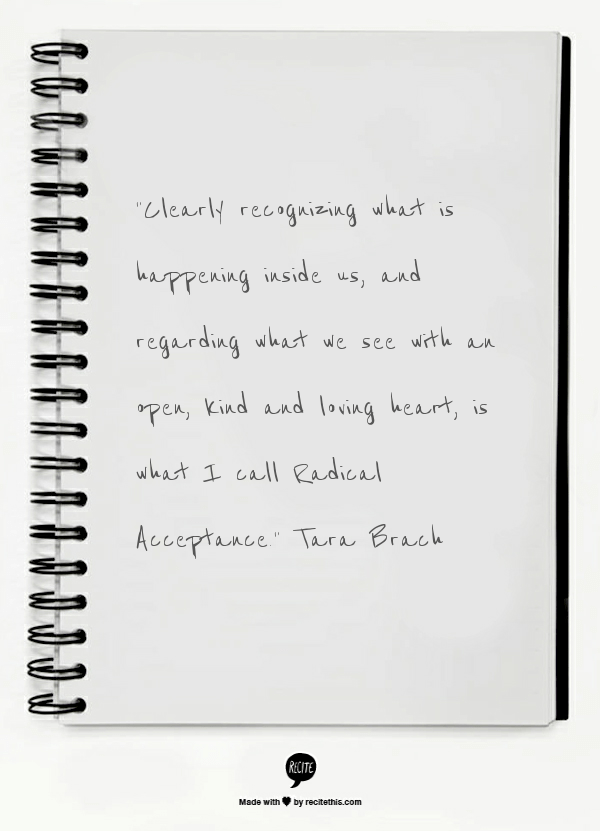
Tara Brach; The Fires of Loss

recite-23764-980594003-1x2pmqs

5 Ways To Surrender To The Inevitable And Accept A Better Life

Chloe Park writes:

Living in a state of surrender takes a lot of letting go of control and allowing the universe to do its thing. At a certain point in life, we (hopefully) come to the realization that there are aspects of life beyond our own egoic human control. The only thing we have real control over is ourselves: how we show up in life, our actions, our thoughts, our speech, how we engage in relationships, etc. Letting go of the illusion and assumption that, “My own perspective, beliefs, conditionings, rules and regulations of existing are the underlying foundation for everyone else’s perspective, beliefs, conditionings, rules and regulations of existing,” will bring you a lot more freedom and peace. Even more than that, it will give you reality.

The reality is that each and every one of us is experiencing life through a different lens, different vantage point, different shutter speed, different filter, different camera, different make, and different model. Imagine that. Here are some ways in which you may release your grasp of control and force to live in a state of ease, acceptance and surrender.

Get the rest here: 5 Ways To Surrender To The Inevitable And Accept A Better Life.

Self-acceptance…

Melody-Beattie-8x6.jpgMelody Beattie writes:

Self-acceptance is a more humble term than self-esteem or self-love. Self-love has tones of narcissism—me first and to heck with you. Self-esteem rings of pride—holding our­selves up higher than everybody else. Self-acceptance is that gentle place we get to when we make peace with who we are.

“For a long time, when I talked to certain people. I got squeamish and uncomfortable. like it wasn’t okay to be me.” a friend said. “I thought it was me being uncomfort­able with myself. I’ve finally learned that I’m responding to how uncomfortable some people feel about themselves.”

We might feel so awkward about ourselves that we believe we have to be different from who we are. Some of that comes from low self-worth, not believing that we’re okay. Or it can stem from a need to control. We think if we pretend to be different or better. we can manipulate how other people feel about us.

Continue reading “Self-acceptance…”

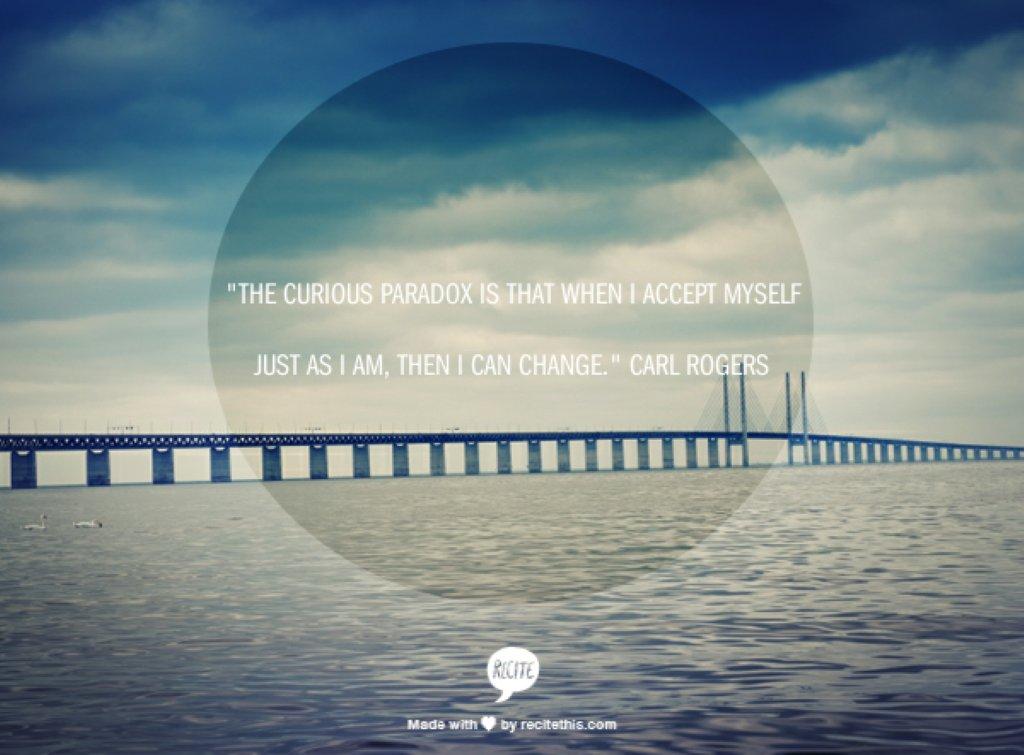
Radical acceptance…

recite-6923-289587727-kgznr6

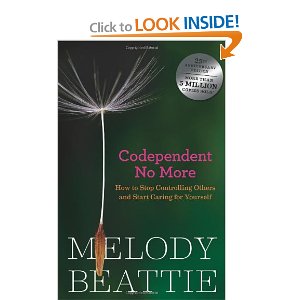
If self-acceptance is an issue with you [as it is with me] may I suggest the following book which has been giving me deep insights in this area:

416XVNN6NRL._BO2,204,203,200_PIsitb-sticker-arrow-click,TopRight,35,-76_AA278_PIkin4,BottomRight,-64,22_AA300_SH20_OU01_
Click the image to view/purchase at amazon.com…

Feel More Balanced Without Changing Your Life: 3 Simple Steps

Marissa Håkansson writes:

If you lead a busy life, common advice on how to create balance might include cutting out what’s least important, becoming more efficient, or adding relaxing activities to counteract your busyness.

This is helpful advice. However, I’ve also found that no matter how much balance we try to create in our external lives, it’s really how we feel on the inside that counts. We need to feel balanced, grounded, and well within our inner world before we can genuinely feel at ease.

To achieve this, you need to make a shift. Instead of slowing things down in your external life (with the intention of influencing how you feel internally), start slowing down internally, and see how it influences your external life.

This is living from the inside-out. It’s about being present in the moment and conscious of what’s going on for you at all levels: physically, mentally, emotionally, energetically and spiritually.

Living from the inside-out helps you embody your experiences fully and live with greater awareness. Conversely, when you’re living from the outside-in, you’re likely spending a lot time caught up in thinking, which only exacerbates your busyness.

When you allow your inner world to guide your outer world, you’re more conscious of how you are moving through each day and interacting with the world. How to do we create this shift?

Continue reading “Feel More Balanced Without Changing Your Life: 3 Simple Steps”

How to Practice Radical Acceptance

Kristin Barton Cuthriell got me started with her post this morning and I can’t let this thought go. Here, an eHow contributor give instructions on how to practice radical acceptance:

Radical acceptance is the practice of accepting life on its own terms and finding effective strategies to cope with whatever is happening. It doesn’t mean being passive, but accepting “what is” with the understanding that you have the power of choice. Practicing radical acceptance is a choice that can ease stress and depression and enhance your overall quality of life.

Get the instructions here: How to Practice Radical Acceptance | eHow.com.

Ending Codependency in Relationships: Find And Live Who You Really Are

“Be yourself; everyone else is already taken.”  ~Oscar Wilde

Full story at: Ending Codependency in Relationships: Find And Live Who You Really Are | Tiny Buddha.

Letting go in love…

codependent no moreMelody Beattie writes:

When people with a compulsive disorder do whatever it is they are compelled to do, they are not saying they don’t love you – they are saying they don’t love themselves.
Codependent No More

Gentle people, gentle souls, go in love.

Yes, at times we need to be firm, assertive: those times when we change, when we acquire a new behavior, when we need to convince others and ourselves we have rights.

Those times are not permanent. We may need to get angry to make a decision or set a boundary, but we can’t afford to stay resentful. It is difficult to have compassion for one who is victimizing us, but once we’ve removed ourselves as victims, we can find compassion.

Our path, our way, is a gentle one, walked in love – love for self, love for others. Set boundaries. Detach. Take care of ourselves. And as quickly as possible, do those things in love.

Today, and whenever possible. God let me be gentle with others and myself. Help me find the balance between assertive action taken in my own best interests, and love for others. Help me understand that at times those two ideas are one. Help me find the right path for me.

via Blog | Just For Today Meditations.

Is it just me…

…or does it seem like most ‘love songs’ are really deeply codependent?

So that’s how it goes…

Melody-Beattie.pngMelody Beattie has a loooong post on New Year‘s mindfulness. Here’s an excerpt:

I began to list the qualities or skills I applied that helped me go from loser to a winner at something I knew absolutely nothing about when I started.  I didn’t take me long to see that these are identical to the qualities that help me succeed at anything I want to do. While these ideas aren’t revolutionary, it’s easy to forget that each is within our power to do.

  1. Realize I’m where I am on purpose, even if it’s an accident. Sometimes the most trivial things that happen to us are more important than we believe.  When I look for the big, the exciting and the momentous – I leave empty-handed.  When I surrender to the present moment, understanding the sheer magnificence of each of these in my life – even those that suck — and then follow that with gratitude, my wheelbarrow overflows.  (I use that expression because my entire life, I wanted a wheelbarrow and now I have one, a good one I won one for not much money at all at DealDash and because “cups overflowing” has become a cliché, something writers should avoid.) I really am thrilled about having a wheelbarrow and in my most far-fetched moments of self-love, couldn’t justify buying one.

Full story at: SO THAT’S HOW IT GOES | Melody Beattie.


Stop Beating Yourself Up… Start Loving Yourself Radically!

kute-blackson-261x3001Kute Blackson writes:

It can be easy to judge yourself at times.

Many of us do it quite well.

We beat ourselves up. Criticize. Treat ourselves harshly. We often strive to make ourselves different from what we are.

From the moment we are born, we get conditioned. We are told who we should and shouldn’t be. We are told repeatedly that who we are isn’t enough. It gets reinforced by the advertising in the media that wants to sell you something.

When you accept yourself for being who you are and who you are not, a powerful freedom is yours.

Beating yourself up to try and fit some idea of who you need to be in order to be loved and accepted by others only creates more stress and suffering.

Beating yourself up to be something often keeps you feeling like nothing and can keep you stuck where you are.

Judging yourself in an effort to change simply reinforces the very patterns you are seeking to change.

No matter what has happened to you, know this:

You are perfect as you are.

So what if you didn’t need to change, improve, or be anything other than what you are already?

What if you were to radically, completely accept who you are and not in this moment?

Not accepting only causes you more suffering.

Acceptance is the key to your freedom. It’s in acceptance of who you are and where you are in your process of being a human being that you create the space to truly be with yourself as you are. It’s this space of non-judgment that is profoundly healing. Even to simply accept your non-acceptance is freedom.

Acting like some idealized version of yourself that you think you should be doesn’t make you authentically who you are or truly free.

The real freedom is in dropping all the “shoulds” of who you think you should or shouldn’t be, and allow yourself to simply be. Then the real you can blossom.

As you begin to accept yourself totally even those parts of yourself that you judge or think are “bad” will heal in the space of love, compassion, and acceptance.

Judging yourself is easy. But it takes real courage to love yourself radically.

To love yourself radically is to not only love just the parts of you that you like, but also the parts that you don’t like.

What parts of yourself have you been judging?

What if you committed to loving that?

What if you committed to loving even the part of you that “can’t” love?

It’s in loving radically that you set yourself free.

It’s time.

Love. Now.

Source: Stop Beating Yourself Up…Start Loving Yourself Radically!

Boundaries

Melody-Beattie-8x6.jpgMelody Beattie writes:

Boundaries aren’t limited to saying no. Boundaries reflect what we believe we deserve. Some people were born into situations that encouraged listening to and trusting themselves. Others had their right to self-respect violated at an early age. If our ability to trust ourselves was tam­pered with when we were young. we may have to work extra hard to acquire and keep boundaries—and self­esteem—in place.

“Someone who barely knew me mentioned to a friend that he thought I was selfish,” a woman said. “For the next six months, I had the worst time setting limits. I kept trying to prove how unselfish I was.”

No matter how many boundaries we’ve set, it’s not unusual to still feel guilty each time we say no. We may be afraid that we’ll lose the other person. or that he or she will go away if we say no. But when we don’t honor ourselves by setting boundaries, we’re the ones who disappear.

Challenge: The hardest thing about boundaries can be recognizing that we’ve lost or misplaced ourselves again. Maybe we could look at setting boundaries as an on­going process of discovering who we are.

via December 15.

In her meditation for February 20, she writes:

We are powerless over other people’s expectations of us. We cannot control what others want, what they expect, or what they want us to do and be. We can control how we respond to other people’s expectations. During the course of any day, people may make demands on our time, talents, energy, money, and emotions. We do not have to say yes to every request. We do not have to feel guilty if we say no. And we do not have to allow the barrage of demands to control the course of our life. We do not have to spend our life reacting to others and to the course they would prefer we took with our life. We can set boundaries, firm limits on how far we shall go with others. We can trust and listen to ourselves. We can set goals and direction for our life. We can place value on ourselves. We can own our power with people. Buy some time. Think about what you want. Consider how responding to another’s needs will affect the course of your life. We live or own life by not letting other people, their expectations, and their demands control the course of our life. We can let them have their demands and expectations; we can allow them to have their feelings. We can own our power to choose the path that is right for us. Today, God, help me own my power by detaching, and peacefully choosing the course of action that is right for me. Help me know I can detach from the expectations and wants of others. Help me stop pleasing other people and start pleasing myself.

Beattie, Melody (2009-12-15). The Language of Letting Go (Hazelden Meditation Series) (p. 49). BookMobile. Kindle Edition.

How to Blame Effectively!

Blame effectively? WTH? Isn’t blaming BAD? Christine Hassler shares this perspective:

Last week I attended Date with Destiny, which was my first Tony Robbins event. Tony is truly masterful at what he does and I had the extra bonus of going with Mastin, Jenna, Chris Assaad and Marie Forleo – we had a blast together sharing our breakthroughs and supporting each other.

One powerful takeaway that I wanted to share with you is about how to blame effectively. Tony talks a lot about our stories, which are created by the meaning we give to events in our life.  Our stories usually have a heaping dose of blame mixed into them.  We blame others for hurting us, making us feel a certain way, not behaving the way we wanted them to, etc.  Blame may be comforting because it justifies our hurt; however, it is completely paralyzing because it makes us a victim of our life rather than a co-creator.

Tony’s advice was that if you are going to blame, at least do so effectively by blaming them for all the lessons and blessings that came from what they did or didn’t do. This resonates with what I believe and teach, which is that EVERY person in our life serves our growth.  The Uni-verse makes no accidents in terms of who the cast of characters are in our life story . . . BUT we make the mistake of casting too many villains rather than angels in our own story.” Full story at: How to Blame Effectively!.

The best of ‘what I see’ for 11/29/2012

  1. SocialBro
    @toddlohenry Hi Todd, everything is ok! Do you see any error message? Which version do you use, Chrome, Adobe Air or the Pro version?
  2. toddlohenry
    @socialbro Your app no longer configures my @bufferapp schedule. Did you change something or is it broken?
  3. toddlohenry
    4 Superfoods to Cure Your Digestive Issues and Give You More Energy twy.la/UYtP09
  4. toddlohenry
    Warning: Believing These 10 Famous Myths Might Be Making You Dumb bit.ly/YpZXhF

The Magic of Gratitude and Acceptance

Another Melody Beattie I should have posted on Thanksgiving but it rings true every day:

“Gratitude and acceptance are two magic tricks available to us in recovery. No matter who we are, where we are, or what we have, gratitude and acceptance work.

We may eventually become so happy that we realize our present circumstances are good. Or we master our present circumstances and then move forward into the next set of circumstances.

If we become stuck, miserable, feeling trapped and hopeless, try gratitude and acceptance. If we have tried unsuccessfully to alter our present circumstances and have begun to feel like we’re beating our head against a brick wall, try gratitude and acceptance.

If we feel like all is dark and the night will never end, try gratitude and acceptance.

If we feel scared and uncertain, try gratitude and acceptance.

If we’ve tried everything else and nothing seems to work, try gratitude and acceptance.

If we’ve been fighting something, try gratitude and acceptance.

When all else fails, go back to the basics.

Gratitude and acceptance work.

Today, God, help me let go of my resistance. Help me know the pain of a circumstance will stop hurting so much if I accept it. I will practice the basics of gratitude and acceptance in my life, and for all my present circumstances.” via Just For Today Meditations » Daily Recovery Readings – November 22, 2012.

Start a Blog at WordPress.com.

Up ↑