“Make yourself feel good. It’s our job to first make ourselves feel better and then make ourselves feel good. Recovery is not only about stopping painful feelings; it is about creating a good life for ourselves. We don’t have to deny ourselves activities that help us feel good. Going to meetings, basking in the sun, exercising, taking a walk, or spending time with a friend are activities that may help us feel good. We each have our list. If we don’t, we’re now free to explore, experiment, and develop that list. When we find a behavior or activity that produces a good feeling, put it on the list. Then, do it frequently. Let’s stop denying ourselves good feelings and start doing things that make us feel good. Today, I will do one activity or behavior that I know will create a good feeling for me. If I’m uncertain about what I like, I will experiment with one behavior today.” via Beattie, Melody (2009-12-15). The Language of Letting Go (Hazelden Meditation Series) (p. 126). Hazelden. Kindle
Edition.
…on feeling good
“Make yourself feel good. It’s our job to first make ourselves feel better and then make ourselves feel good. Recovery is not only about stopping painful feelings; it is about creating a good life for ourselves. We don’t have to deny ourselves activities that help us feel good. Going to meetings, basking in the sun, exercising, taking a walk, or spending time with a friend are activities that may help us feel good. We each have our list. If we don’t, we’re now free to explore, experiment, and develop that list. When we find a behavior or activity that produces a good feeling, put it on the list. Then, do it frequently. Let’s stop denying ourselves good feelings and start doing things that make us feel good. Today, I will do one activity or behavior that I know will create a good feeling for me. If I’m uncertain about what I like, I will experiment with one behavior today.” via Beattie, Melody (2009-12-15). The Language of Letting Go (Hazelden Meditation Series) (p. 126). Hazelden. Kindle Edition.
Today I’ll be working hard on making myself feel good even though my wife is far away and I miss her terribly. What ‘feel good challenge will you over come today?
Related articles
- Owning our Power (toddlohenry.com)
- Go easy (toddlohenry.com)
- Feeling Good (toddlohenry.com)
- On Making Yourself Do Uncomfortable Things! (toddlohenry.com)
- Rise to the Occasion (toddlohenry.com)
…on blessing your enemies
“Action: Ask God to bless your enemies, people you’re envious of people you’re angry with, people you’re concerned about, people you love. Use their names when you say the blessing. Ask God to bless each person’s health, finances, all areas of his or her hie. Ask God to pour down blessings on that person. Say it until you mean it, until you feel the blessing in your heart. If you’re praying for someone you resent, say the blessing each time that person’s name pops into your mind. Whenever a friend or a loved one comes to mind, say a special blessing far that person too. In your prayer time, take a moment to ask God to bless you. Whenever you start a project, your day at work, a meeting, or even a night of fun with friends, you can say a silent little prayer asking God to bless that too. Ask God to bless the people you’re giving to and serving. While you’re at it, ask God to bless our country and the world.” via May 5.
…on Control
Melody Beattie has a good reminder I needed to hear this morning…
“Control is an illusion, especially the kind of control we’ve been trying to exert. In fact, controlling gives other people, events, and diseases, such as alcoholism, control over us. Whatever we try to control does have control over us and our life. I have given this control to many things and people in my life. I have never gotten the results I wanted from controlling or trying to control people. What I received for my efforts is an unmanageable life, whether that unmanageability was inside me or in external events. In recovery, we make a trade-off. We trade a life that we have tried to control, and we receive in return something better—a life that is manageable. Today, I will exchange a controlled life for one that is manageable.
Beattie, Melody (2009-12-15). The Language of Letting Go (Hazelden Meditation Series) (pp. 125-126). Hazelden. Kindle Edition.”
…on Resentment
“It can be tough to stop resenting someone. It takes a deliberate decision—an oomph—to turn our thinking around. For starters, it can be helpful to remember that those around us eventually grow weary of listening to us whine, even if we were wronged. There is a point where enough is enough.
We need to feel our emotions. We don’t want to get into repression or denial, but once we’ve felt the emotion, it’s time to let it go and turn the situation around. Envy and ill will can be a constant undercurrent in our thinking, if we don’t consciously seek to pluck out these emotions. It may feel like other people are constantly getting the good luck, that we have none, and that the good luck others are getting was somehow taken from us. It’s not true. And resenting others and spreading ill will doesn’t help us or improve our situation.
“There’s a lot of haters out there in the world,” a man said to me. “They don’t even know they’re spreading hate by the envious, bitter little thoughts they think.” via May 3 | Language of Letting Go.
…on Holding Good Thoughts…
“Many people agree that thoughts are a form of prayer.
Application: Whenever we find ourselves thinking negative thoughts about someone in our lives, it’s time to change our intentions toward that person. It’s time to pray for only good things for that person.” via May 2 | Language of Letting Go.
…on Blessing
Melody Beattie posts…
“I was out with a married couple for dinner, when the husband sneezed.
“God bless you,” I said.
He sneezed again. “Bless you,” I said.
Then he sneezed again and again.
“He sneezes all the time,” his wife said. “I think he does it on purpose. He just wants people to bless him.” “Who doesn’t want that?” I said.
My first experience with the value of blessing people happened in the early years of my sobriety. I wanted a job that someone else was given. I felt envious and resentful. Twelve Step programs and religions teach us a basic formula to cure ill will: pray for those you resent. Pray for God to shower blessings and happiness on those people. Pray for these blessings each time the resentment—or any hint of ill will enters your mind.
So I did. I prayed twenty or more times a day because that is how often I resented this person. I didn’t feel like praying for blessings. I decided to pray because the envy and bitter feelings were consuming me.
Over a period of months, I watched the situation transform. This person became my friend and mentor.
I eventually got a new position that I really wanted. I learned two things. Other people don’t have anything that belongs to me. And praying for blessings on people is a double whammy. They get blessed, and so do we.
Blessings are not just a tool to cure ill will and resentment—although that would be plenty. Blessings, like gentle rain or sunshine, are in this world for all. Don’t wait for people to sneeze to bless them. Be an active participant in spreading goodwill.
Value: Blessing our enemies, our loved ones, and ourselves is the value for this week.” via May 1.
What do you Expect
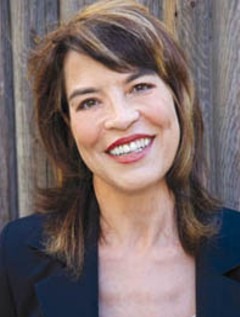
Sometimes I feel my purpose in life is simply to amplify Melody Beattie but her writing speaks to me in a way that nothing else does…
The key to life and power is simple. It’s knowing who we are. It’s knowing what we think, what we feel, what we believe, what we know, and even what we sense. Its understanding where we’ve been, where we are, and where we want to go. That’s often different from who we think we should be, from whom others want us to be, tell us to be, and sometimes even tell us we are.
— Melody Beattie, Stop Being Mean to Yourself
It’s easy to get hooked into other people’s expectations of us. Sometimes, it’s even easier to get hooked into what we think they expect of us.
One of the biggest traps is locking ourselves into a pre-conceived notion of ourselves. We can keep ourselves so busy living up to an image of ourselves that we forget who we really are. It’s tough enough to break free of the expectations, spoken and unspoken, that others put on us. It’s more insidious when we start telling ourselves to be what we think other people are expecting us to be—whether they are or not.
Look in the mirror. If you see a person who has been confined with a limiting image that doesn’t fit or feel right anymore, set yourself free.
God, help me let go of ego. Help me stop living up to self-imposed caricatures of who I think I’m supposed to be.
Source: April 28: What do you Expect | Language of Letting Go
Rise to the Occasion
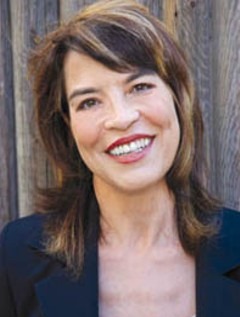
Melody Beattie posted this for today…
“You should have seen me when I was younger. I was something else then.”
“Just wait until I’m older and bigger. Then I’ll show you what I can do.”
If all we do is remember the strength of our past, then we’re denying ourselves the wisdom and abilities we carry with us in the present. And we deny the lessons that age teaches us about slowing down, being still, and letting things be the way they are. If we’re waiting for the future to be happy, we’re robbing ourselves of the vitality and joy in our lives right now.
Stop reminiscing about the past and anticipating the joys of the future that time when you become all powerful, bigger, and better than you are now.
You’re as good as you need to be today. Let yourself be who you are, then enjoy being exactly that.
Rise to the occasion of today.
God, help me be the best me that I can be.
Source: April 27: Rise to the Occasion | Language of Letting Go
Amen!
…on Refreshing Yourself
“There’s a “refresh” button you can click on the computer when you’re on-line. It makes the computer operate more efficiently.
Sometimes we get a little sluggish, too. We’ve been pushing too hard. Mulling the same thoughts over and over. Doing the same things over and over. Sometimes we need a change of scenery. Sometimes we need to refresh our thoughts with prayer, meditation, a few words from a friend, or spending some time with a good book.
Maybe it’s our bodies that need refreshing. We need a cold beverage, a brisk walk, a nap, or a hot shower.
Maybe we need a bigger refreshment: a weekend at a spa, a vacation. Even if our budget is low, we can pitch a tent in a park and take in the refreshing beauty of the world around us.
Look around. The world abounds with refreshments. The next time you get bogged down, stop pushing so hard. Do what you need to do to become efficient and operate with ease.
Refresh yourself.
God, help me understand the power of taking the time to refresh myself. Then help me stop thinking about it and actually do it.” via April 26: Refresh Yourself.

…on Making Yourself Do Uncomfortable Things!
“Many of us do not understand what we are responsible for and what we are not responsible for. We may believe we have to get into a tizzy when someone has a problem because it is our responsibility to do that. However, at the heart of most rescues is a demon: low self-worth. We rescue because we don’t feel good about ourselves.. caretaking provides us with a temporary hit of good feelings, self-worth, and power. Just as a drink helps an alcoholic momentarily feel better, a rescue move momentarily distracts us from the pain of being who we are. We don’t feel loveable, so we settle for being needed. We don’t feel good about ourselves, so we feel compelled to do a particular thing to prove how good we are.” ~ Melody Beattie via Today’s Quotes: What Joy!? Make Yourself Do Uncomfortable Things!.

You Are a Work of Art
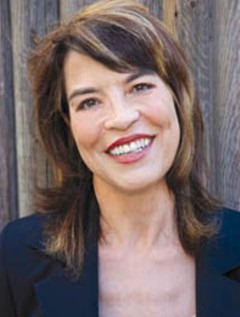
Melody Beattie shares this today….
All the arts we practice are apprenticeship. The big art is our life. ~ M. C. Richards
What you do is not who you are.
You are more, much more, than that.
It’s easy to get so caught up in what we do that we’re only identifying ourselves through our daily tasks. I am a mechanic. I am a parking lot attendant. I am a doctor. I am a dishwasher. When we link ourselves too closely to our jobs, we deny ourselves the chance to ever be anything else. We limit ourselves by believing that’s all we are and all we’ll ever be.
Our concept of who we are is one of the hardest, but most rewarding, ideas we can change. If you have been brought up believing that you are clumsy, you will probably demonstrate this belief in your actions—until you identify that idea, let go of it, and let yourself be something else.
Don’t limit yourself by saying you are just what you do. Stop seeing yourself as a static being. If I am “just” a parking lot attendant, then how can I hope to ever influence someone through my words, my art, my music, my life? But if I am a vital, living, growing soul who happens to be parking people’s cars, then everything I do can become a symphony. I can have an influence for good in the lives of everyone I touch. I can learn from them, and they from me. I can learn the lessons that I am supposed to learn at this place in my life, and I can move on to other lessons.
God gave us the power to change. You’re more than what you do. You’re a vital vibrant soul that came here to experience, grow, and change. Make a masterpiece out of your life.
God, help me realize the glory of my soul. Thank you for my mortality and for the ability to learn and grow.
Source: April 24: You are a Work of Art | Language of Letting Go
Remember to Take Care of Yourself

Here’s a moral with a story from Melody Beattie…
Jenna started dating a new man. Like many women, she was a little frustrated with all the losers that had come along before. She thought she’d put this one to the test. She wanted to see how good he’d be to her.
So when he called her up and asked her what she wanted to do, she told him she thought he should take her on a little trip.
“Hawaii would be nice,” she said. “You get us the tickets. And find someplace nice for us to stay when we get there. I don’t want to be in a cheesy hotel.”
He had enough money in the bank. The trip, she thought, would be exquisite and luxurious. She envisioned the first-class air travel, the limos, and the home he’d rent complete with maid service and a cook.
When the day of the trip arrived, they took a taxi, not a limo, to the airport. And when she boarded the airplane, he led her back to coach. When the flight attendant came around asking if people wanted to rent movies, her boyfriend shook his head and went back to reading his book. She had to dig out the four dollars to pay for the movie.
She sat scrunched up in her seat, all the way to Hawaii. When they got there, he took her to a time-share condo. Then he drove her in the rental car to the grocery store and said, “Pick out what you want to cook.”
Throughout the vacation she spent a lot of time stewing in her head, but when they got home, she decided to give him one more chance.
So when he called her up and asked her what she wanted to do Friday night, she said she thought a movie would be nice. She hung up the phone, then dressed up and did her hair. She thought maybe he’d take her to a nice theater.
He picked her up, then drove to the nearest Blockbuster. “Go in and pick out whatever video you’d like to rent,” he said. “Do you want to watch it at your place or mine?
The moral of this story is twofold and simple. The first lesson is if you know exactly what you want, you need to spell it out clearly. The second is that it’s better not to expect people to take care of us. Even if they agree to do it, we might not like how they do the job.
While it’s nice to have people love us and do things for us, it’s better to plan on taking care of ourselves.
God, help me remember that it’s my job to take care of myself.
Source: April 18: Remember to Take Care of Yourself | Language of Letting Go
Hmmmm…
Lately I’ve been learning a lot about expectations. I think the simplest way to avoid disappointment is not to have them. Or, as Melody points out if you DO have expectations “you need to spell it [them] out clearly” or be prepared to meet them yourself…
Related articles
- On taking care of your self… (toddlohenry.com)
- You are Responsible for You (toddlohenry.com)
- Owning our Power (toddlohenry.com)
- You have the power (toddlohenry.com)
- Go easy (toddlohenry.com)
Taking Care of Ourselves
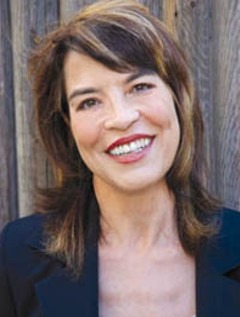
In The Language of Letting Go Melody Beattie says…
“We often refer to recovery from codependency and adult child issues as “self-care.” Self-care is not, as some may think, a spin-off of the “me generation.” It isn’t self-indulgence. It isn’t selfishness—in the negative interpretation of that word. We’re learning to take care of ourselves, instead of obsessively focusing on another person. We’re learning self-responsibility, instead of feeling excessively responsible for others. Self-care also means tending to our true responsibilities to others; we do this better when we’re not feeling overly responsible. Self-care sometimes means, “me first,” but usually, “me too.” It means we are responsible for ourselves and can choose to no longer be victims. Self-care means learning to love the person we’re responsible for taking care of—ourselves. We do not do this to hibernate in a cocoon of isolation and self-indulgence; we do it so we can better love others, and learn to let them love us. Self-care isn’t selfish; it’s self-esteem. Today, God, help me love myself. Help me let go of feeling excessively responsible for those around me. Show me what what I need to do to take care of myself and be appropriately responsible to others.”
Beattie, Melody (2009-12-15). The Language of Letting Go (Hazelden Meditation Series) (pp. 105-106). Hazelden. Kindle Edition.
Feel free today to take care of yourself…
Related articles
- You are Responsible for You (toddlohenry.com)
- Go easy (toddlohenry.com)
- On taking care of your self… (toddlohenry.com)
- Owning our Power (toddlohenry.com)
- Thursday Quote – Melody Beattie (elizaggie.wordpress.com)
You are Responsible for You
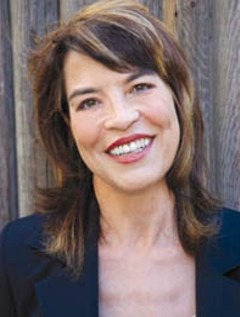
More from Melody Beattie:
We can delegate tasks, but we can’t delegate responsibility, if the responsibility is really ours.
Sometimes, it’s normal to delegate tasks to other people. We may hire people to do certain things for us. We may engage in contracts with a therapist or a healer to help us work through a certain issue. But the responsibility for which pieces of advice we follow, and the decisions we make in our lives, ultimately belongs to us.
It’s easy to get lazy. We can let a friend, an employee, or even a skilled therapist begin making our decisions for us. We can listen to what they say and blindly take their advice. Then we don’t have to take responsibility for our lives. If the decision doesn’t work out, we can say, “You were wrong. Look at the mess you’ve gotten me into. I’m a victim, again.”
Yes you are. But you’re a victim of yourself.
We can listen to advice and let other people help us, but if they’re helping us do something that is our responsibility, the ultimate responsibility for the decision still belongs to us.
Get help when you need it. Delegate tasks. But don’t give away your power. Remember you can think, you can feel, you can take care of yourself, you can figure out your problems.
Don’t get lazy. Don’t give away responsibility for your life.
God, help me remember that I am responsible for me.
Source: April 17: You are Responsible for You | Language of Letting Go
Related articles
- Owning our Power (toddlohenry.com)
- Go easy (toddlohenry.com)
- On taking care of your self… (toddlohenry.com)
- Feeling Good (toddlohenry.com)
- You’re Being Protected (toddlohenry.com)
Own Your Life

A valuable message from Melody Beattie…
Are you willing to take responsibility for this mat, to own it? That doesn’t mean it isn’t everybody else’s mat, too. If you’re big enough to own the mat as yours, you’re big enough to let it be theirs, too.
— George Leonard
In his book The Way of Aikido, George Leonard wrote about the concept of owning the mat. He was talking about aikido. He was referring to an air of ownership, a certain presence he learned to demonstrate both on the mats while practicing martial arts and in his life.
Many subtle attitudes and past conditioning can affect our sense of ownership of our lives and of the world we live in—guilt, a haunting sense of victimization, laziness, living with repressive, angry, or abusive people may have tamed our sense of ownership of our lives. Continue reading “Own Your Life”
On taking care of your self…

C. M. MacNeil shares this from Melody Beattie…
Our most important focus during times of stress is taking care of ourselves. We are better able to cope with the most irregular circumstances; we are better able to be there for others if we’re caring for ourselves. We can ask ourselves regularly: What do we need to do to take care of ourselves? What might help us feel better or more comfortable?
Self-care may not come as easily during times of stress. Self-neglect may feel more comfortable. But taking care of us always works.Today, I will remember that there is no situation that can’t be benefited by taking care of myself.
via April 14, 2012 – Today’s Gift from Hazelden « cmmacneil.
Related articles
- Owning our Power (toddlohenry.com)
- Coping devices (toddlohenry.com)
- Go easy (toddlohenry.com)
- Anger at Family Members? (toddlohenry.com)
- You have the power (toddlohenry.com)
You have the power

Good stuff from Melody Beattie. Again.
For the first several hundred years after the Buddha died, there were no images of him. Only his dharma, or teachings, were passed on from generation to generation. Eventually, however, the people wanted an image to remind them of their ideal, and that’s when and how Buddha statues came to be.
The good thing about having statues of Buddha is they remind followers of the ideals they’re striving for in their lives. The difficult thing about Buddha statues is that people may be tempted to idolize the statue, and forget to seek the state of consciousness the Buddha represented.
It’s easy for us to idolize our mentors and teachers, the people who encourage and help us to grow. It can be easy to look around us and think others have the key to enlightenment, success, joy.
Stop idolizing other people.
Look in the mirror.
You have everything you need to learn your lessons, grow, achieve success. You have all the courage you need to fail, then try again. You have everything you need, within you, to live and follow your own path with heart.
Not only are you right where you need to be, but you can get wherever you want to go from here. And you and I have all the power we need to learn the lessons we came here to learn.
God, teach me that all I need is within me.
Source: April 12: You Have the Power | Language of Letting Go
Christians, don’t get so hung up on the B word – you know, Buddha – that you miss the lesson! Have you forgotten this?
“The kingdom of God does not come with your careful observation, 21nor will people say, ‘Here it is,’ or ‘There it is,’ because the kingdom of God is within you.” Source: Luke 17 NIV 1984
Be uniquely you
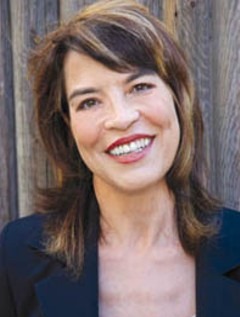
Melody Beattie writes…
We will discover the nature of our particular genius when we stop trying to conform to our own or to other peoples’ models, learn to be ourselves, and allow our natural channels to open.
— Shakti Gawain
We have much in common with each other. And recovery, growth, and change are strengthened by honoring these similarities. But each of us is unique. We each have our own strengths, weaknesses, gifts, vulnerabilities—our own personalities.
The purpose of spiritual growth is not to eliminate the personality. It is to refine and enhance it, and allow each of us to express ourselves creatively.
We are not meant to be just like anyone else. Comparison will leave us uncomfortable, either on the side of pride or of inadequacy.
You are you. The wonder of life comes in finding your own rhythm to the dance, your own way of seeing the world, your own brush stroke, phrase, or special combination.
Listen to your Self…
Being aware of your true self is the best way to free yourself from the controlling, manipulative behaviors of others.
You don’t need the right car, the right shoes, the right girlfriend to be complete. All you really need is to be yourself. Your spirit is the real you. Let it guide you.
Be still. Listen to your spirit say, I am, and I am enough. In the silence, you’ll hear God.
Be who and where you are
Save yourself the time, the money, and the trip.
Be your own guru.
via April 9: Be Who and Where You Are | Language of Letting Go.
 Bright, shiny objects!
You must be logged in to post a comment.