It’s truly amazing what one gay man can do when a bunch of straight guys are too shy to ask a girl to dance. Note: One chair was harmed in the making of this video.
via Guy Hijacks Wedding With Fabulous “Proud Mary” Performance.
Thinks I find along the way

It’s truly amazing what one gay man can do when a bunch of straight guys are too shy to ask a girl to dance. Note: One chair was harmed in the making of this video.
via Guy Hijacks Wedding With Fabulous “Proud Mary” Performance.
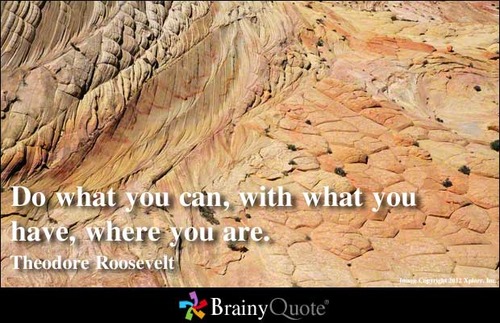

Do what you can, with what you have, where you are. – Theodore Roosevelt
via Do what you can, with what you have, where you are. – Theodore….

Lissa Rankin writes:
All you have to do is turn on the television, check out a magazine or log onto the internet to realize that the media is blasting us with the message that we’re somehow “not enough.”
Coming at us from all sides are messages that we’re not pretty enough, smart enough, rich enough, popular enough, skinny enough, successful enough, healthy enough – whatever enough.
But then if you step it up a notch – really pump up the volume – you get the opposite message. “No! Now you’ve gone off and overdone it! Now you’re ‘too much.’ You should be less intense, less honest, less sexy, less smart, less complicated, less personal, less talented, less ambitious, less dramatic, less emotional, less fierce.
Where Should You Be On The Dial?
The message being sent is that somewhere between “not enough” and “too much” is a perfect setting on the dial that every one of us should emulate – maybe a perfect 7 or something.
Well, I’m here to tell you that’s total bullshit.
Here’s the real truth. If life is a dial from 1 to 10, some days you’ll be a 1. Others you’ll be an off-the-charts 11.
Get more here: Forget “Not Enough” Or “Too Much.” Be Just YOU!
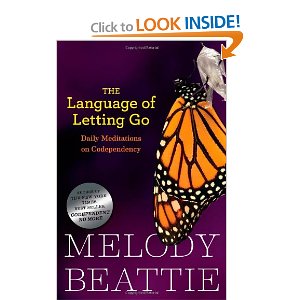
 Melody Beattie writes:
Try harder. Do better. Be perfect. These messages are tricks that people have played on us. No matter how hard we try, we think we have to do better. Perfection always eludes us and keeps us unhappy with the good we’ve done.
Messages of perfectionism are tricks because we can never achieve their goal. We cannot feel good about ourselves or what we have done while these messages are driving us. We will never be good enough until we change the
messages and tell ourselves we are good enough now.
We can start approving of and accepting ourselves. Who we are is good
enough. Our best yesterday was good enough; our best today is plenty good
too.
We can be who we are, and do it the way we do it – today. That is the
essence of avoiding perfection.
Help me let go of the messages that drive me into the crazies. I will
give myself permission to be who I am and let that be good enough.” Source: Daily SNIPS Discussion: 062706 0507-1111 – DailyStrength

This is a tough issue for me brought on by an upcoming event in our family. My gay brother-in-law is getting joined in a civil union — sorry, but I can’t quite bring myself to use the word ‘married’ yet — and we have been invited to the reception, not the ceremony. I have mixed feelings about this event; I don’t know if I can really ‘celebrate’ it but I’m thinking about going to support my wife. In the past, I would have refused to attend on principle but as a recovering conservative Christian ‘living in the gray‘ I am considering input from all sides. Recently, John Piper posted this Christian conservative perspective on relating to gay family members…
Is there hope for a relationship with a family member who is not a believer and is in a same-sex relationship, and who knows your Christian position?
Yes. One story went like this. An adult sister-in-law was in a lesbian relationship and would bring her partner to all the wider family functions when she was invited. She knew her brother-in-law’s position. Not only was she sinning to be involved sexually this way, but her very soul was in danger of eternal judgment if she did not repent. She knew that’s what he thought.
At first she was very angry and, no matter how kind or gracious or caring the Christian couple tried to be, this sister-in-law saw them as homophobic and bigoted. She assumed she was not loved and let that define the relationship.
Then one day the brother-in-law asked her: Are you able to love me in spite of my views that you think are so wrong? Yes, she said. Then, why, he asked, will you not give us the same courtesy and assume that we might be able to love you in spite of your wrong views?
Remarkably, this actually made a difference. She apologized for pushing them away, and for assuming they could not love while disapproving of her ways.
Perhaps this might help others open the hearts of relatives to their genuine care.” via How Do You Relate to a Gay Family Member? – Desiring God.
‘Living in the gray’ is a new experience for me prompted by meditation on the word ‘right’. Nietszche said “You have your way. I have my way. As for the right way, the correct way, and the only way, it does not exist.” I’ve had to let go of a lot of the need to be right in my life and I think have made great progress, but I have to admit there are some things about what Piper says that resonate with me and I’m wondering for myself what is ‘right’ in this situation as a Christian, an American and as a person ‘related’ to another person by marriage…
First of all, I have a problem with any person, community or group that demands tolerance but does not grant it in return and I believe respect for diversity should include respect for Christians, too. 16 years ago at my son’s baptism, my brother-in-law told my wife that he wanted to kill my infant son so that he wouldn’t grow up as a Christian Conservative like us. Something like that is hard to forget. Amends were not made, but forgiveness was given on our side. We have affirmed our love for him despite his cruel remark and his sexual orientation but I don’t feel we receive the same courtesy; or I don’t anyway — I shouldn’t speak for my wife…
On a broader level, I don’t know how I feel about civil unions as an American citizen or if I should just ‘get over it’. The human rights campaign says this about DOMA — the Defense of Marriage Act passed under the Clinton Administration:
The Defense of Marriage Act (DOMA) singles out lawfully married same-sex couples for unequal treatment under federal law. This law discriminates in two important ways. First, Section 2 of DOMA purports to allow states to refuse to recognize valid civil marriages of same-sex couples. Second, Section 3 of the law carves all same-sex couples, regardless of their marital status, out of all federal statutes, regulations, and rulings applicable to all other married people—thereby denying them over 1,100 federal benefits and protections. ” via Respect for Marriage Act | Human Rights Campaign.
The Wikipedia says
The Defense of Marriage Act (DOMA) (Pub.L. 104-199, 110 Stat. 2419, enacted September 21, 1996, 1 U.S.C. § 7 and 28 U.S.C. § 1738C) is a United States federal law that defines marriage as the legal union of one man and one woman. The law passed both houses of Congress by large majorities and was signed into law by President Bill Clinton on September 21, 1996. Under the law, no U.S. state or political subdivision is required to recognize a same-sex marriage treated as a marriage in another state. Section 3 of DOMA codifies the non-recognition of same-sex marriage for all federal purposes, including insurance benefits for government employees, Social Security survivors’ benefits, and the filing of joint tax returns.
Clinton and key legislators have changed their views and advocated DOMA’s repeal. The Obama administration announced in 2011 that it had determined that Section 3 was unconstitutional and, though it would continue to enforce the law, it would no longer defend it in court. In response, the House of Representatives undertook the defense of the law on behalf of the federal government in place of the Department of Justice (DOJ).
Section 3 of the DOMA has been found unconstitutional in a California bankruptcy case, a California class action suit on the part of public employees, several federal district court judges in three circuit court jurisdictions, and by a unanimous United States Court of Appeals for the First Circuit three-judge panel.” via Defense of Marriage Act – Wikipedia, the free encyclopedia.
I wanted to get Focus on the Family’s perspective on DOMA, but the results have been skewed by anti-DOMA bloggers touting Senator Al Franken’s ‘demolition’ of their perspective. More of the anti-tolerance I referred to in ‘first of all’? The ultra-conservative Christian website Stand up for the Truth! frames the debate this way:
President Obama has opened up an issue that will divide the church in this nation—and for that I thank him. For too long many Christian leaders and individuals have been able to tap dance around the issue of homosexuality and gay marriage. We must use this opportunity to find out where our church leaders stand on this issue and then act accordingly.
God provides us choices. He has given us free will to choose the paths for our lives. I believe He is now allowing a choice that will define the future of American Christianity, giving it a choice to return to Him, or fall deep into apostasy. The sheep are being separated from the goats. Quite frankly I am excited that this issue is now front and center. Hopefully, once and for all, Christian leaders will have to take a stand—a stand that will clearly define what they believe about the Word of God. Insist that your pastor and church leadership make a clear, concise statement on this issue and how we as Christians should interact with the homosexual community.
If you think we can just stick our heads in the sand and sit this battle out, you are in for a rude awakening. The battle is on us if we wish it or not—and how we react as Christians will say a lot.” via Gay Marriage: Seperating the Sheep From the Goats | Stand Up for the Truth.
My jury is still out and I’m looking for input. I’m going to forward this post to a couple of people whose opinions I respect and ask them to weigh in in the comments below. You, of course, are welcome to do the same…
 Melody Beattie writes:
Willpower is not the key to the way of life we are seeking. Surrender is.
“I have spent much of my life trying to make people be, do, or feel something they aren’t, don’t want to do, and choose not to feel. I have made them, and myself, crazy in that process,” said one recovering woman.
I spent my childhood trying to make an alcoholic father who didn’t love himself be a normal person who loved me. I then married an alcoholic and spent a decade trying to make him stop drinking.
I have spent years trying to make emotionally unavailable people be emotionally present for me. I have spent even more years trying to make family members, who are content feeling miserable, happy.
What I’m saying is this: I’ve spent much of my life desperately and vainly trying to do the impossible and feeling like a failure when I couldn’t. It’s been like planting corn and trying to make the seeds grow peas. Won’t work!
By surrendering to powerlessness, I gain the presence of mind to stop wasting my time and energy trying to change and control that which I cannot change and control. It gives me permission to stop trying to do the impossible and focus on what is possible: being who I am, loving myself, feeling what I feel, and doing what I want to do with my life.
In recovery, we learn to stop fighting lions, simply because we cannot win. We also learn that the more we are focused on controlling and changing others, the more unmanageable our life becomes. The more we focus on living our own life, the more we have a life to live, and the more manageable our life will become.
Today, I will accept powerlessness where I have no power to change things, and I’ll allow my life to become manageable.” via Daily Meditation ~ Powerlessness & Unmanageability – Miracles In Progress Codependents Anonymous Group.
Today, I am thinking about how to apply this to my in-laws…
My mother in law will never love me like a son and my sibling in laws will never treat me like a brother. Three years ago during the ‘summer of forgiveness’, I made amends and was forgiven and yet I remain in their ‘penalty box‘. I refuse to let myself in an close the lid on top of me. I refuse to play a role in their drama. If I’m not going to get what I need it’s not worth the work…

Melody Beattie writes:
“Having boundaries doesn’t complicate life; boundaries simplify life.” Beyond Codependency.
There is a positive aspect to boundary setting. We learn to listen to ourselves and identify what hurt us and what we don’t like. But we also learn to identify what feels good.
When we are willing to take some risks and begin actively doing so, we will enhance the quality of our life.
What do we like? What feels good? What brings us pleasure? Whose company do we enjoy? What helps us to feel good in the morning? What’s a real treat in our life? What are the small, daily activities that make us feel nurtured and cared for?
What appeals to our emotional, spiritual, mental, and physical self? What actually feels good to us?
We have deprived ourselves too long. There is no need to do that anymore, no need. If it feels good, and the consequences are self-loving and not self-defeating, do it!
Today, I will do for myself those little things that make life more pleasurable. I will not deny myself healthy treats.” via Thought for the Day.


Melody Beattie writes:
As we walk through life, there are many things and people we may lose, or lose out on, if we are unwilling to commit. We need to make a commitment for relationships to grow beyond the dating stage, to have the home or apartment we want, the job we want, or the car we desire.
We must commit, on deep levels, to careers — to goals to family, friends, recovery. Trying something will not enable us to succeed. Committing ourselves will.
Yet, we need never commit before we are ready.
Sometimes, our fear of commitment is telling us something. We may not want to commit to a particular relationship, purchase, or career. Other times, it is a matter of our fears working their way out. Wait, then. Wait until the issue becomes clear.
Trust yourself. Ask your Higher Power to remove your fear of commitment. Ask God to remove your blocks to commitment. Ask God for guidance.
Ask yourself if you are willing to lose what you will not commit to. Then listen, quietly. And wait until a decision seems consistently right and comfortable.
We need to be able to commit, but we need never commit until we are ready.
Trust that you will commit when you want to.
God, guide me in making my commitments. Give me the courage to make those that are right for me, the wisdom to not commit to that which does not feel right, and the patience to wait until I know.” via June 21: Commitment.
Melody Beattie writes:
I was talking to a friend one day about something I planned to do. Actually, I was worrying about how one particular person might react to what I intended to do.
“What if he doesn’t handle it very well?” I asked.
“Then,” my friend replied, “you’re going to have to handle it well.”
“What if ‘s” can make us crazy. They put control over our life in someone else’s hands. “What if’s” are a sign that we have reverted to thinking that people have to react in a particular way for us to continue on our course.
“What if’s” are also a clue that we may be wondering whether we can trust ourselves and our Higher Power to do what’s best for us. These are shreds of codependent ways of thinking, feeling, and behaving, and they signal fear.
The reactions, feelings, likes or dislikes of others don’t have to control our behaviors, feelings, and direction. We don’t need to control how others react to our choices. We can trust ourselves, with help from a Higher Power, to handle any outcome — even the most uncomfortable. And, my friend, we can trust ourselves to handle it well.
Today, I will not worry about other people’s reactions, or events outside of my control. Instead, I will focus on my reactions. I will handle my life well today and trust that, tomorrow, I can do the same.” via June 22: What If?.

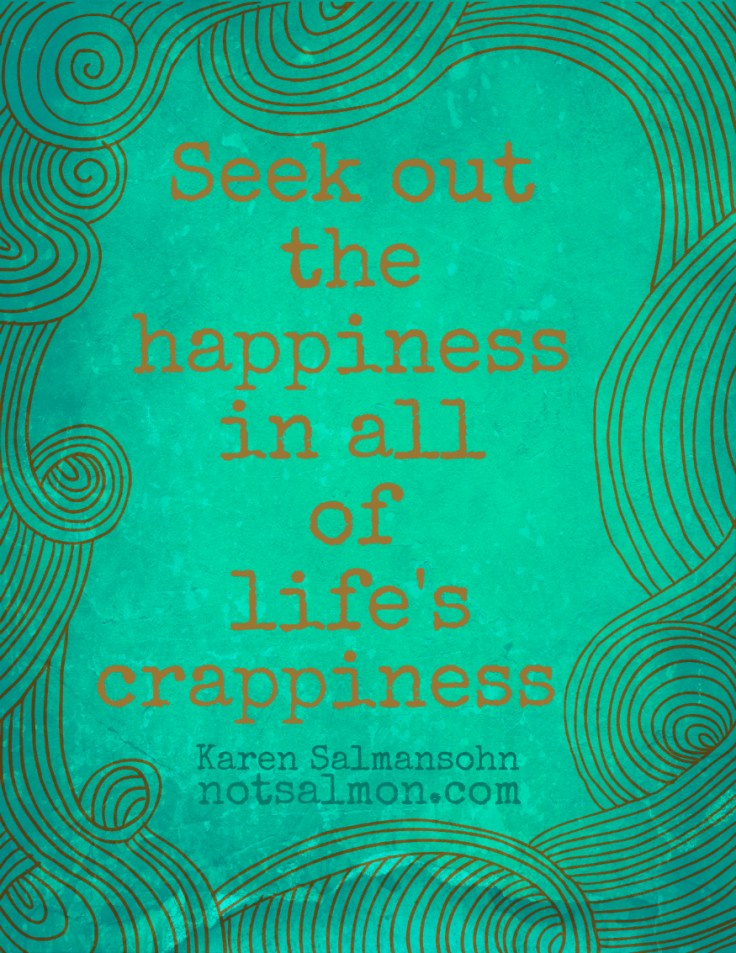
notsalmon via You know how a sunrise can be confused for a sunset?.


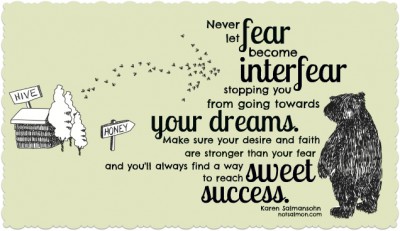
It’s believing strongly what you want won’t happen. Stop it and swap it for real deal faith. Karen Salmansohn via Fear is dyslexic faith..
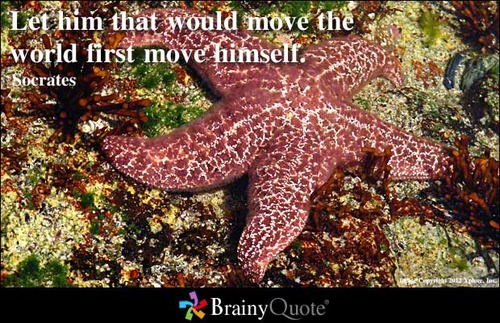

“Let him that would move the world first move himself.” Socrates. via Let him that would move the world first move himself. – Socrates.

 My wife found something else that’s yummy and good for you; teff:
Eragrostis tef, known as teff, taf (Amharic ጤፍ ṭēff, Tigrinya ጣፍ ṭaff), is an annual grass, a species of lovegrass native to the northern Ethiopian Highlands of Northeast Africa.
Common names include teff, lovegrass, annual bunch grass (English); Ṭeff/Ṭéff (Amharic, both representing the same sound, an ejective consonant); Ṭaffi/xaffi (Oromo, both representing the same sound); Ṭaff (Tigrinya); and mil éthiopien (French – ‘Ethiopian millet‘). It is also written as ttheff, tteff, thaff, tcheff, and thaft.[1] The word “tef” is connected by folk etymology to the Ethio-Semitic root “ṭff”, which means “lost” (because of the small size of the grain). Get more here: Eragrostis tef – Wikipedia, the free encyclopedia.
Taste kinda like uncooked bran muffins, but I went back for more…
A farmer in West Virginia blogs:

My morning routine gets me moving and my brain awakening. After I get my coffee and breakfast prepared, I carry it to my desk where the computer is first turned to email. I was happy to see today that this blog has a new subscriber who lives in the Philappines. We can safely assume she will not be shopping our farmers markets but something I wrote struck a cord for her and she signed on. Welcome! The local food movement is growing!
As I wandered down my email I came to my daily subscription for the New York Times. One of the op-ed pieces caught my eye and I want to share it with you: Dirtying Up Our Diets was written by Jeff D. Leach, a science and archaeology writer and founder of the Human Food Project. In the New York Times piece Leach poses one benefit to the increase in farmers market participation that I had not considered: we will be eating more dirt!
During the 20th century more Americans moved off the farm into the cities and no longer grew a good percentage of their own food. As food distribution industrialized, packaging of fresh produce became more prevalent and now we can get prewashed plastic bags of salads, vegetables all cut up ready for stir frying, and even prepared trays of fruit to bring to the next office party.
That popular time saving package saves you germs too. Sounds good, right?
Well, Leach says it is not all good. While he is not truly suggesting that we actually go eat some dirt and therefore ingest some harmful bacteria, he does say that all this washing has resulted in a reduction of the GOOD bacteria that our guts need.” Get more here: Eat More Dirt « wvfarm2u.

Michael Cerkas writes:
Writing a book is much akin to telling a story. The true challenge is to be able to effectively create the images, logic and train of thought, and emotions in the reader as you possess as the author. It is about describing, creating, remembering and planning just how you want to communicate your thoughts.
Below is an excerpt from my first book, “Not in Vein – Miracle within my Soul”. I offer it to you as an opportunity to witness my writing style, hear my story and provide an opportunity to send me feedback, ideas, suggestions, etc. As a writer, I continuously seek feedback as a path toward improvement and growth. Above all, it is an opportunity for me to share some of my life with you.
Please take a moment to review these few sentences and reflect upon the intended meaning and message. I hope you enjoy it; more to come as this project develops. Be well.” Get more here: The Inspired Verse.
I think he’s a really cool guy and you should follow his blog…
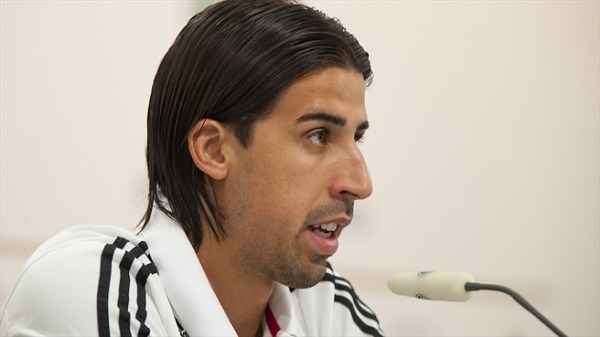

Soccer? What will he blog about next? I had an interesting conversation with one of my U15 players last night. I asked him what he thinks we need to work on as a team. His response? Talking to one another. Deep. I wanted my team to see that it makes no difference how old or good you get — the basics of teamwork are critical!
Germany midfielder Sami Khedira believes his congenial partnership with Bastian Schweinsteiger is in better health than ever.
It is easy forget that this is a combination which perhaps would never have been formed had Michael Ballack not been ruled out of the 2010 FIFA World Cup through injury. Coach Joachim Löw was forced into a rethink in the absence of the venerable Ballack and opted to pair Schweinsteiger and Khedira.
It was a hit from the off, helping Germany to the semi-finals in South Africa, and has flourished ever since. “In 2010, we played only one game together before the World Cup,” said Khedira. “Since then, two years have gone by and we have played many matches together.”
Khedira began the relationship as the undoubted junior partner but, having moved to Real Madrid CF two summers ago, has matured into an integral figure under the stewardship of José Mourinho. For the national team, he and Schweinsteiger complement each other perfectly.
“We know our respective virtues and to enable the other to capitalise on theirs you yourself take a step back,” added Khedira, 25. “I believe our balance between defending and attacking has become even better and that has probably made us stronger as well.”
It is also worth remembering that Khedira’s Madrid club-mate Mesut Özil is the other member of Germany’s midfield triumvirate. “Mesut has taken another step in the past one or two years,” said Khedira. “We players value him, he works a lot for the team. Now he knows how to create space by running.”
Löw expressed his belief that there would be “an explosion in Özil’s form in the knockout stages” and Khedira concurs: “His genius moments will come, simply because he has the quality for that to happen.” Friday’s quarter-final against Greece might be a good time for Özil to turn it on.” via Khedira backs German midfield to unlock Greece – UEFA.com.
Go Germany! :-D


“When mistrust comes in, love goes out.” ~Irish saying.
An old friend of mine felt betrayed by her boyfriend, but chose not to leave him. Instead, she made him pay for it over and over again.
Through subtle digs and less subtle slights, she repeatedly expressed that she felt contempt for him. But instead of forgiving or walking away, she stayed behind a wall of resentment.
Soon he started responding in kind, until their relationship became a container for mutual silent bitterness. It was two people sharing a suffocating space, overwhelmed by the weight of everything they didn’t say.
I suspect many of us can relate to that feeling of clinging to a grievance. In at least one of our relationships, we’ve felt angry and indignant, and despite wanting to forgive, we just couldn’t.
I know I’ve been there before.
It’s not easy to forget when someone breaks your trust, especially if you fear it might be broken again, but holding onto doubt is a surefire way to suffer.
Little hurts worse than the suspicion that someone else might hurt you.
This isn’t the kind of thing you can just brush off through positive thinking. You can’t make yourself feel trusting by telling yourself you should be, or rationalizing away your feelings.
The reality is it takes time and effort to trust again. It takes the courage to acknowledge how you feel and willingness from the other person to hear and honor it. It takes a mutual commitment to move beyond what happened instead of reliving and rehashing.
But most importantly, it requires you to believe in the goodness of the person who hurt you.
You have to believe someone can treat you with respect and consideration—even if it takes you a while to get there—or else you’ll never let your guard down. That’s a painful place to be.
The thing about being defensive is that everything becomes a battle, and no one ever wins.
Of course this doesn’t mean we can ever know for certain that someone won’t hurt us again. The only way we can know if we’re able to trust someone is by first giving them trust.
That means we need to ask ourselves: Is this relationship worth that risk?
Is it worth feeling vulnerable?
Is it worth letting go of the story?
And if it’s worth it, what would it look like to give trust, starting right now?

We have so many labor-saving devices these days, it’s no wonder we’re all getting pudgy. But, if we could look at everyday activities as exercises that can help us to reach our fitness goals and avoid paying gym fees, we might embrace them as something more positive than we have in the past.
The number of calories you burn during an activity depends on a number of factors, including your body size and composition, your gender and your age. It will also depend of the length of time you spend doing the activity but there’s no question that you can get your exercise without going to the gym.
I used to use living 18 miles from the Y as an excuse for being a fatass — another excuse was that the weather in Algoma sucks 7 months out of the year. I decided to stop making excuses and start power walking at 4.5mph, cycling at 15mph [weather permitting] and doing yoga — YES. Yoga! Deal with it…
Here are the most important tools in my smartphone arsenal:
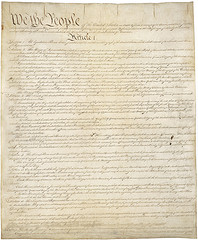
New Hampshire becomes the ninth and last necessary state to ratify the Constitution of the United States, thereby making the document the law of the land.
By 1786, defects in the post-Revolutionary War Articles of Confederation were apparent, such as the lack of central authority over foreign and domestic commerce. Congress endorsed a plan to draft a new constitution, and on May 25, 1787, the Constitutional Convention convened at Independence Hall in Philadelphia. On September 17, 1787, after three months of debate moderated by convention president George Washington, the new U.S. constitution, which created a strong federal government with an intricate system of checks and balances, was signed by 38 of the 41 delegates present at the conclusion of the convention. As dictated by Article VII, the document would not become binding until it was ratified by nine of the 13 states.
Beginning on December 7, five states–Delaware, Pennsylvania, New Jersey, Georgia, and Connecticut–ratified it in quick succession. However, other states, especially Massachusetts, opposed the document, as it failed to reserve undelegated powers to the states and lacked constitutional protection of basic political rights, such as freedom of speech, religion, and the press. In February 1788, a compromise was reached under which Massachusetts and other states would agree to ratify the document with the assurance that amendments would be immediately proposed. The Constitution was thus narrowly ratified in Massachusetts, followed by Maryland and South Carolina. On June 21, 1788, New Hampshire became the ninth state to ratify the document, and it was subsequently agreed that government under the U.S. Constitution would begin on March 4, 1789. In June, Virginia ratified the Constitution, followed by New York in July.
On September 25, 1789, the first Congress of the United States adopted 12 amendments to the U.S. Constitution–the Bill of Rights–and sent them to the states for ratification. Ten of these amendments were ratified in 1791. In November 1789, North Carolina became the 12th state to ratify the U.S. Constitution. Rhode Island, which opposed federal control of currency and was critical of compromise on the issue of slavery, resisted ratifying the Constitution until the U.S. government threatened to sever commercial relations with the state. On May 29, 1790, Rhode Island voted by two votes to ratify the document, and the last of the original 13 colonies joined the United States. Today the U.S. Constitution is the oldest written constitution in operation in the world.” via U.S. Constitution ratified — History.com This Day in History — 6/21/1788.


 Bright, shiny objects!
You must be logged in to post a comment.