Figuring out God’s will

Melody Beattie writes:

It was a stressful time in my life. I didn’t know what to do. I had pressing business decisions to make, and painful relationship issues to face. Everything felt like a mess.

I gathered up a few favorite books, the Bible, a journal, and some clothes. Then I headed for the mountains, a resort that was a favorite place of mine to hide out in and gather my thoughts.

I told myself, “I’m going to stay in there. Write in my journal. Pray. And meditate. I’m not coming out until I know what to do.”

After forty-eight hours of writing about my problems, praying about my problems, and meditating about my problems, I remembered something a friend had said to me.

“What are you doing?” he had asked.

“I’m trying to surrender to God’s will.”

“No you’re not, you’re trying to figure it out.”

Within six months, each of the problems I was wrestling with worked themselves out. I was either guided into an action that naturally felt right at the time, or a solution came to me. The immediate solution to each problem was the same: let go. Just surrender to the situation taking place. Sometimes, what we need to do next is surrender.

If you don’t like the word surrender, try calling it making peace.

God, help me surrender to your will, especially when I don’t know what to do next.” via Just For Today Meditations » Daily Recovery Readings – June 25, 2012.

I love those who yearn for the impossible

BrainyQuote via I love those who yearn for the impossible. – Johann Wolfgang von….

Release the stick!

Student pilots learn a simple method for getting an airplane out of a stall; Release the stick forward, and the airplane rights itself. Continue to hold the stick back, and you cause a fatal spin.

Many times, we cling too tightly to conditions that could simply right themselves if we would only let go. Situations often work themselves out when we stop pushing and pulling too hard.

If we’re living on a spiritual basis and following our 12 Step program, lots of unpleasant conditions will clear up without any strain or struggle on our part. The secret, then, is to do our part and act prudently, but also to be willing to let things happen.

I’ll remember today not to push or pull too hard to get my way. Things might work themselves out if I simply let natural forces work properly in every situation.

via Just For Today Meditations » Daily Recovery Readings – June 26, 2012.

During stormy times….

notsalmon via During stormy times…..

Kind girls are the coolest

notsalmon via Kind girls are the coolest.

10 Reasons Why You Need A Blog

Nick Thacker writes:

I know, I know–you’re already running a business, writing a book, raising children, and trying to have a life.

I get it.

But you’re here, which means that you’re into things like productivity, getting things done, and creating space in your life for the good things.

But it’s probably not enough.

Most likely, you’re able to maintain your 200+ emails-per-day workload, multiple projects at a time, and still have enough sanity to get home in time for dinner.

So why am I advocating adding another thing to your daily task list? Why am I telling you why you need a blog?

Because blogging isn’t going anywhere.

More importantly, it’s not something that should be seen as adding to what you’re doing. On the contrary, blogging (if done well), can be the most productive thing you do all day, and can even take the place of many of your daily “to-do”s. You might need to step out of your comfort zone, but trust me–it’s worth it.

Here’s a list of some of those things blogging can help with: 10 Reasons Why You Need A Blog.

I have two blogs; one business, one personal. This is the personal one. In addition to many of the benefits Nick mentioned, my blog is a place to store the good things I find in such a way that they benefit other people as well as myself. Comment, call or ‘connect’ so we can talk about how this applies to you and your organization…

Just in case you missed this for 6//25/2012

  1. “Learn to say ‘no’ to the good so you can say ‘yes’ to the best.”

    – John C. Maxwell

  2. It is good to have an end to journey towards, but it is the journey that matters, in the end.
    —Ursula K. LeGuin
  3. A man who has committed a mistake and doesn’t correct it is committing another mistake.
    –Confucius
  4. Don’t argue for other people’s weaknesses. Don’t argue for your own. When you make a mistake, admit it, correct it, and learn from it–immediately.
    –Stephen Covey
  5. Left to itself, nature takes ordinary garbage and transforms it into useful nutrients that help sustain life. It’s usually poor human action that makes garbage a problem.

    Our mental and emotional garbage takes the forms of bad memories, festering resentments, and useless regrets. We waste time berating ourselves and others about bad decisions and experiences that are behind us.

    The magic of the 12 Step program is that we can use it to transform this mental garbage into useful experience. A past mistake can become as asset when we share it with others. Pain and suffering can teach a lesson that helps all of us to grow. By forgiving others, a resentment can be turned into a friendship.

    I’ll resolve today not to worry about garbage any longer than it takes to identify it and release it to my Higher Power for transformation.

  6. Quote: When a man points a finger at someone else, he should remember that three of his fingers are pointing at himself.
    —Louis Nizer

    It’s so easy to blame others. Others are always making mistakes we can hide behind. That’s what blame is—hiding. When we blame others for our mistakes, we’re trying to hide our character defects.

    It’s nobody else’s fault that we act the way we do. It’s our fault. We’re responsible for our actions.

    And with the help of our Higher Power, we can change. We can turn over our character defects. Over time, we’re not afraid to learn about ourselves—even the parts we don’t like—because we want to know ourselves better.

    Prayer for the Day: I pray for help in facing my character defects.

    Action for the Day: I’ll think about the past week. I’ll list times I’ve used blame to hide from reality.

If you want to be happier….

notsalmon via If you want to be happier…..

Johnson & Johnson Introduces ‘Nothing But Tears’ Shampoo To Toughen Up Newborns

After decades of coddling young children, Johnson & Johnson unveiled its new “Nothing But Tears” shampoo this week, an aggressive bath-time product the company says will help to prepare meek and fragile newborns for the real world.

A radical departure for the health goods manufacturer, the new shampoo features an all-alcohol-based formula, has never once been approved by leading dermatologists, and is as gentle on a baby’s skin as “having to grow up and fend for your goddamn self.”

“We at Johnson & Johnson have been making bath time a safe and soothing experience for far too long,” company CEO William C. Weldon said. “Years of pampering have left our newborns helpless, feeble, and ill-equipped for the arduous road ahead.”

“It’s time our children got the wake-up call that’s been coming to them,” Weldon continued. “It’s time they cried their precious little eyes out.”

via Johnson & Johnson Introduces ‘Nothing But Tears’ Shampoo To Toughen Up Newborns | The Onion – America’s Finest News Source.

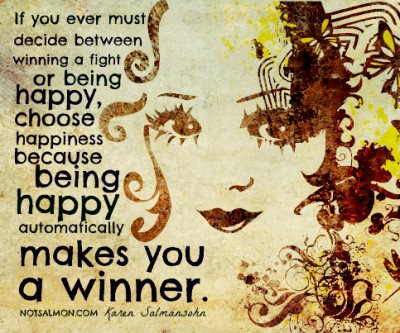
If you ever must decide between winning a fight and being happy…

notsalmon via If you ever must decide between winning a fight and being happy….

Battle of Little Bighorn; This Day in History — 6/25/1876

English: George Armstrong Custer.
George Armstrong Custer. (Photo credit: Wikipedia)
Crazy Horse and Sitting Bull, leaders of the Sioux tribe on the Great Plains, strongly resisted the mid-19th-century efforts of the U.S. government to confine their people to reservations. In 1875, after gold was discovered in South Dakota’s Black Hills, the U.S. Army ignored previous treaty agreements and invaded the region. This betrayal led many Sioux and Cheyenne tribesmen to leave their reservations and join Sitting Bull and Crazy Horse in Montana. By the late spring of 1876, more than 10,000 Native Americans had gathered in a camp along the Little Bighorn River–which they called the Greasy Grass–in defiance of a U.S. War Department order to return to their reservations or risk being attacked.

In mid-June, three columns of U.S. soldiers lined up against the camp and prepared to march. A force of 1,200 Native Americans turned back the first column on June 17. Five days later, General Alfred Terry ordered Custer’s 7th Cavalry to scout ahead for enemy troops. On the morning of June 25, Custer drew near the camp and decided to press on ahead rather than wait for reinforcements.

At mid-day, Custer’s 600 men entered the Little Bighorn Valley. Among the Native Americans, word quickly spread of the impending attack. The older Sitting Bull rallied the warriors and saw to the safety of the women and children, while Crazy Horse set off with a large force to meet the attackers head on. Despite Custer’s desperate attempts to regroup his men, they were quickly overwhelmed. Custer and some 200 men in his battalion were attacked by as many as 3,000 Native Americans; within an hour, Custer and every last one of his soldier were dead.

The Battle of Little Bighorn–also called Custer’s Last Stand–marked the most decisive Native American victory and the worst U.S. Army defeat in the long Plains Indian War. The gruesome fate of Custer and his men outraged many white Americans and confirmed their image of the Indians as wild and bloodthirsty. Meanwhile, the U.S. government increased its efforts to subdue the tribes. Within five years, almost all of the Sioux and Cheyenne would be confined to reservations.” via Battle of Little Bighorn — History.com This Day in History — 6/25/1876.

Charity

International Money Pile in Cash and Coins

Melody Beattie writes:

We need healthy boundaries about receiving money, and we need healthy boundaries about giving money.

Some of us give money for inappropriate reasons.

We may be ashamed because we have money and don’t believe we deserve it. We may belong to an organization that uses shame as a form of control to coerce us out of our money that the organization wants.

We can get hooked into giving money to our children, family members, or friends because we have earned or un­earned guilt. We allow ourselves to be financially black­mailed, sometimes by the people we love.

This is not money freely given, or given in health.

Some of us give money out of a sense of caretaking. We may have exaggerated feelings of responsibility for others, including financial responsibility.

We may be giving simply because we have not learned to own our power to say no when the answer is no.

Some of us give because we hope or believe people will love us if we take care of them financially.

We do not have to give money to anyone. Giving money is our choice. We do not have to allow ourselves to be victimized, manipulated, or coerced out of our money. We are financially responsible for ourselves. Part of being healthy is allowing those around us be financially responsible for themselves.

We do not have to be ashamed about having the money that we earn; we deserve to have the money we have been given — whatever the amount, without feeling obligated to give it all away, or guilty because others want what we have.

Charity is a blessing. Giving is part of healthy living. We can learn to develop healthy boundaries around giving.

Today, I will strive to begin developing healthy boundaries about giving money. I understand that giving is my choice.

via June 25: Charity | Language of Letting Go.

Withholding

Melody Beattie writes:

Sometimes, to protect ourselves, we close ourselves off from a person we’re in a relationship with. Our body may be present, but we’re not. We’re not available to participate in the relationship.

We shut down.

Sometimes, it is appropriate and healthy to shut down in a relationship. We may legitimately need some time out. Sometimes it is self-defeating to close ourselves off in a relationship.

To stop being vulnerable, honest, and present for another person can put an end to the relationship. The other person can do nothing in the relationship when we are gone. Closing ourselves makes us unavailable to that relationship.

It is common to go through temporary periods of closing down in a relationship. But it is unhealthy to make this an ongoing practice. It may be one of our relationship-sabotaging devices.

Before we close down, we need to ask ourselves what we are hoping to accomplish by shutting down. Do we need some time to deal? To heal? To grow? To sort through things? Do we need time out from this relationship? Or are we reverting to our old ways – hiding, running, and terminating relationships because we are afraid we cannot take care of ourselves in any other way?

Do we need to shut down because the other person truly isn’t safe, is manipulating, lying, or acting out addictively or abusively? Are we shutting down because the other person has shut down and we no longer want to be available?

Shutting down, shutting off, closing ourselves and removing our emotional presence from a relationship is a powerful tool. We need to use it carefully and responsibly. To achieve intimacy and closeness in a relationship, we need to be present emotionally. We need to be available.

God, help me be emotionally present in the relationships I choose to be in.” via Just For Today Meditations » 2012 » June » 23.

The Golden Opportunity

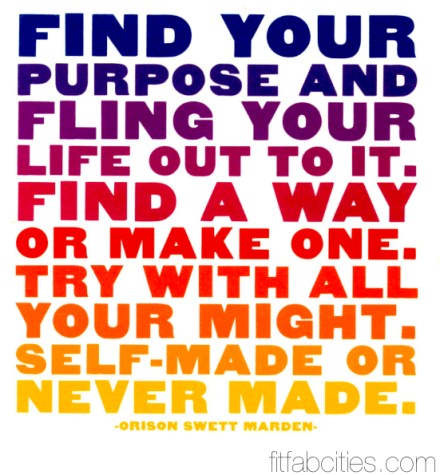
“The golden opportunity you are seeking is in yourself. It is not in your environment, it is not in luck or chance, or the help of others; it is in yourself alone.” Orison Swett Marden. via The Golden Opportunity | PositiveBoomer.

The Seven Levels of Criticism

Nicholas Bate writes:

Level 1

Your work is not good enough. Experience is lacking perhaps. Effort is lacking maybe. The criticism is valid, worth noting and acting upon.

Level 2

There is a difference of opinion. Your output, your deliverable is a quality one but there is a difference of opinion. This might be something worth considering to add even more value to your output or it could be a bit of politics. The criticism is worth considering and exploring to decide whether your product does need to be improved or the  relationship with an individual needs to be bettered.

Level 3

You’ve reminded someone what they might do if they got their own act together. What you have produced does not need to be changed in any way but the critic will attempt to lessen their own vulnerability by criticising your work. Avoid politicing and produce great work.

Level 4

The attack has changed from product to personal. You really are getting some people thinking. You really are doing some worthwhile things. Stay balanced, consider all points but don’t go off path  as you begin to discover your greatest works.

Level 5

The continued comments from all quarters will-as long as you stay balanced-produce friction which will help you produce your greatest works.

Level 6

Oh oh. You are ‘it’. You are the new thing. They finally get it. But: your ego kicks in. There is no room for criticism. You refuse to listen. Your products wanes.

Level 7

With luck, you have learnt your lesson. Humility over ego. Listen over judge. Grow over stay-the-same. Criticism continues but it’s just grit to wonderful output.” via The Seven Levels of Criticism.

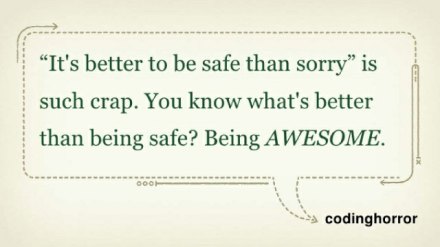
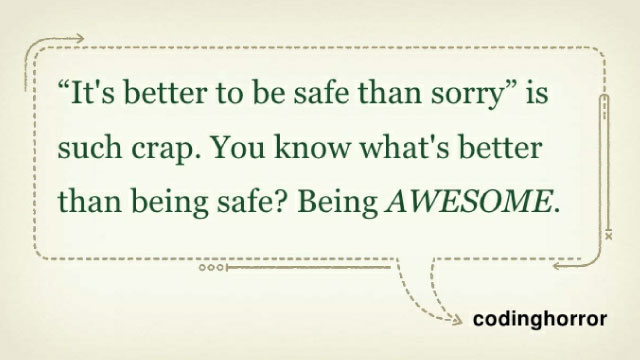
Stop Sucking and Be Awesome Instead: A Three Step Process

Nobody wants to suck, but the truth is, before you can be great at anything, you’re going to suck. Coding Horror blogger and co-founder of Stack Overflow Jeff Atwood has three simple rules for going from the sucking to awesome.

He writes on Coding Horror that “the only thing that prevents us from being awesome is our own fear of sucking.” What he’s found works for him and others to push past that:

1. Embrace the Suck

2. Do It in Public

3. Pick Stuff That Matters

These are his slides expanding on the above: (As presentation slides, they’re brief but most of the points are pretty clear. For ones that are cryptic, you can download the full presentation with his notes on Slideshare). Get more here:  Stop Sucking and Be Awesome Instead: A Three Step Process.

Cure-alls…


Anderson Layman’s Blog: Cure-alls………………….

Is there anyone so wise as to learn by the experience of others?

Is there anyone so wise as to learn by the experience of others? – Voltaire

via Is there anyone so wise as to learn by the experience of others?….

This is your life

Are you who you want to be?

Yesterday is a wrinkle on your forehead
Yesterday is a promise that you’ve broken
Don’t close your eyes, don’t close your eyes
This is your life and today is all you’ve got now
Yeah, and today is all you’ll ever have
Don’t close your eyes

This is your life, are you who you want to be
This is your life, is it everything you dreamed it would be
When the world was younger and you had everything to lose

Yesterday is a kid in the corner
Yesterday is dead and over

This is your life, are you who you want to be
This is your life, is it everything you dreamed it would be
When the world was younger and you had everything to lose

Don’t close your eyes

This is your life are you who you want to be
This is your life are you who you want to be, yeah

This is your life, are you who you want to be, who you want to be yeah
This is your life, are you who you want to be (who you want to be)
This is your life, is it everything you dreamed it would be
When the world was younger and you had everything to lose
And you had everything to lose

Attachment

Adrienne M. posted on the flipside of detachment over at her blog today:

Shirley MacLaine

If you attach yourself to one person, you ultimately end up having an unhealthy relationship. Shirley MacLaine.

Needing people in our lives is healthy, human, and natural. Needing a single person to love at a very deep level is also soothing to the soul’s well-being. Love and attachment are not synonymous, however. They are close to being opposites. If we “attach” ourselves to others, our movements as separate individuals are hampered. Attachment means dependency; it means letting our movements be controlled by the one we are “hooked” to.

Dependency on mood-altering chemicals, on food, on people, means unmanageability in our individual lives. Many of us in this recovery program, though abstinent, still struggle with our dependency on a certain person or a certain friend.

The tools we are learning apply in all cases of dependency. It is healthy independence we are striving for—taking responsibility for our own lives—making choices appropriate for our personal selves. Loving others means letting them make their own choices unhampered by our “attachment.”

Are my relationships attachments or are they based on love? I will take an inventory of them today.” via Daily Reading – June 24, 2012 « 12 Steps – Think About It!.

The Universe is really putting this issue front and center today. Ugggh…

Your attitude is more important than the facts

Kristin Barton Cuthriell writes:

Any fact facing us, however difficult, even seemingly hopeless, is not so important as our attitude toward that fact.  How you think about a fact may defeat you before you ever do anything about it. You may permit a fact to overwhelm you mentally before you start to deal with it actually. On the other hand, a confident and optimistic thought pattern can modify or overcome the fact altogether. -Norman Vincent Peale, The Power of Positive Thinking

A bitter why me attitude will have you going in the wrong direction. It is much healthier to focus your energy on what you can do.

You may have been unfortunate. You may have even been victimized. You may need to grieve your losses, allowing yourself some time to feel sad, angry, and out of sorts. But there comes a time, when it is in your best interest to accept what is and move toward solutions.

The solution does not mean that you will erase the past. You can’t. But the solution does lie in accepting what is, putting away the bitter why me mindset, and opting for a Given my situation, what can I do now attitude.

Focusing on how things use to be or what you use to be able to do can sometimes create a downward spiral both emotionally and physically.  Replacing this paradigm with a solution focused goal oriented mindset can have the opposite effect, creating healthy momentum.

The solution lies within the attitude. It is what it is. What can I do moving forward?

What can you do to improve your attitude? What can you do to improve your life?” via Your attitude is more important than the facts.

Start a Blog at WordPress.com.

Up ↑