 Learn how to calm the chaos of everyday life and find greater peace and happiness with the power of this simple mindfulness meditation technique.
Source: How to Calm the Chaos of Everyday Life with Mindfulness Meditation
Thinks I find along the way
Learn how to calm the chaos of everyday life and find greater peace and happiness with the power of this simple mindfulness meditation technique.
Source: How to Calm the Chaos of Everyday Life with Mindfulness Meditation
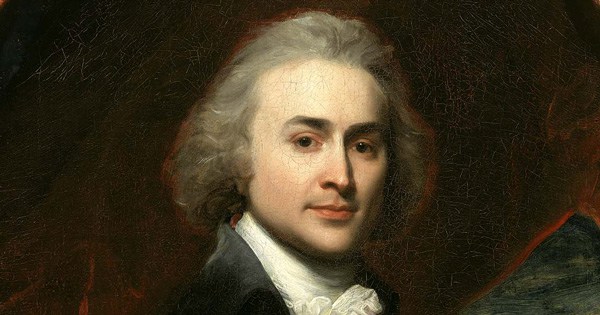 “The spark from Heaven is given to few — It is not to be obtained by intreaty or by toil.”
 Mindfulness—the increasingly popular practice of being present—is often associated with Buddhism, but three new books are exploring its potential in Christian traditions as well.
Source: How to Be Mindful and Christian
 If a tree falls in the forest… | Bright, shiny objects!
Source: (31) If a tree falls in the forest… | Bright, shiny objects! | #brightshinyobjects | Pinterest
The Japanese call it ‘Shinrin-Yoku Forest Therapy’…

To Fight the Winter Blues, Try a Dose of Nature by Florence Williams (excerpts):
Wintertime is rough on those whom the 19th-century hiker-philosopher John Muir called “tired, nerve-shaken, over-civilized people.” But we have an obvious cure for our doldrums: go outside. Though we are months away from the flowers and leafy foliage of spring, a dose of nature can still calm the mind and solidify human bonds. The real question is why we don’t partake more often of this easy balm…
After crunching the data, Dr. MacKerron and Susana Mourato…found people were significantly happier outdoors, especially in natural settings, than they were indoors…But there was a catch: Most of the participants didn’t behave as if they knew this, because they were rarely outside. They were indoors or in vehicles for 93% of their waking hours.
The study reveals our epidemic dislocation from the outdoors—an indictment not just of the structures and…
View original post 481 more words
True…

This morning it rained. This afternoon it is sunny. How is that not like the mind? ~ Michael Kewley, May all beings be happy Sources: Quote – Some of my best friends are birds. Photo: Your Eyes Blaze Out
Ed and Deb Shapiro write:
Quite often we put too much importance on our thoughts and take them so seriously that they can lead us into all kinds of emotional turmoil. Some thoughts are inspiring, while others can be misleading. One time we were teaching meditation. and Ed said to Mary, a participant, that when we meditate all sorts of outrageous thoughts may arise. In response, Mary blurted out, “Wow, how’d you know?” Because of her negative thoughts, Mary felt she was a terrible person. Yet thoughts are simply words in our mind. Those we thought yesterday are gone and new thoughts arise only to disappear into the next moment.
We lived in Dartmouth, on the south coast of England, and each day we would take walks along the wide river Dart to the estuary. One day we were standing and gazing at the flowing water when it struck us that though the river always looked the same, day after day, it was no more the same than it was even a second ago. It was constantly changing, always moving, always different.
Which is just like our thoughts and feelings. Can you remember what you were thinking yesterday that seemed so important? Who we are now is not who we were last week, an hour ago, even a few minutes ago. Like the river, we are always changing. Continue reading “Today’s Thoughts Are Tomorrow’s History”

“O longing mind
Dwell within the depth
Of your own pure nature.
Do not seek your home elsewhere….
Your naked awareness alone, O mind,
Is the inexhaustible abundance
For which you long so desperately.”
Sri Ramakrishna
Go to the source of this quote: Gestalt and Mindfulness | Gestalt Mindfulness

@AmandaLeCe had a post on @mindbodygreen this morning that was so good, I decided you needed to see the whole thing right here:
Between all the tasks, people and activities competing for our attention every day, it’s so easy to get lost in the routine and lose touch of our most powerful, loving selves. Before we know it, we’re acting out of habit or are glued to the computer. The following are some ways I get real, and come back to myself:
Continue reading “6 Ways To Reconnect With Your Most Powerful Self”

Do not try to save
the whole world
or do anything grandiose.
Instead, create
a clearing
in the dense forest
of your life
and wait there
patiently,
until the song
that is your life
falls into your own cupped hands
and you recognize and greet it.
Only then will you know
how to give yourself
to this world
so worthy of rescue.
Boarded cabin within the Wyre Forest, England.
 One of my favorite bloggers, Jackie Dumaine, has a beautiful post on her blog on the topic of spirituality:
“Being “Spiritual” does not mean giving up who you are. In fact, it’s quite the opposite.
It’s about embracing who you are.
Being “Spiritual” does not mean giving up wine night with the girls or refraining from buying a new pair of stilettos (or two). It means embracing varying levels of friendships and the little pleasures that life has to offer, without being attached to them for your happiness. Continue reading “Spirituality and Stilettos”
Clearing
by Martha Postlewaite
Do not try to save
the whole world
or do anything grandiose.
Instead, create
a clearing
in the dense forest
of your life
and wait there
patiently,
until the song
that is your life
falls into your own cupped hands
and you recognize and greet it.
Only then will you know
how to give yourself
to this world
so worthy of rescue.
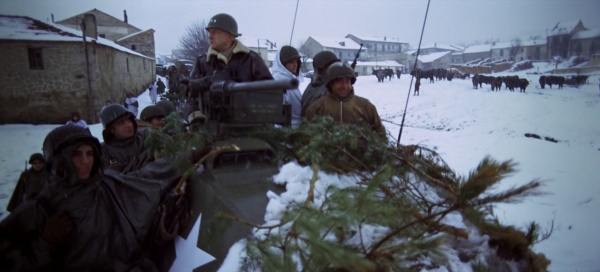
The Nazis amassed three armies for an enormous attack against the Allies in the Ardennes Forest and soon surrounded the 101 Airborne Division in southern Belgium, demanding their surrender.
U.S. General Anthony McAuliffe answered in one word: “Nuts.”
This response confused the Nazi commander, causing him to hesitate.
Marching to the rescue was the U.S. Third Army, but it was hindered due to bad weather.
General Patton directed Chaplain O’Neill to compose a prayer for his 250,000 troops to pray:
“Almighty and most merciful Father, we humbly beseech Thee, of Thy great goodness, to restrain these immoderate rains…Hearken to us as soldiers who call upon Thee…Establish Thy justice among men and nations.”
The weather cleared and the Allies counterattacked.
In his order, DECEMBER 22, 1944, General Eisenhower stated:
“By rushing out from his fixed defenses the enemy may give us the chance to turn his great gamble into his worst defeat.
So I call upon every man, of all the Allies, to rise now to new heights of courage…with unshakable faith in the cause for which we fight, we will, with God’s help, go forward to our greatest victory.”
Two days later President Franklin Roosevelt stated:
“It is not easy to say ‘Merry Christmas’ to you, my fellow Americans, in this time of destructive war…
We will celebrate this Christmas Day in our traditional American way…because the teachings of Christ are fundamental in our lives…the story of the coming of the immortal Prince of Peace.”

Found this on Michael Hyatt’s blog:
When I’m riding, I have a habit of looking over my shoulder to see if anyone else is coming and also to take a second look at something I just passed. At one point yesterday, traveling twenty mph, I executed my habitual over-the-shoulder look to re-see a beautiful lilac bush.
Turning my gaze forward, I realized I was off balance, heading from the paved path and into the forest where certain death awaited! (Cue dramatic music). A quick correction and I was back on track and not in the hospital.” Full story at: How to Lead a More Balanced Life | Michael Hyatt.

This looks interesting:
Dubbed as having the strength of coffee, the health benefits of tea, and the euphoria of chocolate, it’s no wonder South American’s have been drinking yerba mate tea for centuries.
This wonder drink, which is made from the leaves of the South American rainforest holly tree (Ilex Paraguariensis), contains caffeine, heobromine and theopylline. It’s also the national drink in Paraguay, Uruguay, Southern Brazil and Argentina (where it’s consumed by the truckloads, out doing coffee 6-1).
But besides providing a somewhat euphoric punch, it has the health properties to rival even the greenest of teas!
If the chocolate/coffee/tea analogy didn’t grab you, here are five reasons to switch your regular morning pick-me-up with yerba mate.” Get the rest here: Move Over Green Tea: 5 Health Reasons To Drink Yerba Mate Instead | FinerMinds.
Here’s a google search with more info, including places you can buy online. I’m gonna check this out…
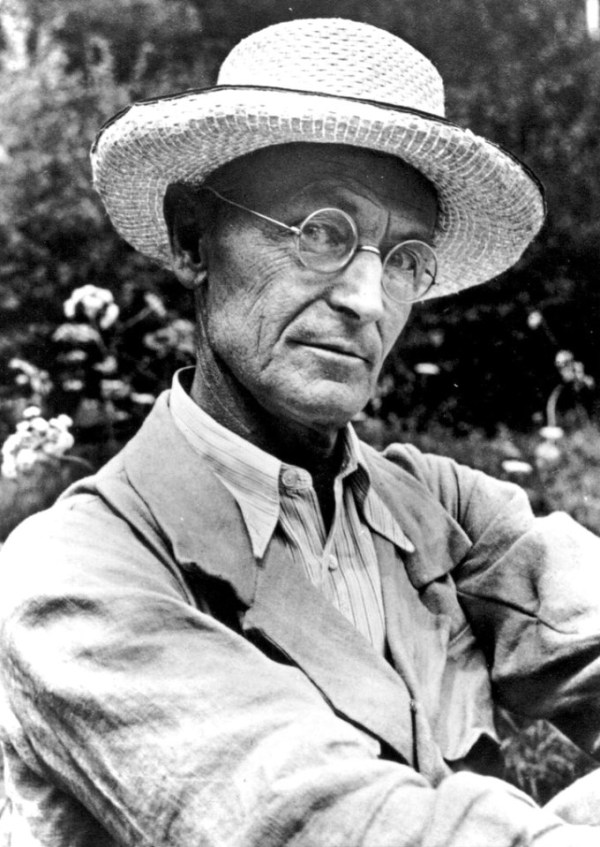
I was born in Calw in the Black Forest on July 2, 1877. My father, a Baltic German, came from Estonia; my mother was the daughter of a Swabian and a French Swiss. My father’s father was a doctor, my mother’s father a missionary and Indologist. My father, too, had been a missionary in India for a short while, and my mother had spent several years of her youth in India and had done missionary work there.My childhood in Calw was interrupted by several years of living in Basle (1880-86). My family had been composed of different nationalities; to this was now added the experience of growing up among two different peoples, in two countries with their different dialects.
I spent most of my school years in boarding schools in Wuerttemberg and some time in the theological seminary of the monastery at Maulbronn. I was a good learner, good at Latin though only fair at Greek, but I was not a very manageable boy, and it was only with difficulty that I fitted into the framework of a pietist education that aimed at subduing and breaking the individual personality. From the age of twelve I wanted to be a poet, and since there was no normal or official road, I had a hard time deciding what to do after leaving school. I left the seminary and grammar school, became an apprentice to a mechanic, and at the age of nineteen I worked in book and antique shops in Tübingen and Basle. Late in 1899 a tiny volume of my poems appeared in print, followed by other small publications that remained equally unnoticed, until in 1904 the novel Peter Camenzind, written in Basle and set in Switzerland, had a quick success. I gave up selling books, married a woman from Basle, the mother of my sons, and moved to the country. At that time a rural life, far from the cities and civilization, was my aim. Since then I have always lived in the country, first, until 1912, in Gaienhofen on Lake Constance, later near Bern, and finally in Montagnola near Lugano, where I am still living.
Soon after I settled in Switzerland in 1912, the First World War broke out, and each year brought me more and more into conflict with German nationalism; ever since my first shy protests against mass suggestion and violence I have been exposed to continuous attacks and floods of abusive letters from Germany. The hatred of the official Germany, culminating under Hitler, was compensated for by the following I won among the young generation that thought in international and pacifist terms, by the friendship of Romain Rolland, which lasted until his death, as well as by the sympathy of men who thought like me even in countries as remote as India and Japan. In Germany I have been acknowledged again since the fall of Hitler, but my works, partly suppressed by the Nazis and partly destroyed by the war; have not yet been republished there.
In 1923, I resigned German and acquired Swiss citizenship. After the dissolution of my first marriage I lived alone for many years, then I married again. Faithful friends have put a house in Montagnola at my disposal.
Until 1914 I loved to travel; I often went to Italy and once spent a few months in India. Since then I have almost entirely abandoned travelling, and I have not been outside of Switzerland for over ten years.
I survived the years of the Hitler regime and the Second World War through the eleven years of work that I spent on the Glasperlenspiel (1943) [Magister Ludi], a novel in two volumes. Since the completion of that long book, an eye disease and increasing sicknesses of old age have prevented me from engaging in larger projects.
Of the Western philosophers, I have been influenced most by Plato, Spinoza, Schopenhauer, and Nietzsche as well as the historian Jacob Burckhardt. But they did not influence me as much as Indian and, later, Chinese philosophy. I have always been on familiar and friendly terms with the fine arts, but my relationship to music has been more intimate and fruitful. It is found in most of my writings. My most characteristic books in my view are the poems (collected edition, Zürich, 1942), the stories Knulp (1915), Demian (1919), Siddhartha (1922), Der Steppenwolf (1927) [Steppenwolf], Narziss und Goldmund. (1930), Die Morgenlandfahrt (1932) [The Journey to the East], and Das Glasperlenspiel (1943) [Magister Ludi]. The volume Gedenkblätter (1937, enlarged ed. 1962) [Reminiscences] contains a good many autobiographical things. My essays on political topics have recently been published in Zürich under the title Krieg und Frieden (1946) [War and Peace].
I ask you, gentlemen, to be contented with this very sketchy outline; the state of my health does not permit me to be more comprehensive.” via nobelprize.org
Happy birthday, Hermann! You made a profound impact on my life through your body of work…




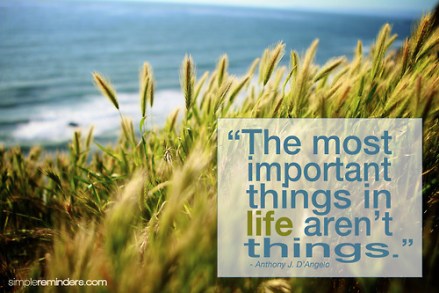


















 Bright, shiny objects!
comments