Out of the Cave

Morning-Reverence-DSC02876

When you have been

at war with yourself

for so many years that

you have forgotten why,

when you have been driving

for hours and only

gradually begin to realize

that you have lost the way,

when you have cut

hastily into the fabric,

when you have signed

papers in distraction,

when it has been centuries

since you watched the sun set

or the rain fall, and the clouds,

drifting overhead, pass as flat

as anything on a postcard;

when, in the midst of these

everyday nightmares, you

understand that you could

wake up,

you could turn

and go back

to the last thing you

remember doing

with your whole heart:

that passionate kiss,

the brilliant drop of love

rolling along the tongue of a green leaf,

then you wake,

you stumble from your cave,

blinking in the sun,

naming every shadow

as it slips.

via From Out the Cave by Joyce Sutphen | The Writer’s Almanac with Garrison Keillor.

If this poem resonates with you, you might enjoy this meditation from Tara Brach; Stepping out of the cave

Simple Truth to a Richer, Deeper, Lasting Relationship

How to Have Enriching RelationshipsHealing thoughts from Jeff Cannon:

When a relationship becomes a one-way way street, it ends up at a dead end sooner or later. Learn to keep the traffic flowing both ways with conversation, forgiveness and mindful awareness to keep your relationship growing well into the future. It all starts with that inner conversation you have with yourself. Be aware of it, and find how easy it is to nurture your relationship in the direction you want it to go. Continue reading “Simple Truth to a Richer, Deeper, Lasting Relationship”

Wise investigation

Click to see...
Click to see more…

Tara Brach may be glad to know that I have ‘discovered’ her work [I find the ‘discovery’ process, how things come to us and the language around it amusing at times]. In any case, thanks to Kristin Barton Cuthriell I became aware of the term ‘radical acceptance‘ a few week ago and devoured Tara Brach’s book by the same name shortly thereafter. I look forward to reading her book True Refuge when I can get a copy but until then I have been listening to her teaching via her podcast. Today on her blog, I found this video recording of one of these podcast meditations that I want to share with you here…

btw, Kristin — I’m very jealous you get to attend one of these meditations soon… :-D

Working With Difficulties

Tara Brach writes:

About twelve years ago, a number of Buddhist teachers began to share a new mindfulness tool that offers in-the-trenches support for working with intense and difficult emotions. Called RAIN (an acronym for the four steps of the process), it can be accessed in almost any place or situation. It directs our attention in a clear, systematic way that cuts through confusion and stress. The steps give us somewhere to turn in a painful moment, and as we call on them more regularly, they strengthen our capacity to come home to our deepest truth. Like the clear sky and clean air after a cooling rain, this mindfulness practice brings a new openness and calm to our daily lives.

I have now taught RAIN to thousands of students, clients, and mental health professionals, adapting and expanding it into the version you’ll find in this chapter. I’ve also made it a core practice in my own life. Here are the four steps of RAIN presented in the way I’ve found most helpful:

R   Recognize what is happening 

A  Allow life to be just as it is

I   Investigate inner experience with kindness

N  Non-Identification

RAIN directly de-conditions the habitual ways in which you resist your moment-to-moment experience. It doesn’t matter whether you resist “what is” by lashing out in anger, by having a cigarette, or by getting immersed in obsessive thinking. Your attempt to control the life within and around you actually cuts you off from your own heart and from this living world. RAIN begins to undo these unconscious patterns as soon as we take the first step.

Full story at: Tara Brach – Working With Difficulties.

Self-acceptance…

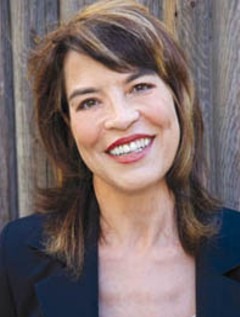
Melody-Beattie-8x6.jpgMelody Beattie writes:

Self-acceptance is a more humble term than self-esteem or self-love. Self-love has tones of narcissism—me first and to heck with you. Self-esteem rings of pride—holding our­selves up higher than everybody else. Self-acceptance is that gentle place we get to when we make peace with who we are.

“For a long time, when I talked to certain people. I got squeamish and uncomfortable. like it wasn’t okay to be me.” a friend said. “I thought it was me being uncomfort­able with myself. I’ve finally learned that I’m responding to how uncomfortable some people feel about themselves.”

We might feel so awkward about ourselves that we believe we have to be different from who we are. Some of that comes from low self-worth, not believing that we’re okay. Or it can stem from a need to control. We think if we pretend to be different or better. we can manipulate how other people feel about us.

Continue reading “Self-acceptance…”

How to Practice Radical Acceptance

Kristin Barton Cuthriell got me started with her post this morning and I can’t let this thought go. Here, an eHow contributor give instructions on how to practice radical acceptance:

Radical acceptance is the practice of accepting life on its own terms and finding effective strategies to cope with whatever is happening. It doesn’t mean being passive, but accepting “what is” with the understanding that you have the power of choice. Practicing radical acceptance is a choice that can ease stress and depression and enhance your overall quality of life.

Get the instructions here: How to Practice Radical Acceptance | eHow.com.

Stop! 9 WARNING Signs That You May Be in a Dangerous Relationship

Ponder this:

Any relationship can be an unhealthy one. Bad relationships aren’t just limited to marriages or partnerships—they can occur while dating, in friendships, or families. Any relationship that is harmful or destructive to your physical, mental, or emotional well-being is an unhealthy one.

There are many reasons why people stay in an unhealthy relationship. Some don’t recognize or aren’t willing to accept that the relationship is unhealthy, or they are fearful or lack the inner strength to leave. Or, they believe that they can change their partner and things will improve. The sad truth is that unhealthy relationships rarely get better; instead, they get progressively worse, leaving scars that are difficult to recover from.

Full story at: Stop! 9 WARNING Signs That You May Be in a Dangerous Relationship – Lifehack.

Letting go in love…

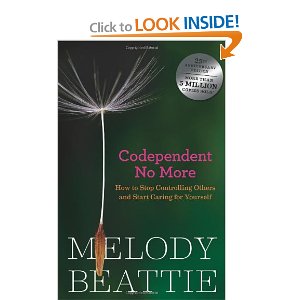
codependent no moreMelody Beattie writes:

When people with a compulsive disorder do whatever it is they are compelled to do, they are not saying they don’t love you – they are saying they don’t love themselves.
Codependent No More

Gentle people, gentle souls, go in love.

Yes, at times we need to be firm, assertive: those times when we change, when we acquire a new behavior, when we need to convince others and ourselves we have rights.

Those times are not permanent. We may need to get angry to make a decision or set a boundary, but we can’t afford to stay resentful. It is difficult to have compassion for one who is victimizing us, but once we’ve removed ourselves as victims, we can find compassion.

Our path, our way, is a gentle one, walked in love – love for self, love for others. Set boundaries. Detach. Take care of ourselves. And as quickly as possible, do those things in love.

Today, and whenever possible. God let me be gentle with others and myself. Help me find the balance between assertive action taken in my own best interests, and love for others. Help me understand that at times those two ideas are one. Help me find the right path for me.

via Blog | Just For Today Meditations.

Leave It. Change It. Accept It…

Claire Obeid writes:

I’ll never forget the first and only time I read Eckhart Tolle’s The Power of Now. Forever etched in my heart and mind is one key message…

“Leave it. Change it. Accept it.”

No other concept has run clearer bells for me since then. Despite the hours I spend devouring up as many spiritual, self-help and wellness books, I still find myself reciting those words like my own personal mantra – it’s how I live my life. It flutters in my mind during yoga, it catches my attention when I’m alone, it nestles into my heart when I need it the most. Not to mention that I enthusiastically pass this little gem on to my health-coaching clients in an effort to incite some calm into their world.

Every time you’re faced with a stressful situation, when you’re working at something without a return or when your ego and emotions get the better of you, just look to these three steps. See them as your spiritual compass to guide you into a calmer, clearer frame of mind.

via Leave It. Change It. Accept It: How Eckhart Tolle Changed My Life.

ch130124

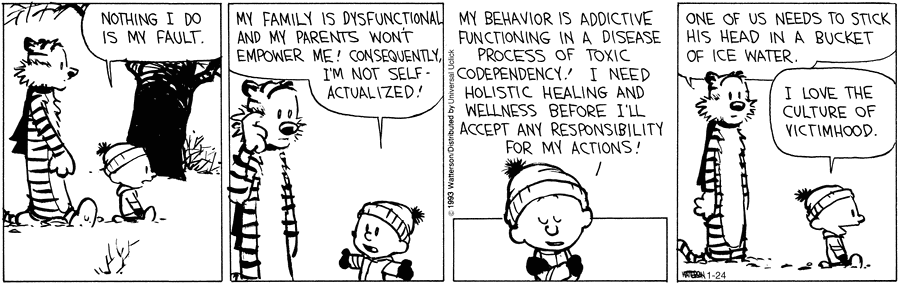
How To Let Go Of Codependency

SunsetHoldingHands660Shelly Bullard writes:

Codependency is one of those words that gets tossed around a lot, but I’m not sure many people really know what it means. The definition can be both vague and all-encompassing.

Codependency is not a word I use too often because I find that it can come off sounding derogatory—like something is wrong with you if you’re codependent. And I personally like to steer clear from labeling people as flawed.

But another reason I don’t use the word often is because I prefer the phrase “to be human”—because from my experience, we all have codependent tendencies. (So let’s agree to drop the pejorative label right here, shall we?)

The reality is, codependent behavior is quite common in relationships. Therefore it seems appropriate to give it some air-time. In this article I am going to discuss what I know about codependency and give you some suggestions on how to shift this pattern in your life.

Codependency is a word used to describe the process of using another person’s feelings to dictate how you feel.

So this could mean that you are dependent on someone else’s positive attention or positive affect to feel good. And this could mean that someone’s negative attention or negative affect makes you feel bad. (And anything in between.)

When you are codependent, you make another person your higher power. Your sense of well-being (and lack thereof) is dependent on them.

Full story at: How To Let Go Of Codependency.


Wholeheartedness = courage, compassion and connection…

220px-Brene_portrait_cropWEBTime to mix things up again. Thanks to my friend Tim Kastelle for sharing Brené Brown’s TED Talk on vulnerability. She writes here on cultivating worthiness…

Practicing courage, compassion, and connection in our daily lives is how we cultivate worthiness. The key word is practice. Mary Daly, a theologian, writes, “Courage is like—it’s a habitus, a habit, a virtue: You get it by courageous acts. It’s like you learn to swim by swimming. You learn courage by couraging.” The same is true for compassion and connection. We invite compassion into our lives when we act compassionately toward ourselves and others, and we feel connected in our lives when we reach out and connect. Before I define these concepts and talk about how they work, I want to show you how they work together in real life—as practices. This is a personal story about the courage to reach out, the compassion that comes from saying, “I’ve been there,” and the connections that fuel our worthiness.

Brown, Brene (2010-09-20). The Gifts of Imperfection: Let Go of Who You Think You’re Suppose to Be and Embrace Who You Are (p. 7). BookMobile. Kindle Edition.

Here’s the TED Talk in case you haven’t seen it yet…

Why Feeling Like a Victim Makes You Unhappy

shelley-bullardShelly Bullard writes:

We all get caught in the victim-trap from time to time. Feeling like we’ve been wronged; like we were right and they were, well, I’m sure we can complete the sentence with lots of words. It’s true, being a victim is not an uncommon stance to take in this world.

But you should know that feeling like a victim only makes you feel worse. Many of us don’t realize this. In fact, often we hang-out in victim-land because we unconsciously believe that it will get us what we want (which is care, concern, and love). On some level we think being a victim will make us feel better! We are sorely mistaken.

If you recognize that sometimes you identify as a victim and you want to stop the pattern, then keep reading. In this article I’m going to discuss why feeling like a victim ultimately leads to more unhappiness, and how to turn the pattern around. Continue reading “Why Feeling Like a Victim Makes You Unhappy”

Standing Up for Ourselves

Melody-Beattie-8x6.jpgMelody Beattie writes:

“We learn some behaviors have self-defeating consequences, while others have beneficial consequences. We learn we have choices” Beyond Codependency

It is so easy to come to the defense of others. How clear it is when others are being used, controlled, manipulated, or abused. It is so easy to fight their battles, become righteously indignant, rally to their aid, and spur them on to victory.

“You have rights,” we tell them. “And those rights are being violated. Stand up for yourself, without guilt.”

Why is it so hard, then, for us to rally to our own behalf? Why can’t we see when we are being used, victimized, lied to, manipulated, or otherwise violated? Why is it so difficult for us to stand up for ourselves?

There are times in life when we can walk a gentle, loving path. There are times, however, when we need to stand up for ourselves – when walking the gentle, loving path puts us deeper into the hands of those who could mistreat us.

Some days, the lesson we’re to be learning and practicing is one of setting boundaries. Some days, the lesson we’re learning is that of fighting for our own rights and ourselves.

Sometimes, the lesson won’t stop until we do.

Today, I will rally to my own cause. I will remember that it is okay to stand up for myself when that action is appropriate. Help me, God, to let go of my need to be victimized. Help me appropriately, and with confidence, stand up for myself.

via Blog | Just For Today Meditations | Maintaining A Life.

12 Rules to Live By

My Philosophy Bookshelf(top)

Craig Ballantyne writes:

The one thing I admire about people who have strong nutrition beliefs is their dogmatic behavior.

For example, a vegetarian, under no circumstances, will ever eat meat. There is no, “well, everyone else is having a burger, so just this once, I will too.”

That’s not how it works.

Not when a vegetarian has a strong personal philosophy that they never, ever, ever eat meat.

And that strong personal philosophy guides them to guilt-free behavior that is congruent with their goals.

I’ve also taught my fat loss clients to develop their own personal philosophy – essentially a set of rules that dictate decisions, and I’ve also created my own rules that determine how I live my life so that I reduce guilt, stress, and wasted emotional energy.

Now the purpose of this email is not to say that my personal philosophies are wrong or right.

Instead, they are simply here to encourage you to adopt your own rules for the sake of living a better, more productive stress free life. You may have your own rules in your head, but I encourage you to put them in writing. And you can adopt a set of rules for every aspect of your life, from health to financial to family and business.

Go to the source if you’d like to get the rest of Craig’s perspective: » 12 Rules to Live By :zenhabits

Nurturing Self Care

Today you get a double shot of Melody Beattie because I need it!

“…there isn’t a guidebook for setting boundaries. Each of us has our own guide inside ourselves. If we continue to work at recovery, our boundaries will develop. They will get healthy and sensitive. Our selves will tell us what we need to know, and we’ll love ourselves enough to listen.” Beyond Codependency

What do we need to do to take care of ourselves? Listen to that voice inside. What makes you angry? What have you had enough of? What don’t you trust? What doesn’t feel right? What can’t you stand? What makes you uncomfortable? What do you want? Need? What don’t you want and need? What do you like? What would feel good? In recovery, we learn that self care leads us on the path to God’s will and plan for our life. Self-care never leads away from our highest good; it leads toward it. Learn to nurture that voice inside. We can trust ourselves. We can take care of ourselves. We are wiser than we think. Our guide is within, ever present. Listen to, trust, and nurture that guide.

Today, I will affirm that gift to the Universe and myself. I will remember that nurturing self care delivers that gift in its highest form.

via Blog | Just For Today Meditations | Maintaining A Life.

Laying the Foundation

Melody-Beattie.pngMelody Beattie writes:

The groundwork has been laid.

Do you not see that?

Don’t you understand that all you have gone through was for a purpose?

There was a reason, a good reason, for the waiting, the struggle, the pain, and finally the release.

You have been prepared. The same way a builder must first tear down and dig out the old to make way for the new, your Higher Power has been cleaning out the foundation in your life.

Have you ever watched a builder at construction? When he begins his work, it looks worse than before he began. What is old and decayed must be removed. What is insufficient or too weak to support the new structure must be removed, replaced, or reinforced. No builder who cares about his or her work would put a new surface over an insufficient support system. The foundation would give way. It would not last.

If the finished product is to be what is desired, the work must be done thoroughly from the bottom up. As the work progresses, it often appears to be an upheaval. Often, it does not seem to make sense. It may appear to be wasted time and effort, because we cannot see the final product yet.

But it is so important that the foundation be laid properly if the fun work, the finishing touches, is to be all that we want it to be.

This long, hard time in your life has been for laying of groundwork. It was not without purpose, although at times the purpose may not have been evident or apparent.

Now, the foundation has been laid. The structure is solid.

Now, it is time for the finishing touches, the completion.

It is time to move the furniture in and enjoy the fruits of the labor.

Congratulations. You have had the patience to endure the hard parts. You have trusted, surrendered, and allowed your Higher Power and the Universe to heal and prepare you.

Now, you shall enjoy the good that has been planned.

Now, you shall see the purpose.

Now, it shall all come together and make sense.

Enjoy.

Today, I will surrender to the laying of the foundation – the groundwork – in my life. If it is time to enjoy the placement of the finishing touches, I will surrender to that, and enjoy that too. I will remember to be grateful for a Higher Power that is a Master Builder and only has my best interests in mind, creating and constructing my life. I will be grateful for my Higher Power’s care and attention to details in laying the foundation – even though I become impatient at times. I will stand in awe at the beauty of God’s finished product.

Source: Blog | Just For Today Meditations | Maintaining A Life

I Love You, But Please Stop Talking…

donna-gates.pngDonna Gates writes:

When we think and when we speak, we create.

Ask yourself the following:

Throughout my day, how many times am I thinking and speaking of:

1)Old things and experiences?

2)Things in society I dislike and wish would change?

3)Things I actually wish to create and experiences I wish to have?

Too often we play out the same dramas with different people.

Too often we give a voice to our worries, our fears, and our stress.

It can be difficult not to think and talk about stressful life events. When we speak about what is on our mind, we release some mental and emotional pressure. If we do not disperse the gloomy cloud that hangs around us, we at least have someone to share it with.

In conversation or in thought, the creative act happens in increments. Slowly, one small creation builds upon another. Before you know it, you are thinking about and speaking about the very experience that you do not want.

Every time we engage our fears and worries, we are putting our focus on things we do not want to experience. So then why are we spending so much time making them part of our reality?

During the first months of the New Year, many of us will begin a new exercise program, quit an unhealthy habit or choose a way of eating for vibrant health.

Whether it is the New Year or not, you can always give yourself the support that you need to succeed.

While each of us is unique, I often find that changing your inner ecosystem with fermented foods and beverages goes hand in hand with strengthening the will for transformation.

Raising your vibration on the inside helps to raise the vibration on the outside, including the good feeling states that promote optimistic thoughts and language.

Often at the end of the year, we focus on our flaws and our mistakes. This needs to stop. We need to change our perspective. Our misfortunes are clues. Our setbacks in health are communications from our body.

Thus we should see all the old events or trials and current misfortunes or imperfections as opportunities that bring us one step closer to understanding that the present moment is the right time for gratitude and the only time to focus on where you are going.

When we grasp that—we are one step closer to living our dreams.

via I Love You, But Please Stop Talking….

You And Your Imposter Complex Are Not Alone!

I first heard about the ‘imposter complex’ from my thoroughly lovely friend and client @jackiedumaine. Tanya Geisler lays it out here:

For a TEDxWomen talk on Dec. 1st, I’ve decided to talk about – and take down – the Impostor Complex. You know, that beast that wants to shut you down, reminding you of allll the ways you are not ready, capable, qualified, prepared and competent.

Yeah. THAT.

Which is perfect, of course, because my own Impostor Complex has a TON to say about why I’m not ready, capable, qualified, prepared and competent enough to deliver this talk. So my material, at the very least, is pretty fresh.

Just recently, I was thrilled to attend Mastin’s Super Soul Sunday event in Toronto. Mastin was generously answering every last question his hungry audience had for him. I asked him how he felt when the call came about going on Oprah with Marie and Gabby. His response:

“I couldn’t believe it. I thought it was a mistake. I didn’t think it would actually happen. I assumed it would be canceled.”

Familiar? You are not alone.

Any time we think that something has happened because of luck, or timing, or because someone made a mistake, we are in the hold of our Impostor Complex.

Is there ANY DOUBT in your mind that Mastin was supposed to be on that show? Is there ANY DOUBT in your mind that he earned it?

No? Me neither.

From the 1000+ hours I’ve been coaching clients, I can tell you with great certainty that almost every single high-achiever has at one point or another felt the weight of the Impostor syndrome, and it sounds like:

“I have written eleven books, but each time I think, ‘Uh oh, they’re going to find out now. I’ve run a game on everybody, and they’re going to find me out.’” – Maya Angelou

“You think, ‘Why would anyone want to see me again in a movie? And I don’t know how to act anyway, so why am I doing this?’” – Meryl Streep

And guess what else?

The Impostor and The Authority are are both Illusions

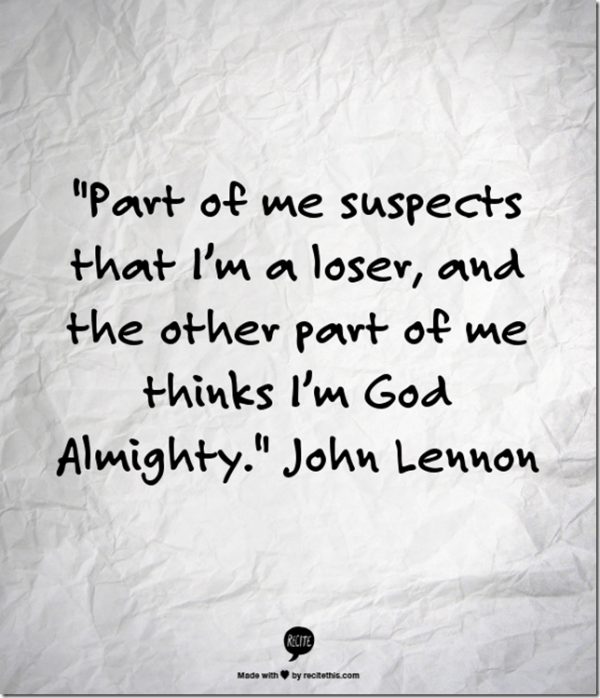
John Lennon said, “Part of me suspects that I’m a loser, and the other part of me thinks I’m God Almighty.”

Can you see the illusions at both ends of that statement? Loser is an illusion. God Almighty is an illusion. The Impostor is an illusion. The Authority is an illusion.

You are never either. You know more than you think AND you will never know it all.

It’s the very nature of the ego: it wants to want more than it wants to get.

Can you feel the relief and the grief in that?

And while I may not be THE authority, my experience as the Impostor Complex – both mine and those of my brilliant clients – certainly makes me AN authority.

So, as you face your desires for stage, for mastery in the boardroom, for the book deal, for the TV show, for the new business or for the promotion, I want you to know this:

  • You are not alone.
  • Those belittling voices are not real or right.
  • You’ve earned your right to be here.
  • You’ve got this.
  • You are ready.

Agreed?

When I’m on stage delivering my TEDx talk, I intend to own it. There has been no mistake made: I’ve earned my right to be there. Speaking truth imbued with experience and love, in spite of what my Impostor Complex wants me to believe. It is, after all, a mere illusion.

Your call’s coming too. Answer it with an effusive YES.

Source: You And Your Impostor Complex Are Not Alone!

I was describing to Jackie my own desire to do a TEDTalk and the trouble I was having writing my book ‘Be Known’; mainly, that people would laugh. Understanding that this feeling is so common that it has a ‘syndrome’ attached to it helped me get beyond my fears. In my experience, if you can name it you can kill it, fix it, fight it, whatever you want to do with it. Watch out for the ‘imposter complex’ in your life!

Related articles

How to Create A Breakthrough in Any Area of Your Life: Manage Your Strategies, Your Story and Your State

Tony Robbins writes here about STRATEGIES, STORY AND STATE and how they work together:

Question: One of the toughest things about chasing the dream is managing the disciplines of persistent action and hopeful patience that are required to ultimately see the vision come to be. This is an area of huge tension. How do dream chasers manage that tension and thrive?

Fulfilling your dreams and your ability to thrive in the areas of your life that matter most can be simplified by breakthroughs—a moment in time when the impossible becomes possible. If anyone wants to thrive in any area of their life, they have to reach a point of breakthrough where they will not settle for anything less than extraordinary in that area. Whether someone wants a breakthrough in their:

  • business
  • intimate life
  • emotional well-being
  • health
  • finances
  • career

There are only three areas to break through in order to feel lasting success.

One breakthrough area is your STRATEGIES. I personally live for finding strategies—those shortcuts that help people get more done in less time. What is it that gets some people to succeed while others fail who seem to have equal enthusiasm or passion for the tasks at hand? They have insights, distinctions, and strategies that allow them to achieve more quickly. For example, take someone who was born very poor, without an education, and had emotional and financial challenges but found a way to be highly successful and living an inspired life. I don’t believe that’s lucky—luck is what you do for a day or a week—strategies are what make it consistently happen for decades. A strategy can be found in the simplest or slightest distinction and it can happen in an instant.

As I described above, there are three elements that effect the long-term success or failure of a person and whether they break through or not. For example, there are hundreds or even thousands of strategies out there for losing weight, and frankly most of them are proven to work—if you work them! We’re not hurting for strategies. There are fitness clubs on every street, dieticians, health coaches, training videos, audios, books, etc. Yet 65% of the United States is overweight and 33% is obese, and those numbers are only growing geometrically. I would suggest to you that the problem for most people is not that they don’t have a strategy—it’s that they’re not using a strategy that works for them or acting upon it. Why? Because they have a disempowering STORY.

We all have stories—narratives we tell ourselves about why we can or cannot do or achieve something in our lives. Whether we believe we can or can’t, we’re usually right, because our expectation controls our focus, perceptions, and the way in which we feel and act. When a person succeeds it’s because they have the right strategy, and they found it usually because they have a story that it was possible or they could make it happen. Often people are not losing weight because they have a simple story that says, “I’m big boned.” With that as your core belief system you are never going to find a strategy, and even if you do you won’t follow through on it.

Your story may be true—you may have been through a horrific experience–but that’s not the reason why you can’t have the life you want. For example, you might have had a bad breakup five years ago, but that’s not the reason you haven’t found the passionate and loving relationship you deserve. A disempowering story is one of the things that controls people and makes them stuck in their beliefs.

Most people tell a story in a selective way so they don’t have to ever maximize their effort towards a strategy because they’re afraid they will fail. In order to get out of a story you have to be triggered by hunger and desire—if someone wants something strong enough they will breakthrough the story that’s limiting them.

Of course, whether you have an empowering story or disempowering one is influenced most powerfully by the mental and emotional STATE you’re in at this moment in time. As human beings we all develop emotional patterns—moods—that are mental or emotional states that tend to filter how we look at our lives.

This influences the stories that we make up about who we are, what we’re capable of, or what’s achievable or not. The states we go into most often then become the most powerful filter of all that will determine whether we find the strategies necessary to succeed and whether we come up with a story that will empower us. The big question then becomes, what is it that we can do to change our state of mind when we’re not able to maximize our true potential? One of our greatest scientific discoveries has been that you can change your emotional mood by a radical change in your “physiology.”

For people who are experiencing stress at any given moment, a form of relief can be to simply change your physiology—take a couple of deep breaths. Most people only use 20% of their lung capacity taking small short breaths, but 70% of the body’s toxins can actually be released when taking a full breath! By taking the time to fill your lungs and release you can not only improve your health but also radically decrease the anxiety related to that moment. There are many ways to change your physiology and in our seminars we prove this time after time by taking people who feel depressed and having them make a radical shift. Intuitively we know this can be changed not only by the way we move, but our breath and body temperature as well.

The second thing that affects our state is what we focus on. For example, if you’ve been at a funeral honoring someone you cared about and everyone is in a sad state and afterwards someone shares a story or anecdote about something that person did that was extremely humorous, suddenly everyone goes from tears to laughter. In an instant our states can be changed by what we focus on. What’s wrong is always available—but so is what’s right. Whatever we focus on effects our state and our state then effects the story we have about who we are, what’s life about, what’s possible and what’s not. From that story we will often determine whether or not we will maximize our capabilities and the strategies that will help us achieve what we’re truly after in a sustainable way.

Learning to put yourself in a peak state consistently is one of the greatest gifts you can give yourself and your life. It can transform your stories and give you the strategies to breakthrough. This is a huge focus that we just don’t tell people but what we train people to do with their minds and bodies in an instant, on cue, so they can shift the quality of their performance. Whether it’s a peak performance athlete like Serena Williams, MMA champion Jon Jones, a president of a company, a parent, or someone in prison—if we’re going to shift our life it comes down to these three fundamentals.

Change your strategy, change your result.

Change your story, change your life.

Change your state—you change it all!

Source: How to Create A Breakthrough in Any Area of Your Life: Manage Your Strategies, Your Story and Your State

Affirmations

Melody-Beattie.pngMelody Beattie writes:

One of our choices in recovery is choosing what we want to think – using our mental energy positively.

Positive mental energy, positive thinking, does not mean we think unrealistically or revert to denial. If we don’t like something, we respect our own opinion. If we spot a problem, we’re honest about it. if something isn’t working out, we accept reality. But we don’t dwell on the negative parts of our experience.

Whatever we give energy to, we empower.

There is magic in empowering the good, because whatever we empower grows bigger. One way to empower the good is through affirmations: simple positive statements we make to ourselves: I love myself… I’m good enough… My life is good…I’m glad I’m alive today… What I want and need is coming to me… I can…

Our choice in recovery is not whether to use affirmations. We’ve been affirming thoughts and beliefs since we were old enough to speak. The choice in recovery is what we want to affirm.

Today, I will empower the good in myself, others, and life. I’m willing to release, or let go of, negative thought patterns and replace them with positive ones. I will choose what I want to affirm, and I will make it good.

via Just For Today Meditations » Daily Recovery Readings – December 11, 2012.

And, whatever we resists, persists…

Start a Blog at WordPress.com.

Up ↑