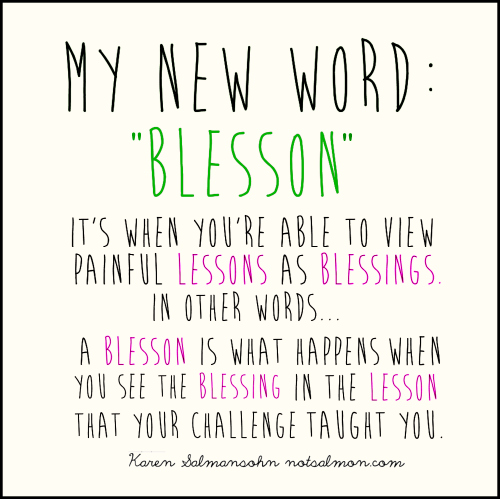
My new word: “Blesson”

notsalmon

via My new word: “Blesson”.

8 Tips for Dealing with Difficult Relatives During the Holiday Season

Gretchen Rubin has some valuable insight for those who struggle with the holidays for one reason or another:

Holidays can be tough. Some people love them; some people dread them.

I thought a lot about the holidays as I was writing Happier at Home, because the holiday season tends to be a time when we focus on home. Maybe you’re going “home” the way I go home to Kansas City for Christmas–which may be fun for you, or not. Maybe you’re deciding how to decorate your home. Maybe you’re making an effort to arrange the holidays the way you experienced them as a child–or the opposite. Maybe you’re feeling sad, or happy, about whom you will or won’t be seeing.

From talking to people, it seems that one of the biggest happiness challenges of the holidays is dealing with difficult relatives. You want to have a nice dinner, but Uncle Bobby makes you crazy. What to do?” Get the answer here: 8 Tips for Dealing with Difficult Relatives During the Holiday Season. « The Happiness Project.

7 Foolproof Ways to Feel Less Alive

grouch[1]

The good folks at ‘Escape Adulthood’ shared this:

Dear friend,

Do you ever suffer from that dreaded emotion of feeling alive? Are you always complaining about that spring in your step, the annoying perception of joy in your heart, or the gnawing sense that you’ve found your purpose in life?

If you ask me, no one should have to live that way, and it’s my mission in life to prevent these sorts of unfortunate conditions. Naturally, there are a host of things that will try and trip you up. Without even realizing it, you can find yourself feeling alive at no fault of your own. Here is a list — by no means is it exhaustive — of certain things you’ll want to steer clear of: smiling babies, as well as all puppies, bunnies and kittens, circuses, water parks, dolphin shows and magic shows, oversized stuffed animals, silly string, bean bag chairs, helium-filled balloons, and of course, Pop Rocks.

Besides all that, here some very effective techniques for turning your situation around:

1) Spend as much time as possible looking at screens. Smartphone screens, computer screens, television screens. The higher number of screen time you can manage is in direct proportion to your lack of aliveness, so as usual, more is better. Also, try replacing face-to-face relationships and interactions with those that exist solely online as much as possible. Remember, leave the real living to the people participating on reality TV shows.

2) On the other hand, when it comes to nature, less is definitely more. Do not frequent parks, mountains, beaches, or wooded areas of any kind. Hiking, biking, climbing, fishing, skiing, swimming…these activities are strictly off-limits. Instead, spend time at more fruitful locales, such as the mall, airport security lines, or the DMV.

3) You should make it a priority to have a job that sucks the living soul right out of you. Specifically, the kind you dread going to and has you longing for the weekend as soon as you arrive. If you already have one, by all means, keep it, especially if it pays the bills. If it pays VERY well, you already find yourself in an ideal position. Refrain from the foolishness of following your “passion.” You’ve got plenty of time for things like that so don’t waste too much time thinking about it now.

4) Commit to as many things as you can, and for your kids as well. A good rule of thumb is to pick activities that you’d only do out of guilt, obligation, or as some misguided attempt to make your kids more appealing to institutes of higher learning. If you have blank spots on your calendar, you’re doing it wrong.

5) Laughter is, of course, a killer. Addictive and insidious, it’s a common culprit for creating feelings of “aliveness.” Believe me, I have spared no effort in trying to wipe out this abominable nuisance. In fact, I’ve made great strides in all levels of government, and many professions as well. (Most of which I’m sure you’d be able to name.) And yet it persists. Resist its spell.

6) Anytime you slip into the habit of wondering if there’s something more out there for you — and don’t worry, it happens to the best of us — calmly remind yourself that this is as good as it gets. Trust me, it is.

7) My final tip is so good, it should be on a bumper sticker: dream small. Although I don’t condemn dreaming, if you must, please, keep it “realistic.”

Feeling less alive is not easy, but millions of people are accomplishing it every day. Follow my words of wisdom, friend, and so can you.

Sincerely,

Adultitis

Source: 7 Foolproof Ways to Feel Less Alive | Escape Adulthood with Kim & Jason

The name that can be named is not the eternal name…

How to Cook the Perfect Thanksgiving Turkey

Greatist – Health and Fitness Articles, News, and Tips

Full story at:  How to Cook the Perfect Thanksgiving Turkey.

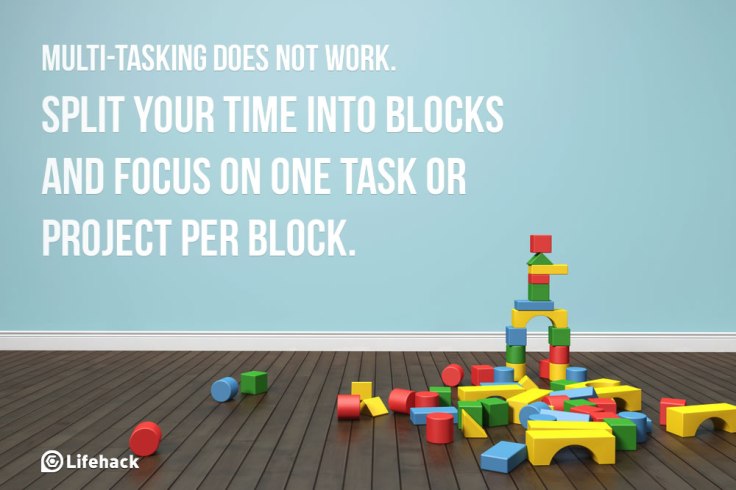
Does Multitasking Work?

Stepcase Lifehack

via 30s Tip: Does Multitasking Work?.

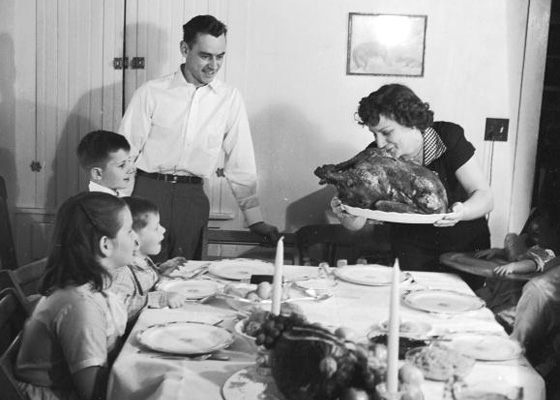
7 Overlooked Thanksgiving Rituals, According to Sociologists

Full story at: 7 Overlooked Thanksgiving Rituals, According to Sociologists – Mental Floss.

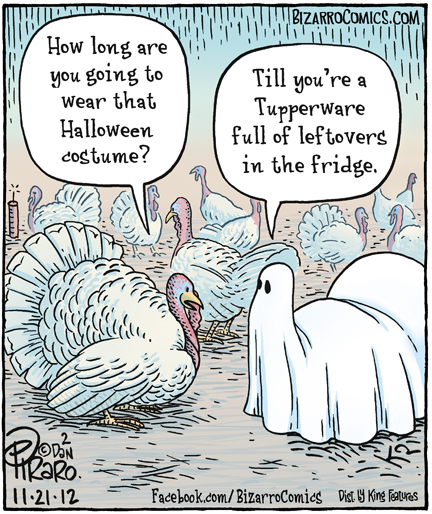
Shag Dark Ghost Corpse

Bizarro Blog!

Get more here: Shag Dark Ghost Corpse.

Be Grateful!

The Daily Love

via Visual Inspiration: Be Grateful!.

The Freedom (and Challenge) of Detachment

Detach660

Danielle Robinson has some valuable insights on the topic of detachment I’d like to share with you:

Most spiritual teachers worth their salt, including all the popular ones (Deepak, Eckhart, Osho), speak in depth about attachment.

Being aware of our impending deaths practically since birth, we humans cling to life and our possessions as though we can bring them with us into the next phase. We cannot. And thank the universe, because that would all be quite burdensome.

There’s a fine line between defining and adhering ourselves to our accomplishments, beliefs and opinions, jobs, loved ones, homes and other assets; and severing all ties between us and those outside “things.”

I’d never want to live life aloof, indifferent or apathetic, but that’s not what detachment implies.

Detachment implies acceptance, specifically of life’s transience. We cannot predict or control another and therefore, we’re bound to be surprised and disappointed by many in our lifetime. How we process this delight or disturbance indicates our level of attachment to outside influences.

I’ve had my heart broken and it sucked, royally. If the me now could talk to the me then, I’d say, “He wasn’t what you’d hope he’d be, someone else is. Move the f*ck on, idiot. “

I am mean to myself sometimes. I’m very, very blunt. I spent three years attached to my heartache and disconnected with thousands of potentially great human beings because of it. My attachment to what was left me incapable of embracing what is or open to what could be. I glued myself to the past. If this happened to me today, I’d allow time to mourn and be sad, but you bet your ass I’d be keeping myself in line toward a better future, and more importantly, a happier present.

No one owes us anything. That’s the hard part to accept.

Get the rest of Danielle’s thoughts here: The Freedom (and Challenge) of Detachment

imho, detachment is one of the most important skills a healthy person can master and I have so far to go. This book has been a great help in showing me what healthy dependency actually looks like…

Give and Forgive

Visual Inspiration: Give and Forgive.

‘Tis the season to get trampled

Questions To Ask Yourself Before Shopping On Black Friday

BuzzFeed – Latest

Full story at:  Questions To Ask Yourself Before Shopping On Black Friday.

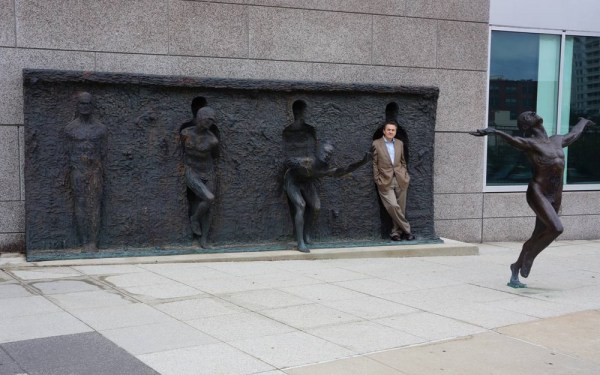
This sculpture was created by Zeno Frudakis who said of his work:

I wanted to create a sculpture almost anyone, regardless of their background, could look at and instantly recognize that it is about the idea of struggling to break free. This sculpture is about the struggle for achievement of freedom through the creative process.

Although for me, this feeling sprang from a particular personal situation, I was conscious that it was a universal desire with almost everyone; that need to escape from some situation – be it an internal struggle or an adversarial circumstance, and to be free from it.

I began this work in a very traditional sculptural manner by creating a small model in clay called a macquette. The purpose of beginning in this manner is to capture the large action and major proportions of the figure within the overall design without any details to detract from the big idea. Another reason for not having details and for working on a small model only a few inches in height is that the small armature within it, holding the clay, is more easily manipulated, allowing for much greater flexibility in developing a concept. For example, an arm, a leg or a head can be pushed around without any concern for obliterating details, such as a nose or a finger.

The macquette is the original mass of clay where a concept is born and from which it grows and develops. This was important later when I enlarged the sculpture from several inches long to 20 feet long, and I retained in the larger work a sense that all the conceptual material, its forms, focus and development sprang from this rough idea. The work metamorphosized, in the way that we do.

Although there are four figures represented, the work is really one figure moving from left to right. The composition develops from left to right beginning with a kind of mummy/death like captive figure locked into its background. In the second frame, the figure, reminiscent of Michaelangelo’s Rebellious Slave, begins to stir and struggle to escape. The figure in the third frame has torn himself from the wall that held him captive and is stepping out, reaching for freedom. In the fourth frame, the figure is entirely free, victorious, arms outstretched, completely away from the wall and from the grave space he left behind. He evokes an escape from his own mortality.

In working on the large scale sculpture, I was satisfied that those who drove by getting a quick look at it would see the big picture: that it was about escape. I was also concerned that those who worked in the building and who passed the sculpture frequently would have something more to see. There was a lot of empty space between the figures on the wall, which I saw as an opportunity to develop further ideas.

It was important to me that the sculpture have more than one theme going on at once. One of the other major ideas incorporated in the work is that the very process of creating the sculpture is clearly revealed in the work itself. The maquette is cast into the sculpture in the lower left hand corner. In the lower right corner is the cast of the sculptor’s hand holding the sculpture tool with two rolls of clay also cast in bronze. Throughout the background of the Wall, I have rolled out the clay and pressed it with my fingers so that my fingerprints are all over the sculpture. I have not hidden how I have made the piece. In fact, the whole idea of the macquette is enlarged so that all the figures in the background look like a giant macquette. And at the same time, as the figures move from left to right, I have shown how figures are developed when you are sculpting from the rough to the more finished product.

Elements of the sculpture trade beside the tools that are cast into the sculpture are calipers both for their use in measuring and their reference to Protagoras’ words “Man is the measure of all things.”

Also cast into the sculpture is an anatomical man, traditionally used as a reference by sculptors. Many of the heads and figures on the wall, some in the round and some in relief, are shown partially sculpted, revealing the process of creation.

Something else I have done with the sculpture is that I have created a one man show of my work. I have always admired Rodin’s Gates of Hell. I similarly thought I would incorporate many sculptures into the wall where it was suitable.

Like T.S. Eliot and other artists, I have put many personal elements in my work. My friend Philip, a sculptor who died of AIDS, created a work that I included in Freedom because he often expressed his wish to have it in a public space. He did not live long enough to accomplish this himself. My cat, who lived with me for 20 years, my mother, father, and my self portrait are in the work. It is obvious which face is mine because there is a ballooned phrase coming from my mouth with the word “freedom”, written backwards, making it clear that the face was sculpted in a mirror. I see the whole Wall sculpture as a kind of illusion akin to Alice’s Through the Looking Glass.

The sculpture contains an original Duane Hanson — a bronze cast of my own hands that Duane cast for me as a gift.

Much of what I did with this sculpture has to do with taking traditional forms and combining them in non-traditional ways, forming a postmodern sensibility. For example, I dropped a wax cast of my father’s bust from two or three feet in height so that it broke into large pieces. I cast those into the wall in a fractured manner over another face, an old work I found in a vat of clay purchased from a sculptor who had long ago died.

I have hidden many things in the background for people who see the sculpture more than once to discover, such as a cast of coins – a nickel and two pennies, another nickel and two pennies, and two quarters and a penny. These represent not only the relationship between money and art, but the numerals 7-7-51, my birth date.

It is important to me that the public interact with the sculpture, not just intellectually and emotionally but physically. I have created a space in which I have written “stand here” so that people can place themselves inside the sculpture and become part of the composition.

In the end, this sculpture is a statement about the artist’s attempt to free himself from the constraints of mortality through a long lasting creative form.

http://www.zenosfrudakis.com/freedom-sculpture/#:~:text=%22I%20wanted%20to%20create%20a%20sculpture%20almost%20anyone%2C,freedom%20through%20the%20creative%20process.%22%20-%20Zenos%20Frudakis

The best of ‘what I see’ for 11/20/12

  1. toddlohenry
    Finding Direction When You’re Not Sure Which Choice Is “Right” http://bit.ly/10lsYtk
  2. toddlohenry
    Secret of Adulthood: Flawed Can Be More Perfect Than Perfection. http://bit.ly/UDSJQc
  3. toddlohenry
    22 Killer Personal Development Resources You’re Missing Out On http://bit.ly/S6QHLM
  4. toddlohenry
    4 Lessons About Love and Long-Distance Relationships http://bit.ly/100Yb5U
  5. toddlohenry
    “Start where you are. Use what you have. Do what you can.”Arthur… http://bit.ly/T7LqkH
  6. toddlohenry
    Secret of Adulthood: Flawed Can Be More Perfect Than Perfection. http://bit.ly/TUrHWt

Blazing in the Grass

Pops Digital

via Blazing in the Grass.

Life is a Mirror!

Do you like what you see?

via Visual Inspiration: Life is a Mirror!.

The science of overeating

Just in time for the holidays!

No more drama

I’m not a big Mary J. Blige fan, but this song is a good reminder that you don’t have to play a role in other people’s dramas if you don’t want to…

As a bonus, here’s the other music video of hers [along with U2] that I really like…

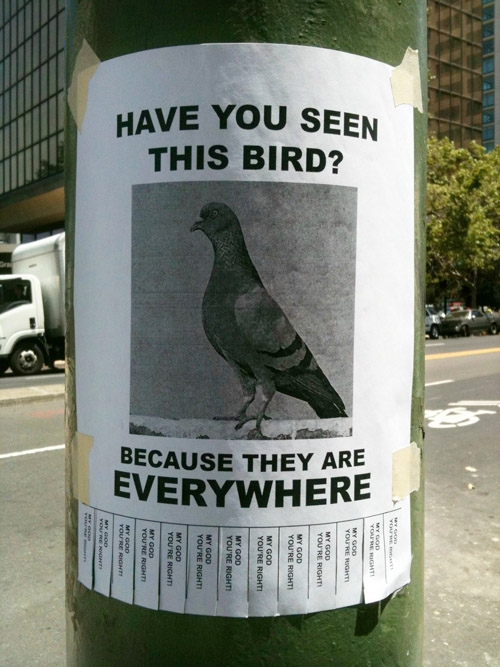
OMG! You’re right!

They ARE everywhere!!!

.

Your Story?

NSRW Thomas Alva Edison
Craig Harper writes:

Once upon a time, JK Rowlings was an unknown, unpublished, impoverished author.
Once upon a time, Thomas Edison was a telegraph operator with three months of formal education.
Once upon a time, Stephen Spielberg made 8 mm films and charged local kids 25 cents to watch.
Once upon a time, I was a fat kid who got picked last for every sporting team.

You’ll never have more potential than you do right now but you will have less time.

What’s the next chapter of your story?

Source: Your Story?

Start a Blog at WordPress.com.

Up ↑