“On November 17, 1968, the Oakland Raiders score two touchdowns in nine seconds to beat the New York Jets—and no one sees it, because they’re watching the movie Heidi instead. With just 65 seconds left to play, NBC switched off the game in favor of its previously scheduled programming, a made-for-TV version of the children’s story about a young girl and her grandfather in the Alps. Viewers were outraged, and they complained so vociferously that network execs learned a lesson they’ll never forget: “Whatever you do,” one said, “you better not leave an NFL football game.”
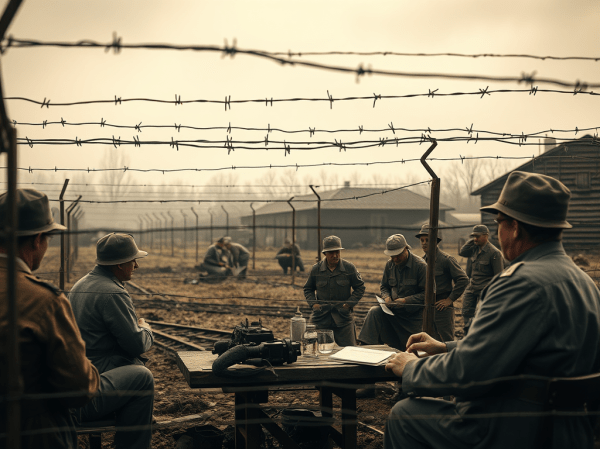
When I was in college, I was shocked to learn there were actually German POWs in the United States. This video (which you must watch on YouTube) goes into great detail on the topic.
A brief summary…
During World War II, the United States held over 425,000 German prisoners of war (POWs) in various camps across the country. Following the capture of German soldiers, they were transported to the U.S. as part of an agreement with the Allies. The conditions in these camps varied; some were well-kept, with prisoners allowed to work on local farms or in factories, while others were stricter. Many German POWs formed friendships with their American captors, and some even chose to remain in the U.S. after the war ended. The legacy of these POWs includes a complex interplay of wartime policies, cultural exchange, and post-war integration.
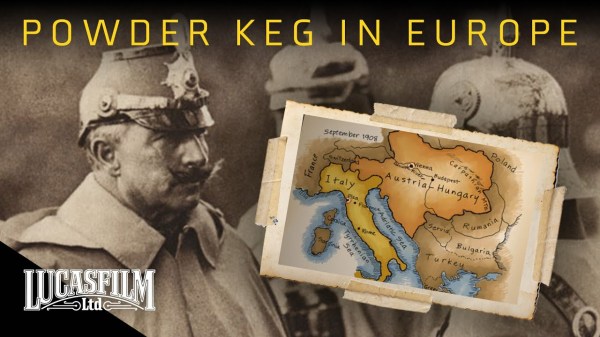
The assassination of Archduke Franz Ferdinand[a] was one of the key events that led to World War I. Archduke Franz Ferdinand of Austria, heir presumptive to the Austro-Hungarian throne, and his wife, Sophie, Duchess of Hohenberg, were assassinated on 28 June 1914 by Bosnian Serb student Gavrilo Princip. They were shot at close range while being driven through Sarajevo, the provincial capital of Bosnia and Herzegovina, formally annexed by Austria-Hungary in 1908. Princip was part of a group of six Bosnian assassins together with Muhamed Mehmedbašić, Vaso Čubrilović, Nedeljko Čabrinović, Cvjetko Popović and Trifko Grabež coordinated by Danilo Ilić; all but one were Bosnian Serbs and members of a student revolutionary group that later became known as Young Bosnia. The political objective of the assassination was to free Bosnia and Herzegovina of Austria-Hungarian rule and establish a common South Slav (“Yugoslav”) state. The assassination precipitated the July Crisis which led to Austria-Hungary declaring war on Serbia and the start of World War I. The assassination team was helped by the Black Hand, a Serbian secret nationalist group; support came from Dragutin Dimitrijević, chief of the military intelligence section of the Serbian general staff, as well as from Major Vojislav Tankosić and Rade Malobabić, a Serbian intelligence agent. Tankosić provided bombs and pistols to the assassins and trained them in their use. The assassins were given access to the same clandestine network of safe-houses and agents that Malobabić used for the infiltration of weapons and operatives into Austria-Hungary.” Source: Assassination of Archduke Franz Ferdinand – Wikipedia
If you find this interesting, you might like this book…
Since you won’t find Hitler plaques and signs in Vienna here is your covert guide to learning about the Nazi Fuhrer when in Wien.
“In 1908, Adolf Hitler shared a small room in a flat in Stumpergasse 31 in Mariahilf (sixth district) with his childhood friend August Kubizek. After Hitler had used up his family inheritance he was forced to leave the flat and became temporarily homeless. Every now and then he would use the homeless shelter in the 12th district of Meidling before renting an inexpensive room in a large B&B for males (Männerheim).
While you can’t access the flat it’s worth visiting the area to get an idea of the place Hitler once called home. On a pragmatic note, combine it with a visit to the Imperial Furniture Collection (aka Hapsburgs Museum of Furniture), at 20-25 min walking distance.” Source: Hitler in Vienna: Uncovering The Führer And Nazi Vienna
Did you know that there were German POWs all over the United States during WWII? It’s true — there was even a famous German literary movement called Die Gruppe 47 that started in the camps. I regret you have to click the link and go to YouTube to listen…
During World War II, approximately 425,000 German prisoners of war (POWs) were held in the United States. These POWs were housed in various camps across the country, often in rural areas. Conditions in the camps were generally humane, with POWs receiving food, shelter, and work opportunities. Many participated in agricultural labor, helping to alleviate labor shortages on American farms.
While in captivity, some German POWs engaged in cultural activities, leading to movements like Die Gruppe 47, which fostered literary and artistic expression among inmates. The presence of these POWs highlighted the complexities of wartime experiences, as they formed a unique part of American history, bridging cultural exchanges between captors and captives. Their stories reflect themes of resilience, adaptation, and the human spirit during tumultuous times.
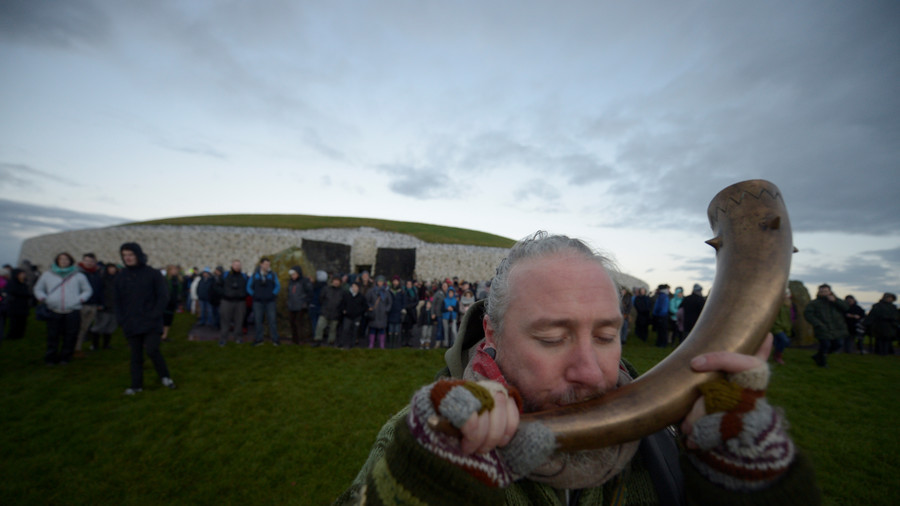
In the early hours of the morning on December 21 something magical happens in an Irish field, the rising sun aligns perfectly with an ancient passage tomb, travels down the long corridor and illuminates the inner chamber. Go to the source to read the backstory: 5,000yo Irish tomb’s winter solstice magic to be livestreamed (VIDEO) — RT World News
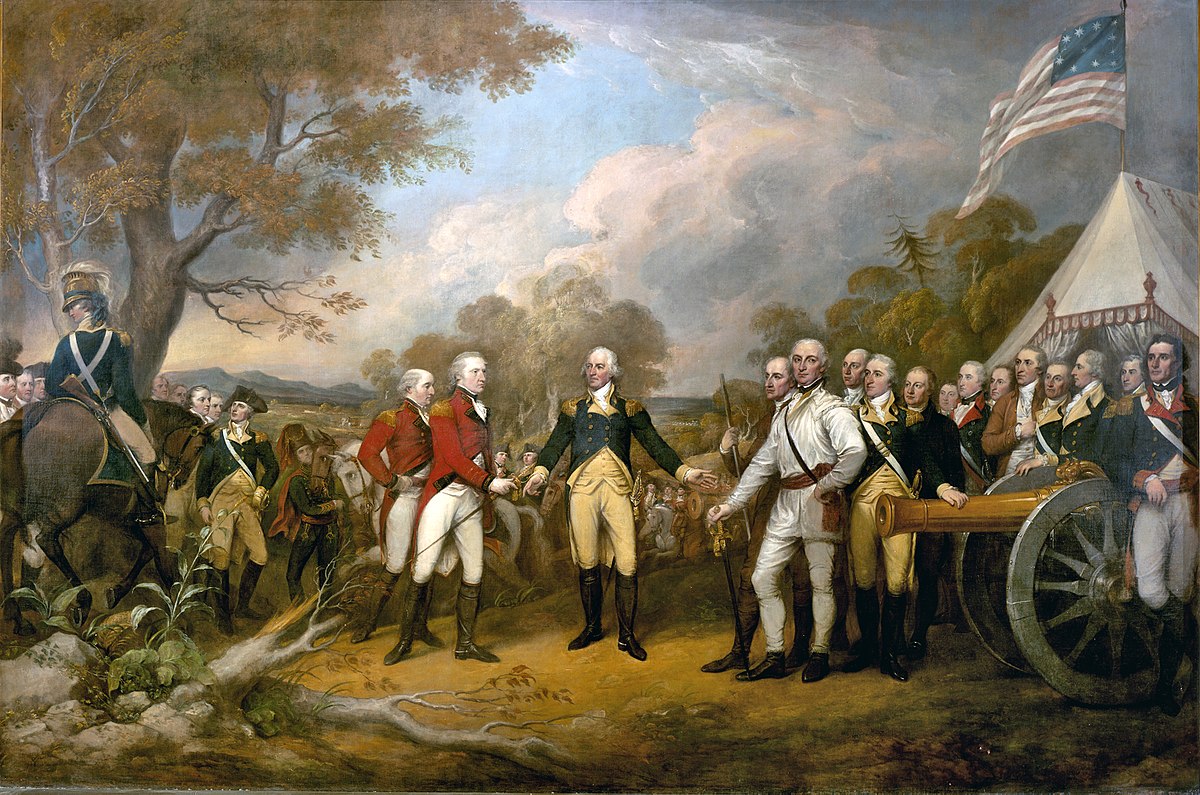
The Battles of Saratoga (September 19 and October 7, 1777) marked the climax of the Saratoga campaign, giving a decisive victory to the Americans over the British in the American Revolutionary War. Continue reading “Battles of Saratoga”→
Einstein says the most important question we will ever ask ourselves is, “Is this universe a friendly place.” Do we trust that there is something essentially benevolent or good about this universe? That we are essentially good? These two talks explore what it means to trust basic goodness, and how this trust naturally emerges through cultivating a meditative presence…
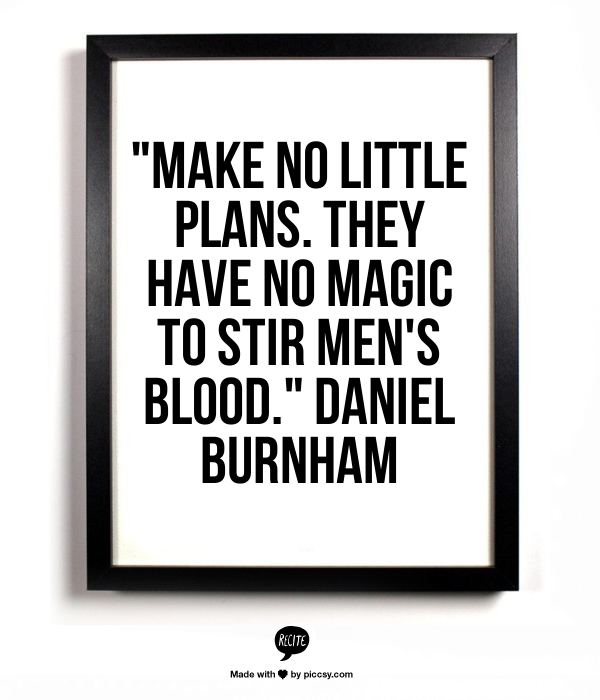
“Make no little plans. They have no magic to stir men’s bloodand probably themselves will not be realized. Make big plans; aim high in hope and work, remembering that a noble, logical diagram once recorded will never die, but long after we are gone will be a living thing, asserting itself with ever-growing insistency. Remember that our sons and grandsons are going to do things that would stagger us. Let your watchword be order and your beacon be beauty. Think big.”
“There she blows!” cried the lookout, sighting Moby Dick.
Captain Ahab, driven by revenge, sailed the seas to capture this great white whale, who had bitten off his leg in a previous encounter.
The crew of the ship Pequod included Quakerchief mate Starbuck, second mate Stubb, Captain Boomer, a tattooed Polynesian harpooner named Queequeg, and Ishmael, the teller of the tale.
Ahab finally caught up with Moby Dick in the Pacific Ocean.
As fate would have it, when the harpoon struck Moby Dick, the rope flew out so fast it entangled Ahab, pulling him under.
This classic was written by Herman Melville, born AUGUST 1, 1819.
I read Melville’s classic during a vacation on the east coast where I visited places from the story like the Seamen’s Bethel in New Bedford and the island of Nantucket. If you’ve never read this classic story, give Netflix a rest this weekend and get a copy. The book is in the public domain so you can download it at no cost and read it on the very device you’re using now via Kindle software…
About a dozen years before the Revolutionary War, tensions increased in America between the British and the French with their Indian allies, resulting in battles.
The most notable period of the French and Indian Wars lasted from 1754 to 1763. It is considered the first global war, as allies of the French and English fought all around the world.
On July 9, 1755, about 1,400 British troops marched over the Appalachian Mountains to seize French Fort Duquesne, near present day Pittsburgh. As they marched through a deep wooded ravine along the Monongahela River eight miles from the fort, they were ambushed by French regulars, Canadians, and Potawatomi and Ottawa Indians.
Not accustomed to fighting unless in an open field, over 900 British soldiers were annihilated.
It was known as the Battle of the Wilderness or Battle of Monongahela.
23-year-old Virginia Colonel George Washington rode back and forth during the battle delivering orders for General Edward Braddock, the Commander-in-Chief of British forces in America.
Eventually, Braddock was killed and every officer on horseback was shot, except Washington.
Washington carried Braddock from the field.
Braddock’s field desk was captured, revealing all of the British military plans, enabling the French to surprise and defeat British forces in succeeding battles at Fort Oswego, Fort William Henry, Fort Duquesne, and Carillon. The Iroquois tribes of Senecas and Cayugas decided to switch their allegiance to the French.
Before he died, Braddock gave Washington his battle uniform sash, which Washington reportedly carried with him while serving as Commander-in-Chief and as President.
Washington presided at the burial service for General Braddock, as the chaplain was wounded. Braddock’s body was buried in the middle of the road so as to prevent his body from being found and desecrated.
Shortly thereafter, writing from Fort Cumberland, George Washington described the Battle of Monongahela to his younger brother, John Augustine Washington, JULY 18, 1755:
“As I have heard, since my arrival at this place, a circumstantial account of my death and dying speech, I take this early opportunity of contradicting the first, and of assuring you, that I have not as yet composed the latter.
But by the All-Powerful Dispensations of Providence, I have been protected beyond all human probability or expectation; for I had four bullets through my coat, and two horses shot under me, yet escaped unhurt, although death was leveling my companions on every side of me!” An Indian warrior later declared:
“Washington was never born to be killed by a bullet! I had seventeen fair fires at him with my rifle and after all could not bring him to the ground!”
The Liberty Bell got its name from being rung JULY 8, 1776, to call the citizens of Philadelphia together to hear the Declaration of Independence read out loud for the first time.
The Liberty Bell, weighing over 2,000 pounds, was cast in England in August of 1752.
The Pennsylvania Assembly ordered it to commemorate the 50th anniversary of William Penn founding the Colony in 1701, writing his Charter of Privileges.
In 1751, the colony’s Assembly declared a “Year of Jubilee” and commissioned a bell to be put in the Philadelphia State House.
Isaac Norris, Speaker of Pennsylvania’s Assembly, read Leviticus chapter 25 verse 10:
“And ye shall make hallow the fiftieth year, and proclaim liberty throughout all the land unto all the inhabitants thereof; it shall be a jubilee.”
Inscribed on the Liberty Bell is:
“Proclaim Liberty throughout the land unto all the inhabitants thereof.”
“The Second Day of July 1776 will be the most memorable Epocha, in the History of America. It ought to be solemnized with Pomp and Parade, with Shews, Games, Sports, Guns, Bells, Bonfires, and Illuminations from one End of this Continent to the other from this Time forward forever more.” – John Adams to Abigail Adams, July 3, 1776. 1776 filled the calendar with dates deserving of remembrance and even celebration. John Adams, delegate from Massachusetts to the Second Continental Congress, wrote home to his wife Abigail that future generations would celebrate July 2, the date the Congress voted to approve Richard Henry Lee’s resolution declaring independence from Britain for 13 of the British colonies in America. Two days later, that same Congress approved the wording of the document Thomas Jefferson had drafted to announce Lee’s resolution to the world. Today, we celebrate the date of the document Jefferson wrote, and Richard Henry Lee is often a reduced to a footnote, if not erased from history altogether. Who can predict the future? (You know, of course, that Adams and Jefferson both died 50 years to the day after the Declaration of Independence, on July 4, 1826. In the 50 intervening years, Adams and Jefferson were comrades in arms and diplomacy in Europe, officers of the new government in America, opposing candidates for the presidency, President and Vice President, ex-President and President, bitter enemies, then long-distance friends writing almost daily about how to make a great new nation. Read David McCullough’s version of the story, if you can find it.)”
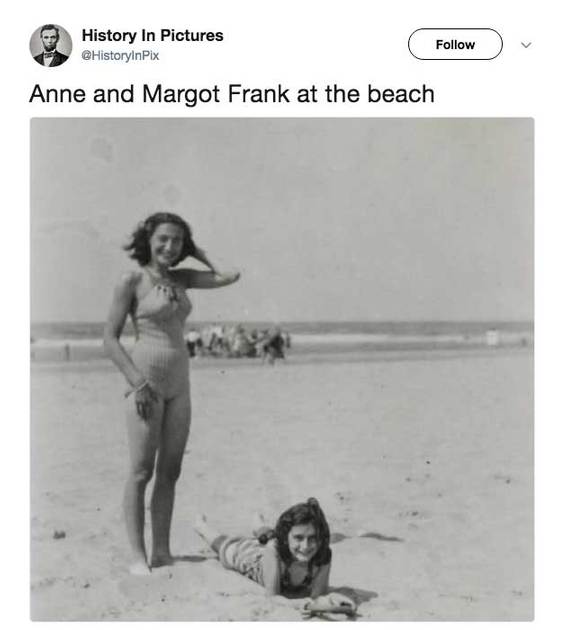
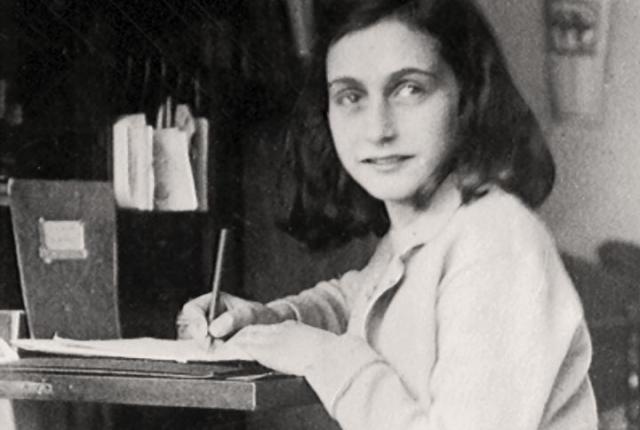
Sixty-six years ago today, the seemingly everyday, innocent thoughts of a teen girl were published. But they weren’t so everyday: they were the thoughts of Anne Frank, a 13-year-old in a unique position to make the world understand what it was like to have to hide your entire existence in exchange for a mere chance at surviving the Nazi regime. Her diary has since sold more than 30 million copies and has been translated into 67 languages. If you haven’t read The Diary of a Young Girl in a while (or even if you have), here are 10 things you should know.
The life of Saint Patrick, the humble man from Britain who escaped Roman slavery and brought Christianity to Ireland in the fifth century, is celebrated annually on March 17. Despite Saint Patrick’s successful Christian missionary work and his designation as the primary patron saint of Ireland, the day we commemorate his life has become associated with wearing outrageous clothing, drinking pints of Guinness, and being excessively inebriated. Without taking away the joy and camaraderie that many people feel when they celebrate Saint Patrick’s Day, we should also remember Patrick’s admirable character by following his example and adhering to his moral teachings. Continue reading “Another Way to Celebrate Saint Patrick’s Day”→










 Bright, shiny objects!
You must be logged in to post a comment.