Divorce can be ugly, but it doesn’t have to be ugly for the kids: Divorced Parents: Kids Should Decide Where They Live/Custody

Read this article too! http://traversecityfamilylaw.com/CanAChildChoose.htm
Thinks I find along the way
Divorce can be ugly, but it doesn’t have to be ugly for the kids: Divorced Parents: Kids Should Decide Where They Live/Custody
Read this article too! http://traversecityfamilylaw.com/CanAChildChoose.htm
Another lovely WordPress.com blog and blogger…

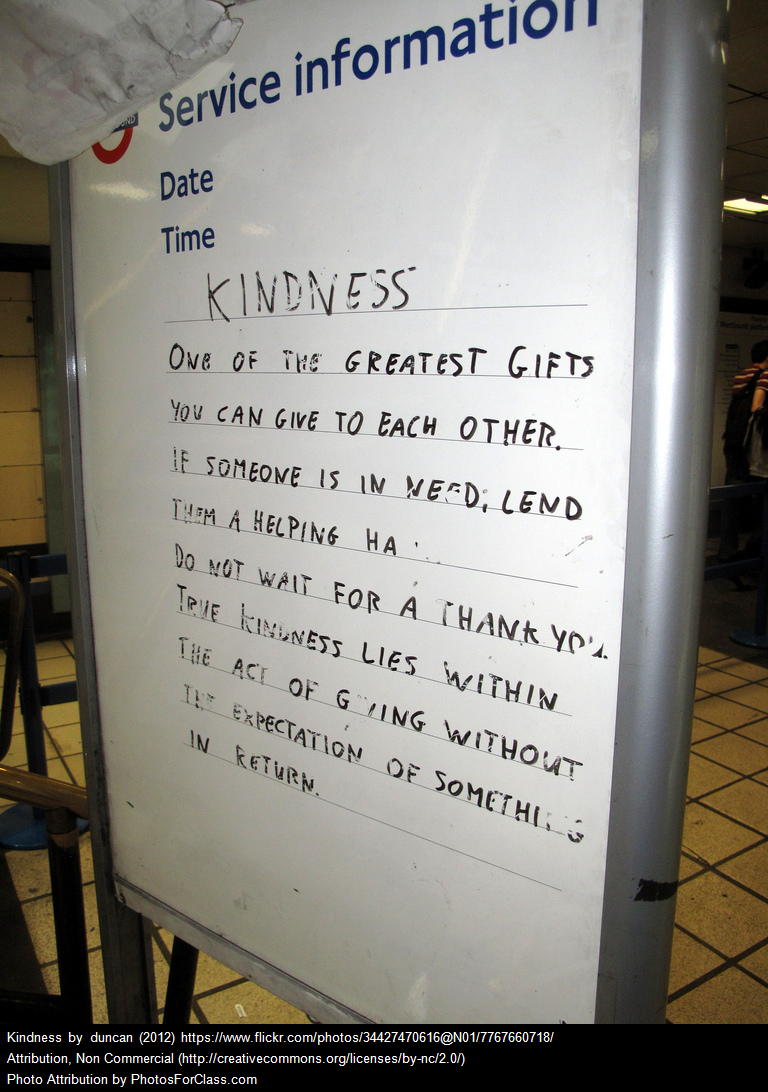
This message was written on a London Underground noticeboard in a tube station in the capital of Great Britain. Kindness is truly one of the greatest gifts you can give to each other. I have witnessed many random acts of kindness in Redding, California. From people donating to students who needed financial support to a pastor collecting shoes, slippers, toothpaste, soap and other essential items for the homeless. They say that a random act of kindness is a nonpremeditated, inconsistent action designed to offer kindness towards the outside world. ‘ These are truly moments of compassion.
Growing up in Colombo, Ceylon (now Sri Lanka), I was blessed to have a grandfather who showed the love of Christ to the poorest of the poor – the Rodi community in Sri Lanka – there were those who did not want to know them or help them as they were deemed almost inferior…
View original post 499 more words

An enlightened woman has an air of humble confidence about them; they know what they want, but they won’t trample over others to get it: 5 Signs You’re In a Relationship With An Enlightened Woman
Another promising blog and blogger to follow…

“A key brain structure that regulates emotions tends to be smaller in young adults with greater depressive symptoms, according to a new study published in Psychiatry Research: Neuroimaging. The research examined the relationship between the amygdala, a pair of almond-shaped brain structures, and depressive symptom severity.
“Volumetric differences in several brain regions have been reported in people with depression. The amygdala is interesting because studies have reported smaller, larger and the same average amygdala volume in depressed people as compared to controls,” explained study author E. Sherwood Brown, a professor of psychiatry and director of the Psychoneuroendocrine Research Program at The University of Texas Southwestern Medical Center.
“Since the amygdala is involved in the processing of emotions, such as fear and anxiety, it is possible that depressed people might process more strong emotions which would, in a sense, make the amygdala work harder and increase in size. On the other hand, increases in the stress hormone cortisol in depression might be harmful to the amygdala and make it become smaller. Finally, it is possible that one might just have either a smaller or larger amygdala which alters processing of emotions and make one more vulnerable to depression.”:: Greater depressive symptom severity linked to smaller amygdala volume in young adults
Consider this data:

Each Friday, we share three topical longreads in our Weekend Reader newsletter. This week, LionsRoar.com’s associate editor Lilly Greenblatt looks at the bittersweet lessons of winter: These Days of Less Sunlight
Forever one of the best bloggers on WordPress.com — David Kanigan!

Our time always shortening.
What we cherish always temporary. What we love
is, sooner or later, changed…
Giving thanks for what we are allowed
to think about it, grateful for it even as it wanes…
And occasionally the bright sound of broken glass.
All of it a blessing. The being there. Being alive then.
Like a giant bell ringing long after you can’t hear it.
~ Jack Gilbert, excerpt from “Burma” from Refusing Heaven
Notes: Poem via Mythology of Blue. Photo: Maximus Audacious of Bell
Have you heard this story? It’s well told in this post and worth reading…
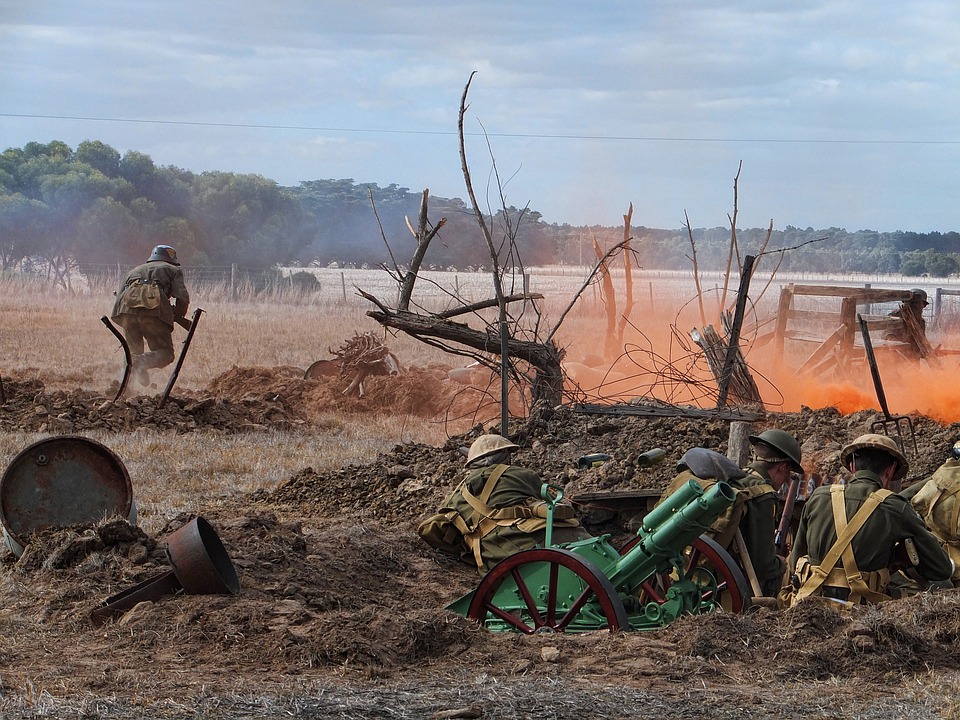
It was 1914. The British Army and the German Army were involved in hand to hand combat near Ypres during Wold War I. It was brutal. Troops on both side were killed or injured in huge numbers. It was one of the deadliest conflicts in human history. Over 40 million military personnel and civilians perished in World War I. In the month of December 1914, the thoughts of the soldiers went back to their loved ones as it was getting nearer to Christmas, the soldiers frequently sang Christmas Carols in the trenches. Sir Edward Hamilton Westrow Hulse, 7th Baronet and a British Army Officer with the Scots Guards wrote detailed accounts of life in the trenches during World War I. Describing what happened in December, Sir Edward wrote that he was organising a concert party on Christmas Day which would “give the enemy every conceivable form of song in harmony”…
View original post 945 more words
And then there’s this approach…

“From 1986 to 2011, Oprah Winfrey hosted The Oprah Winfrey Show. It was the highest rated talk show of all-time and familiar to nearly anyone who owned a television set in North America at that time.
Throughout the 1980s and 1990s, the “Queen of All Media” built a brand that stretched far beyond the television screen. She went on to become a billionaire, a well-regarded philanthropist, and a recipient of the Presidential Medal of Freedom. And as she was busy working toward these otherworldly accomplishments, Oprah relied on a simple habit: journaling.
Journaling is simply the act of thinking about your life and writing it down. That’s it. Nothing more is needed. But despite its simplicity, the daily journal has played a key role in the careers of many prolific people.
As you might expect, journaling is a favorite habit of many writers. From Mark Twain to Virginia Woolf, Francis Bacon to Joan Didion, John Cheever to Vladimir Nabokov. A journal was rarely far from any of these artists. Susan Sontag once claimed that her journal was where she “created herself.”
Journaling has been utilized by scores of brilliant thinkers and inventors. Charles Darwin. Marie Curie. Leonardo da Vinci. Thomas Edison. Albert Einstein. Similarly, leaders and politicians throughout history have kept journals in one form or another. People like Thomas Jefferson, Winston Churchill, and Marcus Aurelius. In the sporting world, athletes like Katie Ledecky, winner of multiple gold medals, and Eliud Kipchoge, the world record holder in the marathon, rely on journals to reflect on their daily workouts and improve their training.
Why have so many of history’s greatest thinkers spent time journaling? What are the benefits?”
Read on: The Surprising Benefits of Journaling One Sentence Every Day | James Clear
It’s hard to know today how cutting edge the Twilight Zone was in the early sixties. Medium aside, some of the stories that intrigue me most are about time travel. In this case, what would the older me say to the younger me? What parts of your life would you want to undo no knowing how they would affect the others? It’s easy to say “I wish I never met my ex-wife” but in my case, what about the 6 great men who came out of the relationship? My answer is to let it go and let Goodness sort out the details…
You can watch the entire episode on Amazon Prime: Spur of the Moment
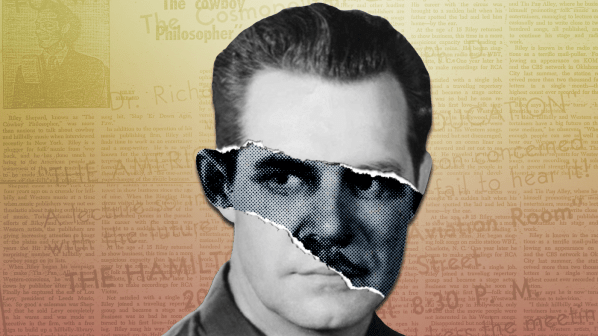
In 2009, an old man died in a California nursing home. His obituary included not just his given name, but a long list of the pseudonyms he’d been known to use. In this episode, we trace the life of Riley Shepard, a hillbilly musician, writer, small-time con man and, perhaps, a genius. Go to the source and hear the story: The Cowboy Philosopher: A Tale Of Obsession, Scams, And Family
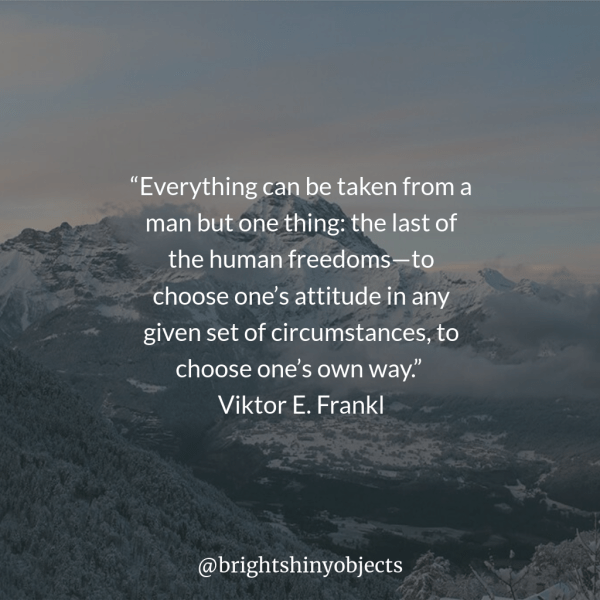
If life’s seemed hard or unfair, ask yourself: Is there another way I can define this experience? A way that can serve me better in the future? Source: We Get to Define Our Experiences and Decide What We Take from Them – Tiny Buddha
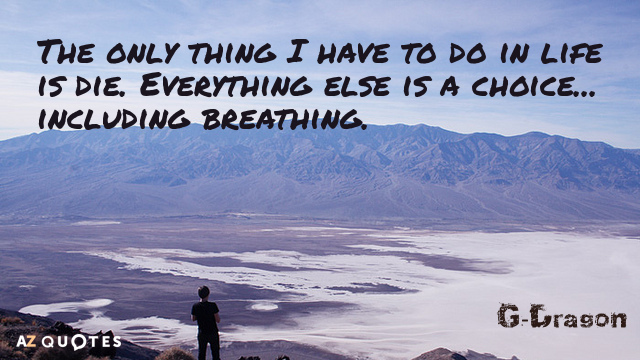 The only thing I have to do in life is die. Everything else is a choice… including breathing.
Source: G-Dragon Quote



 Bright, shiny objects!
You must be logged in to post a comment.