You Have Just Five Minutes Left to Live – What Are Your Deathbed Regrets? via @TinyBuddha

By contemplating our deathbed regrets, we learn that the secret to the art of dying well is right under our noses in how we live our lives. Source: You Have Just Five Minutes Left to Live – What Are Your Deathbed Regrets? – Tiny Buddha

What Can Be Done About Our Deep Political Divisions? via @PsychToday

“Long-form journalism traditionally prompted us to โ€œstop and think.โ€ By contrast, todayโ€™s partisan news and social media outlets often encourage us to โ€œhurry up and feel.” As a result, our ability to think and argue with our fellow citizens has regrettably atrophied. Accordingly, we have to start exercising our deliberative social skills and discerning media habits once more.” Source: What Can Be Done About Our Deep Political Divisions? | Psychology Today

The Calling of These Times via @tarabrach

The Dalai Lama invites us to trust in the power of heart and awareness to awake through all circumstances. What does that look like in the midst of our current global crises? Source: The Calling of These Times – Part 1 – Tara Brach


7 Ancient Stoic Tenets To Keep In Mind Today And Every Day

Could some ancient and obscure pagesโ€”the private diaries of one of Romeโ€™s greatest emperors (Marcus Aurelius), the personal letters of one of Romeโ€™s best playwrights and wisest power brokers (Seneca), the lectures of a former slave and exile, turned influential teacher (Epictetus)โ€”really contain anything relevant to modern life? The answer, it turns out, is yes.ย Source: 7 Ancient Stoic Tenets To Keep In Mind Today And Every Day

The tenets are:

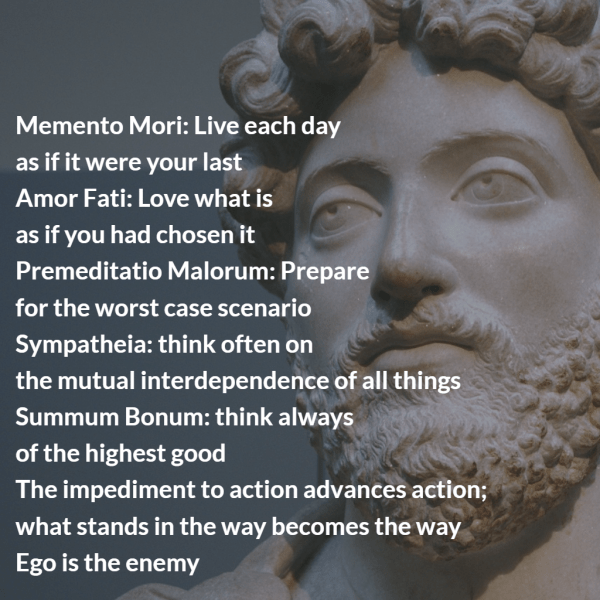
Memento Mori: Live each day as if it were your last

Amor Fati: Love what is as if you had chosen it

Premeditatio Malorum: Prepare for the worst case scenario

Sympatheia: Think often on the mutual interdependence of all things

Summum Bonum: Think always of the highest good

The impediment to action advances action; what stands in the way becomes the way

Ego is the enemy..
The 16 Greatest Lessons From 16 Years With Marcus Aurelius

Ryan Holiday writes “I was 19 years old when I purchased my first copy of Meditations. Here are 16 Stoic lessons I learned from over 100 readings of the classic”. Go to the source: The 16 Greatest Lessons From 16 Years With Marcus Aurelius

Unraveling Anxiety

Buddhist teacher Judy Lief explains the Buddhaโ€™s deep analysis of the roots of anxiety and shows how mindfulness can help us ease the suffering of an anxious mind. Source: Unraveling Anxiety

Three Practices for Nurturing Wise Hope

Meditation, Emotional Healing, and Spiritual Awakening from Tara Brach, PhD – Psychologist, Author, and Meditation Teacher. Source: Three Practices for Nurturing Wise Hope – Tara Brach

How Your “Locus of Control” Affects Your Life

Learn how to manage your locus of control to your benefit. Source: How Your “Locus of Control” Affects Your Life

Bonus: consider these thoughts from the stoics…

Why I Had to Stop Judging Myself to Start Healing from Childhood Trauma

My childhood trauma led me to judge and abuse myself. Here’s how I healed my wounds through self-acceptance. Source: Why I Had to Stop Judging Myself to Start Healing from Childhood Trauma – Tiny Buddha

Cultivating Inner Strength; a Conversation with Tara Brach and Lori Deschene

I have followed both of these women for almost a decade; Tara Brach is of course one of the most respected western teacher of eastern thought and Lori Deschene is the chief creative at the site Tiny Buddha. It’s fun to listen in on their conversation.

Four Hacks for Becoming Your Best Self

Tap into your authenticity through self-awareness. Source: Four Hacks for Becoming Your Best Self

How I Beat Procrastination With Stoicism

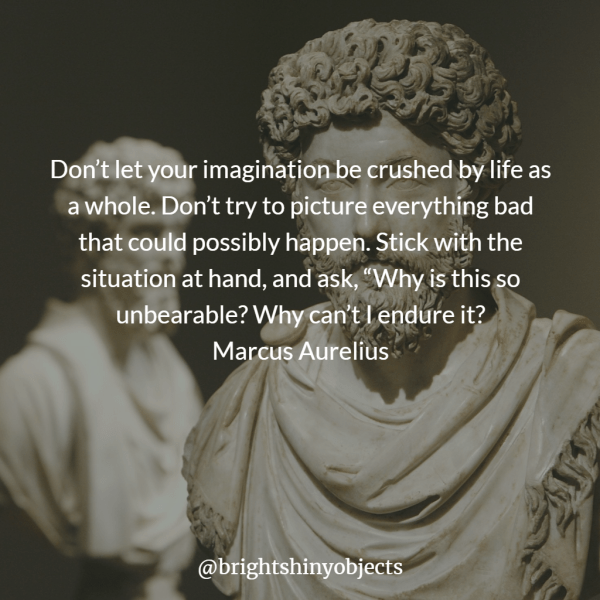
โ€œDonโ€™t let your imagination be crushed by life as a whole. Donโ€™t try to picture everything bad that could possibly happen. Stick with the situation at hand, and ask, โ€œWhy is this so unbearable? Why canโ€™t I endure it?โ€ Youโ€™ll be embarrassed to answer. Then remind yourself that past and future have no power over you. Only the presentโ€”and even that can be minimized. Just mark off its limits.โ€

โ€• Marcus Aurelius, Meditations

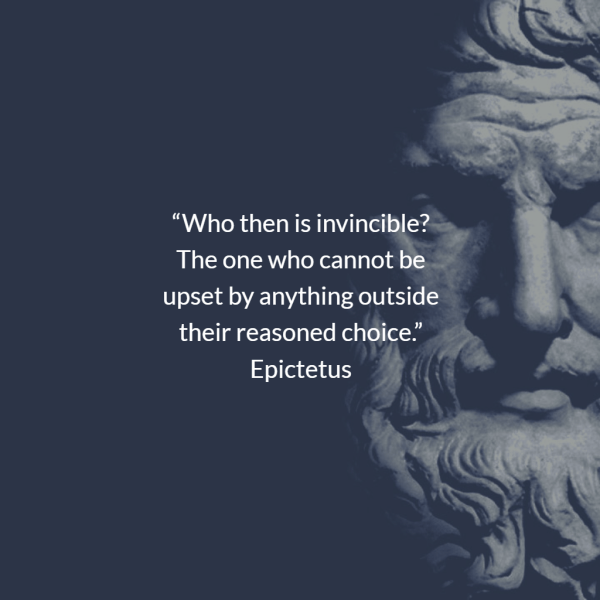
Who then is invincible?

Lightening the Load We Carry From Childhood

Ten ways to forgive the unkindest cuts. Source: Lightening the Load We Carry From Childhood

Zac Brown Band; Homegrown (Official Audio)

Very Zen for a country song: “It’s the way that you carry it for the things you think you want. I’ve got everything I need and nothing that I don’t.”

The Virtue That Made Marcus Aurelius So Great

Ryan Holiday writes: “Marcus Aurelius did not come out of the womb a leader. Nor was he an emperor โ€˜by blood.โ€™ In fact, when first told he was to be king, he weptโ€”thinking of all the bad and failed kings of history. So how did he get from there to philosopher king? Book 1 of Meditations shows us. The first ten percent of the bookโ€”Debts and Lessonsโ€”thanks people who groomed him into one of historyโ€™s greatest leaders. He knew itโ€”without his philosophy teachers and rhetoric teachers and, most importantly, his mentor Antoninus Pius, he wouldnโ€™t have became who he became. In this video Ryan Holiday recounts one of the greatest stories in human history and talks about how Antoninus Pius taught Marcus Aurelius the most important virtue of all.”

Amor fati

Amor fati is a Latin phrase that may be translated as “love of fate” or “love of one’s fate”. It is used to describe an attitude in which one sees everything that happens in one’s life, including suffering and loss, as good or, at the very least, necessary.[1]

Amor fati is often associated with what Friedrich Nietzsche called “eternal recurrence“, the idea that, over an infinite period of time, everything recurs infinitely. From this he developed a desire to be willing to live exactly the same life over and over for all eternity (“…long for nothing more fervently than this ultimate eternal confirmation and sealโ€).[2]

Amor fati Is also talked about in stoic philosophy. Source: Amor fati – Wikipedia

Einzelganger
Ryan Holiday
Ryan Holiday

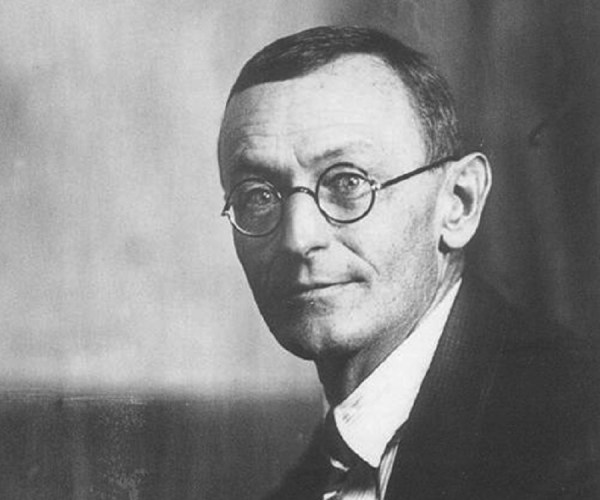
100 years of Hermann Hesse’s ‘Siddhartha’

A book that changed the trajectory of my life is now 100 years old! “When the novel about an Indian man’s spiritual journey was first published, it barely created a ripple. Decades later, it inspired millions to embark on a voyage of self-discovery.” Source: https://www.dw.com/en/100-years-of-hermann-hesses-siddhartha/a-63113218?maca=en-GK-Inoreader-Culture-21643-xml-media

How stoicism can make you a better person

Source: Stoicism 101

12 (Stoic) Questions That Will Change Your Life

The Swedish philosophy of lagom: how “just enough” is all you need

Just because a thing is good doesn’t mean that you need more of it. “Lagom” teaches us to appreciate that “just enough” is all we need. Source: The Swedish philosophy of lagom: how “just enough” is all you need

Start a Blog at WordPress.com.

Up ↑