8 thoughts while watching trainwrecks

Jon Swanson writes:

(First published July 19, 2011. And here’s the video version).

It happens to all of us. A friend, a family member, a coworker looks like they have picked the wrong track and are heading toward a trainwreck. Not physically, probably, but emotionally, spiritually, or relationally. I probably hear about more of these than many people because I’m one of the people that people talk to: “Jon, you’re a (social media) chaplain/pastor. You’ll know what to do. How do I stop them from wrecking everything?”

1. Maybe you are missing something. Probably not, but consider the possibility.

2. TV Movie endings are only in TV movies. If you want an intervention to always end with “How could I have been so foolish, I’m sorry, you were right,” you are going to be disappointed. Every time.

3. Humans almost always choose the short-term over the long-term. Even when the short-term looks painful, it’s because it is easier than the real hard work that would bring about long-term change.

4. Remorse and repentance aren’t the same thing. One is about getting caught. The other is about getting right. The first will only lead to avoidance. The second may lead to change.

5. Yelling almost never works. It just makes fingers go into ears.

6. Sin is fun like antifreeze is sweet. Both are delightful for the short term. And then kill you.

7. Self-destruction often isn’t evident to the self being destroyed. What looks obvious from the outside looks very different from the inside. Of course, the outside view can often see further down the track.

8. Consequence pain is often a good alarm clock. Sometimes people sleep through gentle warnings.

I know it hurts to watch. And you want to help. But sometimes the best help is to be around after the wreck. And to ask God for wisdom and clarity and the right words.

That’s what I do anyway.” via 8 thoughts while watching trainwrecks (from the archives).

Make today YOUR independence day

Mastin Kipp writes:

“Let today be the day that you declare to yourself that you have inalienable rights and have the courage to stand up to those in your life who convince you otherwise. If any of your relationships do not promote your right to “Life, liberty and the pursuit of Happiness”, do what we did in 1776 and draw a boundary. And like the Preamble says, if any relationship becomes destructive, it is your right to abolish it and create new relationships that promote Safety and Happiness.

A single act of defiance in the face of oppression created a whole new country full of new found possibility and freedom. And so it is with you, if you are feeling the need for your own Declaration of Independence, have the courage to stand up for what you need. Who knows what kind of new life and possibilities are out there just waiting for you to claim your right and acknowledge that you deserve a better life? What would of happened if our forefathers hadn’t taken a stand? Where would that of left us?

If you are not in the flow of your happiness, then abundance, freedom, creativity, joy and love cannot be yours. And if you are not in alignment with belief that what you desire for yourself you also desire for others, then these gifts will also evade you.

All beings are created equal and deserve happiness. Claim your right to happiness and let go of trying to control the will others. Give them the space to find what they need and give yourself the room to do the same.

The examples of how to do this are all around you. It’s up to you to claim your own happiness and release others to find this gift for themselves.” Source: Make Today YOUR Independence Day!

Musings during a power outage

Jon Swanson writes:

I walk into the bathroom and turn on the electric switch. Nothing happens. For three days nothing has happened. I know the power is out. I still reach for the switch. Habits are strong.

The computer is off. I walk past my office and look at the screen. It’s still off. I still look.

I think often about wanting time to read and to write. With no access to Internet and no power for television, this would be a perfect opportunity. But I can’t sit still. I can’t let what might happen tomorrow simply happen tomorrow.

It is remarkably easy to blame the rough-running of the neighbor’s generator for the rough-running of my thoughts. And then to generate a low-voltage current of blame that wears down my motor.

It is hot, I suppose, but exercise will make me perspire anyway. And might help alleviate the uncertainty about when the power might come on. Instead, I wait for what might happen. I wait for a day, then another.

It seems that my agenda is more driven by the tools that are working than I thought. I could be working and resting, following the daylight, enjoying the restoration than can come from disconnection. Instead, I am feeling disconnected.

I am grateful for what I am learning about ingratitude during this time. We have water. We have hot water. We have a grill. We can even use the stove (if I light it manually). We have a frenchpress for coffee. Our house wasn’t hit by any trees.

I read from Acts on Sunday morning. I realized that the early church never cancelled services because the electricity was out. It was the right choice for our church on Sunday, but I’m thinking a lot about how much I depend on the wrong energy sources.” via Musings during a power outage. | 300 words a day.

Hmmm. We live in a rural area so when our power goes out, we lose our water too making it even harder to be grateful. Still I love Jon’s perspective…

Constantly Feel Good About Yourself Using These 3 Steps

It is important that you feel good about yourself. More and more scientific evidence points towards a significant link between how you feel about yourself and your overall health and sense of well-being. Scientists have proven that feelings of inferiority have the capacity to pave the way to illness or disease. On the other hand, if you feel good about yourself, have a positive outlook, and maintain an active involvement in life, you’re more likely to be happy and healthy.

Our emotional state can be affected by a lot of things the environment we are in, the people we are with, the weather, the food we eat, how much sleep we’ve had, and so on. Feeling insecure, incapable and inadequate once in a while is part of being human, what matters is that you are able to make yourself feel better again.

If you feel as if you are currently in a state wherein you need some help on bolstering your feelings of self-worth, here are some ideas that you may find helpful:

Step 1: Reframe your identity

If you were asked to describe yourself, what would you say? What be the first adjectives that you would come out with? Experts say that a person’s self-worth can be assessed by the first five words that he would use to answer this question. If you answer with negative adjectives, then you would need to redefine how you think about yourself. Instead of focusing on the shortfalls in your life, bring to mind things that make you special.

For example, instead of branding yourself as a mere office worker, try looking at yourself as a great Mom or a great Dad. Pride yourself on your greatest achievements instead of highlighting flaws.

Step 2: Challenge negative self-talk

As we go about our daily lives, we constantly think about and interpret every situation that we encounter. It’s like we have this voice inside our head that talks us through everything. Psychologists call this inner voice “self-talk.” How this inner voice talks to us is based on our values, beliefs and our conscious and subconscious thoughts. If your self-talk is mostly negative, you will have a very hard time feeling good about yourself.

To correct negative self-talk, you need to learn to notice it as it happens, and consciously dispute and challenge these negative and irrational thoughts. Ask yourself questions like, “Are my thoughts factual?”, “Is this situation as bad as I am making out to be?” or “What can I do that will help me solve the problem?”. Make it a point to conquer self-defeating thoughts with positive and realistic thinking.

Step 3: Take time for yourself

In this world where everyone and everything seems to be in a rush, most of us don’t make ourselves a priority. Often we focus on catering to the needs of others and on being productive. Although it is good to take care of the people you love and fulfill your responsibilities at home and at work, you should not neglect your responsibility and obligation to yourself.

In the same way that you make others feel good when you take care of them, taking care of yourself will also bring about the same feelings. Make it a point that you allocate a certain amount of time each day for yourself to do things you love. Paying attention to yourself has been proven to improve self-esteem and feelings of self worth.

It is impossible for anyone to feel perfectly happy about who he is for their entire life. We are all bound to feel inferior or insecure every once in a while. Fortunately, our thoughts and feelings are not permanent and there are so many ways to love, accept and feel good about ourselves.” via Constantly Feel Good About Yourself Using These 3 Steps.

The Treasure Within Your Struggle

Jackie Dumaine wrote something so good I want to share the entire thing with you here:

“We all have them.

Moments of darkness.

Moments where we’re not sure what will come or if we even have the strength to wait.

Moments where we feel lost, confused and unsure of our existence.

What I’ve come to learn in the last few years is that in these moments of darkness, there is wisdom to be found.

Unanswered questions find their home in this space.

Whether it’s related to life, career or love – our deepest wounds and heartaches can be the source of our greatest joy.

“Where there is ruin, there is hope for a treasure.” ~ Rumi

The 8th principle of The Yoga Code is Tapas – and it asks to hold on during the dark hours of life.  To have the faith and the belief that everything that happens has a purpose – but if we give up and let go too soon, we may never discover what that purpose is.

Tapas asks us to gather the strength, courage and self-discipline to carry through. To hold on for another moment until we can see the blessing in each of our struggles.

As a Yoga Inspired Life Coach and Yoga Teacher, I am not immune to the curve balls that life throws us.

I will never pretend to be.

I have moments of intense confusion. There are times when I doubt my Self and my path. My heart aches.

This is what makes me human.  It’s what gives me the ability to relate on a personal level with my students, coaching clients, friends and family.  It’s what makes me real – and it’s what will make you real.

Please don’t discount your struggles and your shadows. Do not hide them behind a medieval shield of protection. Refrain from acquiring the belief that the world is out to get you. You are worthy of abundance, joy and love.

Do you believe that?

Life has a unique way of showing us the faith it has in our ability to shine.

Pretty remarkable, isn’t it?  Trust this.”

via Jackie Dumaine – Blog – The Treasure Within Your Struggle.

Do What You Cannot Do!

Zen Master Thich Nhat Hanh

“There is no one in the universe more dear to us than ourselves. The mind may travel in a thousand directions, but it will find no one else more beloved. The moment you see how important it is to love yourself, you will stop making others suffer.

Thich Nhat Hanh. via Today’s Quotes: Do What You Cannot Do!.

What Do You Call Yourself?

Are you…

girlfriend, or lover?

husband, or partner?

teacher, or trainer?

leader, or director?

decorator, or designer?

advisor, or counselor?

blogger, or writer?

crafter, or artist?

What you call yourself matters.

Words send signals, labels are magnetic.

Your soul deserves accuracy.” via What Do You Call Yourself?. The Irish say ‘Give a dog a bad name and you can hang him’. Why not give yourself a good name? What you call yourself matters! As the great philosopher Pink so clearly stated:

“You’re so mean when you talk

About yourself. You were wrong.

Change the voices in your head

Make them like you instead.”

via PINK LYRICS – Fuckin’ Perfect.

Don’t Should on Yourself

Is expectation keeping you from living your most authentic life?

Our upbringing, the media, our friends, and our selves are all constantly pressuring us for more, better, or different.

“By now, I should ________.”

Many of my patients finish that sentence with:

  • be married
  • have more money
  • have children
  • be happy
  • have better work
  • be having fun
  • be on vacation
  • be retired
  • own a home
  • have no debt
  • feel better

It’s one thing to recognize something as uncomfortable or as going against your desires. It’s an entirely different thing to witness this “bad” thing and then, on top of it, judge yourself for the existence of this “imperfection.” Now, this one weight upon your mind has become two. And this can snowball if you consciously know that you’re judging yourself, and then—you guessed it—you start to judge yourself for judging yourself. Since we’re all striving to feel comfortable in life, why create all this undue pressure?” Get more here: Don’t Should on Yourself « Positively Positive.

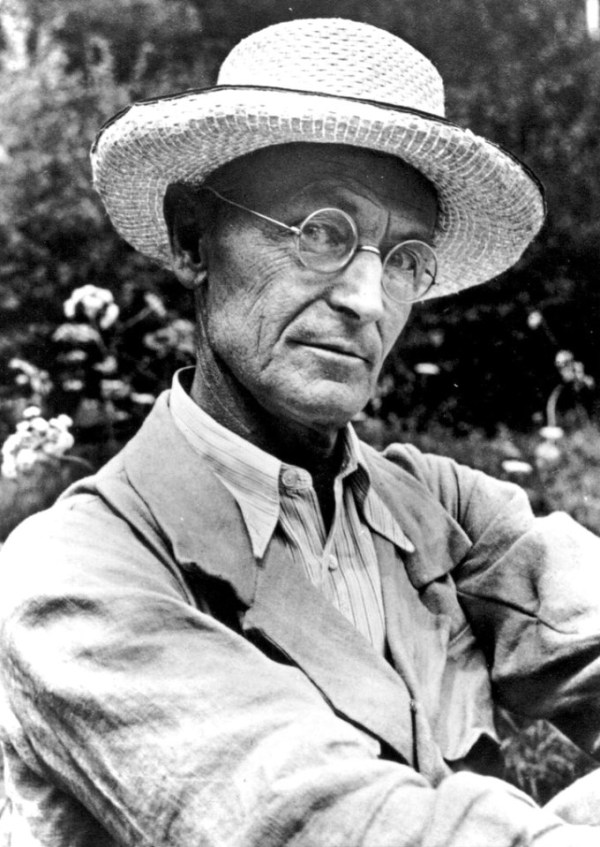
Happy birthday, Hermann Hesse!

I was a German language and literature major in college and went as far as my doctoral studies at University of Illinois before I took a ‘safer’ route. My plan was to become a world famous Hermann Hesse scholar and my dissertation would have explored the relationship between Hesse’s body of work and Hegel’s dialectic but alas. Here is his life in his own words:


I was born in Calw in the Black Forest on July 2, 1877. My father, a Baltic German, came from Estonia; my mother was the daughter of a Swabian and a French Swiss. My father’s father was a doctor, my mother’s father a missionary and Indologist. My father, too, had been a missionary in India for a short while, and my mother had spent several years of her youth in India and had done missionary work there.My childhood in Calw was interrupted by several years of living in Basle (1880-86). My family had been composed of different nationalities; to this was now added the experience of growing up among two different peoples, in two countries with their different dialects.

I spent most of my school years in boarding schools in Wuerttemberg and some time in the theological seminary of the monastery at Maulbronn. I was a good learner, good at Latin though only fair at Greek, but I was not a very manageable boy, and it was only with difficulty that I fitted into the framework of a pietist education that aimed at subduing and breaking the individual personality. From the age of twelve I wanted to be a poet, and since there was no normal or official road, I had a hard time deciding what to do after leaving school. I left the seminary and grammar school, became an apprentice to a mechanic, and at the age of nineteen I worked in book and antique shops in Tübingen and Basle. Late in 1899 a tiny volume of my poems appeared in print, followed by other small publications that remained equally unnoticed, until in 1904 the novel Peter Camenzind, written in Basle and set in Switzerland, had a quick success. I gave up selling books, married a woman from Basle, the mother of my sons, and moved to the country. At that time a rural life, far from the cities and civilization, was my aim. Since then I have always lived in the country, first, until 1912, in Gaienhofen on Lake Constance, later near Bern, and finally in Montagnola near Lugano, where I am still living.

Soon after I settled in Switzerland in 1912, the First World War broke out, and each year brought me more and more into conflict with German nationalism; ever since my first shy protests against mass suggestion and violence I have been exposed to continuous attacks and floods of abusive letters from Germany. The hatred of the official Germany, culminating under Hitler, was compensated for by the following I won among the young generation that thought in international and pacifist terms, by the friendship of Romain Rolland, which lasted until his death, as well as by the sympathy of men who thought like me even in countries as remote as India and Japan. In Germany I have been acknowledged again since the fall of Hitler, but my works, partly suppressed by the Nazis and partly destroyed by the war; have not yet been republished there.

In 1923, I resigned German and acquired Swiss citizenship. After the dissolution of my first marriage I lived alone for many years, then I married again. Faithful friends have put a house in Montagnola at my disposal.

Until 1914 I loved to travel; I often went to Italy and once spent a few months in India. Since then I have almost entirely abandoned travelling, and I have not been outside of Switzerland for over ten years.

I survived the years of the Hitler regime and the Second World War through the eleven years of work that I spent on the Glasperlenspiel (1943) [Magister Ludi], a novel in two volumes. Since the completion of that long book, an eye disease and increasing sicknesses of old age have prevented me from engaging in larger projects.

Of the Western philosophers, I have been influenced most by Plato, Spinoza, Schopenhauer, and Nietzsche as well as the historian Jacob Burckhardt. But they did not influence me as much as Indian and, later, Chinese philosophy. I have always been on familiar and friendly terms with the fine arts, but my relationship to music has been more intimate and fruitful. It is found in most of my writings. My most characteristic books in my view are the poems (collected edition, Zürich, 1942), the stories Knulp (1915), Demian (1919), Siddhartha (1922), Der Steppenwolf (1927) [Steppenwolf], Narziss und Goldmund. (1930), Die Morgenlandfahrt (1932) [The Journey to the East], and Das Glasperlenspiel (1943) [Magister Ludi]. The volume Gedenkblätter (1937, enlarged ed. 1962) [Reminiscences] contains a good many autobiographical things. My essays on political topics have recently been published in Zürich under the title Krieg und Frieden (1946) [War and Peace].

I ask you, gentlemen, to be contented with this very sketchy outline; the state of my health does not permit me to be more comprehensive.” via nobelprize.org

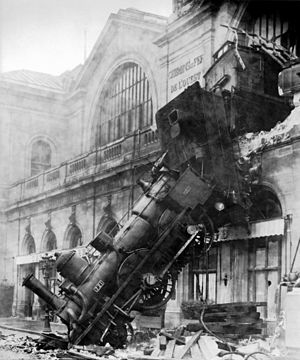
Happy birthday, Hermann! You made a profound impact on my life through your body of work…
Related articles

Denouncing

“There is nothing as easy as denouncing. It don’t take much to see that something is wrong, but it takes some eyesight to see what will put it right again.” Will Rogers.

We come to this day with a choice of whether to be for something or against it. Shall we put energy into what we seek and admire or shall we give our energy to opposition and resistance of what we dislike? If someone asks a favor, we have a choice to resent and resist the intrusion or to engage with the person and see where it might lead. If a project we are working on is frustrating, we can wallow in criticizing it or try to get a clearer picture of what will work and what we want.

Criticizing may be a helpful first stage in learning, but it is seductive because it holds little risk and we feel safe doing it. In that comfort we forget to go forward to create what we really want. Our negative energy, when we are seduced by it, creates negative results. When we look back upon today, we will admire those choices that risked creating something positive.

Today, I will not give my energy to denouncing but to creating what I believe is worthwhile.” via Just For Today Meditations » Daily Recovery Readings – June 30, 2012.

True Positive Thinking is Not the Absence of Negative Thoughts

A positive focus in life, the type of focus that can help you achieve your goals, overcome adversity, and realize your full potential, doesn’t mean the avoidance of negative thoughts or comments.

Positive thinking is the ability to feel negative when you have to and still maintain enough hope to keep on going.

A school of thought has developed that says you always have to turn negative thoughts into positive ones and avoid saying or thinking negative things. This is a denial of all that is human about us. The starting point for creating a better life is to understand what it means to be human and accept who and what we are. As humans, we are frail, imperfect, mistake-prone beings who can react in an emotional way to what happens to us.” Get more here: True Positive Thinking is Not the Absence of Negative Thoughts « Positively Positive.

Six month questions

Jon Swanson writes:

Sunday is July 1. The year is half over. This weekend, then, is a time to review the last 6 months, to check our goals or 3 words, to see if we are making progress.

Here are a bunch of questions to help in that review. But as you look at these questions, you will realize that progress isn’t always related to goals. Sometimes new things happen. Sometimes things change. Sometimes just keeping up with the basics (eating, breathing) is making progress.

Life change is its own set of goals…

  • Did a relationship end? start?
  • Did a family member die?
  • Did a child join the family? struggle? graduate?
  • Did a job change?
  • Did you keep doing the daily work?

Expression

  • Did you write an unplanned poem? a letter? a thank you note? a blog post? a song? a script?
  • Did you read a book? many books?

At least once…

  • Did you say no to an addiction? Can you do it again?
  • Did you change a habit?
  • Did you give someone flowers?
  • Did you choose to stay quiet?
  • Did you wrestle with a major question?
  • Did you apologize?
  • Did you say thank you?
  • Did you keep Sabbath?
  • Did you find solitude?
  • Did you forgive someone?

Looking at things as a farmer would (with thanks to Becky)….

  • Are you ripping out the old plants?
  • Are you between crops?
  • Are you planting?
  • Are you weeding?
  • Are you watering and waiting?
  • Are you harvesting?

Questions for thinking.

  • Did you complete one of last year’s goals? (right goal, wrong year)
  • Did you come back?
  • Did you step out?
  • Did you cry out for help?
  • Did you step back?
  • Did you let go?

Sounding formal…

  • How did you build capacity? Yours? someone else’s? your organization?
  • How have you developed infrastructure?
  • Are you looking forward to the next half of the year?
  • How did a goal change?
  • How did a new goal emerge?
  • Did you realize that your goals weren’t small enough? big enough?

via Six month questions..

Not Knowing

“Being the person that always knows and always has an answer, doesn’t leave a lot of room for learning. And for people to have the energy to teach yourself. The more I work, the closer I get to *not* knowing and to understanding that what matters is the responses not the pre-dertermined idea.” Andrew Zuckerman (via On Curiosity) via Not Knowing.

Steve Jobs: Guru and Goon

Relly Nadler, M.C.C., writes:

Steve Jobs has been a fascinating case study in this blog for leadership because he was a phenomenal innovator and marketer, while demonstrating a dark side that could demonize people. This is the last entry to explore his leadership conundrum.

Newsweek this week named Jobs a top Evangelists and stated “equal parts businessman and poet he envisioned what technology could be –and then delivered it with magnificent products.” He was also vicious, arrogant, stubborn, blind to others feelings and prone to temper tantrums.  He was a star in some Emotional Intelligence competencies, while devastated others on the way to success. How do we make sense of these opposite attributes?  As leaders what do we emulate and what do we eliminate from our leadership behaviors?

In the last blog we continued to look at the DSM IV criteria for Narcissistic Personality Disorder for Steve Jobs as it helps us understand the two sides of Steve Jobs, his motivations and personality. This is exploratory in nature only and educational and not deemed to give him a clinical diagnosis, as he would have to be a client and interviewed personally. Many of these back stories come from Walter Isaacson’s book Steve Jobs. This exploration can help you if you see yourself in any of these descriptions and determine which ones to tune down.

In the DSM IV, the manual that helps diagnose mental disorders, you need 5 of the 9 criteria to meet the diagnosis. It looks like Jobs clearly fits 6 of the 9. We looked at three in the last blog. Two in the second blog on Jobs and here we will explore the last four.” Get the answer here: Jobs: Guru and Goon | Psychology Today.”

Nadler concludes:

“Yes Jobs was one of the most influential people of this century and his Narcissism was driving force for his vision, perfection and success. He is a leadership conundrum for what to emulate and eliminate, which will be studied in MBA and leadership programs for years to come. These last blogs can help deconstruct his complicated nature as we move onto to new leading with Emotional Intelligence topics.

For a summary of What to Emulate and Eliminate from Jobs, go to the blog at www.truenorthleadership.com.”

Relly Nadler

Nadler’s article makes for interesting reading; I suggest you go to the source to get the context of his thoughts…

By the way,  I still think the best post-Jobs retrospective I’ve read was done by Harvard Business Review writer, author [and client] Nilofer Merchant who wrote:

“Certainly, we need inspiration to show us examples of clear purpose. But I wonder what happens in a world where we each figure out why we do what we do and we can live and work from that place. We might refocus on our own work and the community with which we get that work done. We might learn to define success in our own terms. We might even come up with our own mantra around this:

  • I shall not obsess over others’ success: not copying, idolizing, or mindlessly emulating.
  • I shall know my purpose and know why I’m doing something.
  • I shall ally myself to a tribe with a common purpose, though the tribe’s members may work in vastly different fields and forms.
  • I will make ideas stronger by uniting with others to do great work, not by holding my ideas all to myself but releasing them into the wild.
  • I recognize the truth in the credo that the future is not created, the future is co-created and will do my part as a part of the whole.

In doing so, we might go from a culture of find-a-fits-the-mold superhero to a system of heroes- and heroines-next-door. We might create, rather than copy. We might initiate, rather than wait for permission. We might see ourselves as powerful enough. We might not believe that solving the many problems around us is someone else’s responsibility. We might each be willing to disrupt ourselves as Whitney Johnson suggests we do. We might reimagine our careers, with clarity of purpose, and this might show up in our work with others. We might just transform the organizing principles of the places we work. We might even end up reinventing our economy. We might recognize just how connected we are.

For my own situation when I was a kid, once I realized there was no hero coming to save me, I found ways to manage the situation. I said “enough” to what was going on. I also started to claim the things that mattered, like an education.  As a result, I was ousted from my family — but I also started developing the sense of purpose that has led me to the work I do today and the people I do it with.

The cultural change when people know their own purpose and their own power in creating change is what could change everything: for ourselves, for our organizations, and our economy. So, go ahead and buy that Walter Isaacson book. But, let’s not obsess over being the next Steve Jobs or starting the next Facebook or [whatever]. Let us, instead, be inspired to find our own purpose in the world, and a tribe of people to do it with.” Be Your Own Hero | Yes & Know“.

What say you?

When you ASSUME you make an ASS out of ME and YOU!

Kute Blackson writes:

Just because you perceive something a certain way, doesn’t mean it is true.

We often think that reality is what we see and experience. We then make judgments about other people, situations or even ourselves based on our perceptions.

But in reality, the reality that you experience is based on your conditioning and past programming. The reality that you think is reality isn’t necessarily reality. As you become aware of this, it frees you up to see more clearly and question how you perceive a situation or person.

When you look at a situation or person, what you really see is what you bring to it. As a result, we make up assumptions and judgments about people which are often not true. Then we react based on our interpretation, which is not always accurate.

Have you ever reacted a certain way to a situation or person, only to realize afterwards that what you thought wasn’t necessarily so? It was simply how you were perceiving it in that moment based on your limited viewpoint.

Perhaps someone did or said something to you which left you feeling hurt. When you react to the situation based on your hurt, it only creates a negative spiral.

To the degree you live inside of your assumptions about what is going on, is to the degree you are not free and limit yourself.

The more you can step back, question your first reaction to a given situation and embrace what you feel, the more space you can have to actually choose a response that is empowering rather than reactive. Living from reactivity only creates more reactivity in a situation.

When you are in a relationship with a loved one and they do or say something that triggers something within you, we often think that our upset is about the other person. As a result we might react negatively, or even attack the other person out of hurt. We might make up a story about what they said or did, and what that means. In truth you may have no idea what was really going on with the other person or situation as a whole.

So we are all seeing through our individual lens/viewpoint and experiencing reality in unique ways. The challenge is when these realities do not agree, it often results in arguments we both think we are right.

Have you ever experienced this?

On some level you are both right. Everybody is right, based on the viewpoint your are looking through. It doesn’t mean it is reality though. When you realize this, you do not need to take the other person’s reaction to you personally; you realize that, based on their particular viewpoint which they think to be reality, they cannot help but react to you the way they are. It just frees you up to not keep fighting them, and be able to take a step back so that you can really choose your response.

The meaning you give to things controls your entire life. What’s the meaning you are giving to the experiences that happen to you?

Beware of:

Mind reading: When you project onto another other person what you think they are thinking and why they did what they did.

Living in fantasy: When you have an entire relationship with a person not based on reality, but what you have made up in your mind.

Preconceived ideas: This is where you have already made up in your mind who and what someone is and how that person will respond ahead of time. You then already feel reactive, even though nothing has happened yet.

The more you free yourself of your conditioning, the more clearly you are able to see reality clearly and really choose.

Before you judge someone or the situation.

Breathe. And take a step back.

Take a look at the situation from a more expanded viewpoint. Be willing to not know.

Question: Is this reality?

Choose authentically.

So, how much Freedom do you want to experience in your life?

You choose.

Source: When you ASSUME you make an ASS out of ME and YOU! (Give it UP!)

Where is God?

“God is near me (or rather in me), and yet I may be far from God because I may be far from my own true self.” C. E. Roll.

Our relationship with God and our relationship with ourselves are always interwoven. Sometimes we feel disconnected from ourselves or emotionally flat. We may block the flow of communication with our deeper selves by trying to evade a difficult or painful truth. At those times we grope for some kind of contact and may even ask, “Where is God?”

God is always with us, but sometimes we are the missing party. In the past, most of us were deeply alienated from ourselves and from our Higher Power. Our first moments of spiritual awakening may have been when we saw how far we were from our true selves. This honest message from ourselves to ourselves was painful but was also a re-contact with the truth that made it possible to find God.

I need not ask where God is because God is loving and always near. I only need to ask, “Where am I?” via Just For Today Meditations » Daily Recovery Readings – June 26, 2012.

Surviving Slumps

Melody Beattie writes:

A slump can go on for days. We feel sluggish, unfocused, and sometimes overwhelmed with feelings we can’t sort out. We may not understand what is going on with us. Even our attempts to practice recovery behaviors may not appear to work. We still don’t feel emotionally, mentally, and spiritually as good as we would like.

In a slump, we may find ourselves reverting instinctively to old patterns of thinking, feeling, and behaving, even when we know better. We may find ourselves obsessing, even when we know that what we’re doing is obsessing and that it doesn’t work.

We may find ourselves looking frantically for other people to make us feel better, the whole time knowing our happiness and well being does not lay with others.

We may begin taking things personally that are not our issues, and reacting in ways we’ve learned all to well do not work.

We’re in a slump. It won’t last forever. These periods are normal, even necessary. These are the days to get through. These are the days to focus on recovery behaviors, whether or not the rewards occur immediately. These are sometimes the days to let ourselves be and love ourselves as much as we can.

We don’t have to be ashamed, no matter how long we’ve been recovering. We don’t have to unreasonably expect “more” from ourselves. We don’t ever have to expect ourselves to live life perfectly.

Get through the slump. It will end. Sometimes, a slump can go on for days and then, in the course of an hour, we see ourselves pull out of it and feel better. Sometimes it can last a little longer.

Practice one recovery behavior in one small area, and begin to climb uphill. Soon, the slump will disappear. We can never judge where we will be tomorrow by where we are today.

Today, I will focus on practicing one recovery behavior on one of my issues, trusting that this practice will move me forward. I will remember that acceptance, gratitude, and detachment are a good place to begin.” via Just For Today Meditations » Daily Recovery Readings – June 26, 2012.

The Health Benefits Of Pets

We’ve known it for millennia: animals make us feel good.

But they also do us good (when they aren’t gnawing on our shoes, that is). Over the last 20 years, research on human-animal interactions has emerged, proving that people who have pets are happier and healthier. They visit the doctor less often, have more fun, and feel more secure than people who don’t have pets.

Why? Despite how many gadgets we own, humans are animals—and the need to be around other animals is a fundamental part of being human, according to Alan Beck, director of the Center for the Animal-Human Bond at Purdue University. Here are the many healthy roles pets play in our lives.” via The Health Benefits Of Pets | LIVESTRONG.COM.

Confusion

English: Dry Garden in Ryoanji (Kyoto, Japan) ...

“Imagine a sculpture

You work on every day.

If you stop, the beauty

Will slowly go away.”

What if you were at work on a beautiful sculpture but your material reverted or decayed if you ever ceased to progress? This is the unfortunate nature of spiritual efforts.

You can never stop trying to purify yourself, improve yourself, strengthen yourself, and cultivate the sacred that is inside you. If you do well one day, that is good. But if you cease your efforts, you will slide backward. That is why you must strive on every level, from the physical to the mental to the spiritual. Your vigilance must never flag. Your determination must never waver.

Paradoxically, there is nothing to achieve. It is only our minds that convince ourselves that we must do something. We are already pure, already sacred. But we live in a polluted world, we have egotistical thoughts that constantly divide us from the true Tao, and we cannot remain forever in a pure state and still function in the world. If you attained the higher levels of Tao, you would appear to an outsider as if in a trance, and it would be impossible to interact with others. So if you are trying to be spiritual in today’s world, you must never cease striving to keep yourself pure. Once you are not with Tao, you must constantly struggle with the impurity of the world.” via Just For Today Meditations » Daily Recovery Readings – June 25, 2012.

Figuring out God’s will

Melody Beattie writes:

It was a stressful time in my life. I didn’t know what to do. I had pressing business decisions to make, and painful relationship issues to face. Everything felt like a mess.

I gathered up a few favorite books, the Bible, a journal, and some clothes. Then I headed for the mountains, a resort that was a favorite place of mine to hide out in and gather my thoughts.

I told myself, “I’m going to stay in there. Write in my journal. Pray. And meditate. I’m not coming out until I know what to do.”

After forty-eight hours of writing about my problems, praying about my problems, and meditating about my problems, I remembered something a friend had said to me.

“What are you doing?” he had asked.

“I’m trying to surrender to God’s will.”

“No you’re not, you’re trying to figure it out.”

Within six months, each of the problems I was wrestling with worked themselves out. I was either guided into an action that naturally felt right at the time, or a solution came to me. The immediate solution to each problem was the same: let go. Just surrender to the situation taking place. Sometimes, what we need to do next is surrender.

If you don’t like the word surrender, try calling it making peace.

God, help me surrender to your will, especially when I don’t know what to do next.” via Just For Today Meditations » Daily Recovery Readings – June 25, 2012.

Autobiography in 5 chapters

I

I walk down the street.

There is a deep hole in the sidewalk

I fall in.

I am lost … I am helpless.

It isn’t my fault.

It takes me forever to find a way out. Continue reading “Autobiography in 5 chapters”

Start a Blog at WordPress.com.

Up ↑