Find and Respect Your Own Stride

Melody Beattie writes:

“Do not seek to follow in the footsteps of the men of old; seek what they sought.” Basho.

One of the dangers of following a hero is the temptation to emulate them too much instead of walking our own path. John quit his job and started his own company when he was twenty-four years old. Five years later he sold out for mil­lions of dollars. We want to be like John so we try the same thing and go broke. What happened? Is the universe against us? No. We just got confused about the difference between learning from a hero and trying to walk his path. John’s path may have led him to start a company; your path may also lead you on that course, just not at the same time in your life.

We can still learn much from our heroes and the people we admire. Just be aware that their path and time frame may be different from ours.

When the time comes for you to start that business, learn a new skill, enter into a relationship, or whatever you’re hop­ing to do, the experience will be there. The experience will be ready for you when you’re ready for it. Your timing may be different from everyone else’s.

I know people who got married after knowing each other only two weeks and then stayed mostly happily married for more than thirty years. I know people who date each other for years and still can’t decide if they’re ready to commit. My friend made the transition from living in the Midwest to living in California in months. That transition took me several years.

We each have our own stride and path. And while many of our lessons are similar, each of us is unique. If we spend our time trying to emulate a person rather than an idea, we’ll at best be an inferior version of our teacher and at worst will never discover our own path. Their stride will be too long or too short for us, and we won’t learn the true lesson, which is to trust our inner guide.

Gautama Buddha found enlightenment while sitting under a banyan tree; Milarepa found it while living as a hermit in a Himalayan cave. Gaining enlightenment isn’t an exercise in following a person; it’s an exercise in following your heart.

God, help me let go of any expectations of perfection I may have of myself or others. Help me be aware of the messages you send me, then help me discern my own truth.” via September 22: Find and Respect Your Own Stride.

Parents night

image

Posted from WordPress for Android

Stop Being Offended Today: The Cure For Everything That Irritates You


Get the idea here: Stop Being Offended Today: The Cure For Everything That Irritates You – by Dumb Little Man.

The World’s Problem…

The World’s Problem Is Not That The Rich.


Take Back Your Power and Start Loving Your Life

“People are always blaming their circumstances for what they are. I don’t believe in circumstances. The people who get on in this world are the people who get up and look for the circumstances they want, and, if they can’t find them, make them.” ~George Bernard Shaw

Get the scoop here: Take Back Your Power and Start Loving Your Life | Tiny Buddha.


Why Forgiveness Doesn’t Work and How to Change That

“Forgiveness does not change the past, but it does enlarge the future.” ~Paul Boese

Get the answer here: Why Forgiveness Doesn’t Work and How to Change That | Tiny Buddha.

Create a Positive Space and Break the Cycle of Negativity

“Man stands in his own shadow and wonders why it’s dark.” ~Zen Proverb

Get more here: Create a Positive Space and Break the Cycle of Negativity | Tiny Buddha.


Embrace Your Inner Life Coach: 5 Meaningful Ways To Help Others

“We choose our destiny in the way we treat others.” ~Wit

Get more here: Embrace Your Inner Life Coach: 5 Meaningful Ways To Help Others | Tiny Buddha.


Drain Pain

Melody Beattie wrote:

No, I don’t mean a clogged kitchen sink or a shower stall that empties slowly.

I’m talking about allowing people, places and things to slowly and insidiously creep in and begin sucking the soul, energy, life force – and resources – out of us.  No matter how many years ago we learned about not being codependent, it can still happen to us. Again.

Drain Pain occurs so slowly and subtly, we may not see it happening.  Following you’ll find a list of symptoms and the remedy for each:

  • We leave our bodies – disconnect from ourselves. We’re experts at fleeing the body. We hover around ourselves doing everything except feeling what we feel and valuing ourselves. When this happens, we often feel numb, confused and afraid.  We may also feel emotional (generalized) pain. The thoughts that accompany this condition include:  I CAN’T STAND THIS ANYMORE.  IT, HE, SHE OR THEY IS OR ARE DRIVING ME INSANE.  This means it’s boundary-setting time again.
  • We complain about the same thing, behavior or person or problem for days, weeks, months or years but nobody hears us.  The cure for this means listening to ourselves.
  • We know that something’s wrong but we aren’t sure what it is (because we’re not listening to ourselves).   When we mention the problem to the Drainer(s) — the people or institutions in the first symptom above — they look at us askance and reassure us that nothing is wrong except us – who we are, how we feel and what we think is going on just isn’t occurring, they insist.  Remember the story from the first Language of Letting Go, about the scene in a movie where a wife catches her husband in his pickup truck?  He’s parked at the drive-in movie theatre all cuddled up and kissing with another woman. When the wife confronts him about having this affair, he denies it vehemently while the other woman sits there kissing his neck, arm, hand and more.  “What are you going to believe?” the infidel asks his wife.  “Me or what you think you see?”  Crazy as that sounds, it can easily describe us when we’re in codependent mode.
  • We feel tired, unfocused and somewhat like a Boxer looks (the dog, not Mohammed Ali) when it’s chasing not a tail, but the remnants of one before the vet clipped or docked it.  We’re caught up in trying to do the impossible. It’s time to assess what we can and can’t change and then put energy into assessing and solving the right problem – the real issue that’s going on.
  • We feel increasingly angry at the people, places or things in our personalized list in the first symptom above, but as soon as we feel anger we also start to feel guilt. The guilt’s not real.  It’s the codependent guilt that’s followed us around for most of our life. The guilt yammers about how there must be something wrong with us because the other person wouldn’t do that — whatever that is. We wonder what’s wrong with us for feeling this angry and then decide that the problem is us. ZZZZZT.   Wrong answer. Solution?  Look in the mirror and tell ourselves that who we are is okay.
  • Of all the signals that someone’s manipulating or lying to us, feeling cruddy and confused after our interactions with this person or institution — if they’ll stand still long enough to talk to us — ranks highest and indicates that it’s time to open our eyes, shake off the denial dust and start a self-care revival.” This is a long post. You can get the rest here: Drain Pain | Melody Beattie.

3 Mandates To Leadership And Becoming You

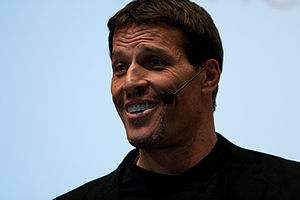
English: Motivational speaker Tony Robbins at ...

The Finerminds team shares this:

Who do you think you are? This is a question many people spend years, and in some instances, a lifetime trying to a establish (and accept).

Perhaps this is why this video has gone viral, because when looking for outside wisdom and answers to this very personal journey, not many people are better equipped to point you in the right direction than the legendary Anthony Robbins.

This 8-minute video, filmed at his cornerstone event, Unleash The Power Within You, explains the three important mandates of becoming a great leader (whether you’re a leader as a parent, an entrepreneur or of your body) – and just why the pursuit of happiness is not about changing yourself, it’s about being yourself.” via Anthony Robbins: 3 Mandates To Leadership And Becoming You (video) | FinerMinds.

I <3 Ryan Star…

Looks like he’s more than a ‘one hit wonder’…

Of course he’s most famous for the ‘lie to me‘ song…

There are only two mistakes one can make along the road

Simple Reminders

via “There are only two mistakes one can make along the road….

Forget Perfection: Strive Toward Progress

Chris Freytag writes:

I used to be a total perfectionist, but I have had a total change of heart. I’ve learned that it isn’t worth it to be consumed with the little things, or sweat the small stuff as they say. I no longer bicker with my husband or kids about the stupid stuff. I’ve incorporated a progress over perfection philosophy throughout my life—from how I live to what I teach to my fitness followers.

Perfection is unachievable. It often leads to disappointment and it can set you up for failure. Strive for progress, not perfection.

I now call myself a recovering perfectionist and there are so many benefits to letting go of perfection.

You can be less concerned about what others think of you.  I am less worried about what others think about me as long as I’m proud of my behavior. I don’t have to look perfect or act perfect. It is liberating to let go of what other people think. Start to value your own opinion more than anyone else’s. Your confidence will soar when you alone determine how you should feel about you.

Teach your kids progress over perfection. I want my kids to escape the whole perfectionist pursuit, so as long as they are giving their best effort, I am happy. I want my kids to be hard workers and caring citizens, to acknowledge their weaknesses, admit when they are wrong, and strive to be better and improve where they can—progress over perfection.

By letting go of perfectionism, you can stop procrastinating. Fear of making a mistake can keep people stuck. Some people may not even take step one on something they want to accomplish for fear of not doing it flawlessly. Perfection stalls progress. What if you flipped perfection on its head and gave yourself permission that it’s okay to fail miserably, but you are just going to try anyway.  I guarantee if try, you will make progress. Just give it your best and have some compassion for yourself if you aren’t flawless.

Giving up on perfection doesn’t mean you work less hard. I work hard at my job, my family and my relationships; I just don’t expect or need perfection anymore.” via Forget Perfection: Strive Toward Progress.

Revenge

Melody Beattie writes:

No matter how long we’ve been recovering, no matter how solid our spiritual ground, we may still feel an overwhelming desire at times to punish, or get even, with another person.

We want revenge.

We want to see the other person hurt the way he or she has hurt us. We want to see life deal that person just rewards. In fact, we would like to help life out.

Those are normal feelings, but we do not have to act on them. These feelings are part of our anger but it’s not our job to deal justice.

We can allow ourselves to feel the anger. It is helpful to go one step deeper and let ourselves feel the other feelings – the hurt, the pain, the anguish. But our goal is to release the feelings, and be finished with them.

We can hold the other person accountable. We can hold the other person responsible. But it is not our responsibility to be judge and jury. Actively seeking revenge will not help us. It will block us and hold us back.

Walk away. Stop playing the game. Unhook. Learn your lesson. Thank the other person for having taught you something valuable. And be finished with it. Put it behind, with the lesson intact.

Acceptance helps. So does forgiveness – not the kind that invites that person to use us again, but a forgiveness that releases the other person and sets him or her free to walk a separate path, while releasing our anger and resentments. That sets us free to walk our own path.

Today, I will be as angry as I need to be, with a goal of finishing my business with others. Once I have released my hurt and anger, I will strive for healthy forgiveness – forgiveness with boundaries. I understand that boundaries, coupled with forgiveness and compassion, will move me forward.” via Just For Today Meditations – Daily Recovery Readings – September 16, 2012.

Life Is Messy

“Control, or lack thereof, is one of the greatest sources of suffering.”

Maggie Lyon writes:

For someone like me, whom I affectionately call a control freak in recovery, with a chaotic walking-on-eggshells childhood, it is obvious why I became (in my teens) so obsessed with having maniacal control over all aspects of my environment. At age sixteen, the most obvious place to start was with my body.

If you haven’t read or heard by now, I became a major anorexic at this time. This brutally domineering mindset lasted on and off in bouts well into my twenties. I’d be lying to say its creepy little ways didn’t present in more feeble moments (and when I got severely ill) in my early thirties.

Anorexia is, of course, all about control, and it has, in various moments, thoroughly taken over my life by leeching out into arenas far beyond what went into my mouth. There have literally been times when I couldn’t stomach any kind of mess. If something didn’t fit into my intense vision of perfection, it got tossed, and fast.” Get the rest here: Life Is Messy « Positively Positive.

Me?

Take responsibility for your life and choices

Melody Beattie writes:

When we are soul searching, be it for the smaller or larger decisions we face during the day, we can learn to ask, is this good for me?… Is this what I really want?… Is this what I need?…Does this direction feel right for me?…or am I succumbing to the control and influence that I sometimes allow others to have over me?

It is not unhealthy selfishness to question if something is good for us. That is an old way of thinking. To ask if something is good for us is a healthy behavior, not to be ashamed of, and will probably work out in the other person’s best interests too.

We shall not wander down a selfish path of self-indulgence by asking if a thing is good for us. We shall not stray from God’s intended plan, God’s highest good, by asking if a thing is good for us. By asking ourselves this simple question, we participate in directing our life toward the highest good and purpose; we own our power to hold ourselves in self-esteem.

Today, I will begin acting in my best interests. I will do this with the understanding that, on occasion, my choices will not please everyone around me. I will do this with the understanding that asking if a thing is good for me will ultimately help me take true responsibility for my life and my choices.” via Just For Today Meditations – Daily Recovery Readings – September 14, 2012.

Learning is a Series of Steps: 7 Tips to Master a New Skill

“The excitement of learning separates youth from old age. As long as you’re learning, you’re not old.” ~Rosalyn S. Yalow

Get more here: Learning is a Series of Steps: 7 Tips to Master a New Skill | Tiny Buddha.


Conflict and Detachment

Melody Beattie writes:

In a relationship, there are those wonderful times when things go smoothly for both people, and neither person needs to focus too heavily on the concept of detachment. But there are those challenging times when one person is in crisis or changing – and we need to detach.

Then there are stressful cycles when both people in a relationship are in the midst of dealing with intense issues. Both are needy and neither has anything to give.

These are times when detachment and taking care of ourselves are difficult.

It is helpful, in these moments, to identify the problem. Both people are in the midst of dealing and healing. Neither has much to give, at least at the moment. And both are feeling particularly needy.

That is the problem.

What’s the solution?

There may not be a perfect solution. Detachment is still the key, but that can be difficult when we need support ourselves. In fact, the other person may be asking for support rather than offering it.

We can still work toward detachment. We can still work through our feelings. We can accept this as a temporary cycle in the relationship, and stop looking to the other person for something he or she cannot give at the moment.

We can stop expecting ourselves to give at the moment as well.

Communication helps. Identifying the problem and talking about it without blame or shame is a start. Figuring out alternative support systems, or ways to get our needs met, helps.

We are still responsible for taking care of ourselves – even when we are in the best of relationships. We can reasonably expect conflicts of need and the clashing of issues to occur in the most loving, healthy relationships.

It is one of the cycles of love, friendship, and family.

If it is a healthy relationship, the crisis will not go on endlessly. We will regain our balance. The other person will too. We can stop making ourselves so crazy by looking for the other person to be balanced when he or she isn’t.

Talk things out. Work things out. Keep our expectations of other people, our relationships, and ourselves healthy and reasonable.

A good relationship will be able to sustain and survive low points. Sometimes we need them, so we can both grow and learn separately.

Sometimes, people who are usually there for us cannot be there for us. We can find another way to take care of ourselves.

Today, I will remember that my best relationships have low points. If the low point is the norm, I may want to consider the desirability of the relationship. If the low point is a temporary cycle, I will practice understanding for myself and the other person. God, help me remember that the help and support I want and need does not come in the form of only one person. Help me be open to healthy options for taking care of myself, if any normal support system is not available.” via Just For Today Meditations – Daily Recovery Readings – September 11, 2012.

How to Actually Create the Time for Something Important to You

Gretchen Rubin shares this today:

Of all the changes in my daily routine wrought by my happiness project, one of the most fundamental is that I get up at 6:00 a.m., every day. And I get up at 6:00 a.m. every day, even on weekends and vacation, because I love it. I get an hour to myself, at my computer, before my family wakes up for the day. It’s quiet, the light is dim, and the world feels very serene.

I love this time so much that I would get up at 4:30 or 5:00 a.m., but that would mean that I’d have to go to bed at 8:00 p.m., and I just can’t live life that way. I’m fuddy-duddy enough as it is.

From what I hear, one of the most common happiness challenges is lack of time for something important.

People want to exercise, work on a novel, meditate, or read for pleasure, and they just can’t fit it into their day. I absolutely know the feeling.

But here’s what I’ve noticed. For many people, the end of the day is a pleasant interlude of free time, when work is done, the office isn’t e-mailing, the kids are in bed, and the TV or internet is at hand. It’s pleasant, so it’s easy to stay up late to watch one more episode of The Wire or to read the most recent article about Kristen Stewart and Robert Pattinson’s break-up or to do back-to-school shopping or to research the works of J. M. Barrie. And then it’s hard to get out of bed in the morning.” Get the rest here: How to Actually Create the Time for Something Important to You « Positively Positive.

I didn’t realize how lazy I had gotten over the summer until last week when school started again. Because I could be so flexible I was scheduling my bike rides for before dinner but when school started again my schedule was shot. Last week I struggled with moving my bike ride to early morning because a big part of me would rather drink coffee and read news to wake up that get on the bike. Today I decided the right comes first; no ride no coffee. Now THAT’S serious!!! I got tell you though, I really enjoyed it! If you’re struggling with setting the important things into your life read the rest of Gretchen’s article and get intentional about your life. You might also find wisdom in the story of ‘The Mayonnaise Jar‘…

Discover what works for YOU

http://www.amazon.com/gp/product/B0030UDW9I/ref=as_li_ss_tl?ie=UTF8&camp=1789&creative=390957&creativeASIN=B0030UDW9I&linkCode=as2&tag=makrai-20More Melody Beattie!

“Enroll in this weight loss program and you’ll lose thirty pounds in five days!” “Come to this free seminar and after spending one hundred dollars on books you’ll be a millionaire!”

There is no quick fix, no panacea that will work for every person. Success rarely happens overnight or in five days. Even the Twelve Steps are only suggestions. Although proven to work, the details and decisions about how we apply those Steps in our lives are left to each one of us.

And few things happen overnight, except the beginning of a new day.

Listen to your mentors. Examine what’s been tried and true, and has worked and helped countless others along their paths. The Twelve Steps are one of those approaches. But don’t be taken in by false claims of overnight success and instant enlightenment along your path.

True change takes time and effort, especially when we’re changing and tackling big issues. We can often get exactly the help we need at times from a therapist, book, or seminar– the best things in life really are free and available to each one of us. The Twelve Steps, again, qualify in this area.

Discover what works for you.

Trust that you’ll be guided along your path and receive exactly the help and guidance you need. Then give it time.

There really isn’t an easier, softer way.

God, give me permission to tackle my problems.” via Just For Today Meditations – Daily Recovery Readings – September 9, 2012.

See How it Feels to do it Right

Melody Beattie writes:

In skydiving, there’s an activity called dirt diving. At the drop zone, you’ll see people lying on their bellies on contrap­tions that look like skateboards. They make all the moves on the ground as if they were free-falling through the air. They’re training their bodies and themselves to do it right. They’re experiencing how it feels to do it right.

Do you have something you’re trying to learn how to do? Are you struggling to let go of someone? Are you trying to do something for the first time—conquer your fear of flying or write a book? Do you have a meeting scheduled that’s causing you some strain? Maybe you need to approach your boss and ask for a raise.

See yourself doing it. Quiet yourself first by deliberately relaxing each part of your body and mind. Then imagine yourself doing it, whatever it is. See how it feels to do it right. Go into each detail of how you would feel if you were doing it right.

If you encounter a block that keeps you from moving for­ward smoothly in your visualization time, ask your Higher Power or yourself how to remedy or release that block. Do you have a fear that’s blocking you? Is it a new or an old fear? Maybe it’s concern over what somebody told you long ago about your inadequacy. Release that energy, then start all over again, seeing what it feels like to do it right. Keep at your visualization until you can go through the entire process smoothly, from beginning to end.

If you try but can’t imagine yourself doing something, much less see how it feels to do it right, maybe you’re trying to do something that’s not right for you. Ask your Higher Power for guidance about that, too.

Visualization can give us time to safely dirt-dive and work through awkwardness, fears, and potential blocks and prob­lems. Sometimes spending quiet time trying to visualize how it feels to do it right can give us a message that either this is or isn’t the right time or thing for us.

God, help me use my mental powers to create the most positive scenes I can imagine taking place in my life.” via September 9: See How it Feels to do it Right | Language of Letting Go.

Start a Blog at WordPress.com.

Up ↑