Want to be happy? Stop trying to be perfect

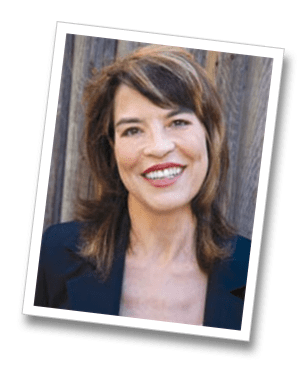
I posted a TEDTalk from author Brené Brown yesterday. Here’s an article she did on the CNN site:

The quest for perfection is exhausting and unrelenting, but as hard as we try, we can’t turn off the tapes that fill our heads with messages like “Never good enough” and “What will people think?”

Why, when we know that there’s no such thing as perfect, do most of us spend an incredible amount of time and energy trying to be everything to everyone? Is it that we really admire perfection? No — the truth is that we are actually drawn to people who are real and down-to-earth. We love authenticity and we know that life is messy and imperfect.

We get sucked into perfection for one very simple reason: We believe perfection will protect us. Perfectionism is the belief that if we live perfect, look perfect, and act perfect, we can minimize or avoid the pain of blame, judgment, and shame.

We all need to feel worthy of love and belonging, and our worthiness is on the line when we feel like we are never ___ enough (you can fill in the blank: thin, beautiful, smart, extraordinary, talented, popular, promoted, admired, accomplished).

Perfectionism is not the same thing as striving to be our best. Perfectionism is not about healthy achievement and growth; it’s a shield. Perfectionism is a 20-ton shield that we lug around thinking it will protect us when, in fact, it’s the thing that’s really preventing us from being seen and taking flight.

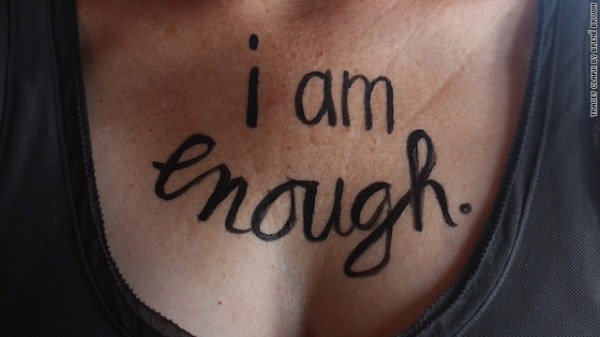
Living in a society that floods us with unattainable expectations around every topic imaginable, from how much we should weigh to how many times a week we should be having sex, putting down the perfection shield is scary. Finding the courage, compassion and connection to move from “What will people think?” to “I am enough,” is not easy. But however afraid we are of change, the question that we must ultimately answer is this:

What’s the greater risk? Letting go of what people think — or letting go of how I feel, what I believe, and who I am?

Go to the source for more: Want to be happy? Stop trying to be perfect – CNN.com

She is soooo on my radar! I’m looking forward to reading one of her books sometime soon…

I’ve seen a lot of good TEDTalks…

…but right now, this one strikes me as one of the best I’ve ever seen! Dr. Brene Brown on vulnerability…

Thanks, Tim Kastelle!!!

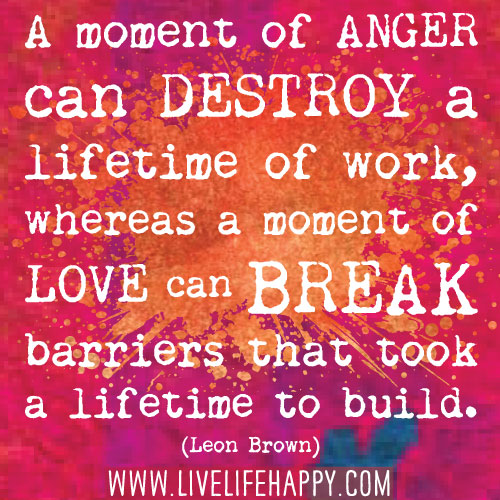
A Moment Of Anger Can Destroy

Live Life Quotes, Love Life Quotes, Live Life Happy

via A Moment Of Anger Can Destroy.

When life falls apart

Gemma Stone writes this about our mutual friend Farhana Dhalla:

Sometimes a crisis is a summons to reconfigure our entire lives.

Even though we are resilient creatures, we are still easily hurt. There are times when living hurts. A lot.

There is purpose in pain; often life falls apart exactly when it needs to be rebuilt.

Our stories become burdensome & false.

Our defenses become exhausting & crumble.

When we are no longer able to maintain the stories and defenses that protect us, we can easily dissolve to bits.

When our lives fall apart, it’s the perfect opportunity to build something newer, truer, fuller.

When Farhana’s life crumbled, she used it as a catalyst for transformation. She courageously ventured within herself, found truth, and emerged glowing with love and light.

And that is why I rely on to her to pull me along when I’m dragging my feet and to shine some light when all I see is darkness.

Thank You for Leaving Me is being released today. Farhana’s story is a heartfelt, refreshingly real account of her journey through divorce.

If you’re moving through the end of a relationship, struggling with heartache, or questioning your relationship patterns, I’m confident this book will be helpful. If you’re hesitant, check out this video. If this sounds like the medicine you need, head over here to pick up her book.

Source: {gems} when life falls apart | Gemma Stone

Kudos, Farhana! For the book and a life well lived in the face of overwhelming hardship…

Letting Go of Resistance

Melody Beattie writes:

Do not be in such a hurry to move on.

Relax. Breathe deeply. Be. Be in harmony today.

Be open. There is beauty around and in us today. There is purpose and meaning in today.

There is importance in today — not so much in what hap­pens to us, but in how we respond.

Let today happen. We learn our lessons, we work things out, we change in a simple fashion: by living our life fully today.

Do not worry about tomorrow’s feelings, problems, or gifts. Do not worry about whether we can trust ourselves, life, or our Higher Power tomorrow.

Everything we need today shall be given to us. That is a promise — from God, from the Universe.

Feel today’s feelings. Solve today’s problems. Enjoy today’s gifts. Trust yourself, life, and your Higher Power today.

Acquire the art of living fully today. Absorb the lessons, the healing, the beauty, the love available to us today.

Do not be in such a rush to move on. There is no hurry. We cannot escape; we only postpone. Let the feelings go; breathe in peace and healing.

Do not be in such a hurry to move on.

Today, I will not run from myself, my circumstances, or my feelings. I will be open to myself, others, my Higher Power, and life. I will trust that by facing today to the best of my ability, I will acquire the skills I need to face tomorrow.

Source: November 11: Letting Go of Resistance | Language of Letting Go

How We Find the Path to Peace


undefined

Kerri Baruch writes:

The simplicity of life is exactly that: simple.

Yet we complicate things.

We interject hatred, insert judgment, cling to rightness and wrongness.

We are attached to beliefs that are in complete contrast to our purpose and our essence: the expression of love.

Why?

Get the answer here: How We Find the Path to Peace

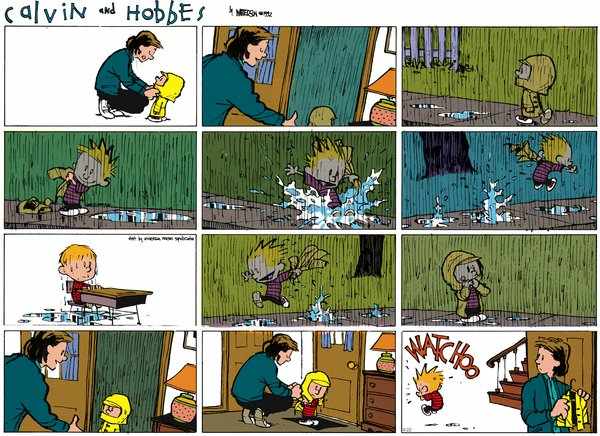
Parenting boys includes a lot of this…

Calvin and Hobbes Comic Strip, November 11, 2012 on GoComics.com.

15 Great Excuses Not to Form the Fitness Habit

Leo Babauta writes:

Lots of people know they should be getting fit, but they can’t seem to find the time to form the fitness habit.

And while I understand this completely — I was stuck in overweight, unhealthy mode for years — I think it’s useful to take a look at the justifications we give ourselves to put it off.

I put things off because I didn’t have time, or energy, or I had too many family commitments, or not enough motivation, or work kept getting in the way, or I didn’t feel good enough to run, or I was sick, or other people would make things difficult, or I didn’t have the money for a gym membership … you get the idea.

But I’ve learned to kill all the excuses. Or to put it less violently, I’ve found loving ways to let them go and embrace the joy of a fit and healthy life.

I did it with six kids and a wife, a full-time job (and now my own business), a ton of family and work commitments, freelancing on the side, building a blog on the side, while writing various books … and so the excuses were ultimately meaningless.

Why might you be putting things off? Let’s look at the justifications, and try to blast them.

Full story at:  » 15 Great Excuses Not to Form the Fitness Habit :zenhabits

Love in Words and Actions

Melody Beattie writes:

Many of us have confused notions about what it means to be loved and cared about.

Many of us were loved and cared for by people who had discrepancies between what they said and did.

We may have had a mother or father who said, “I love you” to us, and then abandoned or neglected us, giving us con­fused ideas about love. Thus that pattern feels like love ­the only love we knew.

Some of us may have been cared for by people who provided for our needs and said they loved us, but simultane­ously abused or mistreated us. That, then, becomes our idea of love.

Some of us may have lived in emotionally sterile environ­ments, where people said they loved us, but no feelings or nurturing were available. That may have become our idea of love.

We may learn to love others or ourselves the way we have been loved, or we may let others love us the way we have been loved, whether or not that feels good. It’s time to let our needs be met in ways that actually work. Unhealthy love may meet some surface needs, but not our need to be loved.

We can come to expect congruency in behavior from others. We can diminish the impact of words alone and insist that behavior and words match.

We can find the courage, when appropriate, to confront discrepancies in words and actions — not to shame, blame, or find fault, but to help us stay in touch with reality and with our needs.

We can give and receive love where behavior matches one’s words. We deserve to receive and give the best that love has to offer.

Today, I will be open to giving and receiving the healthiest love possible. I will watch for discrepancies between words and behaviors that confuse me and make me feel crazy. When that happens, I will understand that I am not crazy; I am in the midst of a discrepancy.

via November 8: Love in Words and Actions.

You are Loveable

Melody Beattie writes:

Even i f the most important person in your world rejects you, you are still real, and you are still okay. Codependent No More

Do you ever find yourself thinking: How could anyone possibly love me? For many of us, this is a deeply ingrained belief that can become a self-fulfilling prophecy.

Thinking we are unlovable can sabotage our relationships with co-workers, friends, family members, and other loved ones. This belief can cause us to choose, or stay in, relation­ships that are less than we deserve because we don’t believe we deserve better. We may become desperate and cling as if a particular person was our last chance at love. We may become defensive and push people away. We may withdraw or constantly overreact.

While growing up, many of us did not receive the uncon­ditional love we deserved. Many of us were abandoned or neglected by important people in our life. We may have con­cluded that the reason we weren’t loved was because we were unlovable. Blaming ourselves is an understandable reaction, but an inappropriate one. If others couldn’t love us, or love us in ways that worked, that’s not our fault. In recovery, we’re learning to separate ourselves from the behavior of others. And we’re learning to take responsibility for our healing, regardless of the people around us.

Just as we may have believed that we’re unlovable, we can become skilled at practicing the belief that we are lovable. This new belief will improve the quality of our relationships.

It will improve our most important relationship: our rela­tionship with our self. We will be able to let others love us and become open to the love and friendship we deserve.

Today, God, help me be aware of and release any self-defeating be­liefs I have about being unlovable. Help me begin, today, to tell myself that I am lovable. Help me practice this belief until it gets into my core and manifests itself in my relationships.” via November 5: We are Loveable.

5 Tips To Being a Grandparent

With the holidays approaching, the AFP Grandparents are back with some important advice for grandparents everywhere.” via 5 Tips To Being a Grandparent.

We Meet People For A Reason

Live Life Quotes, Love Life Quotes, Live Life Happy

via We Meet People For A Reason.

Get Up. Get Out. Don’t Sit.

Thanks to David Kanigan for finding and sharing this:

“…New research this month finds that the more time someone spends sitting, the shorter and less robust his or her life may be. The findings were sobering: Every single hour of television watched after the age of 25 reduces the viewer’s life expectancy by 21.8 minutes. By comparison, smoking a single cigarette reduces life expectancy by about 11 minutes. Looking more broadly, they concluded that an adult who spends an average of six hours a day watching TV over the course of a lifetime can expect to live 4.8 years fewer than a person who does not watch TV.  Those results hold true even for people who exercise regularly. It appears a person who does a lot of exercise but watches six hours of TV every night might have a similar mortality risk as someone who does not exercise and watches no TV…”The researchers found that those people with the “highest sedentary behavior,” meaning those who sat the most, had a 112 percent increase in their relative risk of developing diabetes; a 147 percent increase in their risk for cardiovascular disease; and a 49 percent greater risk of dying prematurely — even if they regularly exercised.

“We might convince ourselves that we are not at risk of disease because we manage the recommended 30 minutes of exercise a day.” But, she says, we “are still at risk if we sit all day…If you exercise for 30 minutes a day, she says, “take time to reflect on your activity levels for the remaining 23.5 hours,” and aim to “be active, sit less.” via Get Up. Get Out. Don’t Sit. – Lead.Learn.Live..

You Are Awesome

You are awesome. End of story. Period. Print it, post it, feel it.

You were born awesome, and you will leave awesome. There may be lessons, bumps, and arrests along the way, but that doesn’t change the fact that you are a totally delicious hug magnet.

If folks aren’t hugging you right now, they just don’t know what they’re missing.” Full story at:  You Are Awesome « Positively Positive.

The Hero’s Journey to Your Own Heart

Dr. Ingrid Mathieu writes:

As a psychologist, I am privileged to witness people engaging with questions of whom they are and want to be, where they are and want to go. I often think of my work as being an invited guest on an excavation into the depths of someone’s being. It is too dark to take the journey alone, but when we both put our headlamps on and take one step at a time into the darkness, we can see what lies ahead. We can remove the obstacles that stand in our way and plunge even deeper toward the treasure that we seek.

The obstacles people find can often be a cause for confusion. This is because every time we put the headlamp on to go exploring, we are afraid of what we are going to find. When we stumble upon the unexpected, we automatically write a story about what it means. We determine that we are “crazy” or on the wrong track and that we shouldn’t keep moving forward. We see the obstacle and say, “there is the evidence that I will never get what I want, so why did I even bother?”

We often look at our lives as proof of how we are doing it wrong instead of how we are doing it right.” Full story at:  The Hero’s Journey to Your Own Heart « Positively Positive.

How to Drop the Extra (Mental) Weight and Set Yourself Free

“Letting go gives us freedom and freedom is the only condition for happiness.” -Thich Nhat Hanh

Full story at:  How to Drop the Extra (Mental) Weight and Set Yourself Free | Tiny Buddha.

The grief process

Melody Beattie writes:

To let ourselves wholly grieve our losses is how we surrender to the process of life and recovery. Some experts, like Patrick Carnes, call the Twelve Steps “a program for dealing with our losses, a program for dealing with our grief.”

How do we grieve?

Awkwardly. Imperfectly. Usually with a great deal of resistance. Often with anger and attempts to negotiate. Ultimately, by surrendering to the pain.

The grief process, says Elisabeth Kubler Ross, is a five stage process: denial, anger, bargaining, sadness, and, finally, acceptance. That’s how we grieve; that’s how we accept; that’s how we forgive; that’s how we respond to the many changes life throws our way.

Although this five-step process looks tidy on paper, it is not tidy in life. We do not move through it in a compartmentalized manner. We usually flounder through, kicking and screaming, with much back and forth movement – until we reach that peaceful state called acceptance.

When we talk about “unfinished business” from our past, we are usually referring to losses about which we have not completed grieving. We’re talking about being stuck somewhere in the grief process. Usually, for adult children and codependents, the place where we become stuck is denial.. Passing through denial is the first and most dangerous stage of grieving, but it is also the first step toward acceptance.

We can learn to understand the grief process and how it applies to recovery. Even good changes in recovery can bring loss and, consequently, grief. We can learn to help others and ourselves by understanding and becoming familiar with this process. We can learn to fully grieve our losses, feel our pain, accept, and forgive, so we can feel joy and love.

Today, God, help me open myself to the process of grieving my losses. Help me allow myself to flow through the grief process, accepting all the stages so I might achieve peace and acceptance in my life. Help me learn to be gentle with others and myself while we go through this very human process of healing.” via Just For Today Meditations – Maintaining A Life.

Whatever your losses, they will hang in there until you work the grieving process. Long ago a priest friend of mine told me that all loss is a death of sorts so applying Ross’ stages is appropriate for just about anything…

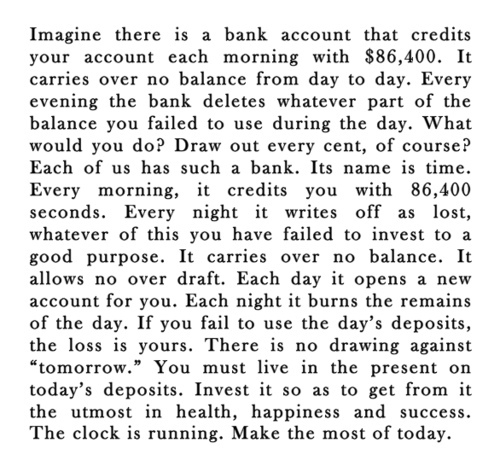
Imagine There Is A Bank

Live Life Quotes, Love Life Quotes, Live Life Happy

via Imagine There Is A Bank.

How to Ask Your Partner for a Change

One of my favorite bloggers, Michele Lisenbury Christensen, has a beautiful post on ‘requesting change’:

I’m a requester.

I have made more – and more daring – requests of my husband in the 15 years we’ve been together than some partners make in a lifetime. In the process, I’ve learned a lot about making requests that engender change.

Often, my learning has come from making ridiculous requests that would be difficult for anyone to hear, let alone act upon.

Ooops.

But my dogged determination to keep my life and our relationship evolving has sent me back to the drawing board time and again to reconfigure how I was thinking about the change I wanted and how I talked to him about it.

What’ve I learned the hard way that maybe – prayers flying heavenward as we speak! – you could learn by my baaad example.” Full story at: via How to Ask Your Partner for a Change : The Calm Space.

10 tips for how not to be a jerk in your next fight

notsalmon

Full story at: 10 tips for how not to be a jerk in your next fight.

Stop Beating Yourself Up. Here’s How.

Rebecca Seed writes:

I am mad at myself. Again. This didn’t go as planned. I lied to myself. I didn’t live my truth. I blew it.

Sound familiar? The self-deprecating tapes that run through your head every time you do what you said you’d never do again? Maybe it’s texting that ex-boyfriend. Caving by sticking your last dollar in the vending machine. Staying out too late with friends when you swore up and down you’d be in yoga class at 7am the next day.

It happens. It’s life. We do our best to practice self-love, so why is it so easy to be hard on ourselves?

For me, as I am about to hit the half way point of my first 200-hour yoga teacher training, I realize I’ve allowed (some of) the bad habits in my life to continue during these intense months. And instead of cutting myself slack for all the amazing hard work I am doing – instead of looking at all I’ve accomplished in five weeks – I’m angry with myself.

I didn’t practice enough. I didn’t ask the barista at Starbucks if the smoothie had milk in it, even though I am newly vegan. And, I poured myself a glass of much-needed wine after a stressful workday. I let the dominoes tumble onto myself.

And when it’s time to gear up for teacher training at the end of the week, I’m mad at myself. Even though I’ve done all my reading and homework. And even though I made it to practice—not every single day, but enough.

Isn’t it time for a little self-forgiveness on my part?  Here’s what I hope to do –and you should, too.” Full story at: Stop Beating Yourself Up. Here’s How..

Start a Blog at WordPress.com.

Up ↑