You are always free…

Many people are familiar with Richard Bach’s book “Jonathan Livingston Seagull” and the subsequent movie and Neil Diamond soundtrack, but my favorite Richard Bach book is “Illusions; the Adventures of a Reluctant Messiah“. The blurb does not do it justice…

A lighthearted, mystical adventure story about two barnstorming vagabonds, Illusions is a thought-provoking dialogue between a guy named Richard and a real Messiah who quit . . . a startling look at the way many of us could live, and the way some of us do.

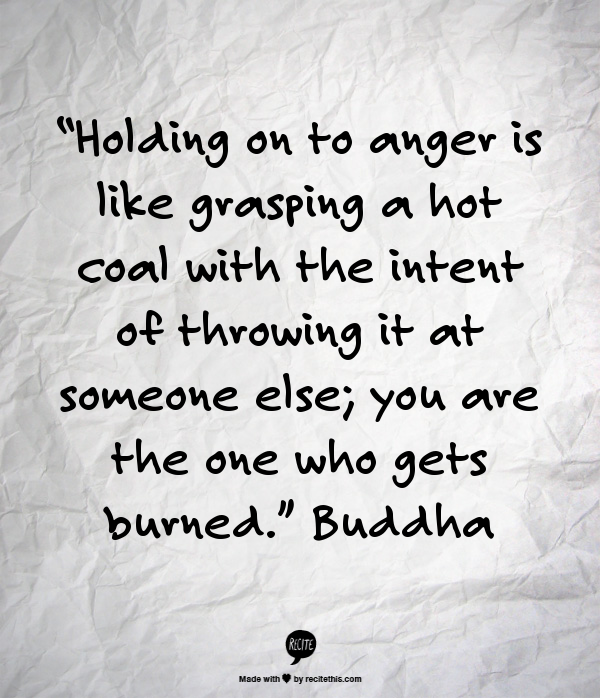
The quote below is one of my favorites from the book…

recite-12566--646664873-19v0gy3

If anyone ever hurt me…

If anyone had ever hurt me, you know
The way I hurt myself
If someone had ever hurt me, you know
The way I hurt myself
Well, they’d be buried six feet under ground
Beyond the good Lord’s help

There is something on my mind
something on my mind
Makes me feel
like I want to die
There is something on my mind
something on my mind
makes me want to die
Heard it’s just a lie
Keeps me searching keeps me hoping keeps me praying
For just a little
just a little piece of mind
Something I’ve yet to find
searching for a little piece of mind

Well, I’m going to cast this evil
Way down in the deep blue sea
Well, I’m going to cast this evil
Way down in the deep blue sea
So that cold black dirty
cold black dirty water
Have it first over me
take this evil first over me

I forgot my phone…

How great leaders inspire action…

Another TED talk worth watching:

Just in case you need this definition like I did:

Saint Francis and the Sow

recite-14687--1513544665-yscank

Continue reading “Saint Francis and the Sow”

The One Deep Inside Your Chest

Tara Brach shared this poem in a meditation and I’m passing it on to you…

Continue reading “The One Deep Inside Your Chest”

A young man who has something to teach us all…

There is No Such Thing As the Future… Only Your Thoughts

recite-23489--1936981381-19zd09l
Ponder this:

There’s no future, and no past – only that which exists in your thoughts. Continue reading “There is No Such Thing As the Future… Only Your Thoughts”

Trusting your basic goodness…

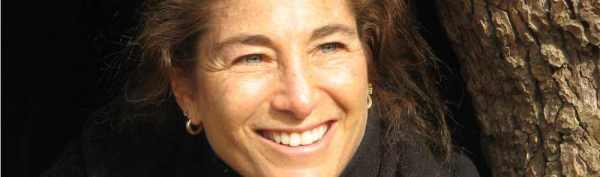
headshot-tara-brachTara Brach writes:

Einstein says the most important question we will ever ask ourselves is, “Is this universe a friendly place.” Do we trust that there is something essentially benevolent or good about this universe? That we are essentially good? These two talks explore what it means to trust basic goodness, and how this trust naturally emerges through cultivating a meditative presence…

Continue reading “Trusting your basic goodness…”

Self-Compassion and Setbacks

Another great post from Barb Markway…

Barbara Markway's avatarThe Self-Compassion Project

madewithover-12I originally wrote this for Psychology Today, but I think the information may also be useful to my awesome readers here.  Haven’t we all had the experience of trying to change something–maybe exercise more, quit smoking, or eat healthy? We do great for awhile and then boom, we “mess up.” How do we keep a setback from turning into a major relapse, and along with it, feeling awful about ourselves? Here are some gentle suggestions (on Psychology Today, they’d be called “tips.”  Oh, and they’d also be numbered.)

Expect setbacks. Change takes time, and often frequent tries. For example, according to the U.S. Centers for Disease Control and Prevention, most smokers require 5 to 7 attempts before they finally quit. Did these people fail the 5 to 7 times prior to the final cessation of smoking? Or were these attempts part of their eventual success? Consider thinking of…

View original post 861 more words

From Story to Presence…

img_2943_2-tara-001A ‘quote*’ from Tara Brach’s meditation “From Story to Presence”…

“The reality is each one of us has caused hurt to other people and each one of us has been hurt by other people. But if we keep running the story of “You hurt me; you’re bad” or “I hurt you; I’m bad” all that happen is a looping that creates separation. What if instead we say the story is that I hurt you and we let that story be there, we don’t put it aside too quickly…

We let it be there and we feel what it feels like in our body. The very presence with that vulnerability awakens compassion. Now the trick — because this is where there can be more suffering is to take the story “I caused you suffering” and to get stuck on the “I’m bad, I’m bad, I’m bad”. We’re wedded to the story and we don’t have access to deeper presence…

So the pathway I am describing to you, and it takes a real sensitivity, is that when stories arise in our mind — to not to quickly go ‘it’s just a story, back to the breath’ because that is just another form of aversion and denial — is to let it be there a bit, but not to believe the story.”

She goes on to say “the story behind some of the more drama stories is really the story of Self. As we open to this presence, we wake up out of that core story that keeps us separate”.

You can hear the whole talk here:

*I tried to transcribe it as best I could; this is NOT an official transcription…

From “The Book of Awakening”…

Mark Nepo writes:

We waste so much energy trying to cover up who we are

When beneath every attitude is the want to be loved

And beneath every anger is a wound to be healed

And beneath every sadness is the fear that there will not be enough time

When we hesitate in being direct we unknowingly slip something on, some added layer of protection

That keeps us from feeling the world Continue reading “From “The Book of Awakening”…”

Got a meeting? Take a walk…

My friend Nilofer Merchant suggests ‘thinking different’ about how we meet — she recently celebrated over one million views of this talk. Maybe the idea will catch on…

Flowering, From Within, of Self-Blessing (3/21/12)

The Backward Step (12/03/11)

The Empathic Civilisation

Self Esteem or Other Esteem?

Mel Schwartz, L.C.S.W. M.Phil. writes:

I have come to believe that the way the term self-esteem is used is actually a misnomer. The first half of the expression, self, would seem to indicate that esteem, the second half of the expression, is derived from one’s self. Yet if we look closer, we find that most people seek a sense of worthiness from that which lies outside of them. For a student, it might come from good grades; for a businessperson or worker, it’s derived from a promotion or a raise; and for most individuals, praise or acknowledgement provide a temporary increase in esteem. Our society generates billions of dollars in revenues from inducing people to seek the quick fix of vanity as a means toward feeling better. Yet none of these actually contributes one iota to self-esteem. Ironically, they may even get in the way. 

Continue reading: Self Esteem or Other Esteem? | Psychology Today.

No Birth, No Death

Thich Nhat Hanh writes:

“Our greatest fear is that when we die we will become nothing. Many of us believe that our entire existence is only a life span beginning the moment we are born or conceived and ending the moment we die. We believe that we are born from nothing and that when we die we become nothing. And so, we are filled with fear of annihilation.

The Buddha has a very different understanding of our existence. It is the understanding that birth and death are notions. They are not real. The fact that we think they are true makes a powerful illusion that causes all our suffering. The Buddha taught there is no birth, there is no death; there is no coming, there is no going; there is no same, there is no different; there is no permanent self, there is no annihilation. We only think there is. When we understand that we cannot be destroyed, we are liberated from fear. It is a great relief. We can enjoy life and appreciate it in a new way.

The same thing happens when we lose any of our beloved ones. The day my mother died I wrote in my journal, A serious misfortune of my life has arrived. I suffered for more than one year after the passing away of my mother. But one night, in the highlands of Vietnam, I was sleeping in the hut in my hermitage. I dreamed of my mother. I saw myself sitting with her and we were having a wonderful talk. She looked young and beautiful, her hair flowing down. It was so pleasant to sit there and talk to her as if she had never died.

When I woke up it was about two in the morning and I felt very strongly as though I had never lost my mother. The impression that my mother was still with me was very clear. I understood then that the idea of having lost my mother was just an idea. It was obvious in that moment that my mother was just an idea. It was obvious in that moment that my mother is always alive in me.”

Thich Nhat Hanh is a Buddhist monk, poet, peace activist, and the author of more than one hundred books, including the national bestsellers ‘Anger’ and ‘Living Buddha, Living Christ.’ He lives in Plum Village, a monastic community in southwestern France.

via DharmaGates – No Birth, No Death by Thich Nhat Hanh.

Start a Blog at WordPress.com.

Up ↑