How you can get what you want from your marriage…

I used to joke with my wife that ‘if only you’d lower your expectations I could be the man of your dreams’. Cute right? Not that there aren’t character issues that I need to work on, but according to this article by F. Diane Barth, L.C.S.W., I may have been on to something:

A colleague sent me a copy of a recent study that addresses the question. In it, a group of psychologists from Northwestern University and the University of Chicago say the problem may not be in the relationship, but in our expectations. If you are in a relationship that, like Tony and Wendy’s, looks good from the outside but seems to be crumbling from the inside, your own expectations and your partner’s may be at least partly to blame. Instead of making you feel good about yourself, if your marriage is destroying your self-esteem, these authors suggest again that you look at your own and your partner’s goals for the partnership.

The authors of the study say that the major problem with most marriages today has to do with a shift in what we look for from the person we plan to live with till death do us part.

Whereas in the past marriage was primarily expected to provide for physical care and satisfaction, today couples look to their partners to provide much more. Contemporary spouses are expected to facilitate one another’s psychological, emotional, social, personal and professional growth. A happy marriage, this research tell us, is one in which a couple feel physically and emotionally safe and get their physical and social needs taken care of. But even more important, these authors say, is our need for our life partners to support our life goals.  We want to be someone who understands and backs us as we develop into the person we want to be.

Here’s the problem. You and your spouse may genuinely love and respect one another. But whether one or both of you is working full time or whether one of you is home taking care of children, a modern life style does not provide a lot of spare time or energy for carefully making sure you are bot feeling good about yourselves. More likely, when you do see each other, the first thing you think to say is to complain about the things you each feel the other hasn’t gotten done, or hasn’t done right.

Your feelings get hurt and you hurt back in retaliation, when what you both really want is someone to say what a good job you’ve done and how hard you’ve been working. These are what the authors of the study call “high altitude needs” of contemporary relationships; and they say that because most relationships are operating on this higher emotional level while at the same time we are so busy and overwhelmed with all of our life tasks and goals, we feel deprived of the emotional “oxygen,” or support and nurturing, that they both need and expect from a partner.

There is good news, though! First of all, if this is how you are feeling, there is a good chance that your partner is feeling the same way. Hard as it may be to empathize with one another, if you can simply recognize that you both need more nurturing, admiration, and respect, you might find some oxygen spontaneously returning to your relationship.

Talking about your goals and your expectations, your hopes and aspirations – not just in your marriage, but in all aspects of your life—can help. Give each other legitimate (not phony) credit and praise. Be honest about things you admire about one another. Surprisingly, even expressing feelings of envy for something your spouse does better than you can have a positive effect, since that kind of envy is also an expression of admiration.

via How you can get what you want from your marriage | Psychology Today.

Make sense to you? Please share your thoughts below…

A Forgiving Heart

Tara Brach writes…

Anger is an intelligent emotion, a natural part of our evolutionary design that lets us know when we are endangered or impeded in our progress. But when it locks into ongoing resentment and blame, our heart becomes armored and we lose access to a wholeness of being. This talk explores forgiving as a process of relaxing our armoring and awakening a healing compassion for ourselves and others.

Direct download: 2014-02-26-Pt3-A-Forgiving-Heart-TaraBrach.mp3

Source: Tara Brach : Part 3: A Forgiving Heart

recite-5549-1130647567-18s5xy4-1

Healing The Shame That Binds You…

Why People Say Yes

Who are You Attracting

via Who are You Attracting.

The Power of Gratitude

The Power of Gratitude | Mindvalley Academy.

If you’re going through challenging times, read this…

If you’re going through challenging times, read this….

How to deal with emotions

Maybe Home Is Nothing

via Maybe Home Is Nothing.

Responding to Sibling Fighting with Spanking?

This one has me thinking about some of my own behaviors and how I got sucked into spanking when I knew instinctively it was wrong…

As I have highlighted in previous posts, one of the most stressful aspects of parenting reported by parents is when their children fight. Although by now the scientific study of parenting has forwarded some exceptional methods of parenting to help deal with the stress of sibling dynamics, many parents respond out of religious conviction to sibling aggression with spanking their children.

Imagine the irony of hearing a parent yell at their child “don’t ever hit your brother, we do not hit in this house…” as the parent proceed to hit their child.

This technique is apparently making a comeback in some online circles as a parenting method to deal with many childhood misbehaviors. Recently I was sent a link by a religious friend of mine to what he thought was a clever online post that read something to effect of “I was spanked as a child and therefore… have developed a respect for others.”

I responded to his link with “you probably also developed aggressive tendencies, an anxiety disorder, anti-social tendencies, academic problems, and sexual issues…”

I have yet to hear back from him.

Continue reading “Responding to Sibling Fighting with Spanking?”

Don’t Let Them Steal Your Happy

via IFTTT

A new equation for intelligence

10 Reasons To Tell Yourself, “I Love You”

Get them here: 10 Reasons To Tell Yourself, “I Love You”.

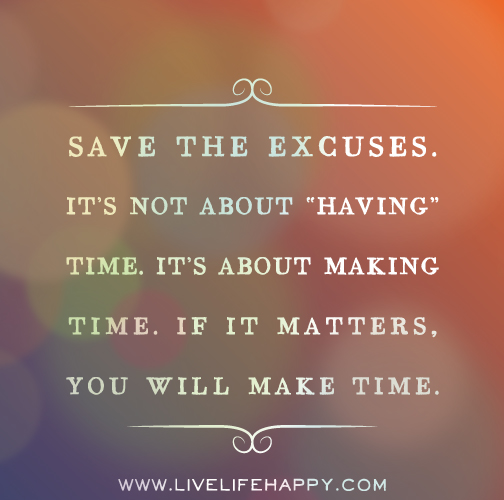
Save The Excuses

via Save The Excuses.

Ironically People Who Are Good

via Ironically People Who Are Good.

Mastering a New Way to BE

via Mastering a New Way to BE.

Gratitude is a powerful antidote for the blues

via Gratitude is a powerful antidote for the blues..

Change has Great Purpose in Our Lives

via Change has Great Purpose in Our Lives.

A journey of a thousand miles…

via Take Action Everyday Toward Your Goals.

[…in our house, it begins with one last trip to the bathroom and 3 trips back into the house to remember last minute items!]

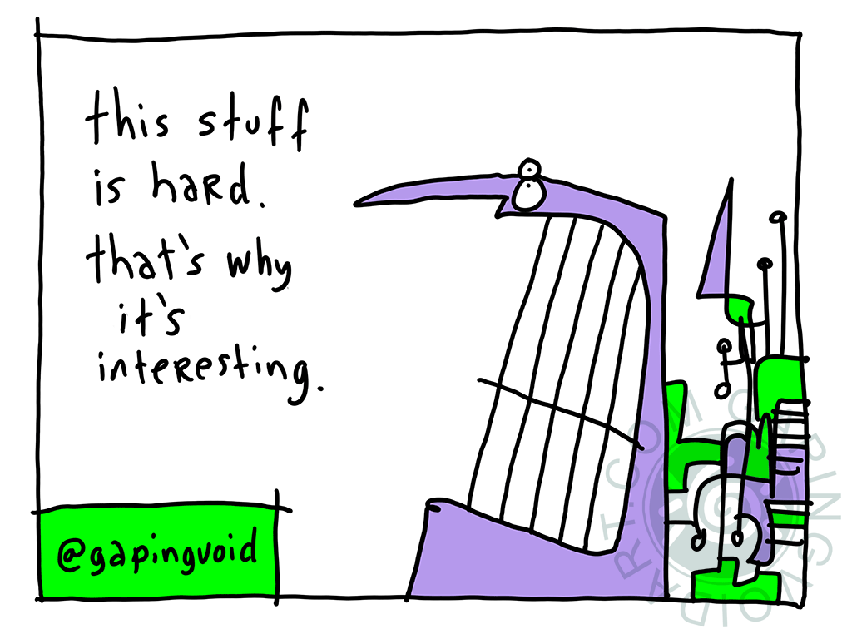
This Stuff Is Hard…

via This Stuff Is Hard….

How To Discover The Message You’re Meant To Share With The World

How To Discover The Message You’re Meant To Share With The World

Shelley Bullard writes: You have a message. Yes, I’m talking to you.

Maybe you know what your message is, or maybe you don’t. Either way, you have one. And sharing it with the world will make you feel incredibly fulfilled from the inside out.

Expressing your message doesn’t have to be a big production. Messages can be loud, but they can also be quiet. They can be discrete, and they can be bold. The importance of a message doesn’t rest on how it’s expressed; the importance comes from how deeply it resonates for you, and how it impacts the world.

Deep down, we’re all called to be of service. What this means is that most of us are consciously aware of a desire to help others. Even more than that, most of us recognize that this desire is actually our purpose in the world. Continue reading “How To Discover The Message You’re Meant To Share With The World”

Start a Blog at WordPress.com.

Up ↑