Life Doesn’t Reward You For What You Know, But For What You Do

0*3fXrwI1YS0AmX9FZ

This is a lesson hitting me in the face this week thanks to Gary John Bishop and his book Unf*ck Your Life: “Most people have adapted to consuming low-level information on the internet. This is the equivalent of filling your car with water or eating McDonalds every meal.

In the documentary film, Super Size Me, 32-year-old Morgan Spurlock goes 30 consecutive days (from February 1 to March 2, 2003) only eating McDonald’s food. The film documents this lifestyle’s drastic effect on Spurlock’s physical and psychological well-being.

During this 30-day period, Spurlock ate at McDonald’s three times per day, eating every item on the menu at least once. Spurlock consumed an average of 5,000 calories per day during the experiment, more than double the recommended amount for a healthy man his age. As a result, Spurlock gained 24 pounds, a 13% body mass increase, increased his cholesterol to 230 mg/dL (6.0 mmol/L), and experienced mood swings, sexual dysfunction, and fat accumulation in his liver.

One of the components of Spurlock’s experiment was that every time he was asked the question, “Do you want to ‘Super Size’ that?” he was required to say yes. Super-sizing means that the soda and french fries went from large to extra-extra large.

When it comes to the internet, Super-sizing is the equivalent of going from one distractive link to the next to the next to the next to the next. What originally was intended to be a quick check of the email or Facebook has now turned into a subconscious self-sabotage. The body has taken over the mind and is seeking its dopamine refuel, of which it has developed an incredibly high tolerance.

It took Spurlock fourteen months to lose all the weight gained during this 30-day experiment. And he had to eat extremely clean to reclaim his health.

For most people who are caught in the addiction-loop of consuming low-quality information, it will take years to transform their brains into a state where they can truly think clearly and powerfully. It will take years of consistent positive decisions and calculated inputs to develop the thinking and decision-making capacity they are capable of.

Most people will remain stuck on the fast-food diet of internet information consumption — getting fatter and more unhealthy mentally, emotionally, physically, and spiritually. The environment is becoming so dopamine-rich that it is nearly impossible for people to pull themselves from the addiction.

Here’s the truly sad part: most people intuitively know that sitting on the internet all day is bad for their brain, mind, spirit, and body. But knowledge is weak. Knowledge is good for nothing unless it is put into practice. Hence, Napoleon Hill said in Think and Grow Rich, “Knowledge is only potential power. It becomes power only when, and if, it is organized into definite plans of action, and directed to a definite end.” Source: https://medium.com/thrive-global/life-doesnt-reward-you-for-what-you-know-but-for-what-you-do-f05b80e9c710
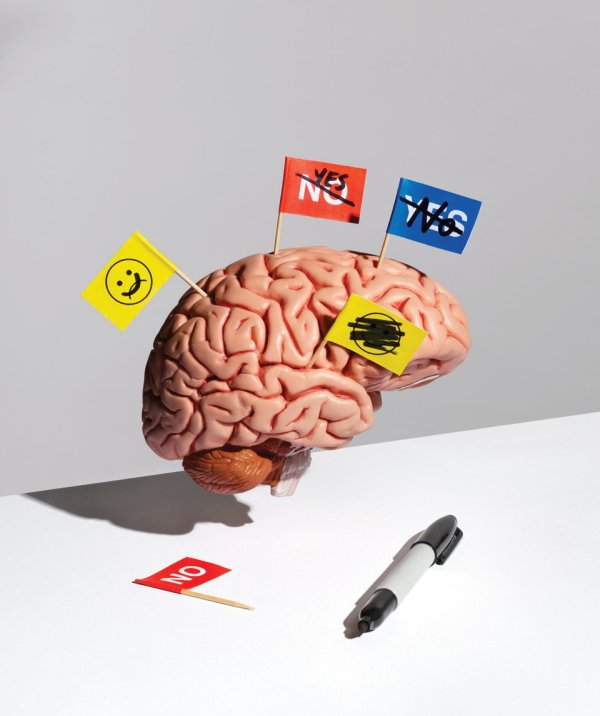

Cognitive Biases and the Human Brain

Ben Yagoda writes “I am staring at a photograph of myself that shows me 20 years older than I am now. I have not stepped into the twilight zone. Rather, I am trying to rid myself of some measure of my present bias, which is the tendency people have, when considering a trade-off between two future moments, to more heavily weight the one closer to the present. A great many academic studies have shown this bias—also known as hyperbolic discounting—to be robust and persistent.” Source: https://www.theatlantic.com/magazine/archive/2018/09/cognitive-bias/565775/?utm_source=pocket&utm_medium=email&utm_campaign=pockethits


giphy.gif?cid=f19dbcb55b6e2b317039722f515e2831
via GIPHY

It’s a familiar problem: "Sitting in front of a computer not long ago, a tenured history professor faced a challenge that billions of us do every day: deciding whether to believe something on the Internet.

On his screen was an article published by a group called the American College of Pediatricians that discussed how to handle bullying in schools. Among the advice it offered: schools shouldn’t highlight particular groups targeted by bullying because doing so might call attention to “temporarily confused adolescents.”

Scanning the site, the professor took note of the “.org” web address and a list of academic-looking citations. The site’s sober design, devoid of flashy, autoplaying videos, lent it credibility, he thought. After five minutes, he had found little reason to doubt the article. “I’m clearly looking at an official site,” he said." Go to the source for more: http://time.com/5362183/the-real-fake-news-crisis/

"It’s important to pull yourself away from work every now and then. Breaks are one thing, but distractions are another. Breaks are focused and deliberate. Distractions catch you off guard and derail your task entirely. In fact, one study shows it takes about 25 minutes to get back into the swing of things after you’ve been interrupted.

We’ve told you how distractions can cause errors. Even after you’ve removed the interruption, you’re not working at the same capacity you were pre-distraction. In a study from the University of California Irvine, researchers shadowed workers on the job, studying their productivity. Here’s what study lead Gloria Mark told Fast Company of the findings:

You have to completely shift your thinking, it takes you a while to get into it and it takes you a while to get back and remember where you were…We found about 82 percent of all interrupted work is resumed on the same day. But here’s the bad news — it takes an average of 23 minutes and 15 seconds to get back to the task." Source: https://lifehacker.com/how-long-it-takes-to-get-back-on-track-after-a-distract-1720708353

https://platform.twitter.com/widgets.js

If you can’t stop watching TV long enough to get your life together you seriously don’t want to change. That’s basic s***. It’s the bare minimum, to be honest. So what will it be? Netflix or a better paying career? Donuts or about a body you can be proud of? Video games or a loving relationship?

Every time you think you can’t stop that’s just another excuse. You can. You can and you will. Stop buying yourself off. Stop letting your own internal condition dominate the quality of your life — take back the wheel. If you continue to be led by your emotions of regret you’ll eventually live that vision on your deathbed thinking what if…

Gary John Bishop, Unf*ck Yourself

https://platform.twitter.com/widgets.js

Stop Overthinking and Start Living: How Overthinking Kills Happiness

Overthinking is a common habit that can have detrimental effects on our happiness. The incessant analysis of past events or the anxious anticipation of the future often leads to unnecessary stress and worry. In this blog post, we’ll explore the reasons why overthinking can be so damaging and discuss strategies to overcome this destructive habit.

The Paralysis of Analysis

Constantly replaying past situations or obsessing over the “what ifs” of the future can lead to a state of mental paralysis. This overactive rumination prevents us from fully engaging with the present moment and enjoying the experiences life has to offer. By getting lost in our thoughts, we miss out on the simple joys and opportunities for happiness that surround us.

Magnifying Problems

Overthinking has a way of magnifying problems and making them seem insurmountable. What starts as a minor concern can quickly snowball into a major source of anxiety and distress. This distorted perception can lead to a persistent state of unhappiness, as we struggle to find solutions to issues that may not be as dire as they seem.

Strained Relationships

When we’re trapped in the cycle of overthinking, our relationships can suffer. Constantly seeking reassurance or overanalyzing interactions can create unnecessary tension and distance between ourselves and those we care about. This strain on our connections with others further exacerbates feelings of isolation and discontent.

Embracing Mindfulness

One of the most effective ways to counteract the effects of overthinking is to practice mindfulness. By focusing on the present moment and accepting our thoughts without judgment, we can regain control over our mental state. Mindfulness techniques, such as deep breathing and meditation, allow us to ground ourselves in the here and now, fostering a sense of calm and inner peace.

Cultivating Gratitude

Shifting our focus from overanalysis to gratitude can significantly enhance our happiness. Taking time to appreciate the positive aspects of our lives, no matter how small they may seem, can counteract the negative effects of overthinking. By cultivating a mindset of thankfulness, we can train our brains to seek out the good, even amidst challenging circumstances.

Action Over Rumination

Rather than getting caught in the trap of overthinking, taking action can provide a sense of empowerment and control. By addressing issues directly and making proactive choices, we can break free from the cycle of perpetual rumination. Engaging in activities that bring us joy and fulfillment can redirect our energy towards productive endeavors.

Conclusion

Overthinking is a subtle yet formidable barrier to happiness. By recognizing the ways in which it hinders our well-being and implementing strategies to combat it, we can reclaim our sense of contentment and fulfillment. Embracing mindfulness, cultivating gratitude, and taking decisive action are essential steps towards breaking free from the grip of overthinking and embracing a more joyful existence.

So, let’s make a conscious effort to stop overthinking and start living in the present moment. Happiness awaits those who free themselves from the shackles of overanalysis.

When a DNA Test Shatters Your Identity

“Each person comes into our group thinking they are a freak.”: When a DNA Test Shatters Your Identity

“Toxic People” And Why You Need To Stop Saying That

“Toxic People”, “Toxic Person”, “They’re Toxic”  You’ve seen these terms bandied around social media, books, workshops, you name it, they have very much become common language in our everyday conversations and environments. And that’s a problem. Why? Because, if you are using these terms, you’re just not thinking. Period: “Toxic People” And Why You Need To Stop Saying That

Can a Dysfunctional Family Become Functional?

You may be part of a dysfunctional family, but that does not mean you are powerless or that you have to suffer the consequences.

You learned today how it’s all a matter of priorities and thinking clearly.

You learned that, if love exists, everything is possible. You learned that even when there is no love and no fix for your dysfunctional family, there are still things you can do. It’s a matter of choosing your peace, because you deserve it.

Everything will be better if you apply this knowledge. If you talk to that problematic family member. If you help them see the harm they are doing. If you make sure they do change and treat you the way you need to be treated…

If you choose yourself over that toxic family member. If you refuse to justify the harm that others can do to yourself. If you realize the most important relationship you have is with yourself.

And lastly, that you also have to be aware of your actions and be open to criticism. Because we might be unknowingly harming others. And that would be us creating a dysfunctionality. Don’t allow it to happen.

Dysfunctional families are not impossible to fix. It just takes love, cooperation and responsibility.

But if you tried and those elements are not present, just choose yourself instead.
https://www.lifehack.org/755934/can-a-dysfunctional-family-become-functional

Without a doubt…

Pinterest themetapicture.com Article from: The Funny Beaver

via Without a doubt… — Rethinking Life

The Compassionate Brain

Dr. Rick Hanson presents a FREE eight-part video series—The Compassionate Brain—that explores effective ways to change your brain and heart and life.

In each interview, Dr. Hanson is joined by a world-class scholar/teacher, including Richie Davidson, Dan Siegel, Tara Brach, Dacher Keltner, Kelly McGonigal, Kristin Neff, and Jean Houston. They discuss different ways to use the power of neuroplasticity—how the mind can change the brain to transform the mind—to open the heart, build courage, find compassion, forgive oneself and others, and heal the world. Enroll here: The Compassionate Brain

Buddha’s Brain: The Practical Neuroscience of Happiness, Love and Wisdom

1132 Positive Affirmations: The Ultimate Guide to Beating Negative Thinking

Yes!

Positive affirmations release you from anxiety, negativity, guilt, fear and pain. Affirmations are simple messages. Repeated over-and-over, they begin to worm their way into your mind. 51 more words

via 1132 Positive Affirmations: The Ultimate Guide to Beating Negative Thinking — Develop Good Habits

https://platform.twitter.com/widgets.js

https://platform.twitter.com/widgets.js

This Is Your Brain On Ads: How Media Companies Hijack Your Attention

How many ads have you encountered today? On this week’s radio show, we discuss the insidiousness of advertising in American media: This Is Your Brain On Ads: How Media Companies Hijack Your Attention

The benefits of physical activity are more than muscle-deep. Moving your body builds and conditions your gray matter, making you smarter, happier, and more resilient.

Source: This Is Your Brain on Exercise

https://platform.twitter.com/widgets.js

Start a Blog at WordPress.com.

Up ↑