“Be miserable. Or motivate yourself. Whatever has to be done, it’s always your choice.”Wayne Dyer “People often say that motivation doesn’t last. Well, neither does bathing – that’s why we recommend it daily.”Zig Ziglar “I was thinking one day and I realized that if I just had somebody behind me all the way to motivate… via 27 Smart and Simple Ways to Motivate Yourself — Bright, Shiny Objects via Todd Lohenry on Inoreader
10 Tips That Will Help You to Overcome Negativity
Make positive thinking a part of your life today by using these 10 practical tips and habits. This is my best advice for thinking positively. Source: Positive Thinking: 10 Tips That Will Help You to Overcome Negativity
We Can Choose Different Ways Without One of Us Being Wrong

Many of us are committed to a journey of change and personal growth. While these are traits to be admired and celebrated, they can also have a darker side. We can become a little militant and dogmatic when we’re on our journeys.
As we focus on our attempts to make changes in our own lives, our views can start to narrow and become very black and white. We become so tuned into what we are doing that we forget there’s more than one way to do just about anything.
We seek out others that agree with us to back up ‘our views.’ This may be part of our primal wiring to be part of a collective. We seek a tribe.
Being part of a tribe can be intoxicating. Being with people that share our passion is exciting. It’s great to have a common goal or view and be able to talk about our passions with others that really get it. We’re all in this together.
Being in a tribe can also distort our perspective. Only seeing and hearing a biased view. Ironically, we can lose objectivity as we seek clarity. Becoming more rigid as we search for methods and hacks.
Or maybe we enjoy citing this study or that to ‘prove’ our point. Using science (bad science oftentimes) as our weapon of choice to make ourselves feel and sound knowledgeable.
Both these traits can lead to us becoming dogmatic, thinking our way is the only way.
Source: We Can Choose Different Ways Without One of Us Being Wrong
The Brain Science of Controlling Our Attention & Gaining Focus
Learn about the two brain systems that control our attention, why we get distracted every day and how to gain focus & improve attention and concentration:
Source: The Brain Science of Controlling Our Attention & Gaining Focus
Why Your Brain Wants to Take a Break in the Afternoon
The midday doldrums aren’t just about what you had for lunch.
Source: Why Your Brain Wants to Take a Break in the Afternoon | Psychology Today
Are You a Fan of Myers-Briggs, StrengthsFinder, the “Big Five,” Enneagram, the Five Love Languages, or Other Personality Frameworks?
Do you love a great personality framework? I sure do.
I believe they can be a great tool for self-knowledge — they help to shine a spotlight on hidden patterns of behavior and thinking.
If, like me, you’re fascinated by these kinds of frameworks, I think you’ll be intrigued by my Four Tendencies model — it divides the world into Upholders, Questioners, Obligers, and Rebels. (Learn more and take the Quiz here.)
People often ask me how my Four Tendencies framework corresponds to other frameworks — for instance, how it matches up with Myers-Briggs or the Big Five. I’ve even had several people suggest that the Four Tendencies correspond to the Four Houses of Hogwarts. (By the way, they don’t!)
In my view, each framework has its own nuances and strengths, which are lost if we try to map one framework onto another. So I don’t try to say that “this” equals “that.”
At the same time, it’s true that the Four Tendencies can be used alongside other frameworks, to provide deeper insights.
The House of Belonging
I awoke
this morning
in the gold light
turning this way
and that
thinking for
a moment
it was one
day
like any other.
But
the veil had gone
from my
darkened heart
and
I thought
it must have been the quiet
candlelight
that filled my room,
it must have been
the first
easy rhythm
with which I breathed
myself to sleep,
it must have been
the prayer I said
speaking to the otherness
of the night.
And
I thought
this is the good day
you could
meet your love,
this is the black day
someone close
to you could die.
This is the day
you realize
how easily the thread
is broken
between this world
and the next
and I found myself
sitting up
in the quiet pathway
of light,
the tawny
close-grained cedar
burning round
me like fire
and all the angels of this housely
heaven ascending
through the first
roof of light
the sun has made.
This is the bright home
in which I live,
this is where
I ask
my friends
to come,
this is where I want
to love all the things
it has taken me so long
to learn to love.
This is the temple
of my adult aloneness
and I belong
to that aloneness
as I belong to my life.
There is no house
like the house of belonging.
– David Whyte
©1996
David Whyte is a poet, author, speaker and organizational thinker. He lectures to large audiences throughout the world, as well as offering seminars in organizational development, including his pioneering work in Conversational Leadership.
Use Mindfulness To Improve Your Life, Not Escape It
Although there are various definitions of mindfulness, a workable one, drawn from some of the most respected practitioners, is the nonjudgmental awareness of the richness, subtlety and variety of the present moment . . . . Mindfulness is not the same as meditation, although meditative activities and exercises are often deployed in its cultivation. Neither is it the emptying of the mind; far from it, as the emphasis is on full awareness. And it is not about savoring the moment, which would demand dwelling on the positive. True mindfulness recognizes every instant of existence, even those of great misery, as teeming and sundry. It encourages adherents to be dispassionate and nonjudgmental about all thoughts, including those like, “I am hopelessly defective.” Mindfulness wants us to pause, reflect and gain distance and perspective.
Source: Use Mindfulness To Improve Your Life, Not Escape It | Psychology Today
Grieving the End of a Relationship
…If a real breakup has actually occurred, it is best not even visualizing the possibility that it could be reversed. In fact, it is best not spending too much time thinking about the relationship and the breakup. Avoid overthinking what went wrong or how you might be able to make your ex-partner fall in love with you again. Leave all thoughts about the relationship and the breakup for some time in the future when you can truly say that you have healed emotionally…
Source: Grieving the End of a Relationship | Psychology Today
What the Long Labor Day Weekend Does for Your Brain
Overthinking
“Overthinking is the biggest cause of our unhappiness. Keep yourself occupied. Keep your mind off things that don’t hep you. Think positively.” — Unknown Author
Source: SimpleReminders.com — “Overthinking is the biggest cause of our…
After watching this, your brain will not be the same
After watching this, your brain will not be the same…

Your brain hallucinates your conscious reality
When we agree about our hallucinations we call it reality. Watch the TED Talk and see why…
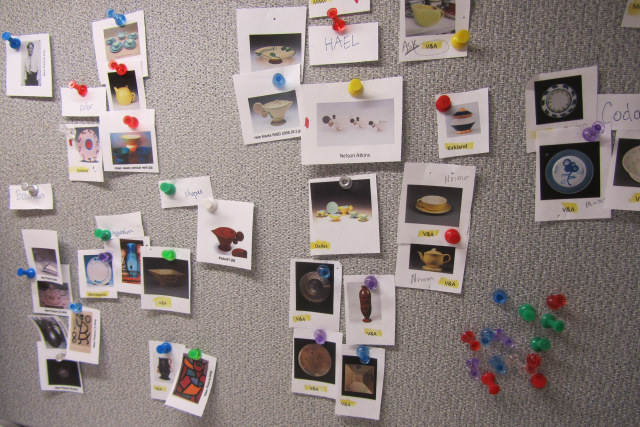

What Does It Mean To “Curate”?
Although I try very hard not to bring work home with me, sometimes (okay, most of the time) I can’t help it. I just love museums, and so I often find myself thinking about them after 5 p.m.
Read on: What Does It Mean To “Curate”? | Milwaukee Art Museum Blog
Change your thinking
The more radically you can change your thinking, the more radically you can change your life. — Bryant McGill
Source: mysimplereminders
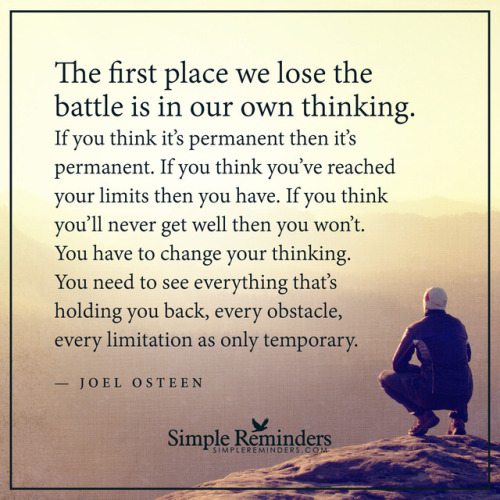
The first place we lose the battle is in our own thinking
“The first place we lose the battle is in our own thinking. If you think it’s permanent then it’s permanent. If you think you’ve reached your limits then you have. If you think you’ll never get well then you won’t. You have to change your thinking. You need to see everything that’s holding you back, every obstacle, every limitation as only temporary.” — Joel Osteen
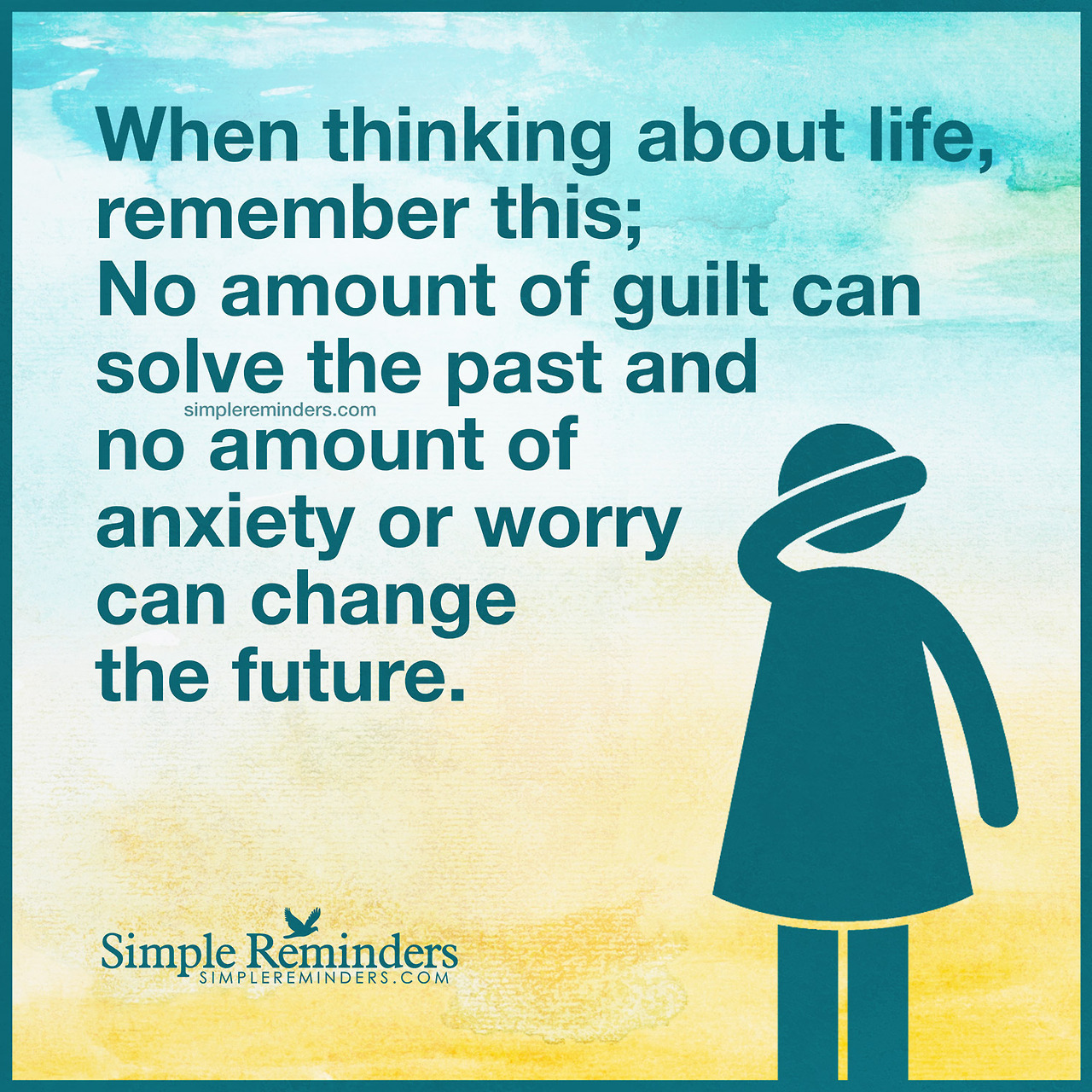
“When thinking about life, remember this; No amount of guilt can solve the past and no amount of anxiety or worry can change the future.” — Unknown Author
Source: mysimplereminders
When thinking about life
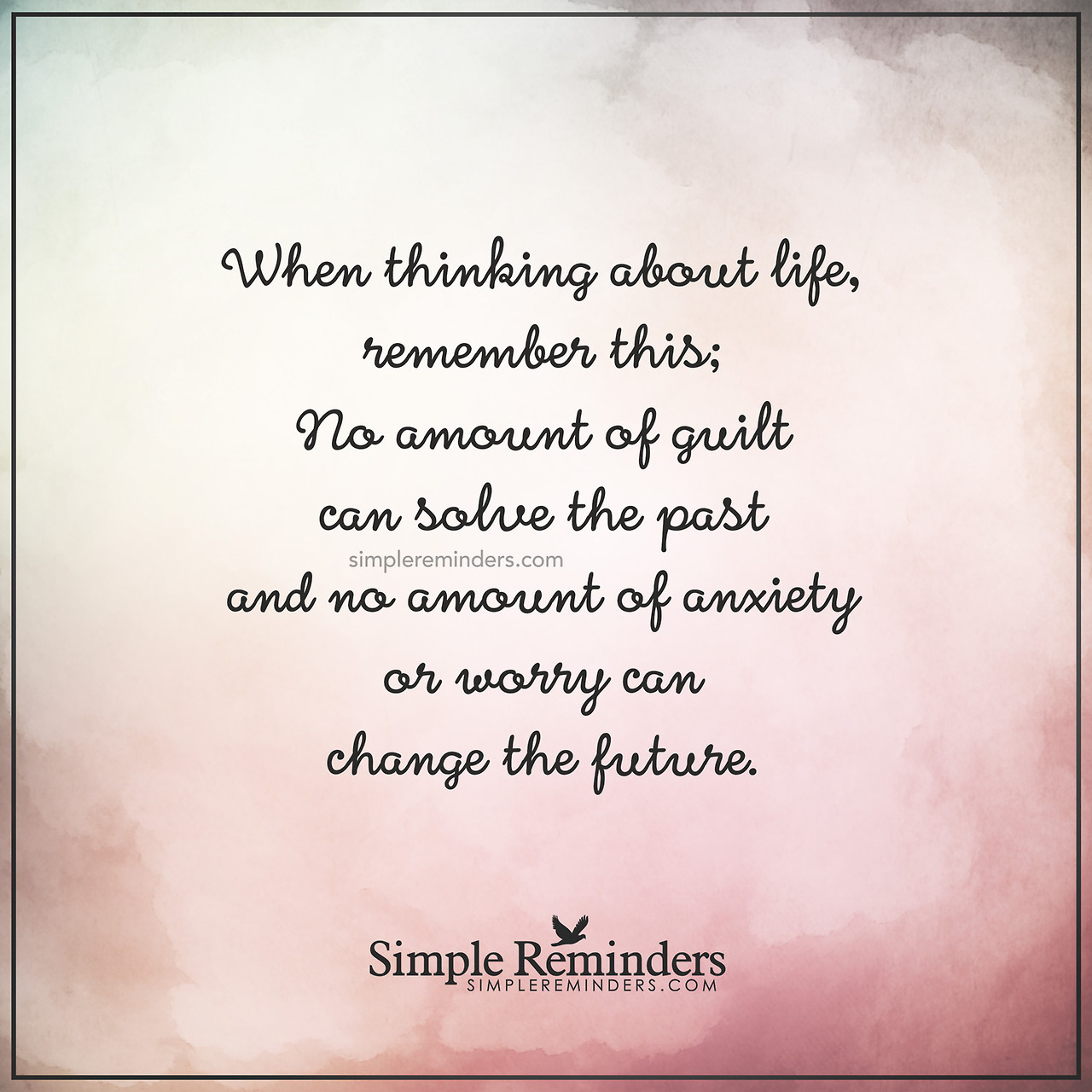
“When thinking about life, remember this; No amount of guilt can solve the past and no amount of anxiety or worry can change the future.” — Unknown Author
Source: mysimplereminders


You must be logged in to post a comment.