The universe dropped this in my inbox this morning…
I can’t say this is recommended reading because I haven’t read it yet, but I did like the podcast…
Thinks I find along the way

The universe dropped this in my inbox this morning…
I can’t say this is recommended reading because I haven’t read it yet, but I did like the podcast…

In this solo episode recorded on Election Day 2020, I talk directly to our wholehearted community about the practice that helps me when I’m feeling fearful, worried, or wobbly, and why this work is the foundation for true belonging: Brené on Strong Backs, Soft Fronts, and Wild Hearts

Seeing life with appreciation contributes to well-being. Source: The Importance of Appreciating the Simple Things in Life

Ice cream is delicious. But it’s also a direct line to daydreams and memories—of leisure, of afternoons in the sun, of the excitement you felt as a 5-year-old meeting the ice-cream truck as it rolled down your street. In 2017, the culture writer Matt Siegel noted an Austrian study that found that “only ice cream lowered the human startle response in men and women (at least when ingested by syringe), whereas chocolate and yogurt did not produce statistically significant outcomes across genders.” This suggests that the comfort of ice cream goes much deeper than “the physiological effects of sugar, fat, temperature, and perceived sweetness,” Siegel writes. “The phenomenon, it appears, is largely psychological.” The writer Margaret Visser argues that ice cream evokes two kinds of nostalgia: one for childhood memories, which recall that feeling of comfort, and the other for “Elsewhere”—summer vacations, beaches, whatever elsewhere means to the rememberer in question. The psychological benefits of ice cream were so ingrained in America’s consciousness by World War II that in 1945, the U.S. Navy spent $1 million to convert a barge into a floating ice-cream factory that was towed around the Pacific, distributing ice cream to ships so troops could enjoy it. Source: Why Is Ice Cream So Easy to Love?
Behold, the power of the cartoon to communicate…

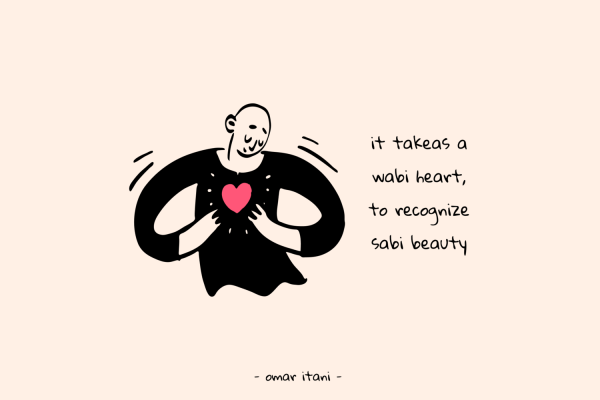
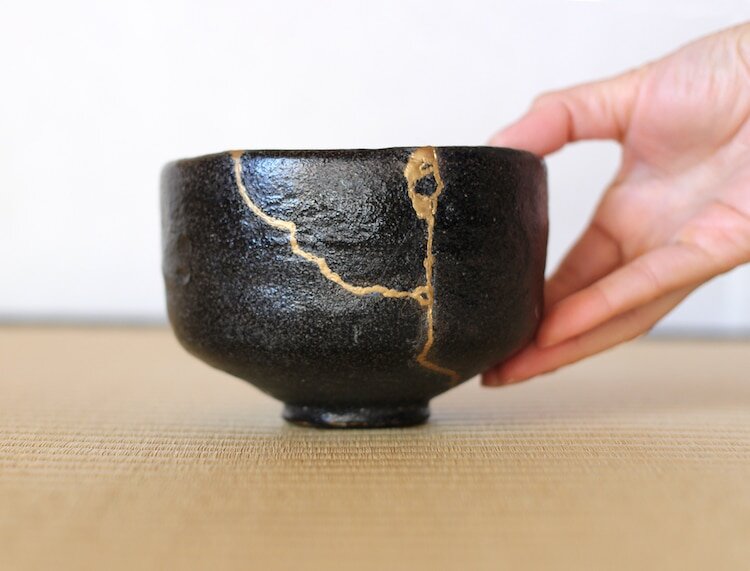
Wabi-sabi is a concept that motions us to constantly search for beauty in imperfection and accept the more natural cycle of life. It reminds us that all things including us and life itself, are impermanent, incomplete, and imperfect. Perfection, then, is impossible and impermanence is the only way. Go to the source: 5 Teachings From The Japanese Wabi-Sabi Philosophy That Can Drastically Improve Your Life — OMAR ITANI
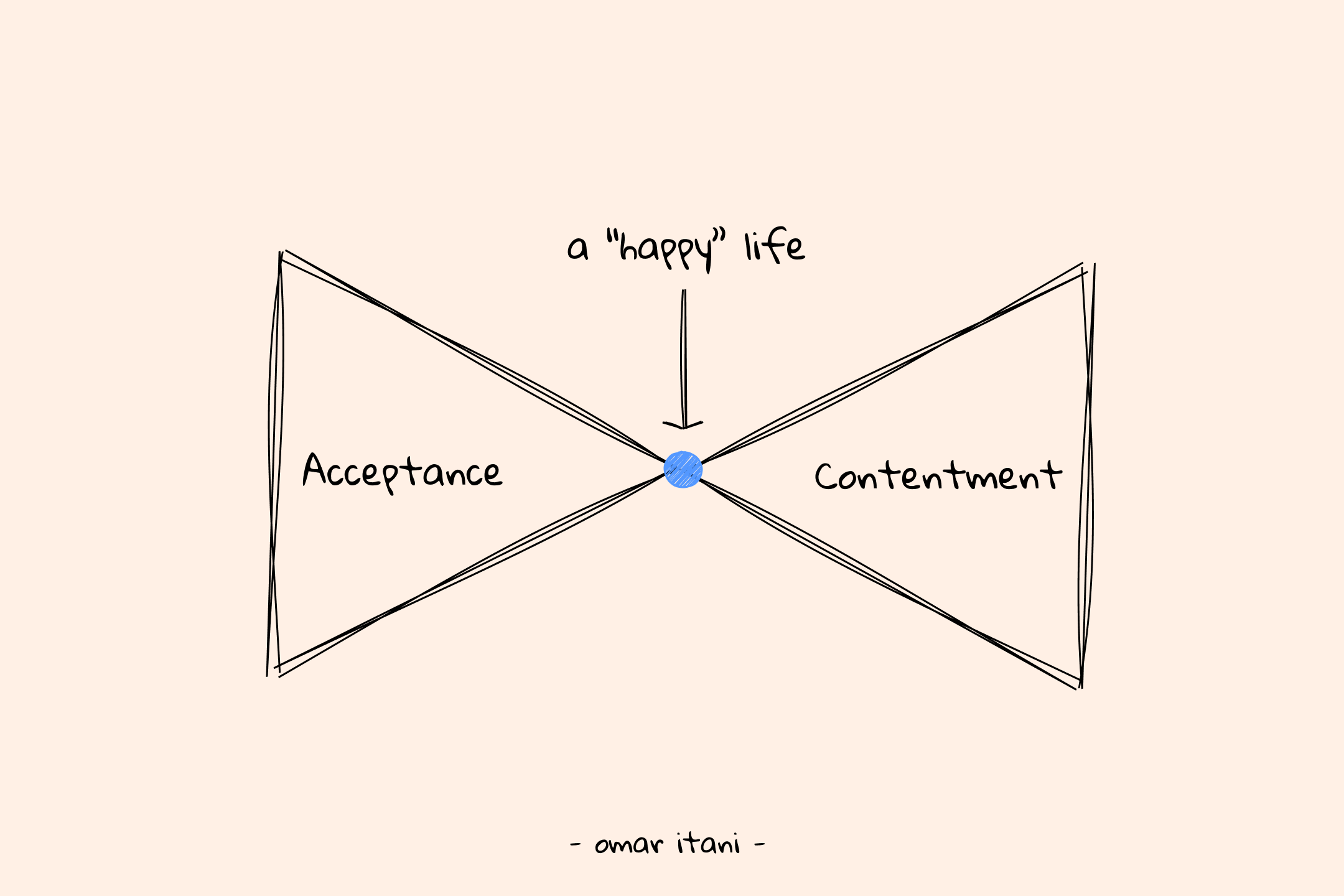

Are you tired? Stop “swimming” against life. Source: The Value of Effortless Action

Catherine Burns, artistic director at The Moth, shares what she has learned about the art of storytelling. Source: How to Break Free from the Stories We Tell Ourselves

For those of us who live our lives in the real world, there is one branch of philosophy created just for us: Stoicism. It’s a philosophy designed to make us more resilient, happier, more virtuous and more wise–and as a result, better people, better parents and better professionals. Source: What Is Stoicism? A Definition & 9 Stoic Exercises To Get You Started
Want to go deeper? Check out this summary of Marcus Aurelius’ Meditations…
Brian Johnson offer’s a great overview here but you have to create a free account…

Just because a thing is good doesn’t mean that you need more of it. “Lagom” teaches us to appreciate that “just enough” is all we need. Source: The Swedish philosophy of lagom: how “just enough” is all you need

If you can prevent your emotions from taking over in the face of stress, you can avoid a lot of regret and set a good example for others. Source: Never Freak Out

To be the same person at home as you publicly portray to others is a consistency not everyone achieves. Source: The Compliment I Most Want Said at My Funeral

Enjoy some encouraging words to inspire more simplicity in your life today. Go to the source: Inspiring Simplicity. Weekend Reads.
“From 1986 to 2011, Oprah Winfrey hosted The Oprah Winfrey Show. It was the highest rated talk show of all-time and familiar to nearly anyone who owned a television set in North America at that time.
Throughout the 1980s and 1990s, the “Queen of All Media” built a brand that stretched far beyond the television screen. She went on to become a billionaire, a well-regarded philanthropist, and a recipient of the Presidential Medal of Freedom. And as she was busy working toward these otherworldly accomplishments, Oprah relied on a simple habit: journaling.
Journaling is simply the act of thinking about your life and writing it down. That’s it. Nothing more is needed. But despite its simplicity, the daily journal has played a key role in the careers of many prolific people.
As you might expect, journaling is a favorite habit of many writers. From Mark Twain to Virginia Woolf, Francis Bacon to Joan Didion, John Cheever to Vladimir Nabokov. A journal was rarely far from any of these artists. Susan Sontag once claimed that her journal was where she “created herself.”
Journaling has been utilized by scores of brilliant thinkers and inventors. Charles Darwin. Marie Curie. Leonardo da Vinci. Thomas Edison. Albert Einstein. Similarly, leaders and politicians throughout history have kept journals in one form or another. People like Thomas Jefferson, Winston Churchill, and Marcus Aurelius. In the sporting world, athletes like Katie Ledecky, winner of multiple gold medals, and Eliud Kipchoge, the world record holder in the marathon, rely on journals to reflect on their daily workouts and improve their training.
Why have so many of history’s greatest thinkers spent time journaling? What are the benefits?”
Read on: The Surprising Benefits of Journaling One Sentence Every Day | James Clear
#simplicity https://t.co/f6i9g1l8hY #addtobuffer
— Bright, Shiny Objects (@brightshinytwts) August 18, 2018
#simplicity #addphoto pic.twitter.com/CWIpydCw0h
— Bright, Shiny Objects (@brightshinytwts) August 18, 2018

“While life brings you thrills and excitement, it also dispenses you with a fair share of puzzles and perplexity. You are perplexed when a good friend suddenly gives you a cold shoulder, worried when your boss speaks to you in a tone unusually stern, and anxious when your tour agent fails to pick you up in a foreign land. We tend to react when uncertainty arises; and often overreact. You can, as a matter of fact, try something quite different. When you are puzzled at what your see, do not stare hard. Instead, relax your mind and get your inner self to feel the thing. When you cannot figure out what you hear, do not struggle to listen. Rather, take a step back, and feel the vibration with a quiet mind. Let go of trying and open your mind to receive. When you allow your mind to receive, intricacy is given a chance to become simplicity; and the shapeless to palpable. It gets you see what you do not see and hear what you do not hear – moving you a step closer to reality. It brings the present back to you, enabling you to know what is actually happening. Do you have the patience to wait until your mud settles and the water is clear? “Do you have the patience to wait Till your mud settles and the water is clear? Can you remain unmoving Till the right action arises by itself?” Lao Tzu Tao Te Ching Chapter 15: Do you have the patience to wait till your mud settles – Tao Te Ching”
Daily Simplicity: 13 Habits That Will Make Your Life Lighter and Happier https://t.co/J9MLrXXYIW #blog pic.twitter.com/FSgMFnszlF
— Bright, Shiny Objects (@bsotweets) May 2, 2018
Excellent thoughts on productivity from Lolly Daskal!
As with any growth and expansion, becoming more productive doesn’t happen overnight. It takes consistent investment of time and commitment.
If you want to take yourself to the next level, you must be more productive.
To be more productive isn’t always easy — sometimes we need repeated reminders.
Here are seven powerful phrases that will make you more productive.
Repeat after me:
1. If not now, when?
When procrastination sets in and things start to pile up, it’s time to commit to a change. If anything is going to happen, it is up to you. The timing is up to you too, so choose to make it happen now.
2. I will rethink to regroup.
If you’re digging yourself into a hole, the first thing to remember — but sometimes the hardest — is to stop digging. Look around. Take a breath. Regroup, recalibrate your priorities, and regain control.
3. I will start with what is necessary.
Start by doing what’s necessary; then do what’s possible; and before you know it, you may find yourself doing the impossible. Try to start each day with a series of small but necessary tasks to fuel the rest of your morning.
4. I will simplify what is complicated.
It’s simplicity of intention that gives us consistent productivity. Many of us overthink and make things more complicated than they need to be. Ask yourself how much you really need to be doing.
5. I will focus on what matters.
Obstacles are what you see when you take your eyes off your goal. Stay focused on the actions that will lead toward your successful productive future, and don’t let yourself get distracted with busywork.
6. I will make this happen no matter what.
It’s always possible to dodge responsibilities, but it’s much more difficult to dodge the consequences. It was Winston Churchill who defined success as stumbling from failure to failure with no loss of enthusiasm. A river cuts through rocks not because of its power, but because it never gives up, the persistence over time is its power.
7. I will control my mind before my mind controls me.
If your thoughts are filled with negativity, not much can get done. But positivity fuels productivity. Success comes to those who have positive energy. Positivity will not only boost your productivity, it will help you make the best of what you do and how you do it.
The bottom line: When it comes to boosting productivity, if it’s really important for you to be willing do whatever it takes and to keep reminding yourself with phrases to make it happen. The time to make that commitment, though, is today.
Go to the source for more: 7 Powerful Phrases to Boost Your Productivity | Inc.com
 Source:
  Bright, shiny objects!
You must be logged in to post a comment.