See on Scoop.it – Living Business

In a world of hate, love is the revolution. ~Bryant McGill #revolution #hate #occupy #revolutionary
See on simplereminders.com
Curious Curation
See on Scoop.it – Living Business
In a world of hate, love is the revolution. ~Bryant McGill #revolution #hate #occupy #revolutionary
See on simplereminders.com

 Melody Beattie has a loooong post on New Year‘s mindfulness. Here’s an excerpt:
I began to list the qualities or skills I applied that helped me go from loser to a winner at something I knew absolutely nothing about when I started. I didn’t take me long to see that these are identical to the qualities that help me succeed at anything I want to do. While these ideas aren’t revolutionary, it’s easy to forget that each is within our power to do.
- Realize I’m where I am on purpose, even if it’s an accident. Sometimes the most trivial things that happen to us are more important than we believe. When I look for the big, the exciting and the momentous – I leave empty-handed. When I surrender to the present moment, understanding the sheer magnificence of each of these in my life – even those that suck — and then follow that with gratitude, my wheelbarrow overflows. (I use that expression because my entire life, I wanted a wheelbarrow and now I have one, a good one I won one for not much money at all at DealDash and because “cups overflowing” has become a cliché, something writers should avoid.) I really am thrilled about having a wheelbarrow and in my most far-fetched moments of self-love, couldn’t justify buying one.
Full story at: SO THAT’S HOW IT GOES | Melody Beattie.

 C’mon, world! We’re not all imperialist dogs — some of us are quite nice actually! Here are some things you might want to know about our Independence Day:
On July Fourth, Americans eat hot dogs and apple pie, watch fireworks, and go swimming. But what are we really celebrating? Standard answers to this question are that we are celebrating our independence or the signing of the Declaration of Independence. Well, yes and no.
Here are 10 things you might not know about our America’s Independence Day.” Get the answer here: 10 Things You Might Not Know About America’s Independence | All Pro Dad.
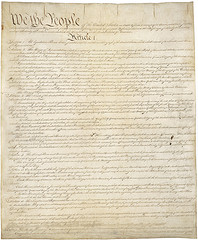
New Hampshire becomes the ninth and last necessary state to ratify the Constitution of the United States, thereby making the document the law of the land.
By 1786, defects in the post-Revolutionary War Articles of Confederation were apparent, such as the lack of central authority over foreign and domestic commerce. Congress endorsed a plan to draft a new constitution, and on May 25, 1787, the Constitutional Convention convened at Independence Hall in Philadelphia. On September 17, 1787, after three months of debate moderated by convention president George Washington, the new U.S. constitution, which created a strong federal government with an intricate system of checks and balances, was signed by 38 of the 41 delegates present at the conclusion of the convention. As dictated by Article VII, the document would not become binding until it was ratified by nine of the 13 states.
Beginning on December 7, five states–Delaware, Pennsylvania, New Jersey, Georgia, and Connecticut–ratified it in quick succession. However, other states, especially Massachusetts, opposed the document, as it failed to reserve undelegated powers to the states and lacked constitutional protection of basic political rights, such as freedom of speech, religion, and the press. In February 1788, a compromise was reached under which Massachusetts and other states would agree to ratify the document with the assurance that amendments would be immediately proposed. The Constitution was thus narrowly ratified in Massachusetts, followed by Maryland and South Carolina. On June 21, 1788, New Hampshire became the ninth state to ratify the document, and it was subsequently agreed that government under the U.S. Constitution would begin on March 4, 1789. In June, Virginia ratified the Constitution, followed by New York in July.
On September 25, 1789, the first Congress of the United States adopted 12 amendments to the U.S. Constitution–the Bill of Rights–and sent them to the states for ratification. Ten of these amendments were ratified in 1791. In November 1789, North Carolina became the 12th state to ratify the U.S. Constitution. Rhode Island, which opposed federal control of currency and was critical of compromise on the issue of slavery, resisted ratifying the Constitution until the U.S. government threatened to sever commercial relations with the state. On May 29, 1790, Rhode Island voted by two votes to ratify the document, and the last of the original 13 colonies joined the United States. Today the U.S. Constitution is the oldest written constitution in operation in the world.” via U.S. Constitution ratified — History.com This Day in History — 6/21/1788.

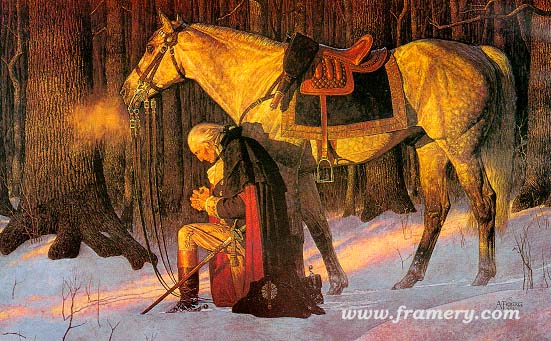
On this day in 1775, George Washington, who would one day become the first American president, accepts an assignment to lead the Continental Army.
Washington had been managing his family’s plantation and serving in the Virginia House of Burgesses when the second Continental Congress unanimously voted to have him lead the revolutionary army. He had earlier distinguished himself, in the eyes of his contemporaries, as a commander for the British army in the French and Indian War of 1754.
Born a British citizen and a former Redcoat, Washington had, by the 1770s, joined the growing ranks of colonists who were dismayed by what they considered to be Britain’s exploitative policies in North America. In 1774, Washington joined the Continental Congress as a delegate from Virginia. The next year, the Congress offered Washington the role of commander in chief of the Continental Army.
After accepting the position, Washington sat down and wrote a letter to his wife, Martha, in which he revealed his concerns about his new role. He admitted to his “dear Patcy” that he had not sought the post but felt “it was utterly out of my power to refuse this appointment without exposing my Character to such censures as would have reflected dishonour upon myself, and given pain to my friends.” He expressed uneasiness at leaving her alone, told her he had updated his will and hoped that he would be home by the fall. He closed the letter with a postscript, saying he had found some of “the prettiest muslin” but did not indicate whether it was intended for her or for himself.
On July 3, 1775, Washington officially took command of the poorly trained and under-supplied Continental Army. After six years of struggle and despite frequent setbacks, Washington managed to lead the army to key victories and Great Britain eventually surrendered in 1781. Due largely to his military fame and humble personality, Americans overwhelmingly elected Washington their first president in 1789.


On this day in 1777, during the American Revolution, the Continental Congress adopts a resolution stating that “the flag of the United States be thirteen alternate stripes red and white” and that “the Union be thirteen stars, white in a blue field, representing a new Constellation.”
The national flag, which became known as the “stars and stripes,” was based on the “Grand Union” flag, a banner carried by the Continental Army in 1776 that also consisted of 13 red and white stripes. According to legend, Philadelphia seamstress Betsy Ross designed the new canton for the flag, which consisted of a circle of 13 stars and a blue background, at the request of General George Washington. Historians have been unable to conclusively prove or disprove this legend.
With the entrance of new states into the United States after independence, new stripes and stars were added to represent new additions to the Union. In 1818, however, Congress enacted a law stipulating that the 13 original stripes be restored and that only stars be added to represent new states.
On June 14, 1877, the first Flag Day observance was held on the 100th anniversary of the adoption of the American flag. As instructed by Congress, the U.S. flag was flown from all public buildings across the country. In the years after the first Flag Day, several states continued to observe the anniversary, and in 1949 Congress officially designated June 14 as Flag Day, a national day of observance.” via Continental Congress chooses national flag — History.com This Day in History — 6/14/1777.
“”Soul Brother #1,”The Godfather of Soul,” “Mr. Dynamite,” “Sex Machine,” “The Minister of the New New Super Heavy Funk.” These are some of the names by which the world would eventually know James Joseph Brown, Jr., the revolutionary musical figure who was born on this day in 1933. The story Brown himself would often tell is that he appeared stillborn when he first came into the world, but that an aunt attending his birth managed to breathe life into him.
Long before he changed the course of 20th-century popular music and crowned himself “The Hardest Working Man in Show Business,” little James Brown may well have been the hardest working boy in Augusta, Georgia, where he was sent to live with his Aunt Honey Washington at the age of six. He’d spent the previous several years with his father, James, Sr., who scraped out a meager living selling pine tar to the local turpentine factory in the woods of Barnwell County, South Carolina, just down the Savannah River from Augusta. James’s mother had left with another man when James was only four, and while Aunt Honey would play something of a maternal role for James, the fact that she ran a brothel and sold moonshine for a living made for anything but a traditional upbringing.” via James Brown is born — History.com This Day in History — 5/3/1933.

September 11, 1777, the Chaplain of Congress, Patrick Allison, brought to the attention of the Continental Congress that Revolutionary War had interrupted trade with the King’s authorized printers in England, thereby causing a shortage of the King James Authorized Version of the Bible, commonly used in education. A Continental Congress committee passed the motion: “The use of the Bible is so universal and its importance so great that your committee refers the above to the consideration of Congress…The Committee recommends that Congress will order the Committee of Commerce to import 20,000 Bibles from Holland, Scotland, or elsewhere, into the different parts of the States of the Union. Whereupon it was resolved accordingly to direct said Committee of Commerce to import 20,000 copies of the Bible.” That same day, the British won the Battle of Brandywine, forcing Washington’s troops to retreat to Valley Forge. In a panic, the Continental Congress evacuated Philadelphia before action could be taken on the resolution. Five years later, the Continental Congress again responded to the shortage of Bibles by authorizing the printing of America’s first English language Bible, which had been described in a petition as: “a neat edition of the Holy Scriptures for the use of schools.” Congress, on September 10, 1782, selected the publisher of The Pennsylvania Magazine, Robert Aitken, who died JULY 15, 1802, for the printing: “Resolved, That the United States in Congress assembled highly approve the pious and laudable undertaking of Mr. Aitken, as subservient to the interest of religion, as well as an influence in the progress of arts in this country, and being satisfied from the above report of his care and accuracy in the execution of the work, they recommend this edition of the Bible to the inhabitants of the United States, and hereby authorize him to publish this recommendation. – Charles Thomson, Secretary.” Copies of this Bible are with the American Bible Society’s Museum of Biblical Art in New York, and Houston Baptist University’s Dunham Bible Museum.
On this day in 1517, the priest and scholar Martin Luther approaches the door of the Castle Church in Wittenberg, Germany, and nails a piece of paper to it containing the 95 revolutionary opinions that would begin the Protestant Reformation.
In his theses, Luther condemned the excesses and corruption of the Roman Catholic Church, especially the papal practice of asking payment—called “indulgences”—for the forgiveness of sins. At the time, a Dominican priest named Johann Tetzel, commissioned by the Archbishop of Mainz and Pope Leo X, was in the midst of a major fundraising campaign in Germany to finance the renovation of St. Peter’s Basilica in Rome. Though Prince Frederick III the Wise had banned the sale of indulgences in Wittenberg, many church members traveled to purchase them. When they returned, they showed the pardons they had bought to Luther, claiming they no longer had to repent for their sins.
Luther’s frustration with this practice led him to write the 95 Theses, which were quickly snapped up, translated from Latin into German and distributed widely. A copy made its way to Rome, and efforts began to convince Luther to change his tune. He refused to keep silent, however, and in 1521 Pope Leo X formally excommunicated Luther from the Catholic Church. That same year, Luther again refused to recant his writings before the Holy Roman Emperor Charles V of Germany, who issued the famous Edict of Worms declaring Luther an outlaw and a heretic and giving permission for anyone to kill him without consequence. Protected by Prince Frederick, Luther began working on a German translation of the Bible, a task that took 10 years to complete.
Hmmm. I wonder if my pastor will mention this today…


 Bright, Shiny Objects!
comments