Are there parallels between stoicism and buddhism?

Yes, there are many parallels between Stoicism and Buddhism. Both philosophies emphasize the importance of virtue, wisdom, and living in accordance with nature. They also both teach that suffering is caused by attachment to material things and that the way to achieve happiness is to let go of these attachments.

Here are some of the key parallels between Stoicism and Buddhism:

  • The nature of suffering: Both Stoics and Buddhists believe that suffering is a natural part of life. However, they differ in their understanding of the cause of suffering. Stoics believe that suffering is caused by our attachment to material things and our judgments about external events. Buddhists believe that suffering is caused by our ignorance of the true nature of reality.
  • The path to happiness: Both Stoics and Buddhists believe that the path to happiness is to live in accordance with nature. Stoics believe that this means living a life of virtue, wisdom, and self-control. Buddhists believe that this means living a life of compassion, mindfulness, and detachment.
  • The importance of virtue: Both Stoics and Buddhists believe that virtue is essential for a happy and fulfilling life. Stoics define virtue as living in accordance with nature, while Buddhists define it as living a life of compassion, wisdom, and mindfulness.
  • The importance of wisdom: Both Stoics and Buddhists believe that wisdom is essential for a happy and fulfilling life. Stoics define wisdom as the ability to see things as they really are, while Buddhists define it as the ability to see the interconnectedness of all things.
  • The importance of meditation: Both Stoics and Buddhists practice meditation as a way to cultivate virtue, wisdom, and detachment. Stoics use meditation to train their minds to focus on the present moment and to control their emotions. Buddhists use meditation to train their minds to see the true nature of reality and to let go of attachments.

Despite their similarities, Stoicism and Buddhism also have some important differences. For example, Stoics believe in the existence of free will, while Buddhists believe that everything is determined by karma. Stoics also believe in the existence of a soul, while Buddhists believe that there is no such thing as a soul.

Despite these differences, Stoicism and Buddhism are both valuable philosophies that can offer us guidance on how to live a happy and fulfilling life.

What Marcus Aurelius Learned from His Father About Being a Good Man

Another excellent post from Ryan Holiday, this time about the things that Marcus Aurelius learned from his father:

A wholistic approach to human growth

A holistic approach to human growth is a way of thinking about and promoting human development that considers all aspects of a person’s life, including their physical, mental, emotional, social, and spiritual well-being. This approach recognizes that all of these aspects are interconnected and that a healthy and fulfilling life requires attention to all of them.

There are many different ways to promote holistic human growth. Some common approaches include:

  • Physical health: Eating a healthy diet, getting regular exercise, and getting enough sleep are all important for physical health.
  • Mental health: Maintaining positive relationships, practicing relaxation techniques, and seeking professional help if needed are all important for mental health.
  • Emotional health: Learning how to express and manage emotions in a healthy way is important for emotional health.
  • Social health: Building strong relationships with family and friends, participating in community activities, and learning how to resolve conflict are all important for social health.
  • Spiritual health: Finding meaning and purpose in life, developing a personal belief system, and connecting with something larger than oneself are all important for spiritual health.

A holistic approach to human growth can be beneficial for people of all ages. It can help people to live longer, healthier, and happier lives. It can also help people to cope with challenges and to reach their full potential.

Credit Rafaello Palandri

Here are some additional tips for promoting holistic human growth:

  • Set goals for yourself in all areas of your life. This will help you to stay motivated and focused on your overall well-being.
  • Make time for self-care. This could include activities such as reading, spending time in nature, or getting a massage.
  • Be kind to yourself. Everyone makes mistakes. Don’t dwell on your failures. Instead, learn from them and move on.
  • Find a support system. Having people who care about you and who can offer you support is essential for your emotional and social well-being.
  • Be open to change. Life is constantly changing. Be willing to adapt to new challenges and opportunities.

By taking a holistic approach to human growth, you can create a life that is full of meaning, purpose, and joy.

Unwinding Anxiety with Awareness

Tara Brach talks with Dr. Judson Brewer about how to unwind anxiety.


How to Stop Putting Your Foot in Your Mouth

Live with integrity by speaking with care to yourself and others. Source: How to Stop Putting Your Foot in Your Mouth

The Struggles of Sons of Narcissistic Mothers

The article “The Struggles of Sons of Narcissistic Mothers” explores the profound impact narcissistic parenting has on children, particularly sons. It discusses how such parenting styles can lead to emotional challenges, including feelings of inadequacy, self-doubt, and difficulties in forming healthy relationships. The author emphasizes the importance of understanding these dynamics to help affected individuals navigate their emotional landscapes and develop healthier self-worth. The article serves as a guide for recognizing and addressing the long-term effects of growing up with a narcissistic mother.

Source: The Struggles of Sons of Narcissistic Mothers

4 Tricks to Calm the Mind

Science-based tips and strategies to help you create more calm. Source: 4 Tricks to Calm the Mind

New Research Dispels 3 Myths About Loneliness

Debunking misconceptions about loneliness and people who feel the loneliest. Source: New Research Dispels 3 Myths About Loneliness

We’re Hard-Wired to Crave Nature

Too little green in your life? You’re not alone. But can science prove that you’re hardwired to crave nature? Source: We’re Hard-Wired to Crave Nature – Mindful

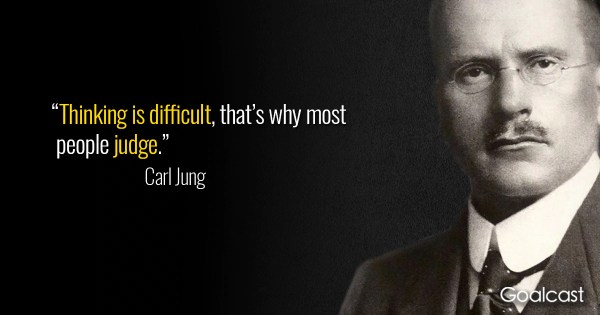
The Shadow; Carl Jung’s Warning to The World

Who was Carl Jung and why should we study him and his work?

Who was Carl Jung and why is it important to study him and his work? Go to the source: Who was Carl Jung and why should we study him and his work?

Why Is Ice Cream So Easy to Love?

Ice cream is delicious. But it’s also a direct line to daydreams and memories—of leisure, of afternoons in the sun, of the excitement you felt as a 5-year-old meeting the ice-cream truck as it rolled down your street. In 2017, the culture writer Matt Siegel noted an Austrian study that found that “only ice cream lowered the human startle response in men and women (at least when ingested by syringe), whereas chocolate and yogurt did not produce statistically significant outcomes across genders.” This suggests that the comfort of ice cream goes much deeper than “the physiological effects of sugar, fat, temperature, and perceived sweetness,” Siegel writes. “The phenomenon, it appears, is largely psychological.” The writer Margaret Visser argues that ice cream evokes two kinds of nostalgia: one for childhood memories, which recall that feeling of comfort, and the other for “Elsewhere”—summer vacations, beaches, whatever elsewhere means to the rememberer in question. The psychological benefits of ice cream were so ingrained in America’s consciousness by World War II that in 1945, the U.S. Navy spent $1 million to convert a barge into a floating ice-cream factory that was towed around the Pacific, distributing ice cream to ships so troops could enjoy it. Source: Why Is Ice Cream So Easy to Love?

Ancient Wisdom Meets Modern Therapy

Six ways to harness the power of stoicism and cognitive behavioral therapy. Source: Ancient Wisdom Meets Modern Therapy

What is the connection between Hermann Hesse and Hegel’s Dialectic?

There is a connection between Hermann Hesse’s work and Hegel’s dialectic in the sense that Hesse was influenced by Hegelian philosophy and dialectical thinking, and this influence can be seen in Hesse’s novels, particularly in his exploration of themes such as self-discovery and personal transformation.

Hegelian dialectic is a philosophical concept that involves the resolution of opposing ideas or contradictions through a process of thesis, antithesis, and synthesis. This process of dialectical thinking involves the transformation of ideas and the search for a higher truth or resolution.

In Hesse’s novels, such as “Demian” and “Steppenwolf,” we see a similar exploration of opposing ideas and the search for a higher truth. Hesse’s characters often undergo a process of transformation, struggling with their own contradictions and ultimately finding a synthesis or resolution through their experiences.

Continue reading “What is the connection between Hermann Hesse and Hegel’s Dialectic?”

What was the connection between Carl Jung and Hermann Hesse?

Carl Jung and Hermann Hesse had a significant connection as both were influential figures in the field of psychology and philosophy during the 20th century.

Hermann Hesse was a renowned German-Swiss writer who explored spiritual and existential themes in his works, while Carl Jung was a Swiss psychiatrist and founder of analytical psychology, which emphasizes the importance of the individual psyche and the exploration of the unconscious.

Jung’s work greatly influenced Hesse’s writing, particularly his interest in exploring the inner workings of the human mind and the concept of individuation. Hesse’s novels, such as “Demian” and “Steppenwolf,” reflect Jungian themes and ideas, including the integration of the shadow self and the importance of finding meaning and purpose in life.

Continue reading “What was the connection between Carl Jung and Hermann Hesse?”

What 20 Seconds of Hugging Can Do for You

Read the article: What 20 Seconds of Hugging Can Do for You

Merton, Eckhart & the Search for Our True & Deeper Selves

Human beings have to dig and work at finding our deep and true self.  If we do not, we live superficially out of fear or greed or addiction and set ourselves up for false idols and lies.  For someone else’s expectations for us which can set us up for dictatorship of many kinds. Indeed, it may be… Read More » Merton, Eckhart & the Search for Our True & Deeper Selves, continued – Daily Meditations with Matthew Fox

Why are INFJ and ENFJ Men So Rare?

“The ENFJ and INFJ men who do exist can take comfort in knowing that their unique set of caring and nurturing traits are needed badly everywhere.”

Why are INFJ and ENFJ Men So Rare?

Research tells us that just 2.8 percent of all men are either INFJs or ENFJs. This is a super-low percentage, revealing that the NFJ set of personality characteristics is only rarely measured among men who take the Myers-Briggs personality typing system test. Source: Why are INFJ and ENFJ Men So Rare?

Why Stoicism Is More Relevant Than You Might Think

Good read! “The notions that Stoicism is only for times of great difficulty, or that Stoics repress emotions, are two of the most common myths about Stoicism, as properly understood. Many people confuse Stoicism, the philosophy (upper-case S) with stoicism (lower-case s), or having a “stiff upper lip.” In this post I will describe the 3 pillars of real Stoicism, as opposed to fake or lower-case s stoicism. I hope that you will agree that Stoicism is well worth consideration, alongside other practices such as mindfulness and exercise, as part of a good mental health regime, to help us be happier, and to become better versions of ourselves.” Source: Why Stoicism Is More Relevant Than You Might Think | Psychology Today

Only you can tell yourself to giddyup!

Behold, the power of the cartoon to communicate…

Upgrade Your Mindset

Learn to accept the realities of life with ancient wisdom. Source: Upgrade Your Mindset

Start a Blog at WordPress.com.

Up ↑