Detachment means “freedom from emotion”

The Way You Make Me Feel
The Way You Make Me Feel (Photo credit: Wikipedia)

Letting someone else’s behavior determine how we feel at every turn is irresponsible. Our emotions should be determined by us, not by someone else. But no doubt we have spent years confusing the boundaries that separate us from other people. Whether at work or at home, we have too often let someone else’s “insanity” affect how we behave and how we feel.

At first, it may seem insensitive not to react to others’ problems or negative behavior. We may fear they’ll think we simply don’t care about them. Learning that it is far more caring to let other people handle their own lives takes time and patience. But with practice, it will begin to feel comfortable. In fact, in time it will feel freeing and wonderful.

I will work on detachment today, knowing that in time the rewards will come. 

Waste of time?

Failbook – Funny Facebook Status Messages ( Failbooking ) via If a Bro Works Out in a Gym and Nobody’s Around to See It, Does He Even Exist?.

Honesty

Melody Beattie writes:

“Admitted to God, to ourselves, and to another human being the exact nature of our wrongs.” Step Five of Al Anon

Talking openly and honestly to another person about our­selves, in an attitude that reflects self-responsibility, is critical to recovery.

It’s important to admit what we have done wrong to others and to ourselves. Verbalize our beliefs and our behaviors. Get our resentments and fears out in the open.

That’s how we release our pain. That’s how we release old beliefs and feelings. That’s how we are set free. The more clear and specific we can be with our Higher Power, our­selves, and another person, the more quickly we will experience that freedom.

Step Five is an important part of the recovery process. For those of us who have learned to keep secrets from ourselves and others, it is not just a step — it is a leap toward becom­ing healthy.

Today I will remember that it’s okay to talk about the issues that bother me. It is by sharing my issues that I will grow beyond them. I will also remember that it’s okay to be selective about those in whom I confide. I can trust my instincts and choose someone who will not use my disclosures against me, and who will give me healthy feedback.” via June 5: Honesty.

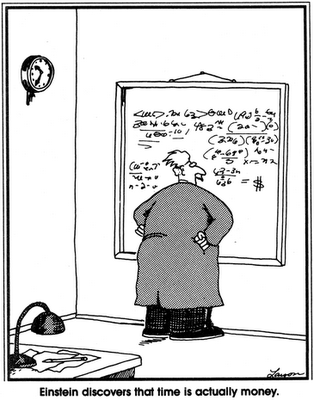
Time is $

Anderson Layman’s Blog via Great moments………………..

Are You Running Away from Yourself?

“No matter where you go, there you are.” Confucius. Get more here: Are You Running Away from Yourself? | Tiny Buddha: Wisdom Quotes, Letting Go, Letting Happiness In.

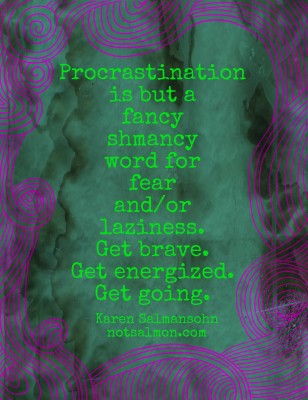
A reminder for procrastinators…

notsalmon via A reminder for procrastinators….

How to Make Your Summer Memorable

Escape Adulthood with Kim & Jason. Get more here: How to Make Your Summer Memorable.

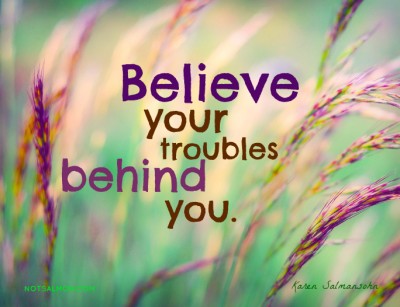
Believe your troubles behind you.

notsalmon via Believe your troubles behind you..

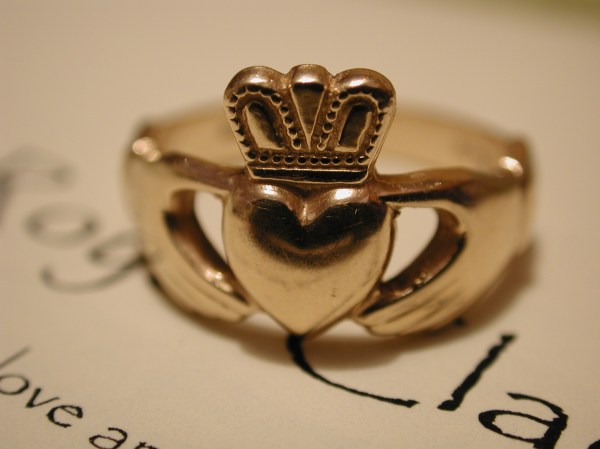
Claddagh rings

English: Gold Royal Claddagh Ring Français : C...

The Claddagh ring (Irish: fáinne Chladaigh) is a traditional Irish ring given as a token of friendship, love, or marriage. The design and customs associated with it originated in the Irish fishing village of Claddagh, located just outside the city of Galway. The ring was first produced in the 17th century, though elements of the design date to the late Roman period.

The Claddagh’s distinctive design features two hands clasping a heart, and usually surmounted by a crown. The elements of this symbol are often said to correspond to the qualities of love (the heart), friendship (the hands), and loyalty (the crown). A “Fenian” Claddagh ring, without a crown, was later designed in Dublin. Claddagh rings, with or without the crown (most commonly with a crown), have come to denote pride in Irish heritage, while continuing to be symbols of love or marriage.

Claddagh rings are commonly used as friendship rings, but are most commonly used as engagement/wedding rings. In Ireland, America and other places, the Claddagh is handed down mother-to-daughter or grandmother-to-granddaughter. The way that a Claddagh ring is worn on the hand is usually intended to convey the wearer’s relationship status:

On the right hand with the point of the heart toward the fingertips, the wearer is single and may be looking for love. (This is most commonly the case when a young woman has first received the ring from a relative, unless she is already engaged).

On the right hand with the point of the heart toward the wrist, the wearer is in a relationship, or their heart has been “captured”.

On the left hand with the point of the heart toward the fingertips, the wearer is engaged.

On the left hand with the point of the heart toward the wrist, the wearer is married.

There are other localised variations in the traditions involving the hand and the finger upon which the Claddagh is worn. Folklore about the ring is relatively recent, not ancient, with “very little native Irish writing about the ring”.

The Claddagh ring belongs to a group of European finger rings called “fede rings”. The name “fede” comes from the Italian phrase mani in fede (“hands [joined] in faith” or “hands [joined] in loyalty”). These rings date from Roman times, when the gesture of clasped hands was a symbol of pledging vows, and they were used as love and marriage rings in medieval and Renaissance Europe.

Fede rings are cast in the form of two clasped hands, symbolizing faith, trust, or “plighted troth”. The Claddagh ring is a variation on the fede ring, while the hands, heart, and crown motif was used in England in the early 18th century.” via Claddagh ring – Wikipedia, the free encyclopedia.

My wife and I have chosen this ring as an intentional symbol of our desire for friendship, love and loyalty above all else…

Splitting

Split face photo

Splitting creates instability in relationships, because one person can be viewed as either personified virtue or personified vice at different times, depending on whether he or she gratifies the subject’s needs or frustrates them. This along with similar oscillations in the experience and appraisal of the self lead to chaotic and unstable relationship patterns, identity diffusion, and Other-directed mood swings. Consequently, the therapeutic process can be greatly impeded by these oscillations, because the therapist too can become the target of splitting. To overcome the negative effects on treatment outcome, constant interpretations by the therapist are needed.[1]

Splitting contributes to unstable relationships and intense emotional experiences, something that has been noted especially with narcissists. Alexander Abdennur writes in his book on narcissistic personality disorder, Camouflaged Aggression, that “[t]hrough this splitting mechanism, the narcissist can suddenly and radically shift his allegiance. A trusted friend can become an enemy; the partner may become an adversary.”[2]

Treatment strategies have been developed for individuals and groups based on dialectical behavior therapy, and for couples.[3] There are also self help books on related topics such as mindfulness and emotional regulation that have been helpful for individuals who struggle with the consequences of splitting.[4]” Get more here: Splitting (psychology) – Wikipedia, the free encyclopedia.

Conceive, believe, achieve…

Quin is a winner…

…no matter how you look at it. Did we think that Quin would win state as a sophomore? No. Did we hope for a better outcome? Yes. In the end, we’re grateful Quin had the opportunity to go and see what it was all about…

We hope that he’ll use this as a learning experience that will fuel him through long winter months in the weight room and propel him to a better outcome at State 2.0 next spring. Let the preparation begin!

Just in case you missed this for 6/4/2012

  1. “The trouble with most of us is that we’d rather be ruined by praise than saved by criticism.”

    – Norman Vincent Peale

  2. “With forgiveness, your victim identity dissolves, and your true power emerges – the power of presence. Instead of blaming the darkness you bring in the light.”

    – Eckhart Tolle

  3. “When you are inspired by some great purpose, some extraordinary project, all your thoughts break their bonds: Your mind transcends limitations, your consciousness expands in every direction, and you find yourself in a new, great, and wonderful world. Dormant forces, faculties and talents become alive, and your discover yourself to be a greater person by far than you ever dreamed yourself to be.”

    – Patanjali

  4. Todd’s tweets…

Ford brochure, 1955

Retronaut via Ford brochure, 1955.

Enter The Real Dragon

“To hell with circumstances. I create opportunities.” Bruce Lee. Get more here: Enter The Real Dragon – I Am Bruce Lee | FinerMinds.

Follow Your Bliss!

The Daily Love via Visual Inspiration: Follow Your Bliss!.

ParadoxicalProductivity: The First 14


Nicholas Bate writes…

“1: Send Less E-Mail. Get less e-mail.

2: Tidy Up. Gain clarity.

3: Fewer People. Faster, focused and easier.

4: Use A Wall Planner Not Your Phone To Plan. The future, not just today.

5: You KNOW the problem: (1) Wake Up (2) Look Up (3) Get Real

6: Stand Up. Gain determination.

7: You Don’t Need To Be Nice. Polite, loyal and on time definitely. But this ain’t kindergarten.

8: Put the work in at the start. For an easy life later on.

9: Take A Break. It activates higher brain where the best work is always done.

10: Start at the end. Start with the result you want and work backwards.

11: Work Hard To Maintain The Relationship. Productive business needs trusting relationships.

12: Make Small, Big. And Big, Small. Get perspective/get a plan.

13: Know Your Rhythm. Follow your rhythm rather than just the Siren’s call of pure urgency.

14: Re-claim your unique advantage. Stop & Think.

The detail here.

Bonus 1:  Professionalism 101

Bonus 2: How To Be Brilliant

Bonus 3: How To Be Brilliant at Business” via ParadoxicalProductivity, Director’s Cut: The First 14.

Lessons…

Anderson Layman’s Blog via Lessons…………….

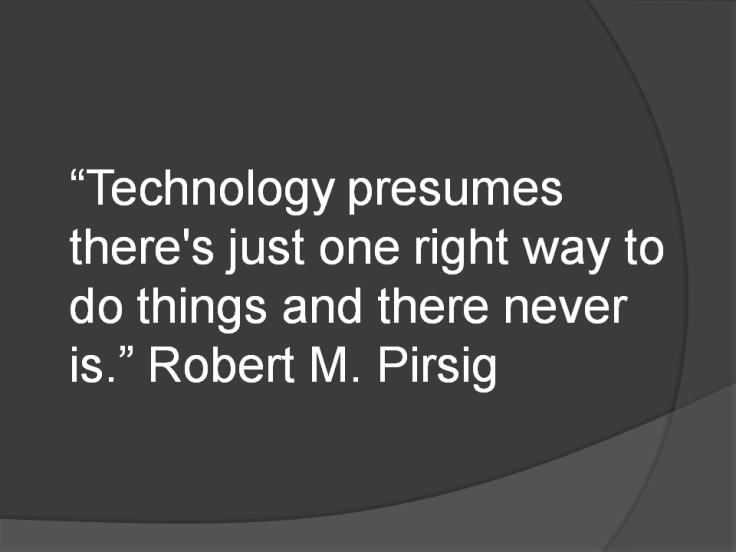
Technology

Growing from Pain

“Life’s challenges are not supposed to paralyze you; they’re supposed to help you discover who you are.” Bernice Johnson Reagon. Get more here: Growing from Pain and Using it to Discover Who You Are | Tiny Buddha: Wisdom Quotes, Letting Go, Letting Happiness In.

6 Reasons We Need Each Other

“Remember, we all stumble, every one of us. That’s why it’s a comfort to go hand in hand.” Emily Kimbrough. Get more here: 6 Reasons We Need Each Other: The Power of Community | Tiny Buddha: Wisdom Quotes, Letting Go, Letting Happiness In.

Start a Blog at WordPress.com.

Up ↑