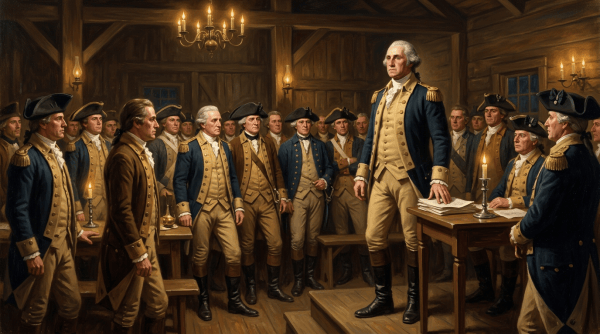
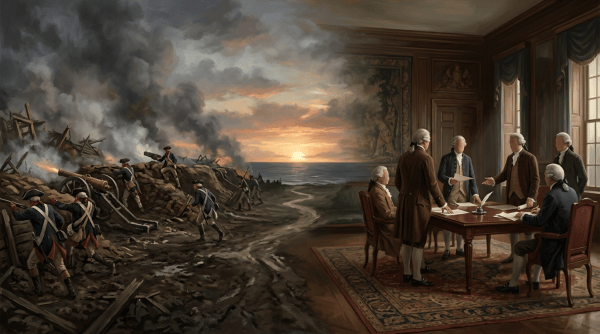
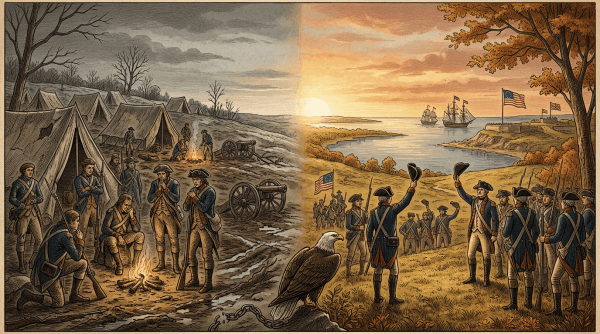
In March 1783, George Washington faced what may have been the most dangerous moment of his public life.
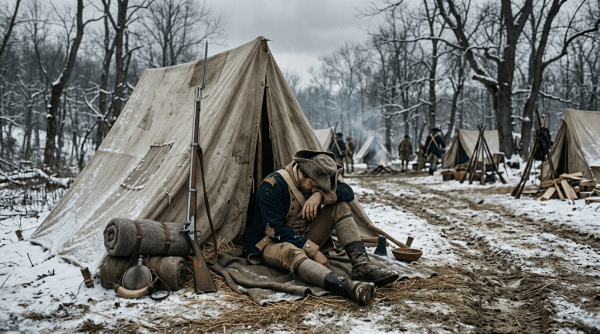
The Revolutionary War was essentially won, but the American experiment was anything but secure. Officers of the Continental Army were furious. Congress had failed to pay them what they were owed. Some were openly discussing whether the army should use its power to force Congress to act.
Washington walked into a meeting of those officers at Newburgh, New York.
He argued against military intervention. Then, near the end of his remarks, he pulled out a letter and struggled to read it. Washington reached into his pocket for a pair of spectacles.
“Gentlemen,” he told them, “you must pardon me, for I have not only grown gray but almost blind in the service of my country.”
Men who had endured years of war with him reportedly wept.
The conspiracy collapsed.
There are few moments that better illustrate George Washington’s conception of leadership. He possessed enormous power at that moment. His officers revered him. The national government was weak. History offered plenty of examples of victorious generals who had converted military glory into political power.
Washington chose restraint.
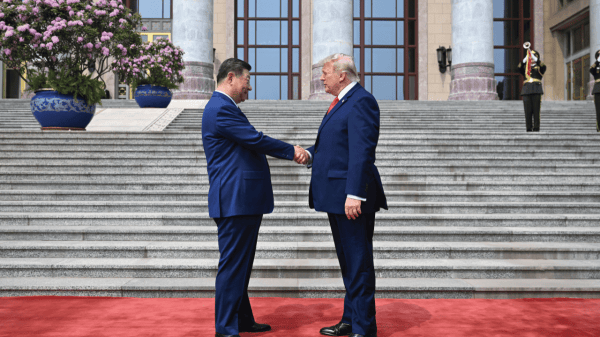
Nearly two and a half centuries later, Donald Trump offers Americans an extraordinarily different conception of strength.
And whatever one thinks of Trump politically, that contrast is worth examining.
Because this isn’t really a story about whether George Washington was a good man and Donald Trump is a bad one.
It is a story about what Americans believe character has to do with power.


 Bright, Shiny Objects!