When the People Building AI Say the Odds Are Unacceptable

A startling headline made the rounds this week: Anthropic researchers say AI could cause human extinction by 2030. It sounds like the conclusion of a new scientific paper. It isn’t. But the real story may be more unsettling.

Jacob Coxon, a researcher who worked on pretraining at both OpenAI and Anthropic, resigned from Anthropic and accused the frontier labs of racing toward self-improving superintelligence without adequate safeguards. Two current Anthropic safety researchers publicly supported the substance of his warning. Evan Hubinger, Anthropic’s alignment science lead, put his own estimate at greater than a 10 percent chance that AI could “kill all humans” within the next decade.

That is not a corporate forecast, a consensus prediction, or a deadline stamped by science. It is a personal probability estimate about an uncertain future. Still, when people closest to the machinery tell us the risk is not zero—or even remotely close to zero—the responsible response is neither panic nor a dismissive eye roll. It is attention.

Continue reading “When the People Building AI Say the Odds Are Unacceptable”


When AI Gets Smarter, What Happens to Our Own Intelligence?

We are pouring extraordinary amounts of money, electricity, infrastructure, and ambition into making artificial intelligence more capable. But how much are we investing in the people expected to use it wisely?

That imbalance sits at the heart of a provocative new essay in Psychology Today by Cornelia C. Walther. Her concern is not simply that AI is accelerating. It is that the human abilities AI is meant to extend—attention, memory, judgment, imagination, language, and agency—can weaken when assistance quietly becomes substitution.

That distinction matters. A tool can help us reach farther while still leaving us responsible for the reaching. But when the tool routinely remembers, drafts, interprets, and reasons for us, our role can shrink from creating thought to merely approving output.

Continue reading “When AI Gets Smarter, What Happens to Our Own Intelligence?”

The AI Singularity May Be a Human Failure, Not a Machine Triumph

We keep talking about the AI singularity as if it were a weather system gathering beyond the horizon: immense, mysterious, and headed our way whether we like it or not.

But what if the decisive event is not a machine crossing some invisible threshold? What if it is a human one—our decision to sprint toward a future we do not fully understand because everyone else seems to be sprinting too?

That is the unsettling question at the center of “The Singularity Is Not What It Seems,” a new episode of Galaxy Brain. Host Charlie Warzel draws on reporting with The Atlantic staff writer Matteo Wong to examine an AI race powered not only by technical ambition, but also by hubris, greed, and the oldest Silicon Valley anxiety of all: fear of missing out.

Continue reading “The AI Singularity May Be a Human Failure, Not a Machine Triumph”

GPT-6 Astra May Be AGI. Trust Is the Real Test.

There is a moment in every technological story when the argument shifts from What can it do? to What are we willing to let it do? OpenAI’s GPT-6 Astra may be that moment.

Axios reports that OpenAI president Greg Brockman called Astra a “generational leap” and said he personally believes the company has reached artificial general intelligence. The label will be debated for months. The practical change may arrive sooner: Astra is designed to operate inside software and complete complex professional tasks, not merely explain how a human might complete them.

Continue reading “GPT-6 Astra May Be AGI. Trust Is the Real Test.”

Don’t Ban AI in Schools—Teach Students to Think With It

The most important question isn’t whether students use AI. It’s what kinds of thinking schools still require them to do.

Coral PS Hoh argues that educators should divide the work deliberately: let AI extend students’ capacity while holding them accountable for critical, creative, strategic, and ethical judgment. That matters because literacy and math proficiency were already weak before generative AI—and increasingly specialized knowledge makes breakthrough connections harder to see.

A blanket ban may protect familiar assignments. It won’t prepare students for the problems they’ll inherit. Schools should teach students to question AI, justify their choices, expose errors, and use the tool without surrendering the thinking.

Read: “Ban on Students’ AI Use and the Bigger Problem Facing Us All” by Coral PS Hoh, Ph.D., in Psychology Today.

New Work Foundation: Helping Young Workers Get Hired in The AI Age

New Work Foundation is a registered 501(c)(3) nonprofit dedicated to equipping young workers in America with the tools, information, and skills to navigate an AI-reshaped economy.


The New Work Foundation offers various tools and resources for job seekers, including:

  • Career Workshops: Interactive sessions focused on building skills and understanding the job market.
  • Resume and Cover Letter Templates: Ready-to-use templates that help applicants present themselves effectively.
  • Interview Preparation Resources: Guides and tips to enhance interview skills and confidence.
  • Online Courses: Educational content on essential skills and industry trends relevant to today’s job market.
  • Networking Opportunities: Platforms to connect with industry professionals and mentors.
  • Job Boards: Listings of available positions tailored for young workers entering the job market.
  • Webinars and Podcasts: Insights from experts on navigating the modern workforce.

Perhaps the most useful tool on the website is a ‘field report‘ which is “an AI job explorer that helps grads understand the best careers for their major. Enter your field of study and explore roles by compensation, job listings, and AI exposure — so they can make smarter decisions about where to focus their energy.These resources aim to empower young workers to successfully secure employment in an AI-driven economy.”

Source: New Work Foundation – Nonprofit helping young workers get hired in the AI age

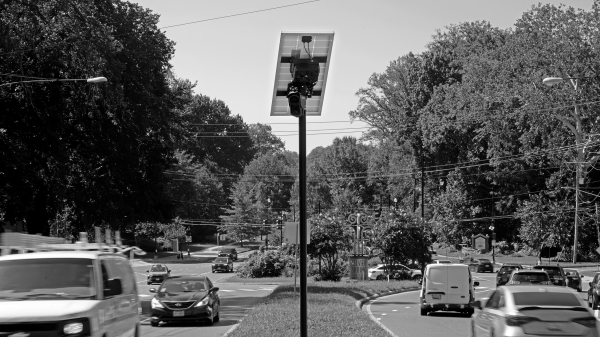
Flock Safety Cameras: Privacy Backlash and Rising Public Outrage

The article “Why the Flock Backlash Has Gotten So Intense” from The Atlantic explores the growing public outcry against the use of surveillance technology, particularly Flock Safety’s automated license plate reader cameras. It delves into the reasons behind the backlash, including concerns over privacy, data security, and the potential for misuse of the technology. As communities grapple with the implications of such surveillance tools, the discussion highlights the balance between safety and civil liberties.

To gain deeper insights into this critical issue and understand the different perspectives involved, I encourage you to read the full article: Why the Flock Backlash Has Gotten So Intense

The Question AI Can’t Answer for You

An inconvenient 12-hour trip made me rethink what we should—and shouldn’t—outsource to AI.

In the article “The Question AI Can’t Answer for You,” the author explores the limitations of artificial intelligence in addressing personal and complex human decisions. Through anecdotes and insights, it becomes clear that while AI can assist with tasks and data processing, it lacks the capability to navigate the intricacies of human emotions and subjective experiences. This thought-provoking piece encourages readers to reflect on what aspects of their lives should remain solely under human control.

To dive deeper into this compelling discussion and uncover the nuances of AI’s role in our decision-making, be sure to read the original article: The Question AI Can’t Answer for You

Start a Blog at WordPress.com.

Up ↑