What Makes “All Things Must Pass” Great

Some songs try to convince me that everything will be all right. George Harrison’s “All Things Must Pass” does something wiser: it reminds me that nothing stays the way it is.

Not happiness. Not heartbreak. Not youth, success, disappointment, friendship, love, grief—or even the darkest night.

That may sound melancholy, but the song has never felt depressing to me. I hear it as an act of consolation. George does not deny loss or decorate it with easy optimism. He simply places it inside a larger truth: whatever I am experiencing now will change. The difficult part of life is accepting that this applies to the things I treasure as well as the things I want to escape.

That emotional balance is one reason the song is so great. It mourns and reassures me at the same time.

Continue reading “What Makes “All Things Must Pass” Great”

Star Trek Day 2026: Picard, Janeway, and the Courage to Lead

Star Trek turns 60 today

That is a remarkable lifespan for a television idea—and an even more remarkable lifespan for a vision. For six decades, Star Trek has insisted that curiosity is stronger than fear, that cooperation is not naïve, and that humanity can become better than it is now.

I have enjoyed many corners of that universe, but when I think about what Star Trek means to me, I keep coming back to two captains: Jean-Luc Picard and Kathryn Janeway.


They are very different leaders. Picard is the diplomat-philosopher, measured and deliberate. Janeway is the scientist-explorer, warm but formidable, forced to improvise thousands of light-years from home. One commands the Federation flagship with the weight of civilization behind him. The other must preserve that civilization when almost everything familiar has fallen away.

Together, they offer two versions of the same enduring lesson: character matters most when the map runs out.

Continue reading “Star Trek Day 2026: Picard, Janeway, and the Courage to Lead”

Nice Start to the Notre Dame Season Tonight…

…this might have been my favorite story to come out of the game!

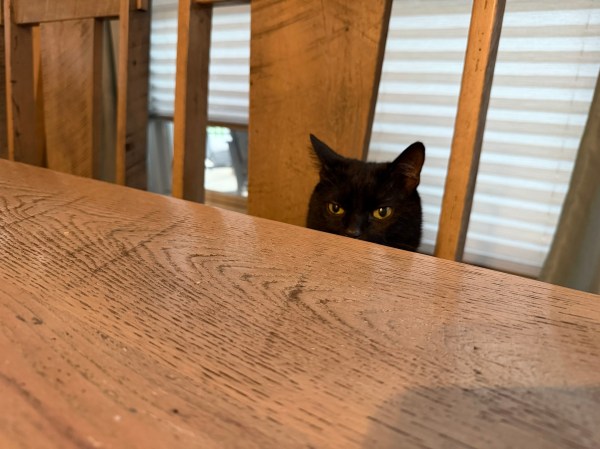
What About Cats?

Cats’ intelligence and sociability are difficult to test, but new findings are increasing our understanding.

Cats are often misunderstood when it comes to their intelligence and sociability. Recent studies have provided new insights that challenge common perceptions, revealing complexities in feline behavior and cognition. These findings highlight the unique ways in which cats interact with their environment and humans, prompting a reevaluation of their capabilities.

To delve deeper into this intriguing subject, we encourage you to read the original article What About Cats?. It’s a fascinating exploration that sheds light on the true nature of our feline companions!

On Reading and Sex

Maria Popova’s essay explores Italo Calvino’s wonderfully sensual idea that reading and lovemaking are variations of the same intimate act: two separate selves attempting to understand, enter, and transform one another.

Drawing from Calvino’s 1979 novel If on a winter’s night a traveler, Popova begins with the observation that neither stories nor relationships have tidy beginnings. Every book opens in the middle of something, just as every lover arrives carrying an unseen library of memories, habits, wounds, desires, and previous encounters.

For Calvino, intimacy becomes a kind of reading. We interpret another person through touch, expression, laughter, hesitation, appetite, memory, and countless small details—those “poor alphabets” through which one human being tries to comprehend another. Sometimes we read closely; sometimes we skim, linger, reread, lose our place, or become unexpectedly captivated by a seemingly insignificant detail.

But this reading is not linear. It loops, pauses, repeats, accelerates, wanders, and occasionally gets lost. Although physical intimacy may seem to move toward a climax, Calvino suggests that its deeper meaning lies in the strange private dimension it creates: a time and space outside ordinary measurement, where experience becomes unrepeatable.

The essay’s most important insight is that genuine intimacy does not require two people to dissolve into one. Even at the moment of greatest union, each remains a complete and distinct self. Love’s beauty lies in this paradox: we become most profoundly connected not by erasing our separateness, but by bringing our whole selves—our entire histories, imaginations, and bodies—to the encounter.

In short: we read the way we love, and we love the way we read—curiously, imperfectly, hungrily, always hoping that another person might open a world we could never have entered alone.

Read “Italo Calvino on Reading and Sex” at The Marginalian

Life Is Mostly Annoying Little Things

“There’s a Russian word for the everyday stuff that eats us alive. Learning it changed how I think about the daily tedium.”

In the article “Life Is Mostly Annoying Little Things,” the author explores the concept of how everyday irritations can accumulate and disrupt our peace of mind. The discussion revolves around a unique Russian term that encapsulates these mundane frustrations, shedding light on the profound impact they have on our lives. By acknowledging and understanding these irritants, we can shift our perspective and approach daily challenges with resilience. To gain deeper insights into this phenomenon and learn how to navigate life’s annoyances, be sure to read the original article: Life Is Mostly Annoying Little Things

Here’s the podcast episode:

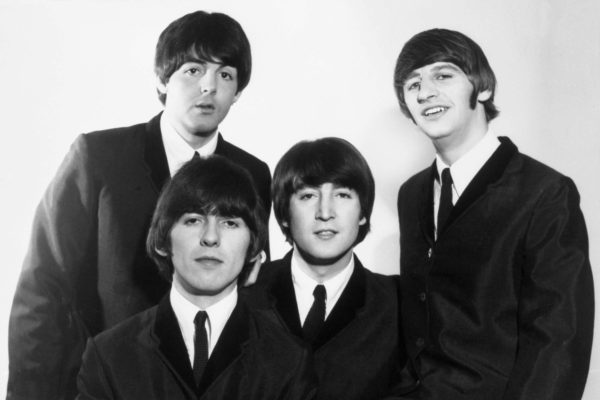
Now and Then; the Beatles Drop Their ‘last Song’

In case you haven’t heard, the Beatles dropped their ‘last song’ yesterday. “Peter Jackson has detailed the “overwhelming” task of creating the music video for Now and Then.” Go to the source if you’re interested in knowing how Paul and Ringo used AI to complete the lost, last song: George Harrison’s son moved to tears by Now and Then


Start a Blog at WordPress.com.

Up ↑