When I was in college, I was shocked to learn there were actually German POWs in the United States. This video (which you must watch on YouTube) goes into great detail on the topic.
A brief summary…
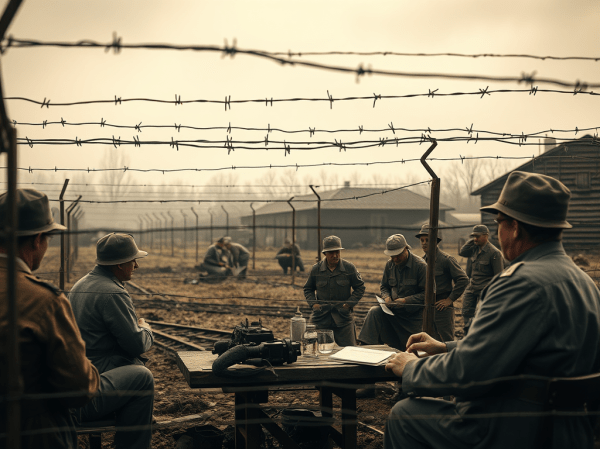
During World War II, the United States held over 425,000 German prisoners of war (POWs) in various camps across the country. Following the capture of German soldiers, they were transported to the U.S. as part of an agreement with the Allies. The conditions in these camps varied; some were well-kept, with prisoners allowed to work on local farms or in factories, while others were stricter. Many German POWs formed friendships with their American captors, and some even chose to remain in the U.S. after the war ended. The legacy of these POWs includes a complex interplay of wartime policies, cultural exchange, and post-war integration.
You will never convince me that there never has been nor will there ever be another Thomas Müller. Here are just a few of the heartfelt tributes worth watching as he ends his 25+ year career with FC Bayern Munich at the end of the 2025 season…
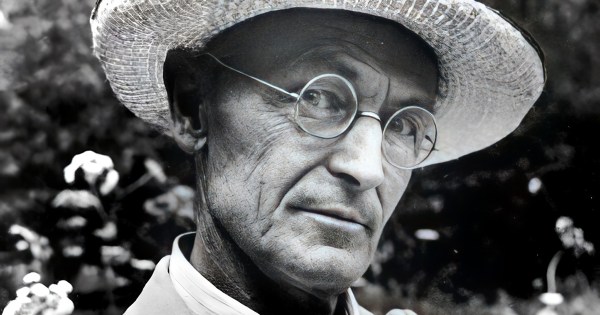
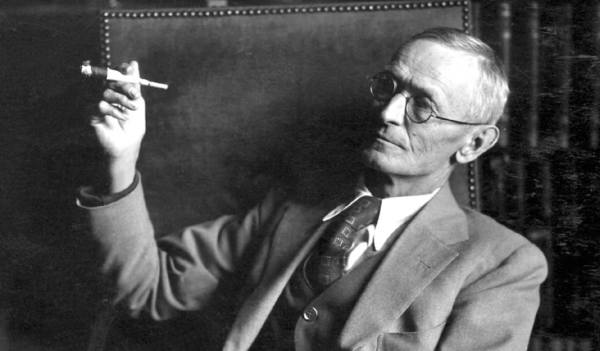
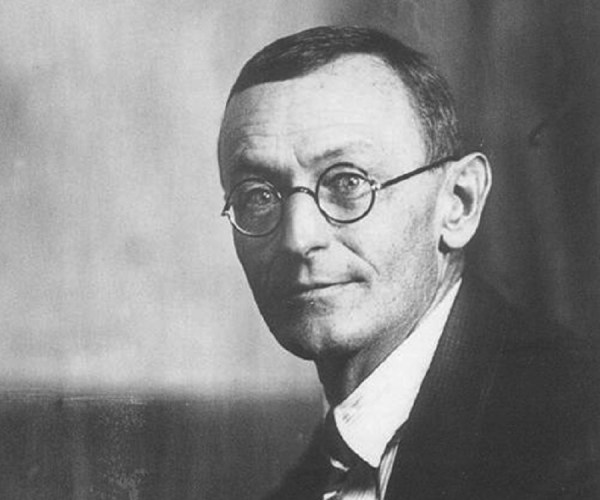
Today is the birthday of my favorite author Hermann Hesse. Who?
Hermann Hesse: A Comprehensive Biography
Early Life and Background
Hermann Hesse was born on July 2, 1877, in Calw, a small town in the Black Forest region of Germany. He came from a family of missionaries and was influenced by the cultural and theological environment of his upbringing. His father, Eugen Hesse, was a German-Swiss missionary, and his mother, Hermannine, was the daughter of a prominent German family. This mixture of cultural backgrounds and the strong influence of religion would play a significant role in shaping Hesse’s literary themes.
Thomas Müller: The Raumdeuter’s Reign – An Analytical Career Retrospective
1. Introduction: Thomas Müller – The Raumdeuter Who Conquered Football
In the intricate tapestry of modern football, few threads are as unique, enduring, and decorated as that woven by Thomas Müller. He is not merely a footballer; he is a phenomenon, an enigma wrapped in relentless effectiveness. Müller is the self-proclaimed “Raumdeuter” – the space interpreter 1 – a player whose genius lies not in dazzling dribbles or thunderous strikes, but in an almost preternatural understanding of space, timing, and tactical intelligence. His career, spent almost entirely under the banner of FC Bayern Munich and the German national team, stands as a testament to a different kind of footballing greatness, one built on consistency, adaptability, and an extraordinary haul of silverware that places him among the most decorated German footballers in history.3
Today marks a significant milestone in the football world as Thomas Müller steps onto the pitch for his 500th career game. This celebrated German forward, known for his remarkable versatility and tactical intelligence, has established himself as one of the most iconic players in modern football. He is only the 13th professional footballer to accomplish this amazing feat and only 4 of the 13 have done it with the same team like Müller…
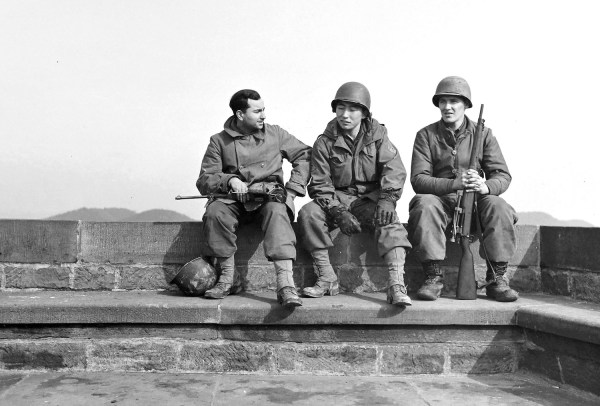
Archival images from the last weeks of World War II, taken by an American Army combat photographer during a push across eastern France into southern Germany.
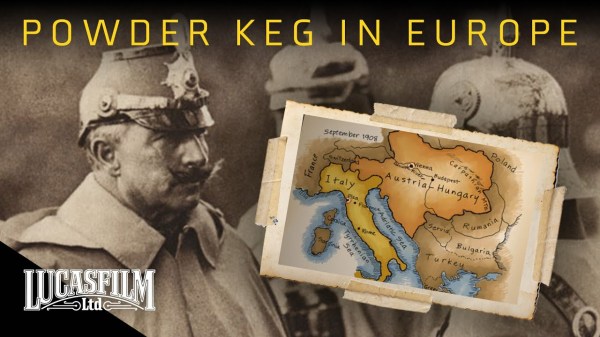
The assassination of Archduke Franz Ferdinand[a] was one of the key events that led to World War I. Archduke Franz Ferdinand of Austria, heir presumptive to the Austro-Hungarian throne, and his wife, Sophie, Duchess of Hohenberg, were assassinated on 28 June 1914 by Bosnian Serb student Gavrilo Princip. They were shot at close range while being driven through Sarajevo, the provincial capital of Bosnia and Herzegovina, formally annexed by Austria-Hungary in 1908. Princip was part of a group of six Bosnian assassins together with Muhamed Mehmedbašić, Vaso Čubrilović, Nedeljko Čabrinović, Cvjetko Popović and Trifko Grabež coordinated by Danilo Ilić; all but one were Bosnian Serbs and members of a student revolutionary group that later became known as Young Bosnia. The political objective of the assassination was to free Bosnia and Herzegovina of Austria-Hungarian rule and establish a common South Slav (“Yugoslav”) state. The assassination precipitated the July Crisis which led to Austria-Hungary declaring war on Serbia and the start of World War I. The assassination team was helped by the Black Hand, a Serbian secret nationalist group; support came from Dragutin Dimitrijević, chief of the military intelligence section of the Serbian general staff, as well as from Major Vojislav Tankosić and Rade Malobabić, a Serbian intelligence agent. Tankosić provided bombs and pistols to the assassins and trained them in their use. The assassins were given access to the same clandestine network of safe-houses and agents that Malobabić used for the infiltration of weapons and operatives into Austria-Hungary.” Source: Assassination of Archduke Franz Ferdinand – Wikipedia
If you find this interesting, you might like this book…
“Rock Me Amadeus” is a song recorded by Austrian musician Falco for his third studio album, Falco 3 (1985). The single was made available for physical sale in 1985 in German-speaking Europe, through A&M. “Rock Me Amadeus” was written by Falco along with Dutch music producers Bolland & Bolland. To date, the single is the only German language song to peak at number one on the Billboard Hot 100, which it did on 29 March 1986.[5]
It topped the singles charts on both sides of the Atlantic. It was Falco’s only number one hit in both the United States and the United Kingdom, despite the artist’s popularity in his native Austria and much of Europe.
I love staying at German hotels like the H2 Hotel Wien Schönbrunn where they serve a full German breakfast buffet. It’s a great way to start a day of heavy tourism!
“A typical German Breakfast is coffee and various juices, German crusty rolls, jam, jelly, wurst and cheese platter and soft boiled eggs.”
In general, we noticed that Austrians (and Europeans) in general eat more whole foods and are fitter than Americans — yes, I know that’s a gross overgeneralization but I think we have a lot to learn in the US.
Since you won’t find Hitler plaques and signs in Vienna here is your covert guide to learning about the Nazi Fuhrer when in Wien.
“In 1908, Adolf Hitler shared a small room in a flat in Stumpergasse 31 in Mariahilf (sixth district) with his childhood friend August Kubizek. After Hitler had used up his family inheritance he was forced to leave the flat and became temporarily homeless. Every now and then he would use the homeless shelter in the 12th district of Meidling before renting an inexpensive room in a large B&B for males (Männerheim).
While you can’t access the flat it’s worth visiting the area to get an idea of the place Hitler once called home. On a pragmatic note, combine it with a visit to the Imperial Furniture Collection (aka Hapsburgs Museum of Furniture), at 20-25 min walking distance.” Source: Hitler in Vienna: Uncovering The Führer And Nazi Vienna
Did you know that there were German POWs all over the United States during WWII? It’s true — there was even a famous German literary movement called Die Gruppe 47 that started in the camps. I regret you have to click the link and go to YouTube to listen…
During World War II, approximately 425,000 German prisoners of war (POWs) were held in the United States. These POWs were housed in various camps across the country, often in rural areas. Conditions in the camps were generally humane, with POWs receiving food, shelter, and work opportunities. Many participated in agricultural labor, helping to alleviate labor shortages on American farms.
While in captivity, some German POWs engaged in cultural activities, leading to movements like Die Gruppe 47, which fostered literary and artistic expression among inmates. The presence of these POWs highlighted the complexities of wartime experiences, as they formed a unique part of American history, bridging cultural exchanges between captors and captives. Their stories reflect themes of resilience, adaptation, and the human spirit during tumultuous times.
Today is the the 146th anniversary of Hermann Hesse’s birth. Is he still relevant today? I believe he is for a number of reasons. His novels and stories explore themes that are still relevant, such as:
The search for meaning and purpose in life
The conflict between the individual and society
The nature of good and evil
The importance of personal growth and development
The relationship between the material and spiritual worlds
Hesse’s writing is also characterized by its lyrical beauty and its insights into the human condition. His novels are often read as coming-of-age stories, but they also offer wisdom and guidance to readers of all ages.
In addition, Hesse’s work has been praised for its relevance to the modern world. His novels often deal with issues such as alienation, isolation, and the loss of traditional values. These are all issues that we still face today, and Hesse’s work can help us to understand and cope with them.
Here are some specific examples of why Hesse’s work is relevant today:
The search for meaning and purpose in life. Hesse’s novels often feature characters who are searching for meaning and purpose in their lives. This is a question that many people still ask themselves today, and Hesse’s work can offer insights into the search for meaning.
The conflict between the individual and society. Hesse’s novels often explore the conflict between the individual and society. This is a conflict that is still relevant today, as we see people struggling to find their place in a world that is often seen as being hostile to individuality.
The nature of good and evil. Hesse’s novels often explore the nature of good and evil. This is a question that has been asked by philosophers and theologians for centuries, and Hesse’s work offers a unique perspective on this age-old question.
The importance of personal growth and development. Hesse’s novels often emphasize the importance of personal growth and development. This is a message that is still relevant today, as we see people seeking to improve themselves and become the best versions of themselves.
The relationship between the material and spiritual worlds. Hesse’s novels often explore the relationship between the material and spiritual worlds. This is a question that has been asked by mystics and religious leaders for centuries, and Hesse’s work offers a unique perspective on this complex issue.
His novels are often read as coming-of-age stories, but they also offer wisdom and guidance to readers of all ages. If you are looking for a writer who can help you to understand yourself and the world around you, then Hermann Hesse may be a good place to start.
You can read one of his most beloved poems here and hear him read it to you in his own voice.
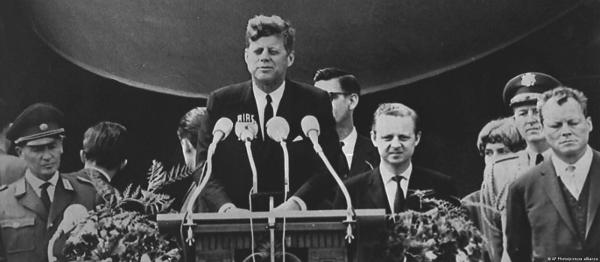
“During the Cold War, 60 years ago, John F. Kennedy sparked hope with a legendary speech given in West Berlin, after the Berlin Wall came up.” Did he really say ‘I am a jelly donut’? Go to the source: The story behind John F. Kennedy’s ‘Ich bin ein Berliner’
LOL. That was a real click bait title for me! I’m sharing this content for a couple of unrelated reasons: first, Feli from Germany is one of my favorite YouTubers because I love all things German but I especially love her perspective on all things German. Second, in this video she shares information about a great product called Ground News (trailer follows). Kudos, Feli, for all the great work you do!
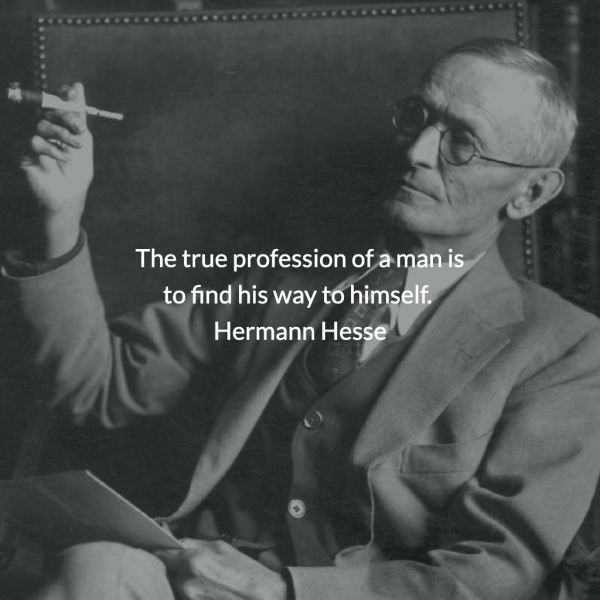
At one time, I thought my destiny was to become a world famous Hermann Hesse scholar. While I did not accomplish that objective, my love for Hesse and his work still grows with each new discovery. Thanks to my friend Dalia for sending me the quote in the first place. Of course something this good deserves the full meme treatment…
Ich Steppenwolf trabe und trabe, Die Welt liegt voll Schnee, Vom Birkenbaum flügelt der Rabe, Aber nirgends ein Hase, nirgends ein Reh! In die Rehe bin ich so verliebt, Wenn ich doch eins fände! Ich nähm’s in die Zähne, in die Hände, Das ist das Schönste, was es gibt. Ich wäre der Holden so von Herzen gut, Fräße mich tief in ihre zärtlichen Keulen, Tränke mich satt an ihrem hellroten Blut, Um nachher die ganze Nacht einsam zu heulen. Sogar mit einem Hasen wäre ich zufrieden, Süß schmeckt sein warmes Fleisch in der Nacht – Ach, ist denn alles von mir geschieden, Was das Leben ein bißchen fröhlicher macht? An meinem Schwanz ist das Haar schon grau, Auch kann ich nicht mehr ganz deutlich sehen, Schon vor Jahren starb meine liebe Frau. Und nun trab ich und träume von Rehen, Trabe und träume von Hasen, Höre den Wind in der Winternacht blasen, Tränke mit Schnee meine brennende Kehle, Trage dem Teufel zu meine arme Seele.
Dichtung von Hermann Hesse aus: Der Steppenwolf Roman ersch. 1927 / Rezitation: Christian Berkel











 Bright, shiny objects!
You must be logged in to post a comment.