I have an anxious attachment style

I’m writing this post to share something personal with you. I have an anxious attachment style. This means that I tend to worry a lot about my relationships, especially romantic ones. I crave closeness and intimacy, but I also fear rejection and abandonment. I often feel insecure and needy, and I may act clingy or jealous. Sometimes I overthink everything and imagine worst-case scenarios. Other times I avoid expressing my true feelings or needs, hoping that my partner will just know what I want.

I know that having an anxious attachment style can make it hard to have healthy and satisfying relationships. It can also affect my self-esteem and mental health. That’s why I decided to seek professional help and learn more about myself and my attachment patterns. I want to share with you some of the things that I learned and how they helped me cope better with my anxiety.

One of the first things that I learned is that attachment styles are not fixed or permanent. They are shaped by our early experiences with our caregivers, but they can also change over time and in different contexts. For example, I may feel more anxious with a partner who is distant or inconsistent, but less anxious with a partner who is responsive and supportive. This means that I have some control over how I feel and behave in my relationships. I can also choose partners who are more compatible with my attachment needs and communicate with them openly and honestly.

Continue reading “I have an anxious attachment style”

The path of the inner truth

“God calls all of you to take the path of the inner truth–and that means taking responsibility for everything that’s in you: for what pleases you and for what you’re ashamed of, for the rich person inside you and for the poor one. Francis of Assisi called this, “loving the leper within us.” If you learn to love the poor one within you, you’ll discover that you have room to have compassion “outside” too, that there’s room in you for others, for those who are different from you, for the least among your brothers and sisters.” Richard Rohr

Brené Brown with Chris Germer on Compassion


I Worry I’ll Never Change – Here’s Why I Still Accept Myself via @TinyBuddha

I no longer fool myself into thinking anything is wrong with me. I embrace all of who I am, with compassion for the parts of me that struggle. Source: I Worry I’ll Never Change – Here’s Why I Still Accept Myself – Tiny Buddha

Mindfulness Vs. Self-Compassion: Which Matters More?

3 studies show self-compassion is a more powerful mental health predictor. Source: Mindfulness Vs. Self-Compassion: Which Matters More?

Let Go, Find Warmth: 11 Mindfulness Practices for the Winter Blues

These mindfulness resources can help us treat ourselves with compassion when we could use a bit more warmth and light. Source: Let Go, Find Warmth: 11 Mindfulness Practices for the Winter Blues

Are You Sabotaging Yourself?

Why we get in our own way when it comes to our goals. Source: Are You Sabotaging Yourself?

The RAIN of Self-Compassion via @tarabrach

Facing Fear in a Traumatized World with @tarabrach

Tara Brach says “Unprocessed fear cuts us off from our full aliveness and spirit, and it separates us from others. This talk looks at how we bring healing to the trauma and deep fears that cause us to dissociate from our body. We focus on ways we increase safety, diminish shame and then, with a courageous, embodied and compassionate presence, learn to contact and integrate fear into our larger awareness.” Listen for more…

Buddhism’s “Five Remembrances” Are Wake-Up Calls for Us All

Perfectly clear, compassionate, and concise, the “Five Remembrances” are Buddhism at its very best. Koun Franz explains: Buddhism’s “Five Remembrances” Are Wake-Up Calls for Us All

Emotional Resilience During the Holidays

Consistently investing in your emotional health builds emotional resilience over time. Resilience allows you to maintain groundedness, clarity, and compassion in the face of challenges.  When resilience is present a hard hit to your heart, like an argument with a family member, still hurts: Emotional Resilience During the Holidays — Wise Heart

How to Navigate Coronavirus With Emotional Intelligence

Strategies for awareness, care, and compassion: How to Navigate Coronavirus With Emotional Intelligence

Tonglen Meditation with Tara Brach: Discovering the Boundless Space of Compassion

“This short version of the Tibetan Tonglen practice guides us in courageously opening to the suffering within us and all beings, and allowing that suffering to be held in the formless heartspace that is our true belonging.”

Self compassion

Without love and compassion

March Theme: Kindness, Compassion, and Wellbeing

Yes. Be kind…

deborahshaddy's avatarSophia Center, LLC

“Be Kind” is a popular meme — encouraging people to be kind to one another.

Kindness and compassion can be seen as a way to help others, but compassion also benefits the giver as well as the receiver of that kindness.

Throughout the month of March, At the Gates of the Soul will explore how compassion can benefit our mental wellbeing.

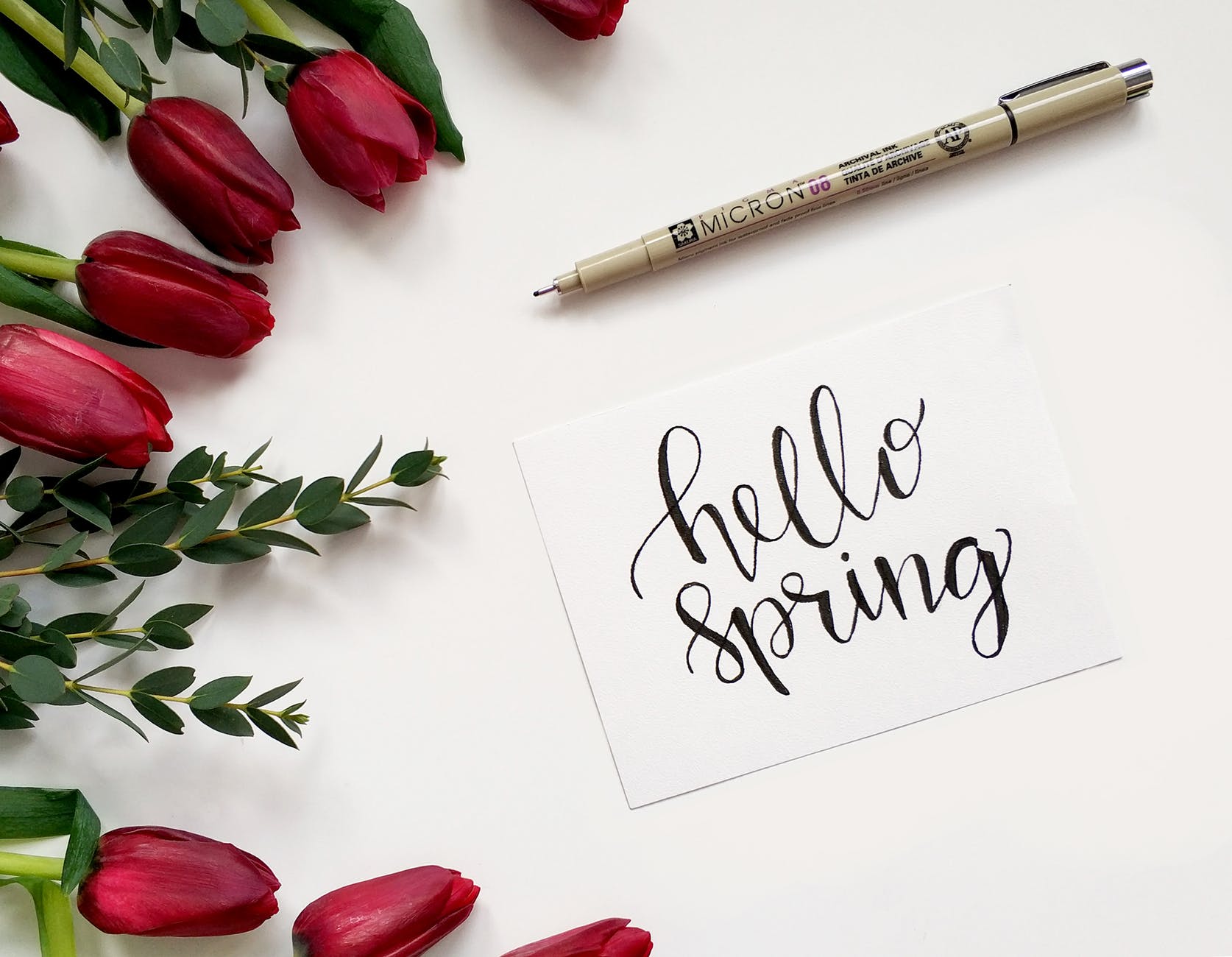
hello spring handwritten paper Photo by Alena Koval on Pexels.com

Emma Seppala wrote about research on the health benefits of compassion a few years ago, in an article for Greater Good Magazine. She points to research that says compassion is a natural part of being human.

Though economists have long argued the contrary, a growing body of evidence suggests that, at our core, both animals and human beings have that “compassionate instinct.” In other words, compassion is a natural and automatic response that has ensured our survival.

Seppala also writes about the psychological…

View original post 110 more words

Radical Self-Compassion

Tara Brach is one of my favorite teachers. Here she talks about loving ourselves into healing with the practice of RAIN: Radical Self-Compassion

@TaraBrach on Radical Compassion: Loving Ourselves and Our World into Healing

The self-compassionate way to get things done

“A parent shaming us by comparing us unflatteringly with a sibling; a boss humiliating us in front of colleagues when a task isn’t up to their expectations; a partner repeatedly complaining about some household task we haven’t done yet: these are all attempts to “light a fire under our ass” in order to get us to achieve more. Most of us have had this ploy used against us so many times over the course of our lives that we’ve internalized this motivational strategy.

Our inner critic punishes us verbally when it thinks we’ve under-performed. It castigates us for being lazy when we haven’t gotten around to starting some task. Yet despite all this internal criticism, most of us still have a hard time motivating ourselves to do things. When self-criticism fails, the answer is usually more self-criticism. “How,” we might wonder, “would I get anything done if I didn’t give myself a hard time?” Source: https://www.wildmind.org/blogs/on-practice/the-self-compassionate-way

Buddhist View of Love and Compassion

Another great wordpress.com blog…

otwaylifemagazine's avatarOtway Journal - coming back to earth

By Venerable Jampa Drolma and David Mayer.

The definition of love in Buddhism is something quite different from the ordinary term ‘love’ we regularly use in our daily life. It is not in relation to attachment or lust but love with a sense of good-will and from the depths of one’s heart that we direct a sincere wish for sentient beings (all living beings with a mind) to be happy and have the causes that gives rise to happiness. 

So from this definition, we can translate it as loving-kindness, or unconditional love.

Silhouette of mother kissing child on head

 We all have this potential within ourselves and it arises from a gentle- warm heart. If we are willing to activate this and allow ourselves to open our heart and open our mind, this loving–kindness is the most powerful emotion. Why? Because with love our suffering is relieved, it brings protection…

View original post 452 more words

Day 90: Lesson 5 from quitting booze and sugar. Exercise self-compassion.

Another great wordpress.com blogger…

Big Happy Life's avatar

My goodness! What a difference this made!

I used to think that the harder I was on myself, the more likely I was to succeed. As much as I hated the mental beatings, they felt like a necessary evil. How was I ever going to get anywhere if I went easy on myself?

I had no idea that all I was doing was creating the illusion of control. I never felt better and rarely did better as a result. All I did was stress myself out and since stress is the enemy of willpower and mental strength it’s fair to say I was actually making the situation worse. I had to find a way to reduce stress and gain genuine control.

I found the key in “The Willpower Instinct” by Kelly McGonigal PH.D. It is absolutely packed with useful and fascinating information but one of the most surprising…

View original post 360 more words

Start a Blog at WordPress.com.

Up ↑