How Not to Be Owned by Your Emotions and Thoughts

We can’t control the waves of thoughts and emotions that we experience, but we can learn to surf them.

In a culture that often encourages us to control, suppress, or fix our emotions, Buddhist psychology offers a powerful perspective: Emotions are not our enemies. Thoughts are not truths; they are fleeting events in our awareness. True freedom arises not from eliminating these challenges, but from transforming our relationship with them. The SNAP technique invites us to see, name, allow, and rest in the present moment, repeating this process until a compassionate relationship with our emotions and thoughts becomes second nature.

Go to the source article: How Not to Be Owned by Your Emotions and Thoughts
How the Five Precepts of Buddhism Reduce Stress

Buddhism’s five precepts offer practical ways to manage stress, boost resilience, and improve mental clarity.

Buddhism’s five precepts are essential guidelines that promote ethical conduct and mental well-being. These precepts not only help practitioners cultivate a mindful lifestyle but also provide practical strategies to manage stress effectively. By adhering to these principles, individuals can enhance their resilience and improve mental clarity. The article from Psychology Today delves into how embracing these precepts can significantly contribute to reducing stress and fostering a calmer, more focused mind.

Go to the source to read the entire article: How the Five Precepts of Buddhism Reduce Stress


The Buddha nature and Donald Trump

“It’s a fundament of Buddhist belief that everyone, without exception, is inherently a Buddha. Our Buddha-nature (and certainly I include myself here) is blocked from time to time by unresolved greed, anger, or delusion—negative energies known as kleshas. Disturbing as it might be to admit, I am not so unlike our former president or political figures for whom I have difficulty feeling compassion. I am a product of the same Universe, breathed by it, my heart beats according to its laws and principles. I also have the same brain, nervous system, and sense organs as those I ridicule. It requires effort for me to perceive the Buddha in Donald Trump, but here’s a test: Can you name a president in your memory who made it more graphically clear to millions of citizens the overriding importance of honesty, character, transparency, law, and social norms than Donald Trump? He taught by negative example, but the lessons were clear and irrefutable. His occupancy of the White House was instructive…”

Coyote, Peter. Zen in the Vernacular: Things As It Is (pp. 32-33). (Function). Kindle Edition.

Peter Coyote

Any fan of documentaries, particularly those of Ken Burns will recognize the iconic voice of Peter Coyote. As one of those fans, imagine my joy when I discovered that the voice behind many of my favorite historical documentaries such as The Civil War, The American Buffalo, and Lewis & Clark: The Journey of the Corps of Discovery is not only a great actor and voice artist, but also a Buddhist priest!

Continue reading “Peter Coyote”

When Your Cat Allows This, It Means a Deep Bond!

I have known many Zen Masters. All of them cats…

Eckhart Tolle

This is my zen master Sadie…

This Is What a Digital Coup Looks Like

If this is the status quo, how then do we we who aspire to mindfulness respond?

Achieving contentment this year

Karl Duffy shares…

There are two methods. One method is to obtain everything that we want and desire – all the money, houses, and cars; the perfect mate; and the perfect body. The Dalai Lama has already pointed out the disadvantage of this approach; if our wants and desires remain unchecked, sooner or later we will run up against something that we want but can’t have. 

The second, and more reliable, method is not to have what we want but rather to want and appreciate what we have.

Source: achieving contentment this year

Buddhist Advice for Election Anxiety

Are you experiencing strong, difficult emotions due to the upcoming election? Four Buddhists offer advice for dealing with despair, anger, grief, and anxiety. (This applies to the results as well!)

Source: Buddhist Advice for Election Anxiety

So very zen…

Wisdom is all around us. Sometimes it appears in unexpected places like when the coach of the University of Notre Dame football team teaches the media about the first and second arrow…

First and second arrow?

“In life, we can’t always control the first arrow. However, the second arrow is our reaction to the first. The second arrow is optional.”

The Buddha

Zen master Freeman: Reload and Refocus!

A Practice for Developing Kindness Toward Yourself

Valerie Mason-John shares a meditation for cultivating a positive relationship with yourself, and, by extension, the world: A Practice for Developing Kindness Toward Yourself

Developing a Rich Inner Life

Buddhist psychology is based on a positive view of human nature. Instead of trying to fix our shortcomings, we learn to nurture the parts of ourselves that were never broken. Source: Developing a Rich Inner Life

Not the most important

What we see is not the most important. Could dust rise without the invisible hand of the wind? Could a fan turn without any current? Could lungs breathe without breath? Tell me What is the shape of Love? How much does joy weigh when held in the palm of your hand? Can you catch the Spirit of Life in a jar? All things seen depend upon the Unseen. All sounds depend upon Silence. All things felt depend upon what is not felt. Adyashanti

Source: not the most important – Mindfulbalance

h/t Karl Duffy

Desire and Addiction: Voices of Longing Calling You Home

Desire is intrinsic to all living forms – the urge to exist and flourish. It turns to suffering when, due to unmet needs, it contracts, intensifies and separates us from our full aliveness and awareness. These two talks guide us in awakening from this trance, and discovering how within desire is the longing that can carry us to true belonging.


5 Practices for Nurturing Happiness

Thich Nhat Hanh’s life was inspiring, his benefit great, and his teaching, like the dharma itself, profound and practical. Here, he shares five practices to nurture happiness: letting go, inviting positive seeds, mindfulness, concentration, and insight: 5 Practices for Nurturing Happiness | Lion’s Roar

Wisdom for Waking Up to Your World

“One of my favorite subjects of contemplation is this question: “Since death is certain, but the time of death is uncertain, what is the most important thing?” You know you will die, but you really don’t know how long you have to wake up from the cocoon of your habitual patterns. You don’t know how much time you have left to fulfill the potential of your precious human birth. Given this, what is the most important thing?

Every day of your life, every morning of your life, you could ask yourself, “As I go into this day, what is the most important thing? What is the best use of this day?” At my age, it’s kind of scary when I go to bed at night and I look back at the day, and it seems like it passed in the snap of a finger. That was a whole day? What did I do with it? Did I move any closer to being more compassionate, loving, and caring — to being fully awake? Is my mind more open? What did I actually do? I feel how little time there is and how important it is how we spend our time.” Source: Pema Chödrön’s Wisdom for Waking Up to Your World | Lion’s Roar

Why Reincarnation Isn’t So Wonderful

The proper aim is not a better station, but liberation: Why Reincarnation Isn’t So Wonderful


The Bodhisattva Path

The Bodhisattva path is a long path of practice, with specific stages – ten in all – to be attained through many lives, with the goal of achieving Buddhahood, that is, the Perfection of Wisdom, for its own sake as well as the sake of helping others: The Bodhisattva Path

Tara Brach talks about it here…

Additional resources…

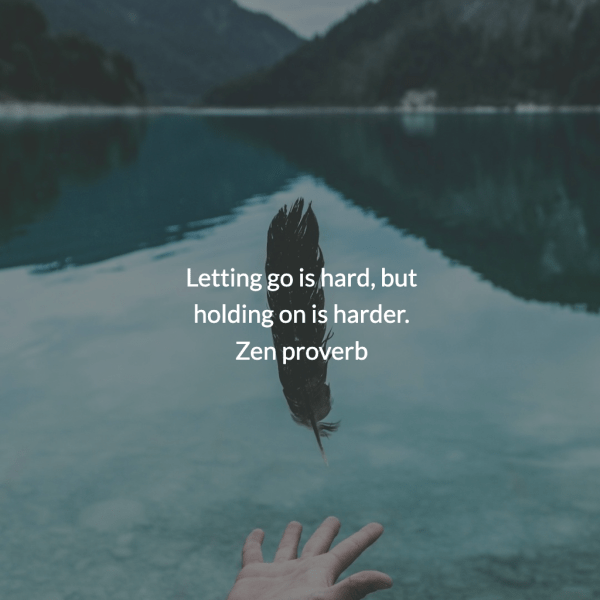
Letting Go vs. Holding On


2min snip from Anitta: 6 Ways to Heal Your Inner Child & Let Go of Past Trauma | On Purpose with Jay Shetty: Letting Go vs. Holding On | 2min snip from On Purpose with Jay Shetty

Why Your Ego Is an Illusion

The Buddhist take on the self. Source: Why Your Ego Is an Illusion


Handling Life’s Challenges with Grace

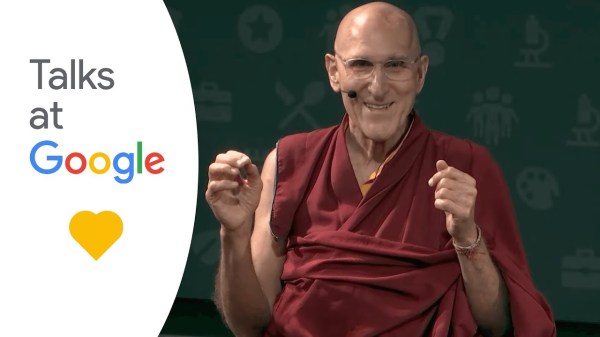
Monk, educator and The Dalai Lama’s personal physician Dr. Barry Kerzin discusses how to find meaning and joy in uncertainty, while utilizing practical tools for stress reduction, avoiding burnout and self-compassion…

Shall I Stay or Shall I Go?

More people than ever before are changing jobs, or at least thinking about it. To help you decide, says Dan Zigmond, contemplate the nature of change. Source: Shall I Stay or Shall I Go? | Lion’s Roar

Start a Blog at WordPress.com.

Up ↑