AI is already becoming a dominant force in the workplace. There is no need for fear, but there is an opportunity for better leadership.
The article discusses the growing presence of AI in the workplace and emphasizes that rather than fearing this technological shift, individuals should view it as an opportunity to enhance leadership qualities. It advocates for a more human-centered approach to work, focusing on the importance of emotional intelligence and interpersonal skills as essential components in a world increasingly influenced by AI. By prioritizing these human traits, workers can position themselves favorably in relation to the evolving job landscape.
Geoffrey Hinton, whose work shaped modern artificial intelligence, says companies are moving too fast without enough focus on safety. Brook Silva-Braga introduced us to Hinton in 2023 and recently caught up with him.
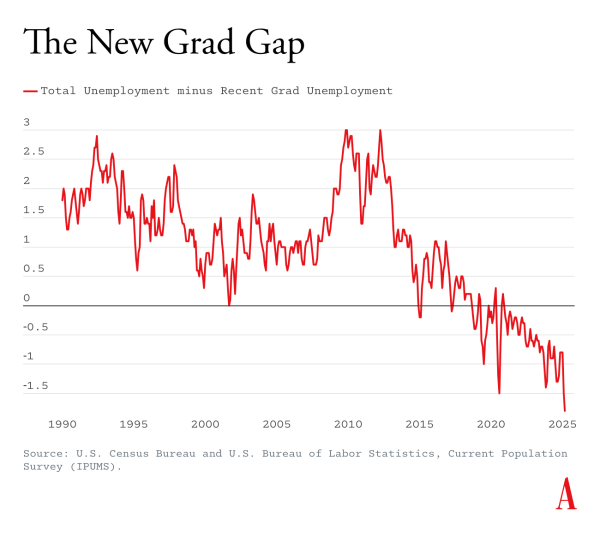
A new sign that AI is competing with college grads.
The article discusses the alarming trends in the job market where artificial intelligence (AI) is increasingly competing with college graduates for employment opportunities. It highlights the challenges faced by young job seekers as companies lean towards AI capabilities that can perform tasks traditionally reserved for human workers. The piece emphasizes the need for adaptation in education and workforce development to address the shifting landscape brought about by technological advancements, urging a reconsideration of skills that will remain relevant in the evolving job market.
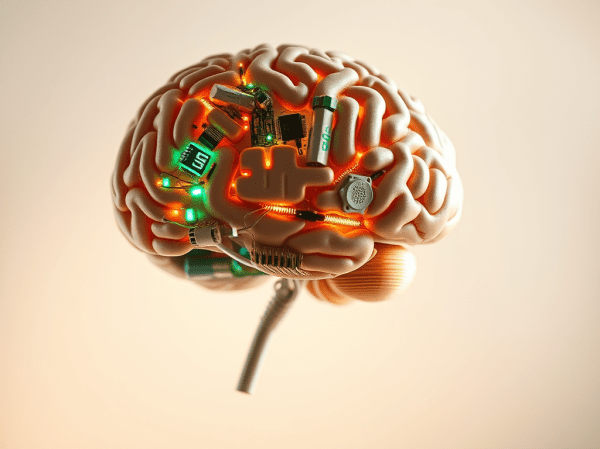
The use of AI can either make you smarter or dumber. It’s all about how you use it. Learn how to harness AI as a tool for growth, not degradation, with a practical example.
The article “Will AI Make You Dumber? It’s Up to You—Here’s How” discusses the dual potential of artificial intelligence to either enhance or hinder our cognitive abilities. It emphasizes that the impact of AI on intelligence depends on how individuals choose to engage with the technology. By providing practical examples, the article illustrates ways to leverage AI as a tool for personal growth rather than allowing it to contribute to intellectual decline. The key takeaway is that mindful and purposeful use of AI can lead to positive outcomes in learning and development.
In the 2010s, Millennials got cheap Ubers. Today’s young people are getting free ChatGPT and SuperGrok.
The article “The Gen Z Lifestyle Subsidy” discusses how today’s young people, particularly Gen Z, benefit from various technological advancements such as free access to AI tools like ChatGPT and SuperGrok. This contrasts with Millennials in the 2010s, who enjoyed affordability in services like Uber. The author analyzes how these resources shape the experiences and lifestyles of current college students, emphasizing the implications of such support in their educational and personal lives.
As AI technology advances, questions arise about the implications of machines potentially surpassing human intelligence. The article “When Your AI Assistant Is Much Smarter Than You” explores the relationship between human intellect and artificial intelligence, emphasizing the importance of maintaining accountability and purpose in our thinking processes. It highlights the concern that as AI becomes more capable, humans might rely too heavily on machines, potentially diminishing our own critical thinking skills. The quote from B.F. Skinner serves as a reminder to prioritize human thought and awareness in an age increasingly dominated by intelligent systems. The article urges readers to reflect on their cognitive responsibilities in the face of rapidly evolving technology.
People are flooding social media with AI-generated toy versions of themselves, and others, made with ChatGPT’s new image generator. They’re fun and sometimes political. Of course I had to try it!
When algorithms discriminate or polarize, they’re not malfunctioning—they’re mirroring the world we’ve built. AI exposes personal bias and inconsistency.
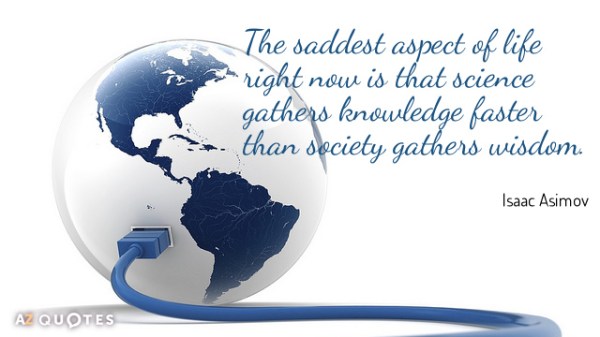
“The saddest aspect of life right now is that science gathers knowledge faster than society gathers wisdom.”
Isaac Asimov
The article “AI Isn’t the Problem, We Are” argues that when algorithms exhibit bias or polarization, it’s a reflection of the societal issues and personal biases inherent in our world rather than a failure of the technology itself. The piece emphasizes that AI technology reveals existing inconsistencies among humans, highlighting the gap between the rapid accumulation of scientific knowledge and the slower development of societal wisdom. The author supports this perspective with a quote from Isaac Asimov, stressing the urgency of addressing human biases to mitigate the negative impacts of AI.
Isaac Asimov famously expressed concern that society gathers knowledge faster than wisdom, highlighting a potential imbalance in our pursuit of technological advancement.
AI presents us with opportunities and opens the door to disaster. To unlock its benefits while minimizing the risks, we must guide its development with a sense of agency.
How will AI affect our hearts and minds in the coming year? What will the continuous evolution of AI do to our emotions, mental processes, and behaviors?
In recent years, Apple has made significant strides in the field of artificial intelligence (AI). With its commitment to enhancing user experience, Apple Intelligence aims to integrate smart technology seamlessly into everyday life. From Siri to machine learning capabilities in its devices, Apple is harnessing the power of AI to create more intuitive and efficient services.
Knowledge Navigator
Apple has been envisioning ‘Apple Intelligence’ since 1987. Have you ever seen this video?
Siri: The AI Assistant
Siri, Apple’s voice-activated assistant, has continually evolved since its launch. Apple Intelligence has improved Siri’s understanding of natural language, enabling it to respond more accurately to user queries. With each update, Siri becomes more capable of handling a wider range of tasks, from basic inquiries to complex scheduling and smart home management.
Machine Learning in Devices
Apple’s AI efforts extend beyond software like Siri to hardware as well. The incorporation of machine learning models in devices enhances features such as photography, face recognition, and predictive text inputs. For instance, the Smart HDR technology in iPhones uses AI to optimize photos by balancing exposure and detailing, providing users with stunning images effortlessly.
Privacy and Security
A distinct aspect of Apple Intelligence is its focus on user privacy. Apple is committed to ensuring that data collected by its AI systems is handled responsibly. The company processes much of its data locally on devices instead of on external servers, minimizing risks associated with data breaches.
Looking Ahead
As we look to the future, Apple Intelligence promises to continue evolving, integrating deeper AI capabilities into its ecosystem. Innovations in augmented reality (AR) and advanced health tracking are just the beginning. Apple’s pursuit of intelligent design aims to create devices that not only meet user needs but anticipate them, paving the way for a smarter, more connected world.
In conclusion, Apple Intelligence is not just about technology; it’s about enhancing our daily lives. As the company continues to innovate, the potential applications of AI within the Apple ecosystem are limitless, making our interactions with technology more natural and engaging. Stay tuned for what lies ahead in the fascinating journey of Apple and AI!
S. Craig Watkins is a renowned scholar and professor at the University of Texas at Austin, known for his work in the fields of digital media, youth culture, and social networking. His research explores the intersection of technology and society, including the impact of artificial intelligence on various aspects of human life. Watkins delves into the ways AI influences communication, education, and access to information, shedding light on both its potential benefits and possible drawbacks. His insightful analyses offer valuable perspectives on the evolving relationship between AI and society.
Humans and other animals are conscious because the brain changes as part of the environment from one moment to the next. Artificial intelligence on computers always stays the same: A Question of Time: Why AI Will Never Be Conscious









 Bright, shiny objects!
You must be logged in to post a comment.